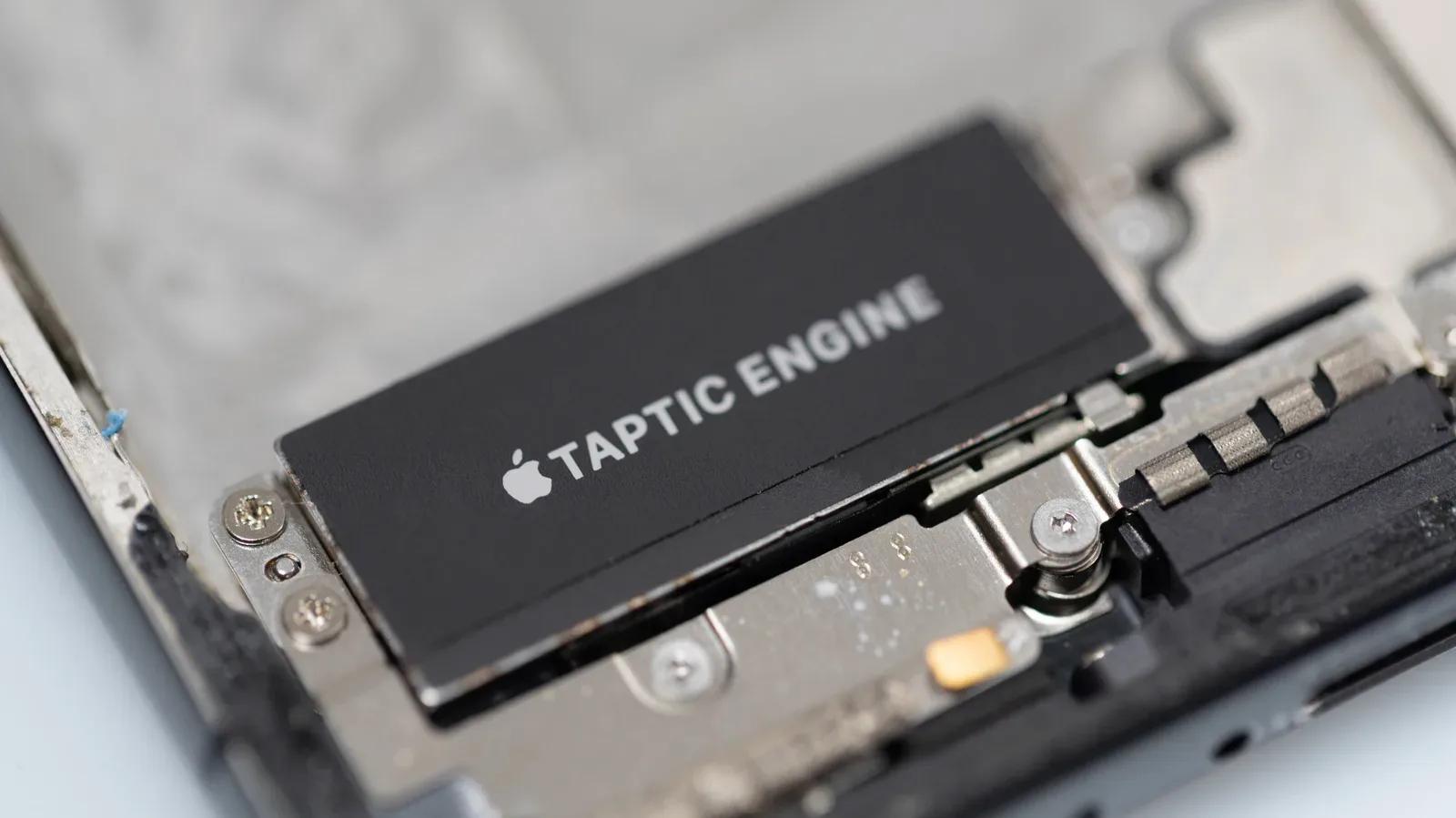
Apple has been hit with a jury verdict of more than $5.7 billion in a patent dispute centered on haptic-feedback technology used in iPhones and Apple Watches. The damages award favors Taction, a San Diego company that makes audio and gaming peripherals with haptic feedback.
The jury found that Apple unintentionally infringed two Taction patents through the Taptic Engine used in various iPhone and Apple Watch models. Apple disagrees with both the finding and the damages figure and is expected to appeal, meaning the number is not a final payment or a settled endpoint to the case.
If sustained, the award would rank among the largest U.S. patent-infringement payouts. It also places an element most users encounter as a tiny buzz, tap, or pulse—the hardware and software system that supplies tactile feedback—at the center of a multibillion-dollar legal fight.
What the jury decided
Taction brought its lawsuit in 2021, alleging that Apple’s Taptic Engine infringed two patents concerning haptic feedback. A federal judge in San Diego dismissed the case in 2023. It returned to court after the U.S. Court of Appeals for the Federal Circuit later revived it, leading to the latest jury decision.
The verdict’s use of “unintentional” infringement is important, but it should not be mistaken for a finding that no infringement occurred. In this case, the jury found infringement while not concluding that it was deliberate. The reported damages award nevertheless exceeds $5.7 billion.
Apple’s planned appeal is equally important context. Appeals can scrutinize legal rulings made during the case, how patent claims were interpreted, whether the evidence supports the verdict, and whether the damages calculation can stand. Until that process plays out, the award remains subject to potential change.
Why haptics matter beyond a simple vibration
Haptic feedback is the use of touch-based physical sensations to communicate information or confirm an action. On a phone or watch, it can make an interaction feel like a click, signal an alert without an audible tone, or provide a subtle cue as a person navigates a device.
The term can sound broad because it is broad. It does not merely mean that something vibrates. Haptics covers the experience designed around that physical response: how a device produces the sensation, when it activates, and how the sensation conveys a particular result to the user. That makes the underlying intellectual-property questions potentially technical and highly specific. The dispute is not a general ruling that one company owns every device vibration; it concerns two Taction patents and Apple’s accused implementation.
For players, tactile feedback is familiar territory. Controllers, handheld devices, wearable accessories, and gaming peripherals can use physical response to make an action more legible without requiring another look at a display. Taction’s business includes gaming peripherals with haptic feedback, which helps explain why the case has relevance beyond the usual smartphone patent headline.
At the same time, the current verdict concerns Apple’s Taptic Engine in certain iPhones and Apple Watches—not a finding described here against every haptic device, game controller, or peripheral on the market. The distinction matters: patent cases turn on the particular patents asserted and the particular technology accused of practicing their claims.
The Taptic Engine is the focus, not a product recall
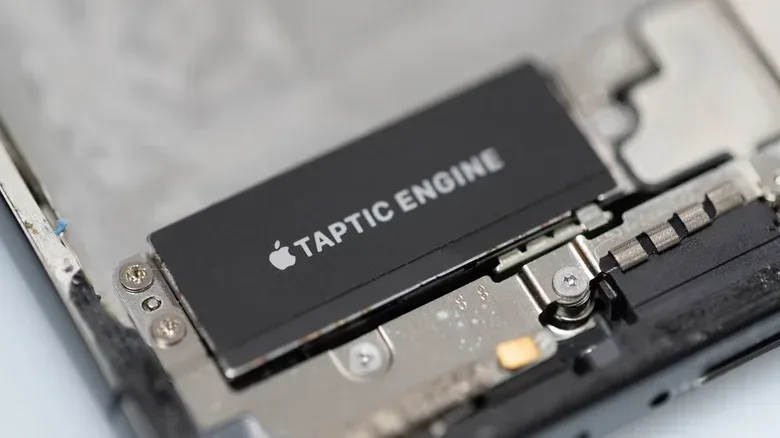
The Taptic Engine is Apple’s name for the component associated with tactile feedback in its devices. The lawsuit alleged that versions used in iPhone and Apple Watch models infringed Taction’s patents. The verdict does not itself mean that owners should expect their current devices to stop working, nor does the available information establish any consumer-facing hardware change.
That is a useful line to draw in a case with such a large headline number. Patent litigation typically concerns whether protected technical claims were used without permission and, if so, what remedy is appropriate. Depending on the case and its procedural posture, remedies can involve damages, licensing arrangements, changes to technology, or further litigation. No specific product change, license, or other resolution is established by this jury verdict alone.
For now, the direct practical implication for iPhone and Apple Watch owners is limited: Apple’s haptics are the subject of a live legal dispute, but the reported decision does not announce an immediate change to how those products operate.
Apple’s wider run of haptics and watch-related patent disputes
This is not Apple’s first patent fight involving haptic technology. Immersion previously filed a complaint accusing Apple of patent violations involving haptics in iPhones, Apple Watches, and MacBooks. That dispute ended in a settlement for an undisclosed amount.
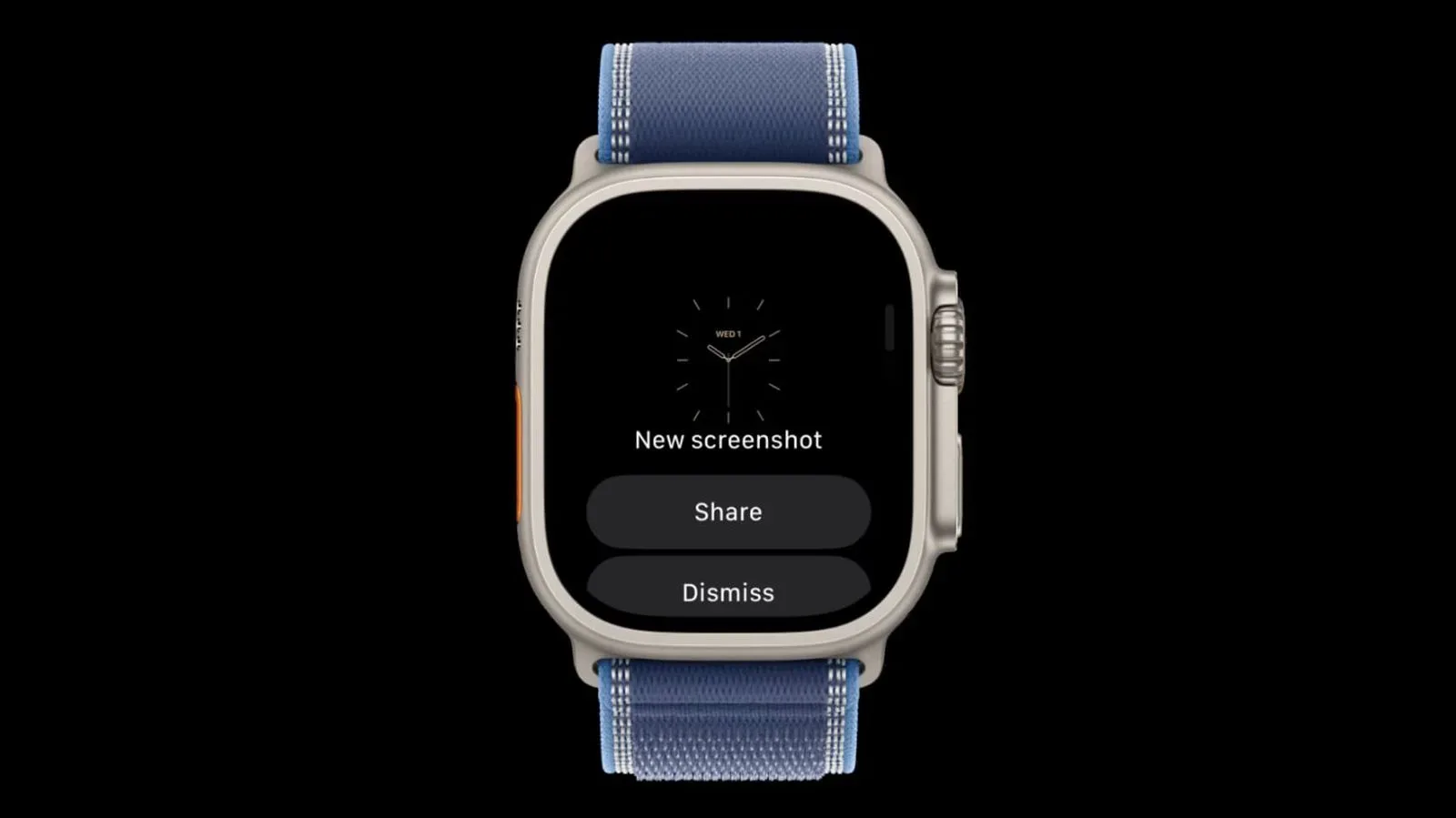
Apple is also in a separate patent battle involving blood-oxygen tracking on the Apple Watch. In November, another federal jury ruled that Apple must pay $634 million for infringing Masimo patents. Apple likewise planned to appeal that verdict.
These disputes should not be blended together. Taction’s case concerns haptic feedback and the Taptic Engine; the Masimo litigation concerns blood-oxygen tracking; and the prior Immersion case was settled rather than resolved through this new Taction verdict. Their shared connection is Apple’s hardware ecosystem and the broader reality that devices can combine many patent-sensitive systems inside a single product.
That is particularly true for smartwatches. A modern wearable can include tactile alerts, sensors, software interfaces, and other specialized functions in a compact form factor. A legal controversy around one function is not necessarily a judgment on the rest of the device. Still, each dispute can carry substantial financial and strategic stakes.
Why the damages figure stands out
The more-than-$5.7-billion figure is notable not just because it is large, but because it eclipses the $3 billion at issue in an ongoing Intel patent case referenced in reporting on the verdict. If it holds through the appeal process, Taction’s award would be among the biggest patent-infringement recoveries in the United States.
But a jury award and the amount ultimately paid are not always identical. Apple’s expected appeal creates a new phase of uncertainty. The company can challenge the underlying liability determination, the legal framework applied by the court, the damages award, or more than one of those points. The appellate outcome could leave the verdict intact, alter it, or send parts of the case back for more proceedings.
That uncertainty is why it is most accurate to describe Apple as facing a $5.7 billion-plus jury verdict rather than treating the litigation as finished. The initial outcome is a major development, but not necessarily the final ledger entry.
What to watch next
The next major signal will be the shape of Apple’s appeal and the arguments it raises against the jury’s infringement finding and damages award. The appeal will determine whether the revived case moves toward a durable judgment, a revised outcome, or another round of court action.
For Taction, the verdict is a significant win in its effort to enforce patents related to haptic feedback. For Apple, it adds another major patent dispute to a period already marked by litigation over Apple Watch technology. And for the wider device business, it is a reminder that interactions users may experience in fractions of a second can be built on highly contested engineering territory.
Apple’s hardware roadmap remains separate from this case, including questions around its other device categories. For a look at the uncertainty surrounding another Apple platform, see our coverage of the reported Vision Pro reset and the headset’s uncertain future.
For now, the narrow bottom line is straightforward: a jury has found that Apple unintentionally infringed two Taction haptics patents and awarded more than $5.7 billion in damages. Apple intends to fight that result, so the legal status—and the eventual financial consequence—remains unresolved.