
Apple appears to be laying groundwork for a far more hands-on kind of artificial intelligence: an agent intended to carry out work across apps, browsers, command lines, code tools and online services. Job listings describe a team building “general-purpose computer-use agents,” including systems that can choose tools, plan multi-step work and potentially coordinate specialist agents.
That language matters because it moves beyond the familiar assistant model. A conventional assistant largely answers questions or performs a narrow command after being explicitly asked. The kind of system described in the listings is meant to operate more like a task runner: it would determine the sequence of steps needed for a goal, use the appropriate software or service at each stage, and execute those steps across a computer environment.
Apple’s stated ambitions include web browsing, app use, command execution, writing and debugging code, and calling services. Its listings also emphasize a requirement that will be central to whether people can trust such software: safety, privacy and security are intended to be built into the design rather than bolted on afterward.
What a computer-use agent actually is
“Agentic AI” is an industry term for AI that does more than produce a response. Instead of merely explaining how to complete a task, an agent can break the task into actions and attempt to perform them. In the description Apple is recruiting around, those actions span a browser, documents, terminals, editors, apps and APIs.
An API, or application programming interface, is a structured way for software to request information or trigger functions in another service. A terminal is a text-based interface for running commands. Combining those tools with app and browser control would give an agent a broad operating surface: it could potentially move between a webpage, a document, a coding environment and a service integration while pursuing one larger assignment.
Apple describes the goal in deliberately human terms: people regularly move fluidly among tools to get meaningful work done. A useful agent would need to recognize that a job is rarely completed in a single window. Writing software, for example, may involve reading documentation in a browser, editing files, running commands, identifying an error, revising the code and repeating the process. The listings indicate Apple is pursuing systems able to handle those connected steps.
The envisioned software would browse, work across apps, run commands, write and debug code, and select the right tool for each part of a task.
There is an important difference between that stated vision and a confirmed consumer product. A recruiting listing shows the technical direction Apple wants to build toward; it does not establish a release date, supported devices, pricing, a finished feature set or how much authority an eventual agent would receive. The listed roles are evidence of active work on the foundations, not proof that every described capability is ready for public use.
Why the privacy and security language is the hard part
Giving AI access to apps, websites and command lines creates an obvious usefulness-versus-control problem. A system that can take meaningful actions may save time, but it may also encounter sensitive personal material, account controls, private documents, service credentials or destructive commands. The wider its access, the higher the stakes when it misunderstands an instruction, follows unsafe material on the web, or performs an action the user did not expect.
That is why Apple’s emphasis on privacy, safety and security is not boilerplate in this context. It is a core technical requirement. A computer-use agent needs boundaries around what it can access and what it can do. It also needs a reliable way to distinguish a request from the user from potentially untrustworthy instructions encountered in a webpage, document or other external content.
Privacy concerns how task data, browsing activity, documents and account information are handled. Security concerns preventing unauthorized access or unsafe actions. Safety is broader: it includes whether the agent behaves predictably, stays within user intent and avoids harmful or inappropriate outcomes. The listing groups all three together, which reflects how inseparable they become when an AI is permitted to act rather than simply chat.
The practical test for any such system will be the level of control people retain. An agent that drafts code or organizes information may be relatively low risk compared with one that can execute system commands or call outside services. Apple has not detailed an approval model, permissions structure or specific safeguards, so those key questions remain unanswered. Still, building those controls into the foundation is a more consequential challenge than making an AI generate polished prose.
A project that reaches across Siri, frameworks and foundation models
The hiring effort spans the Siri, UI frameworks and Apple Foundation Models teams. That combination suggests the work is not being framed solely as a standalone coding tool or a single app feature.
UI frameworks are the software building blocks developers use to create and operate application interfaces. An agent that works across apps needs an effective and dependable way to understand and interact with those interfaces. Foundation models are broad AI models capable of supporting different kinds of tasks rather than being trained for just one narrow job. Siri, meanwhile, is Apple’s established assistant layer and a natural place for users to express what they want done.
Putting those areas in the same orbit points to the scale of the undertaking. A capable agent needs a way to interpret an instruction, form a plan, use tools, understand the results of each action and decide what to do next. It also needs an interface through which people can give instructions, review progress and intervene. None of that confirms exactly how Apple will package the technology, but it explains why the effort crosses several teams.
The listings further mention the ability to coordinate specialized sub-agents. In plain language, that means a larger system may divide a job among smaller AI components with focused responsibilities. One component could be suited to planning, another to using a particular tool, and another to checking work. This is a potential approach to managing complex tasks, though Apple has not specified how any such coordination would function in a user-facing product.
The competitive pressure is becoming visible
Apple is pursuing this work while proactive agents become a major industry focus. Meta introduced Muse in September, and it rose quickly on App Store charts. OpenAI subsequently released Dots, Anthropic launched Claude Duet, and Google turned its Gemini Spark agent into Tasks while adding features.
These systems are grouped together by a shared premise: they offer to undertake tasks for users without waiting for a direct command. That is a notable contrast with Siri’s current AI capabilities, which do not offer that form of proactive task handling.
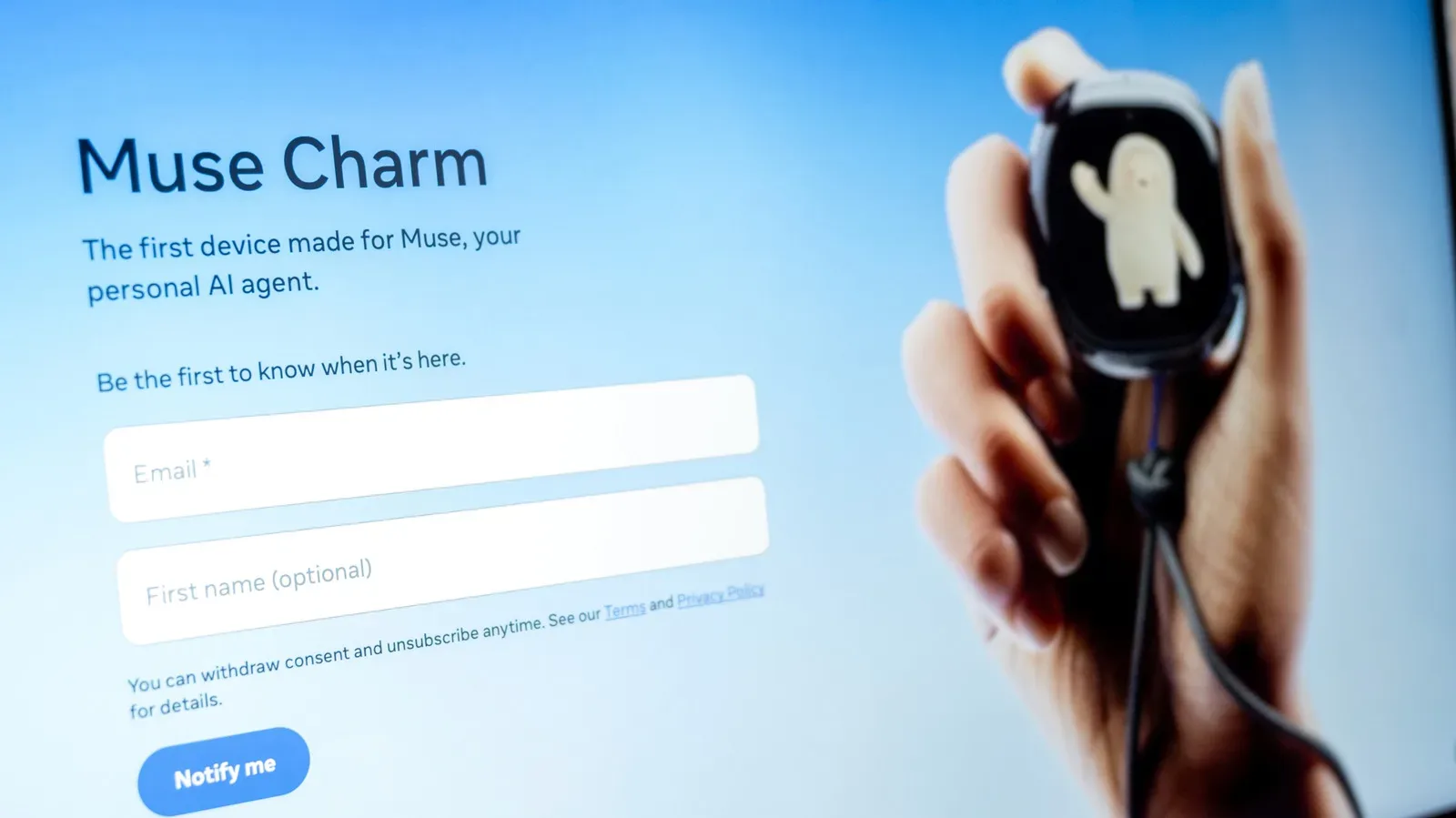
For a broader look at the hardware-oriented end of that trend, see the report on Meta’s reported Muse Charm. The significance is not that every agent will take the same form, but that AI competition is increasingly about initiative and execution, not only conversation.
Apple has reportedly been targeting a version of Siri that is more agent-like as soon as 2027. That timeline is reported rather than officially confirmed, and it should be read as an ambition rather than a promise. The new listings nonetheless offer a concrete signal that the company is staffing for the technical work such a change would require.
Apple CEO John Ternus has reportedly pressed software engineering chief Craig Federighi to accelerate AI work. That reported internal urgency fits a market in which competitors are already presenting agents as products that can do things, not just recommend things.
What it could mean for developers and everyday workflows
The code-focused part of Apple’s description is particularly notable. Writing and debugging code are iterative activities. An AI that can only suggest snippets is different from one that can inspect a project, make an edit, run a command, observe an error and continue working through the problem. The latter is the type of multi-step workflow implied by the listings.
But execution does not automatically equal correctness. Debugging often involves judgment about requirements, trade-offs and unintended effects. A system capable of running commands may speed up repetitive work, yet users would still need to inspect changes—especially where code affects a live service, personal data or security-sensitive operations. Apple’s description establishes an intended capability, not a guarantee that an agent can independently resolve every complicated programming task.
Outside coding, the same principle applies. Browser and app control could make routine workflows less fragmented, because a user would not have to manually shuttle information between every tool. Yet the value of that convenience depends on clarity. Users need to know what the agent is doing, which services it is calling and when it needs approval. In practical terms, the best agent experience is unlikely to be one that hides every intermediate decision; it is one that makes delegation understandable and reversible.
That is especially relevant to people who use computers for valuable work. The Apple listing itself centers the fact that work often happens across multiple tools. The promise is to reduce the mechanical switching between them. The challenge is to do so without turning a productive workflow into a black box.
What is confirmed, and what remains speculation
- Supported by the listings: Apple is building foundations for general-purpose computer-use agents that can plan and execute multi-step tasks across apps, browsers, command lines, code and APIs.
- Supported by the listings: The intended capabilities include browsing, app use, running commands, coding, debugging and calling services.
- Supported by the listings: Apple treats privacy, security and safety as central design concerns, and the work connects Siri, UI frameworks and Apple Foundation Models teams.
- Reported, not officially confirmed: A more agent-like Siri could arrive as soon as 2027, and leadership has pushed for greater speed on AI.
- Not established: A public launch date, platforms, devices, pricing, final product name, feature limits and the specific protections or approval controls users would receive.
For now, the clearest takeaway is that Apple is hiring toward AI that can operate across the tools people already use, rather than remaining confined to a question-and-answer interface. Whether it becomes a major Siri evolution, a distinct product or an underlying capability shared across Apple software remains to be seen. The technical direction, however, is clear: the next battleground is not simply an AI that can talk about work, but one that can safely participate in doing it.