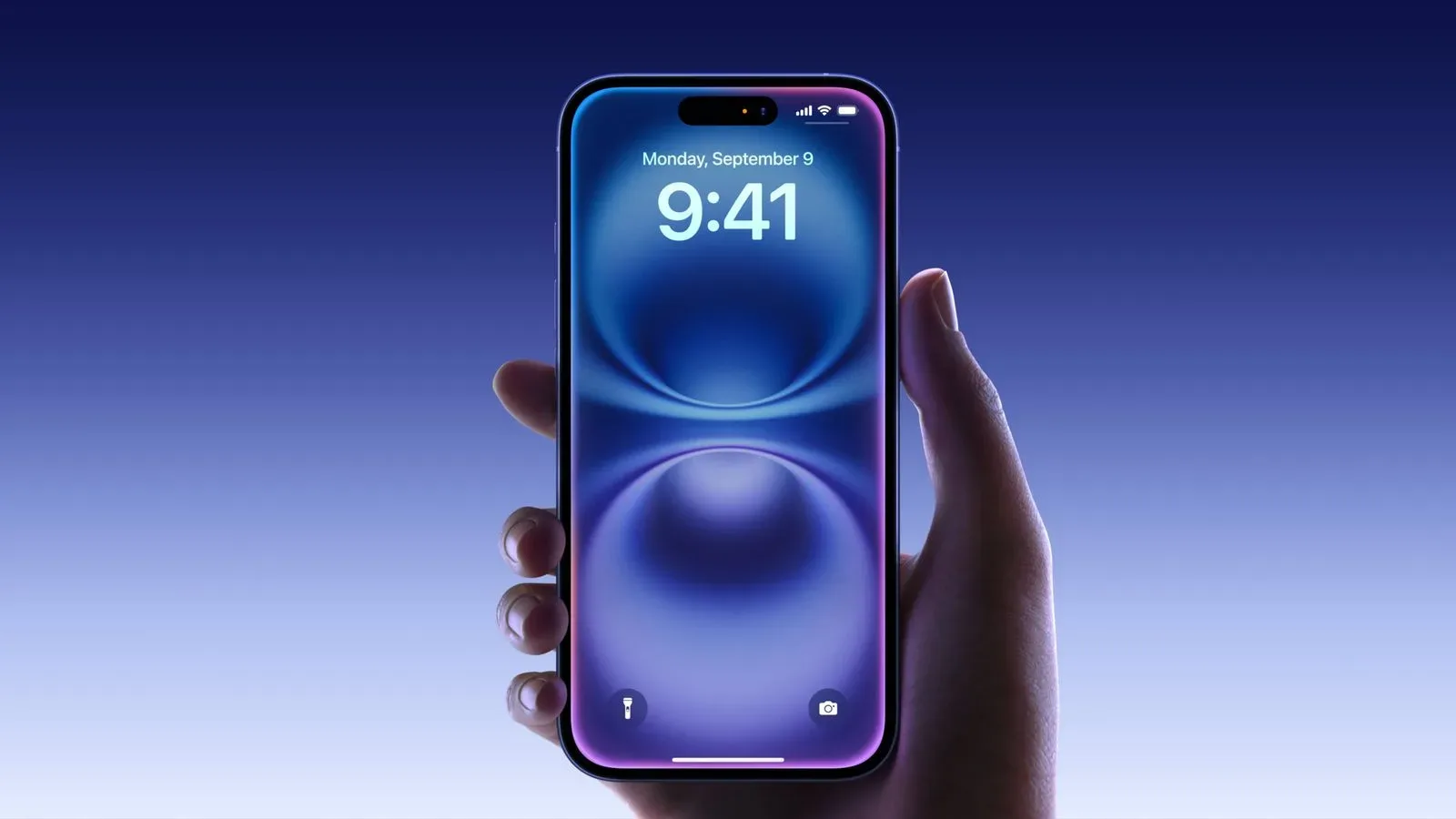
Apple and Apple Korea are facing a formal review in South Korea over advertising tied to the iPhone 16 and the rollout of Apple Intelligence. The central question is not simply whether the company eventually delivered AI features, but whether its marketing made their availability—particularly in Korean—clear enough at the time consumers were being asked to buy a new phone.
South Korea’s Fair Trade Commission has referred the matter for review after investigators alleged that several Apple Intelligence capabilities were not delivered as advertised. The features cited include Genmoji, Image Playground, and a version of Siri designed to understand personal context and what is on a user’s screen.
There is no final decision, fine, or other penalty at this stage. Apple has said it cooperated with the investigation, disagrees with the conclusions in the examiner’s report, and intends to present its defense to the Commission.
What the review is examining
The dispute turns on timing, scope, and clarity. AI features are often described in a way that makes them sound like one unified product, yet their real-world availability can depend on language support, region, software rollout timing, and the specific feature in question. A consumer may see “Apple Intelligence” attached to an iPhone 16 launch and reasonably assume the advertised set of tools is ready for use. The regulator is examining whether Apple made the limits of that assumption sufficiently prominent.
One example in the report involves Siri’s personal-context capabilities. They were advertised for Korean availability in early April 2025, but did not arrive until October 2026—about 18 months later. That gap is crucial to the case because the issue is not just an abstract roadmap changing over time. It concerns a capability presented in connection with a consumer device sale, followed by a substantially later rollout in the local market.
Genmoji and Image Playground are also named among the features investigators believe were not provided as advertising led buyers to expect. The supplied information does not establish a final legal finding about any individual advertisement, nor does it provide a complete feature-by-feature timetable. It does establish that availability messaging for these tools is part of the regulator’s concern.
Why “availability” matters more than a feature list
For phone advertising, a feature claim can carry more weight than a general promise that future software updates may add improvements. Buyers often use a launch-period feature list to compare devices, decide whether to upgrade, and judge whether a premium model is worth its price. When an advertised capability is delayed, unavailable in a buyer’s language, or only partially released, the distinction between “coming later” and “available now” becomes commercially significant.
This is especially true for generative AI tools, whose names can cover very different functions:
Related coverage includes South Korea reviews Apple's iPhone 16 ads over AI feature availability.
- Genmoji refers to a tool for creating custom emoji-like images or characters from prompts.
- Image Playground is an image-generation feature intended to produce images from user input.
- Personal context describes Siri using information relevant to the user to better understand requests.
- Onscreen awareness refers to Siri understanding material currently displayed on the device, allowing requests to be more directly tied to what a user is viewing.
Those descriptions also illustrate why regional rollout language needs to be precise. A device can support some Apple Intelligence functions while lacking others. A platform may add a language for certain tools while a more capable Siri experience arrives later. Calling the overall package “available” without readily understandable qualifications can leave consumers with an impression that differs from the actual set of functions they can access.
Apple’s response
Apple says it values its relationship with customers in Korea and points to Korean-language Apple Intelligence support added last year, which it says gave users access to dozens of integrated capabilities across its platforms. The company also highlighted the recent Korean-language launch of Siri AI, characterizing it as a new Siri that is more capable, conversational, and personal.
However, Apple directly contests the examiner’s conclusions. Its position is therefore not that the review is settled by the later launch of Korean support, but that it will argue its case before the Commission. That distinction matters: a regulator’s referral and an examiner’s report are significant steps, but they are not the same thing as a final ruling.
Apple says it cooperated with the investigation, disagrees with the examiner’s report, and looks forward to giving a full defense before the Commission.
The Commission still must evaluate the case and decide whether any violation occurred. Until then, claims that Apple has been found liable, fined, or ordered to change advertising in South Korea would go beyond the known facts.
A pattern of scrutiny around Apple Intelligence marketing
The Korean review comes after comparable questions in the United States and other major Apple markets. In April 2025, Apple removed an “available now” claim from its Apple Intelligence webpage after an inquiry by the National Advertising Division, an advertising watchdog in the U.S.
The watchdog concluded that “available now” suggested that all listed Apple Intelligence features were ready for customers, while the footnote explaining a phased rollout was not clear enough. Apple disagreed with that assessment but complied with the recommendation and removed the wording.
That earlier dispute is useful context because it identifies the same practical advertising problem now under examination in Korea: a broad availability statement can be read as applying to every highlighted feature, even if qualification text says some capabilities will come later. Fine print may technically disclose a limitation, but regulators can still question whether the overall impression of the ad is misleading.
Apple also agreed in May 2026 to a $250 million settlement in a U.S. class-action lawsuit involving allegations that buyers were misled about Apple Intelligence and Siri availability when the iPhone 16 launched in September 2024. A settlement is not a final court ruling on the allegations, and it does not decide the South Korean proceeding. Still, the settlement underscores how feature-delivery timing became a major issue around the iPhone 16’s AI messaging.
What makes language support a consumer-protection issue
Language availability is not a minor footnote for an assistant or writing-focused AI tool. It can determine whether a feature is usable at all. This is particularly apparent with Siri functions based on conversation, context, and screen content: their value depends on reliable understanding of how people actually communicate in the supported language.
From a product-development perspective, rolling out such functions gradually may reflect the complexity of adapting an AI system to additional languages. But consumer-protection analysis asks a different question. It asks what the buyer was led to believe at the moment of purchase, and whether important limitations were made clear in a way an ordinary customer could see and understand.
That difference is worth keeping in view. A company can have reasons to ship features in phases and still face scrutiny if advertising did not adequately separate what was immediately usable from what remained planned. Likewise, a feature launching later does not by itself resolve whether an earlier message was clear.
What iPhone buyers should take from the case
The review does not mean the iPhone 16 lacks all Apple Intelligence functionality in Korea, and it does not establish that every Apple Intelligence advertisement was misleading. The Commission has not yet reached a final result. But the case is a strong reminder that broad AI branding should not be treated as a checklist of functions guaranteed to work on day one in every region or language.
For buyers assessing any AI-focused phone, a more practical reading of marketing is to separate four questions:
- Which individual features are being advertised? A branded AI suite may contain image tools, writing tools, assistant upgrades, and other functions with separate release plans.
- Is each feature available in the buyer’s language and region? Platform-wide language support does not necessarily mean every headline capability is enabled.
- Is the claim about present access or a future software update? Phrases such as “available now,” “coming soon,” and “later this year” imply materially different things.
- How visible are the qualifications? Consumers should not have to rely on an obscure footnote to learn that a major advertised function is not currently accessible.
These are not Apple-only considerations. As more companies use AI features to differentiate hardware, buyers will increasingly encounter launch messaging built around capabilities that may roll out in stages. The most valuable part of an AI claim is not necessarily the most eye-catching demo; it is whether the function a customer wants is live, supported locally, and usable on the product they are purchasing.
Why this matters beyond smartphones
The scrutiny of Apple’s advertising also has wider relevance for the technology business. AI has become a selling point for phones, computers, tablets, and software services, but the term often compresses many distinct tools into a single label. That can obscure meaningful differences in timing and capability.
For gaming and creative-tech audiences, the lesson should feel familiar. New technology can be useful without being fully mature or universally available at launch. The key consumer-facing question is whether the promotional message clearly establishes the boundaries. That same tension is visible across the industry’s broader adoption of AI, including debates over how it is used in development work; one recent example involves AI in game quality assurance.
In Apple’s case, South Korea’s review will test whether the advertising sufficiently distinguished an expanding feature roadmap from the functions Korean iPhone 16 buyers could actually access. Apple’s forthcoming defense and the Commission’s eventual decision will determine the legal outcome. For now, the case is best understood as an unresolved examination of whether feature availability was represented clearly—not a final finding or a penalty.