Team Ninja is drawing a line around where it believes AI belongs in game development: repetitive quality-assurance and verification work may be suitable for automation, but the decisions that make an action game enjoyable should remain in human hands.
That position comes from producers Kohei Shibata and Masakazu Hirayama, whose work is associated with Nioh and Wo Long respectively. Their comments connect two subjects that can seem separate at first: the use of AI in development and the painstaking work of making a demanding action game feel fair. In both cases, the central idea is control. Technology may help teams move through certain tasks more efficiently, but people must still decide what a player should feel, learn and overcome.
AI for QA, not for deciding what is fun
Shibata said Team Ninja is already using AI in QA and various verification tasks to streamline parts of its workflow. QA, short for quality assurance, is the development discipline focused on finding, documenting and helping teams address problems before a game reaches players. Verification work can include confirming whether systems behave as intended after changes are made.
The producer’s argument is not that automation itself makes a game better. Rather, if AI can reduce the time consumed by simple, repeatable work, the saved time could be redirected into improving the overall game. That is a practical distinction: efficiency is presented as a means to support quality, not as the product’s creative objective.
“What matters fundamentally is that a game becomes fun when crafted by human hands. Repetitive, simple tasks that anyone must perform can be streamlined using technology. But ultimately, deciding how to craft the game and what makes it enjoyable must be done by humans.”
Shibata also stressed that using AI should not become an end in itself, and said people thinking through and completing the game remains the principle that matters. The studio is continuing to assess appropriate implementations because the technology is still new.
That wording matters because “AI” covers a wide range of tools and methods. The current public discussion often centers on generative AI: systems that produce material such as text, images or other content from prompts and training. But AI-assisted QA does not inherently mean generative output is being used to create in-game art, writing or design. The information shared here identifies QA and verification as the intended applications, while leaving creative choices to people.
Why QA fits the studio’s stated boundary
QA is closely tied to repetition. A game with complex combat and many interlocking systems can require the same actions, checks or conditions to be examined again after a change. Workflows that shorten some of that routine effort may help a team spend more attention on issues that require judgment: whether controls communicate clearly, whether an enemy response is understandable, or whether a failure teaches the player something useful.
Related coverage includes Team Ninja explains what makes Nioh and Wo Long hard without feeling unfair.
Those are not simply yes-or-no questions. A tool may be able to help identify behavior worth examining, but deciding whether a combat interaction feels satisfying, readable or frustrating depends on the intended experience. Team Ninja’s stated policy puts that evaluative responsibility with its developers.
It is also notable that automated game testing did not begin with the recent wave of generative-AI debate. The source material notes that Sony has experimented with AI for testing games for many years. That context does not settle whether every contemporary use is acceptable, nor does it answer concerns about jobs. It does clarify why it is useful to distinguish testing-oriented automation from creative generation when discussing a studio’s AI policy.
For players, the result that matters is unlikely to be the label attached to an internal tool. It is whether the game behaves consistently and whether its challenges feel earned. Team Ninja’s producers framed those goals in unusually direct terms when explaining their action-game philosophy.
Difficult is not the same as unfair
Team Ninja is widely associated with difficult combat games, but Shibata and Hirayama emphasized a difference between demanding a player and treating a player unfairly. Their shared framework centers on interaction: players need to read opponents, understand their next move, time their own response and learn through repeated encounters.
The studio’s games may share swordplay and a focus on timing, yet the producers described different combat identities for their respective series. Shibata characterized Nioh as samurai action built around stillness and movement. The player observes, stands ready and strikes when an opening appears. Hirayama described Wo Long through aggressive Chinese martial-arts action, where offense and defense are meant to flow into one another and a defensive response should lead naturally to the next attack.
These descriptions are useful because they show that difficulty is not merely a matter of making enemies stronger or asking players to retry an encounter. A challenging system can still give players a recognizable process: observe, interpret, respond and adjust. When that process is clear, defeat can point back to a missed read, poor timing or flawed decision. When it is unclear, a player may instead blame the controls or the game’s feedback.
Responsiveness is the foundation
Shibata identified control responsiveness as the core of action games. In plain terms, responsiveness is the degree to which a character’s movement and actions quickly and predictably match a player’s input. Pressing a button should produce the expected result. A delayed, missing or wildly exaggerated reaction breaks the connection between decision and outcome.
That connection is particularly important in games built around timing. If a player is asked to recognize an opponent’s opening and commit to a precise response, the controls have to communicate the result rapidly and intuitively. Otherwise, the player cannot reliably tell whether an attempt failed because the read was wrong or because the game did something unexpected.
This is where the studio’s statements on fairness and AI meet. QA and verification are not replacements for combat design, but they can be relevant to preserving consistency in a complicated game. The human task is deciding what the action should feel like and what level of challenge supports that aim. Streamlined testing may, in the studio’s view, create more opportunity to polish the work needed to deliver that feeling.
What Team Ninja has said—and what remains open
The comments establish a clear philosophy, but they are not a detailed technical breakdown of Team Ninja’s tools. The studio has said it uses AI for QA and verification tasks, that it sees value in shortening certain workflows, and that creative judgment should stay human-led. It has not, in the information available here, described the particular systems, their scope, or the precise tasks they perform.
That leaves legitimate questions. Players and workers may reasonably want clarity about how broadly automated systems are deployed, how their output is reviewed and what such tools mean for QA roles over time. The material does not offer a final answer on job impacts, and it remains uncertain how audiences will respond to this type of use.
Still, Team Ninja’s position is more specific than a broad promise to “use AI responsibly.” It identifies an operational boundary: use technology to reduce routine workload where it is useful, but do not surrender the definition of fun, challenge or creative direction to it. That boundary also reflects a wider industry tension. Game development can benefit from more efficient processes, while the experience players value is made from intentional decisions about movement, timing, feedback and difficulty.
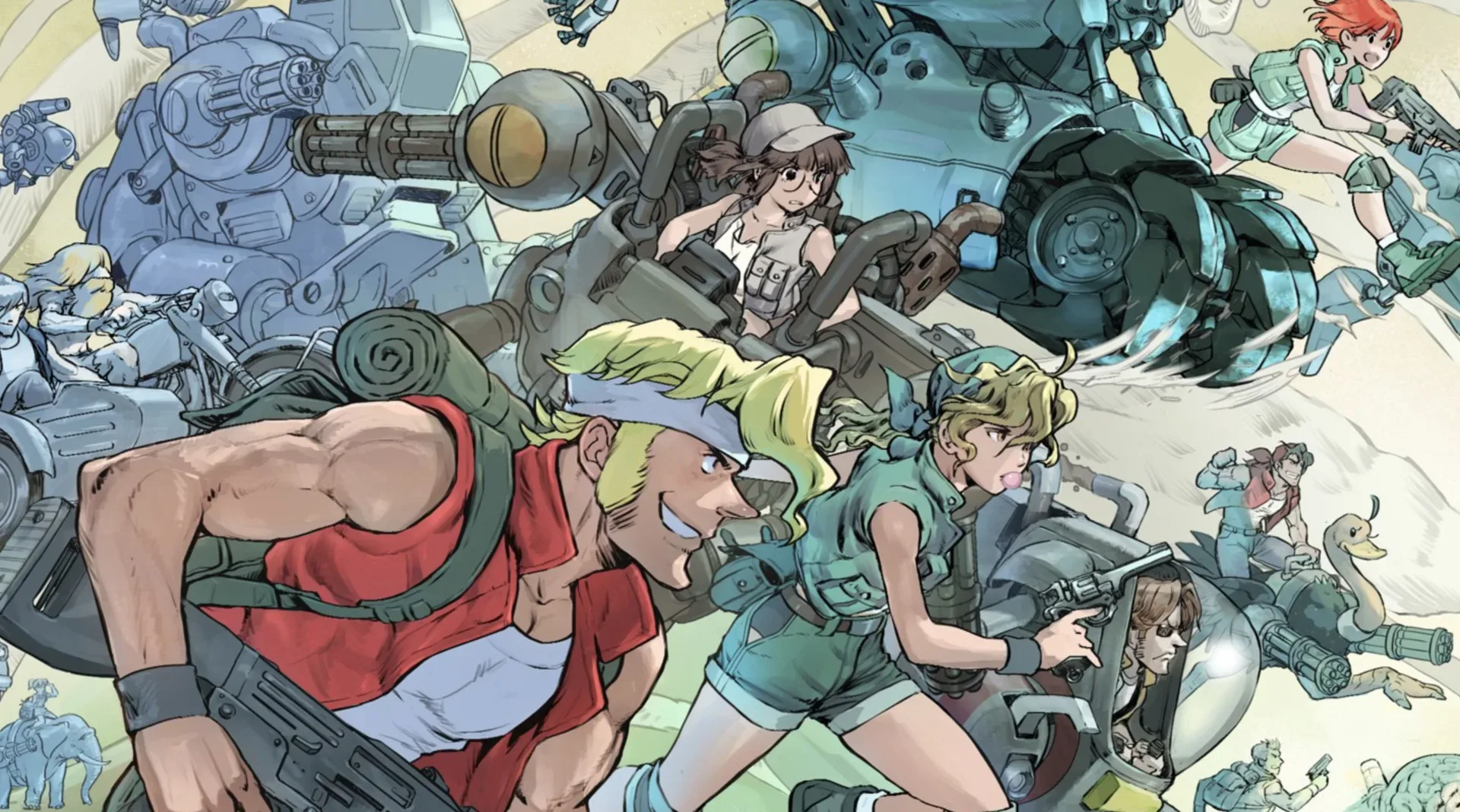
Human creative leadership remains a meaningful point across the industry, including projects outside game development; creative direction is also at the center of the planned Metal Slug movie. For Team Ninja, though, the argument is especially easy to connect to its work: a difficult action game only feels fair when its every input, animation and consequence has been shaped with care.
The practical standard players can apply
Team Ninja’s comments suggest a straightforward way to judge the outcome rather than the buzzword. Does the character do what the player reasonably expects? Are enemy actions readable enough to learn from? Does defending or attacking create a comprehensible path into the next decision? And after a defeat, does the player understand what could be improved?
Those questions do not require players to know which internal task used automation. They focus on the finished work: whether a game’s systems communicate clearly enough that failure feels like a challenge to meet rather than friction imposed by the software.
For now, Team Ninja’s answer to the AI question is cautious rather than absolute. It sees a place for the technology in repetitive QA and verification work, continues to evaluate how it should be applied, and maintains that the decisive work of making a game enjoyable belongs to people. In a genre where a fraction of a second and a single button press can determine whether combat feels exhilarating or exasperating, that human responsibility is the whole point.