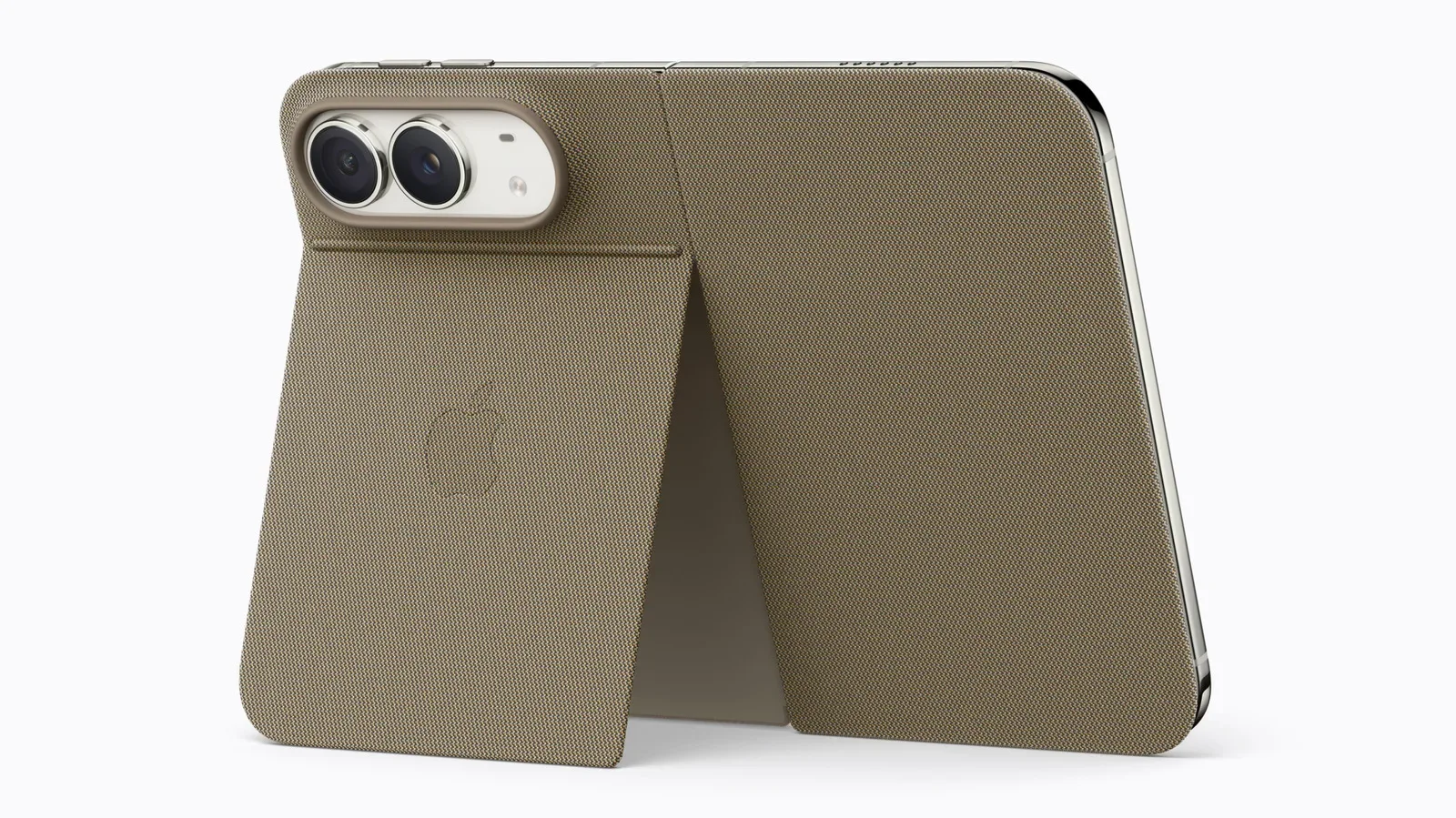
Apple has detailed two accessories designed specifically for iPhone Duo: the iPhone Duo Case and the iPhone Duo Folio with Kickstand. They approach protection and portability from noticeably different angles, though both rely on integrated magnets to line up with the foldable handset.
The timing is significant because a foldable phone changes the usual case-shopping checklist. Owners are not simply looking for a shell with a preferred color. A suitable accessory needs to account for a device that opens, closes, has front and rear surfaces to consider, and may be used in more than one physical orientation during the day. Apple’s newly described pair offers one option that wraps the device more completely and another that favors a slimmer rear-mounted cover with a built-in stand.
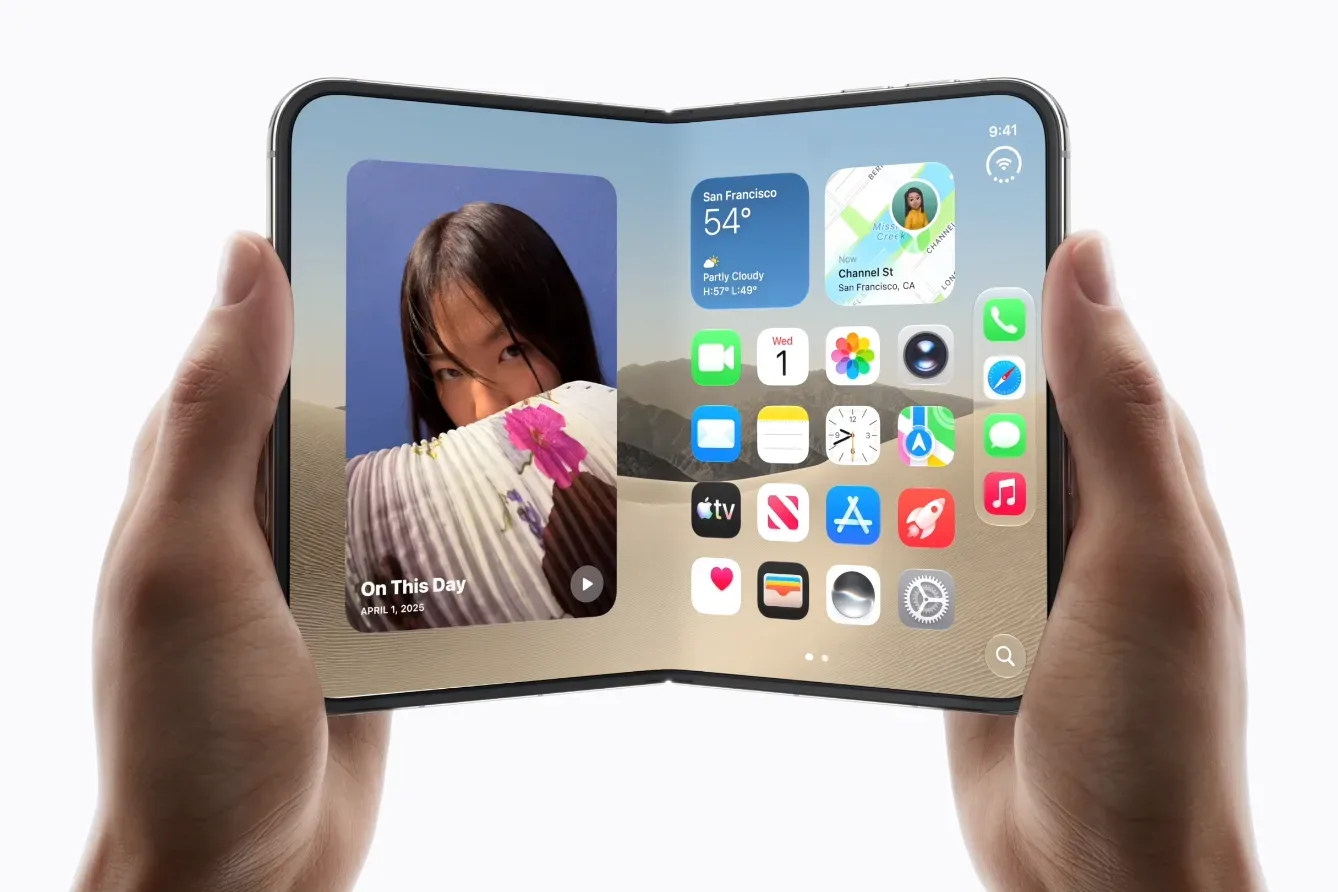
Neither the iPhone Duo Case nor the Folio with Kickstand is currently available. Apple has not provided a release date, preorder date, or price for either accessory in the details available so far. For the broader context around the foldable itself, see our coverage of the iPhone Duo’s 7.6-inch unfolded display and starting price.
Two accessory designs for a foldable routine
The iPhone Duo Case is the more conventional of the two in purpose, but not entirely in construction. It uses a thin, two-piece layout that covers both the front and back of the iPhone Duo. That means the accessory is intended to provide a more all-around physical layer than the Folio, which covers the device’s rear only.
Apple says magnets built into the Case align it with iPhone Duo. Magnetic fitting systems can matter on a device with a more elaborate shape than a single rigid phone slab: they are meant to help the separate components settle into their intended positions without making installation feel like a tiny engineering project at the kitchen table.
The Case is made from polycarbonate and has a matte coating. Apple lists two finishes: Sand and Navy Blue. Sand gives the lineup a light neutral option, while Navy Blue provides the darker alternative. No additional colors have been identified at this stage.
Its two-part format is arguably the defining feature. A folding phone involves two exterior sides when shut, and the Case is designed to wrap the front and rear accordingly. Apple has not provided further technical detail here about impact protection, thickness, weight, hinge coverage, drop-rating claims, or how the case may affect the device’s folded profile. Those are sensible questions for anyone choosing protection for a premium foldable, but they remain unanswered rather than features that can be assumed.
The Folio puts the stand at center stage
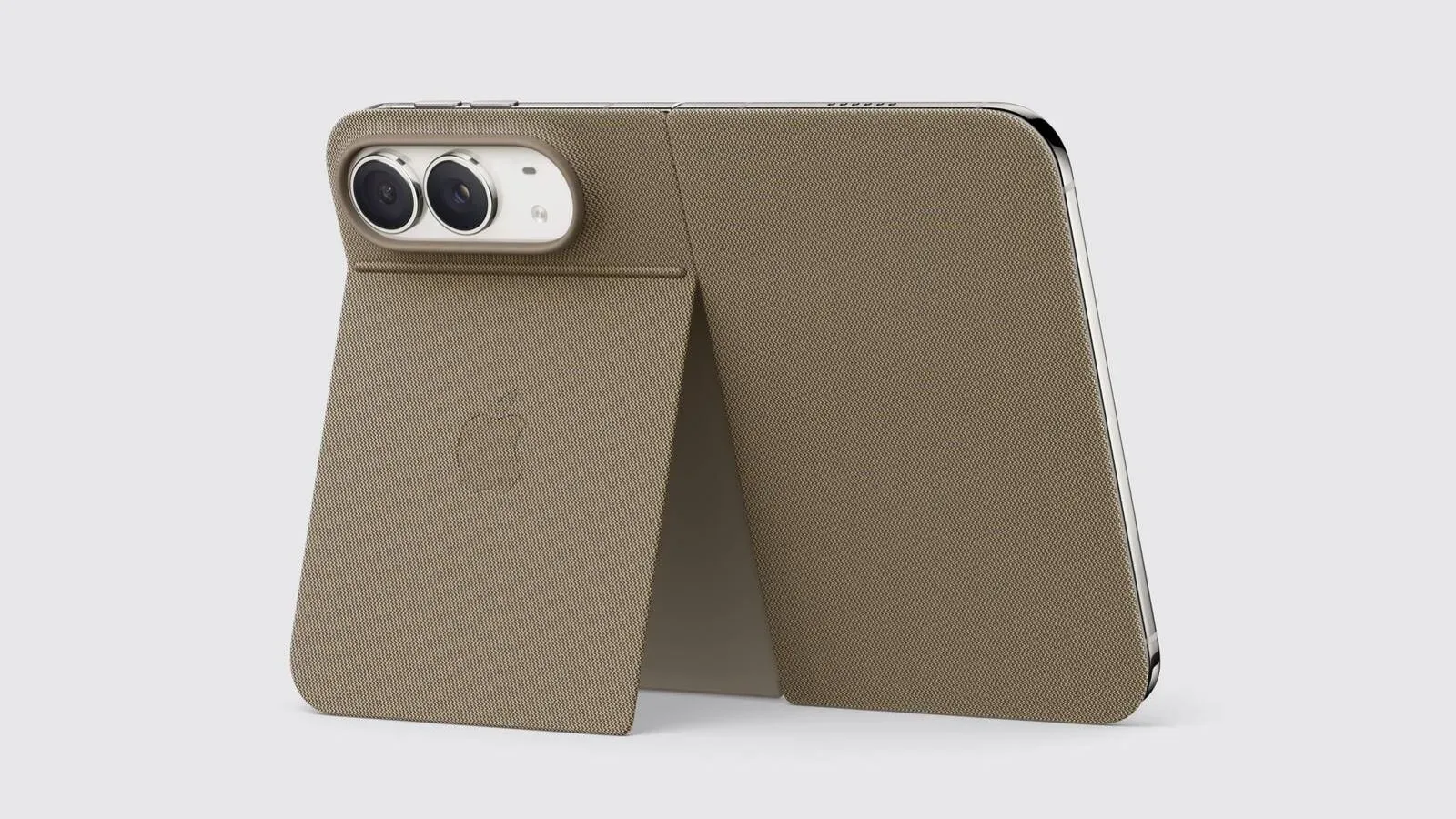
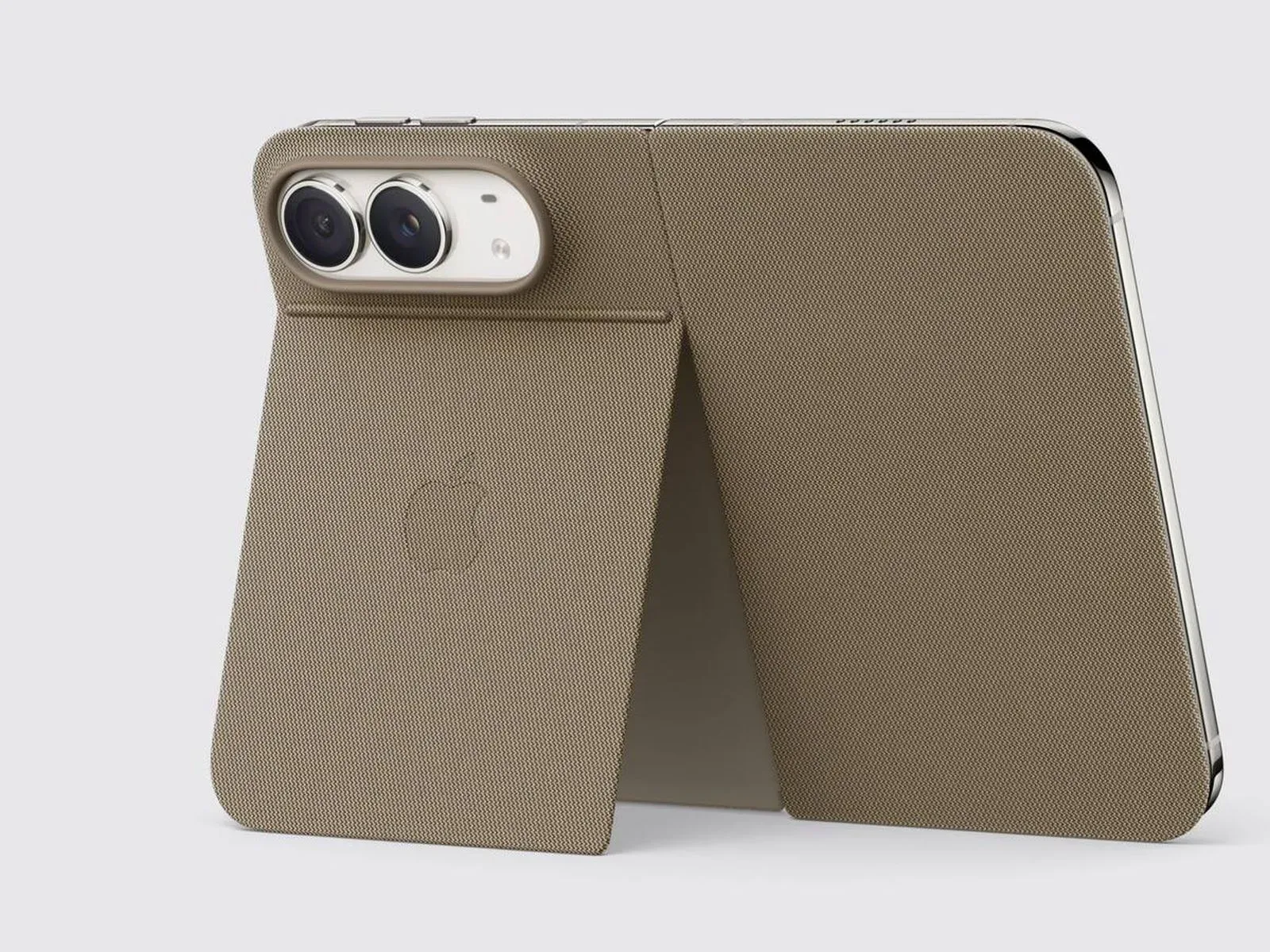
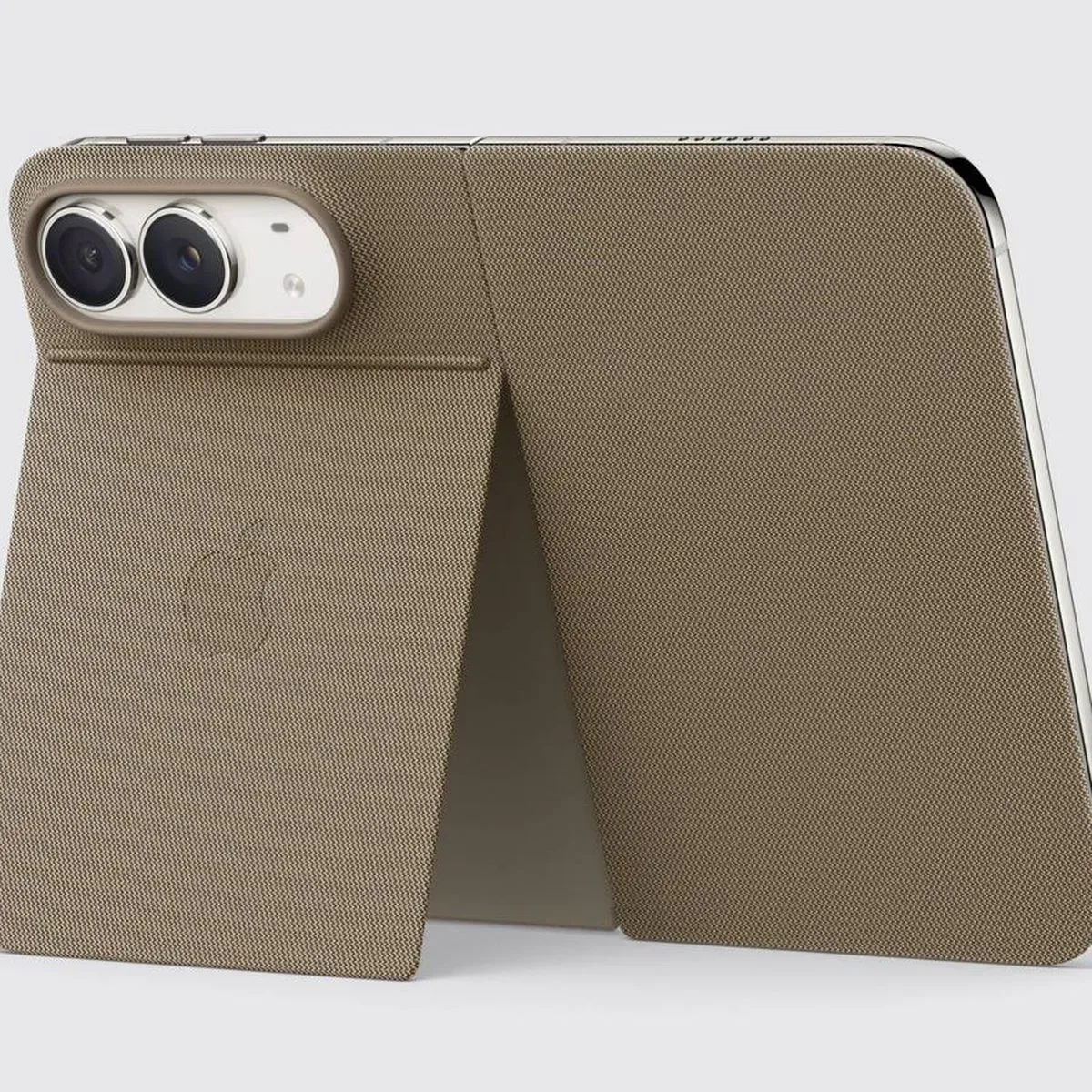
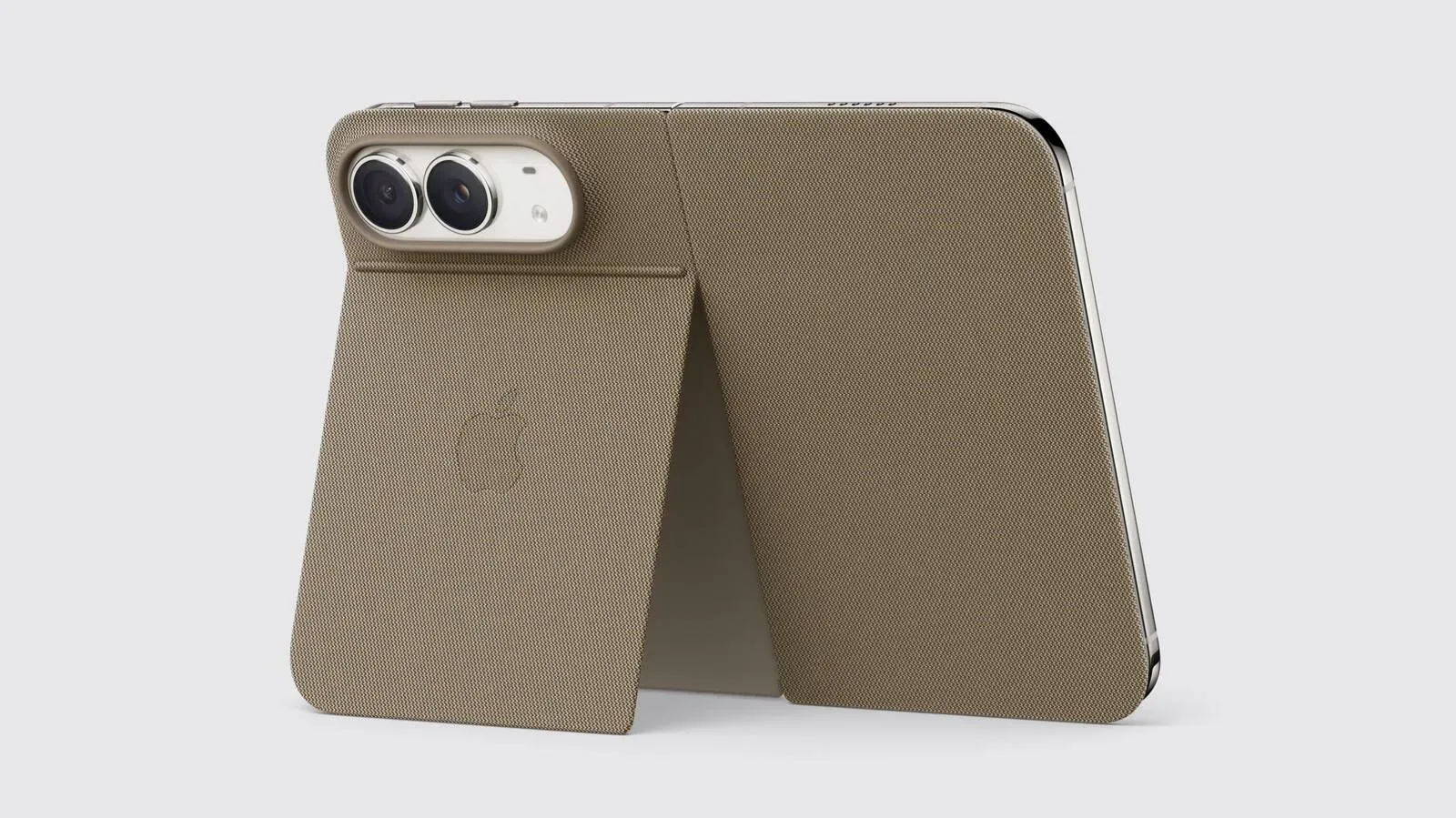
Apple’s other new option, the iPhone Duo Folio with Kickstand, has a more specialized job. Instead of surrounding the edges, it covers only the back of iPhone Duo. It is made with TechWoven, Apple’s custom technical fabric, creating a material distinction from the matte polycarbonate Case.
The key hardware addition is in the name: an integrated kickstand. When it is not being used, the stand snaps flush against the Folio. When opened, it can prop iPhone Duo at a range of angles. Apple specifically identifies reading, watching video, and FaceTime calls as the kinds of activities it is built to support.
That flexibility could be especially relevant to a large-screen foldable. A stand is not automatically essential, of course, and the supplied information does not state exact angles or positions. Still, the design signals an attempt to make the device easier to use without holding it continuously—whether it is serving as a reading screen, a compact video player, or a call display placed on a desk.
It also avoids one obvious concern around a magnetic, stand-equipped back cover: charging. Apple says MagSafe charging works through the Folio behind the kickstand, including while the stand is open. That claim is specific to the described setup and makes the Folio’s stand seem less like an obstacle that must be folded away before the phone can be charged.
The Folio with Kickstand will be offered in Taupe and Navy Blue. Taupe differentiates it from the Case’s Sand, even though both are restrained neutral-adjacent shades, while Navy Blue is shared between the two accessories. Buyers hoping to coordinate their setup can do so in blue; those preferring the lighter selections will be choosing between distinct colors and materials.
What each accessory appears built to prioritize
Based on Apple’s descriptions, the choice is less about one accessory replacing the other than about identifying a preferred daily use pattern. The Case puts coverage first, with its front-and-back, two-part construction. The Folio places more importance on a back-covering design, TechWoven material, and the kickstand’s adjustable viewing support.
- iPhone Duo Case: Thin, two-piece construction; wraps the front and rear; polycarbonate with a matte finish; magnetic alignment; available in Sand and Navy Blue.
- iPhone Duo Folio with Kickstand: Rear-only coverage; TechWoven fabric; magnetic alignment; flush-folding integrated stand with multiple angles; MagSafe charging claimed behind the open kickstand; available in Taupe and Navy Blue.
That concise comparison also makes clear what has not been announced. There is no stated pricing, no confirmation of a release schedule, and no supplied information on accessories beyond these two dedicated options. There are likewise no published measurements for the stand, the covers, or their added bulk. Anyone deciding between the two will need to wait for the retail listings and their full specifications rather than fill those gaps with assumptions.
Magnetic alignment is the common thread
Both products use built-in magnets for alignment with iPhone Duo. The shared attachment approach creates a common foundation despite their different materials and coverage. On the Case, magnets support the placement of the two-piece protective design. On the Folio, they support the rear cover while leaving the kickstand as the defining extra feature.
For a device category that can introduce unusual dimensions and a closing mechanism, attachment details are more than decorative marketing language. An accessory that needs precise placement may be easier to live with if its intended position is aided by magnets. Apple describes the experience in especially polished terms, but the practical takeaway is straightforward: the cases are designed to align magnetically with iPhone Duo.
MagSafe compatibility is only explicitly described for the Folio with Kickstand. Apple says charging can continue behind its kickstand when the stand is extended. The available information does not separately make the same charging statement about the iPhone Duo Case, so it would be premature to treat the Folio claim as a confirmed specification for both accessories.
Testing claim and the details still to come
Apple says both iPhone Duo accessories undergo thousands of hours of testing during design and manufacturing, in line with its wider case range. The statement applies to the Case and the Folio with Kickstand, although no breakdown has been offered for the types of tests performed or the standards used. It is a durability-process claim, not a published drop rating or a promise of protection against every kind of wear or damage.
The most immediate issue is availability. At present, the Case and Folio with Kickstand cannot be ordered. Their eventual arrival would give iPhone Duo owners a choice between a conventional protective wrap and a fabric-backed, stand-ready alternative, but precise timing is not yet confirmed.
Until Apple provides store pages with prices and fuller specifications, the confirmed picture is deliberately narrow: two colors per accessory, two different material approaches, magnetic alignment on both, and a MagSafe-through-kickstand claim for the Folio. For a new foldable, that is enough to establish the basic accessory strategy—one cover for broader front-and-back enclosure, and one designed to turn the phone into a more comfortable hands-free screen.