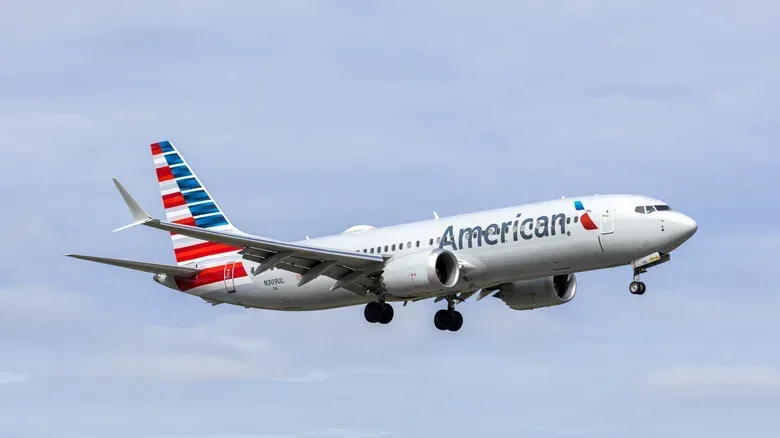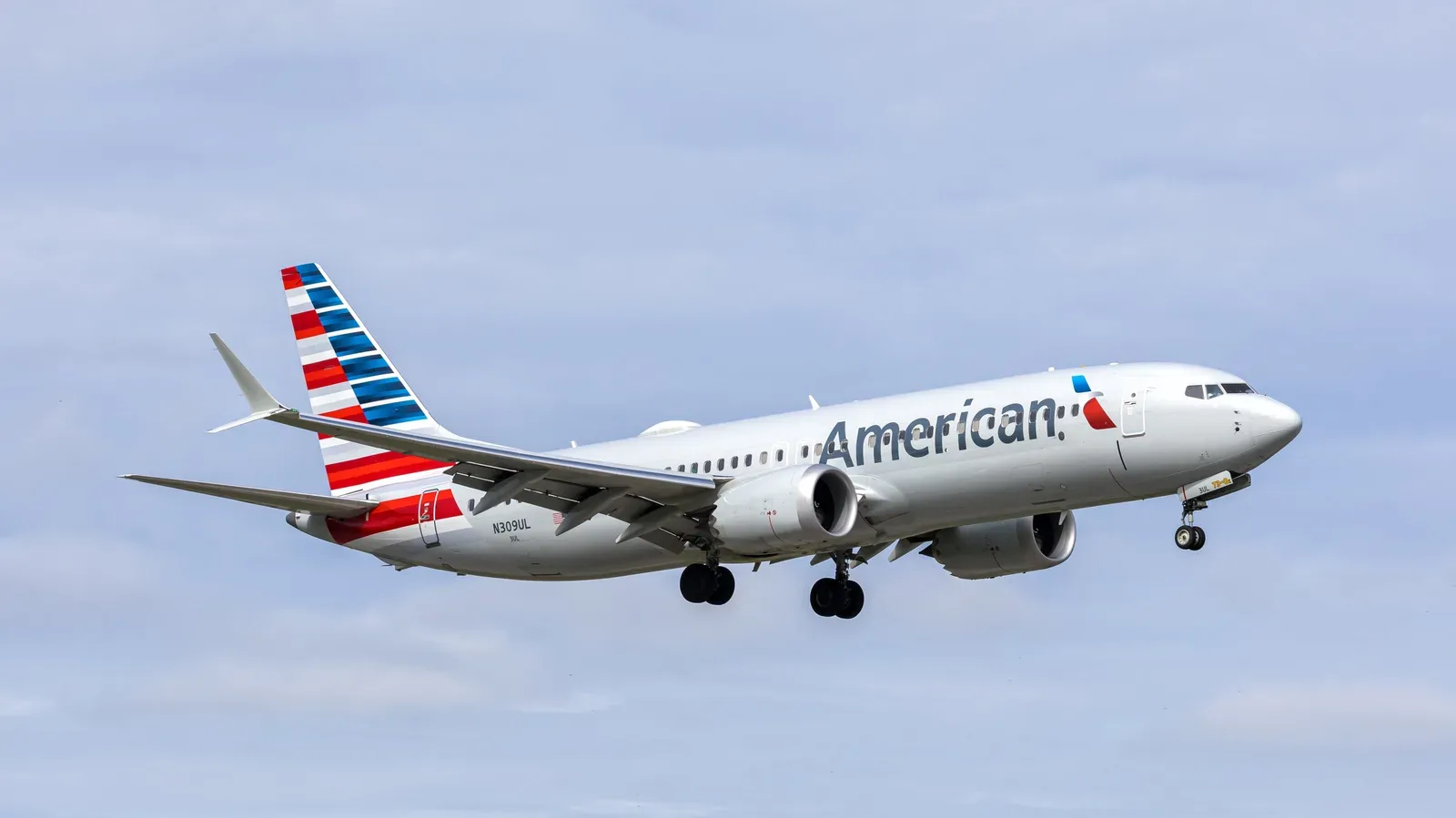
American Airlines plans to equip its entire mainline fleet with Starlink in-flight Wi-Fi beginning in 2027, a major expansion of an agreement that previously covered 500 aircraft. The carrier’s mainline operation includes more than 1,030 narrowbody and widebody planes, placing the commitment at more than twice the size of the number discussed earlier this year.
The planned service will use Starlink’s Performance Aero Terminal, with speeds described as reaching up to 1Gbps. That is a headline capability rather than a guarantee that every connected passenger will receive a gigabit-per-second connection at every moment of a flight. Still, it signals the scale of capacity American expects from the satellite system compared with older approaches to aircraft Wi-Fi.
A fleet-wide plan, not a limited trial
The significant detail is the breadth of the plan. American is not limiting Starlink to a selected cabin, a small group of premium aircraft or one part of its route network. The stated commitment covers its full mainline fleet, including both narrowbody and widebody aircraft.
Narrowbody planes are generally aircraft with a single aisle, commonly used on shorter and medium-distance services. Widebody aircraft have two aisles and are generally associated with long-haul flying. Covering both categories matters because passenger expectations can differ sharply by trip length: a connection that feels like a useful extra on a short flight can become much more important during a longer journey.
American carries more than 165 million customers annually. If the rollout is completed as outlined, those travelers should encounter a more consistent connectivity proposition across the airline’s mainline operation rather than having to guess which aircraft happens to provide the stronger Wi-Fi experience.
What “up to 1Gbps” actually means
Gbps means gigabits per second, a measure of how much data a connection can move in one second. It should not be confused with gigabytes: there are eight bits in a byte. The advertised figure is therefore a measure of potential network throughput, not a promise that each device onboard will receive that amount of bandwidth.
In an aircraft cabin, a connection is shared. Its real-world feel can depend on how many people connect, what they are doing, the conditions affecting the satellite link and the network capacity allocated to the aircraft. Messaging, web browsing, cloud-based work, streaming and downloading all make different demands on a connection. A stated maximum is useful for showing the system’s ceiling, but it does not settle questions about per-passenger performance, service tiers or access terms.
Those details have not been specified here. Travelers should therefore separate the confirmed fleet plan from open practical questions, including what Wi-Fi access will cost, whether it will be included for particular customer groups, and how the installation schedule will unfold aircraft by aircraft.
Why satellite connectivity changes the conversation
In-flight internet has long been shaped by technical limits. A plane is moving rapidly, passengers may be spread throughout the cabin, and each aircraft needs a dependable link while operating across many routes. Satellite-based service is intended to provide connectivity beyond the limits of ground-focused systems, particularly on flights where terrestrial coverage is less relevant or unavailable.
Starlink’s Performance Aero Terminal is the onboard equipment intended for aviation use. In simple terms, it is the hardware that allows the aircraft to connect with the satellite network. The terminal is central to the service: satellite capacity alone is not useful to passengers unless the plane has the equipment required to establish and maintain that connection and distribute it through its cabin Wi-Fi network.
For travelers who treat a flight as usable time, the practical appeal is straightforward. Reliable connectivity could make it easier to keep up with messages, deal with changing plans, access online documents or continue entertainment that depends on an internet connection. For passengers planning a gaming session around a trip, it may also make digital storefronts, cloud saves, launchers and online communities more accessible while airborne. That does not automatically mean every multiplayer game will be a smooth fit for flight, since responsiveness and stability matter as much as raw capacity.
That distinction is especially relevant for gaming. Bandwidth describes how much data a connection can carry. Latency is the delay between sending information and getting a response. A high-capacity connection can still feel less suitable for timing-sensitive competitive play if latency or connection consistency is poor. The available information emphasizes speed, not measured latency, so travelers should avoid assuming that “up to 1Gbps” answers every question about online play.
A notable shift from the earlier 500-aircraft figure
American had already signed a Starlink contract, but the earlier figure was 500 aircraft. The new plan covering more than 1,030 mainline planes represents a substantial increase rather than a minor extension.
It also comes after American previously agreed a deal with AT&T aimed at bringing high-speed Wi-Fi to members of its AAdvantage loyalty program. The newer fleet-wide Starlink plan indicates a change in the airline’s connectivity direction. The evidence available does not set out every commercial or customer-access detail behind that shift, so it would be premature to make assumptions about how loyalty benefits, eligibility and any future Wi-Fi policy will work.
For frequent fliers, the important immediate takeaway is consistency of intent: American is positioning fast satellite Wi-Fi as a mainline-fleet service rather than an exception. That may reduce the gap between the connection customers expect and the one they receive when a different aircraft is assigned to a route.
Starlink’s growing airline footprint
The American commitment arrives as satellite connectivity competition is becoming more visible across commercial aviation. Starlink already operates on 724 United Airlines aircraft, representing roughly 41% of United’s fleet. Worldwide, Starlink has partnered with 48 airlines.
American’s more than 1,030-aircraft mainline plan is therefore significant not only for its own passengers but also for the wider competitive picture. The move suggests that large-scale airline deployment is becoming an important measure of momentum for connectivity providers. A partnership can sound ambitious at signing, but broad installation across a mixed fleet is what determines how often passengers actually encounter the service.
SpaceX and Starlink did not secure Delta’s signature earlier this year; Delta selected Amazon Leo instead. That rollout is not expected to begin until 2028. The contrast illustrates that the market is not settled around a single provider, even as Starlink adds airline agreements and expands its installed footprint.
For passengers, provider competition could matter less than outcomes: whether access is simple, whether the connection remains dependable under load, and whether service terms are clear. But for airlines, connectivity can become a more visible part of the onboard experience, particularly as customers bring more devices and expect continuity between ground and air.
What has been confirmed—and what has not
There are several firm points in the plan:
- American Airlines intends to begin equipping its full mainline fleet with Starlink Wi-Fi in 2027.
- The mainline fleet includes more than 1,030 narrowbody and widebody aircraft.
- The service is expected to use Starlink’s Performance Aero Terminal.
- The cited potential speed is up to 1Gbps.
- The scale is more than double the earlier 500-aircraft commitment.
There are also key points that remain unclear from the available information:
- How quickly individual aircraft will be equipped after the rollout starts.
- Whether access will be free, paid, loyalty-linked or divided into different service options.
- How connection performance will vary among routes, flights and levels of passenger demand.
- What latency and stability will look like for real-time activities such as competitive online gaming or video calls.
Those caveats do not diminish the scale of the fleet commitment. They simply frame it properly. A plan covering an entire mainline fleet is a major operational decision, while the day-to-day customer experience will depend on installation progress and the eventual rules governing use.
What it could mean for connected travelers
Air travel often forces a sharp break from connected routines. A stronger satellite service could soften that break, allowing passengers to use more of the online tools and entertainment ecosystems that now shape work and leisure. The value may be especially apparent on longer flights and for people juggling travel with time-sensitive personal or professional tasks.
It may also alter how passengers judge airline Wi-Fi. Earlier expectations often centered on basic messaging or a connection good enough for light browsing. A service marketed around substantially greater capacity invites a higher standard: passengers may expect more routine access to the services they use on the ground, even if cabin-wide conditions mean results vary.
For the gaming audience, the useful approach will be practical rather than speculative. Download updates and games before departure when possible, keep offline options available, and treat any onboard connection as a potentially helpful bonus until its performance is known on a particular flight. That remains sound advice even as aircraft connectivity improves. The bigger change is that a fleet-wide satellite rollout could make the bonus far more common.
American’s 2027 plan is ultimately about scale. More than 1,030 mainline aircraft are slated for Starlink, replacing a 500-plane figure with a commitment that encompasses the carrier’s full mainline operation. Whether passengers are checking in with friends, catching up on work, or trying to keep a digital routine intact at cruising altitude, the promise is a much more capable connection across a far larger share of the airline’s flights.
For more on how connectivity-related hardware can affect gaming use cases, see our look at the Nothing Ear (3)’s low-lag mode and gaming implications.