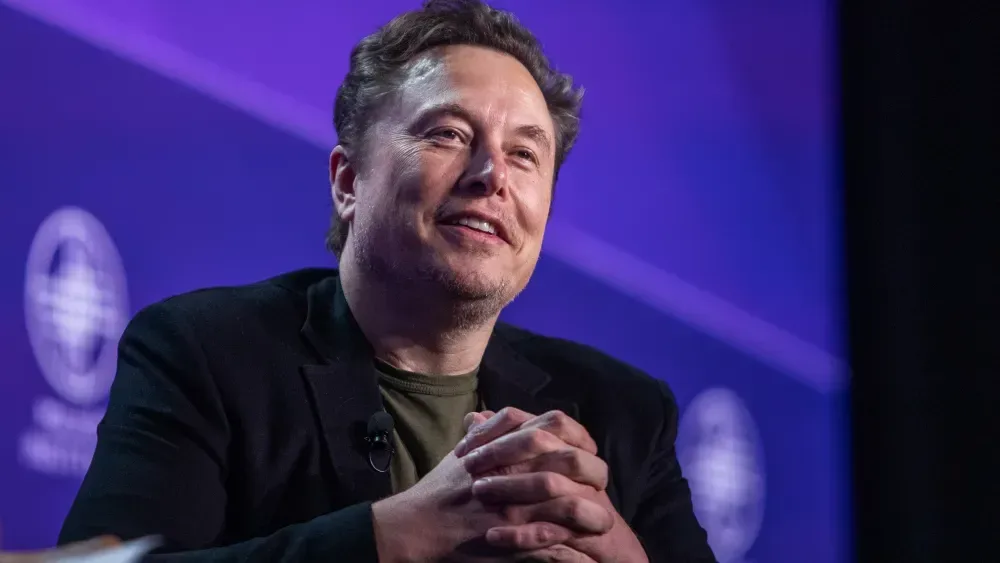
Elon Musk has described his nearly $500 million outlay in the 2026 midterm elections as something he feels “pretty foolish” about after Republican candidates suffered sweeping losses and Democrats took control of both the House and Senate.
The remark is notable not simply because of the scale of the spending, but because Musk paired it with an unusually blunt admission about the uncertain payoff of political money. He said he did not see much return from the expenditure, before adding an important qualification: it was possible, he suggested, that the outcome might have been worse for Republicans without it.
That second thought matters. It is not a claim that the spending changed any particular race, and it does not resolve whether it was effective. Instead, it captures the problem at the heart of evaluating major campaign expenditures: a losing side can argue that money limited the damage, while critics can point to the final result as evidence of an unsuccessful strategy. Neither position can be settled from the total alone.
Musk’s spending included $200 million aimed at defeating Texas Senator-elect James Talarico. The midterms nevertheless ended with Democrats winning nationally, making Musk’s post-election assessment a rare public acknowledgment of the distance between an enormous political investment and a preferred electoral result.
A political identity Musk says is not party loyalty
During his appearance, Musk also rejected the MAGA label, saying he is “not MAGA.” He framed the distinction around what he called blind adherence to a Republican policy agenda, arguing that he does not have it and that both major parties contain positive and negative elements.
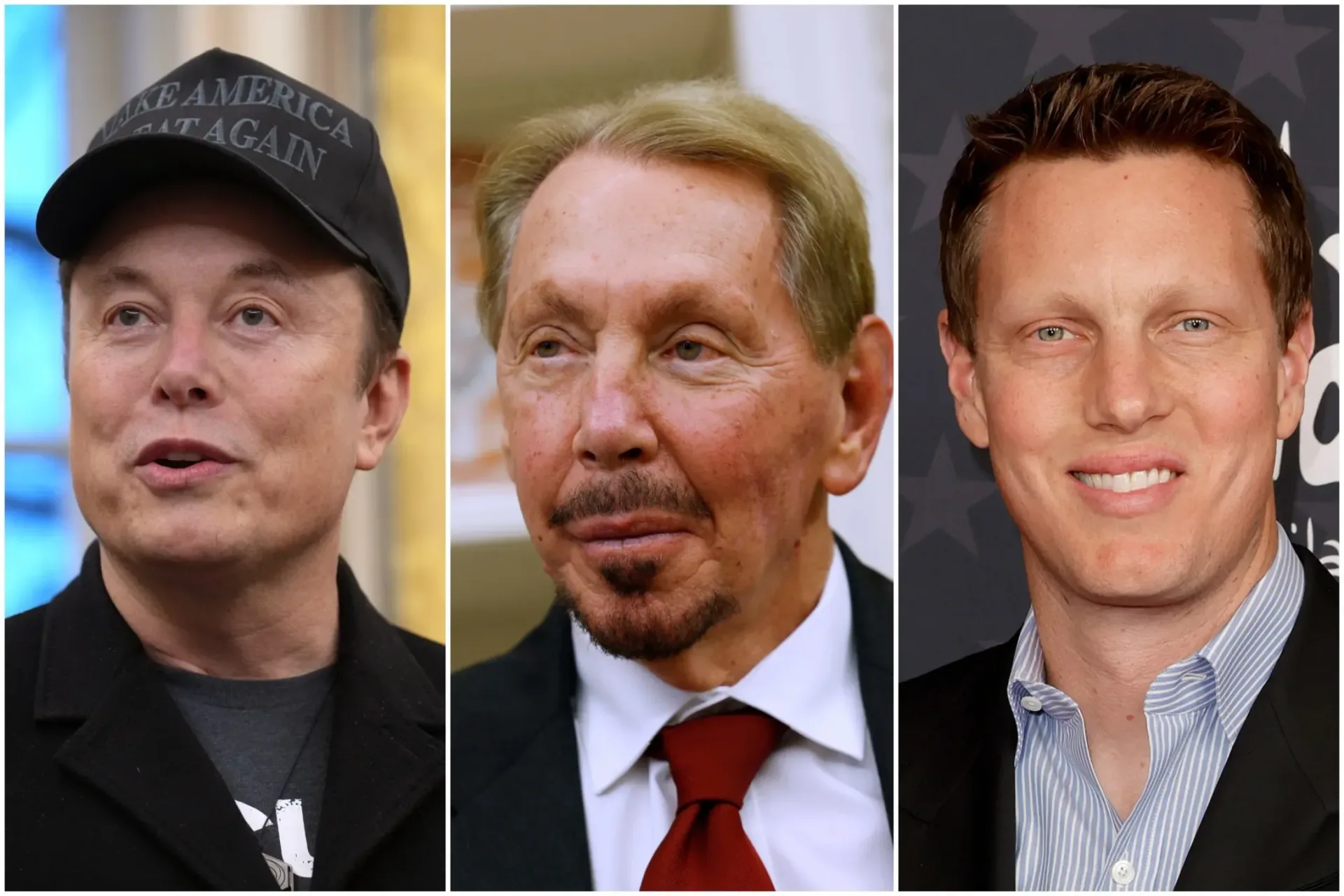
His comments sit alongside a public record described in the supplied material: Musk has worn “Make America Great Again” hats at public events and previously led DOGE, the Trump administration’s ad-hoc cost-cutting department. He served in that role for several months in 2025 as a special government employee before leaving amid a dispute with President Donald Trump.
The tension between the label Musk rejects and the associations people draw from his actions is central to why his comments will attract attention. “MAGA” can function as a broad political identifier in everyday discourse, while Musk presented a narrower definition focused on complete alignment with Republican Party policy. Those are not necessarily the same definition, and the difference helps explain why people can look at the same political activity and reach different conclusions about what it signifies.
Musk also criticized what he described as the tribal nature of politics. His comparison was to hometown sports fandom: people can become so invested in a side, he argued, that they refuse to recognize merit in an opponent or faults in their own camp.
Related coverage includes Elon Musk Reflects on $500M Midterm Spending, Politics and Tesla-SpaceX Talks.
It is an analogy with an obvious gaming-era parallel. Team loyalty can turn a discussion about hardware, exclusives or corporate strategy into a contest where changing one’s mind feels like betraying a faction. In electoral politics, however, the stakes are substantially broader than an argument over a console dashboard. Musk’s point was about partisan behavior, not a claim that political choices are entertainment; the sports-team metaphor is a description of tribal incentives, not a reduction of their consequences.
Texas receives a more conciliatory assessment
Despite backing Republican efforts in the midterms, Musk offered a comparatively reassuring assessment of Gina Hinojosa, Texas’s newly elected governor. He said he expected her to be moderate rather than far-left and that, based on what he had heard, Texas would be fine under her leadership.
That comment gives a little more texture to his insistence that he is not bound to a single party’s outlook. It does not erase the immense amount he spent helping Republicans, nor does it establish agreement with Hinojosa’s agenda. It does show that his immediate response to the Texas result was not presented as a prediction of catastrophe.
For businesses with substantial operations, political transition can create questions about regulation, infrastructure, labor, taxation and long-term planning. Musk did not set out specific policy expectations for Texas in these remarks, so readers should not infer detailed positions from the endorsement of moderation alone. The clearer takeaway is narrower: he expressed confidence that the state would be fine with its new governor.
Tesla and SpaceX merger talks remain exploratory
Musk also revisited the prospect of combining Tesla and SpaceX, saying the companies are exploring a potential merger. He described growing areas of interaction and overlap between them, and contrasted his current thinking with how he would have answered the question five years ago, when he said he would have seen no purpose in bringing them together.
A merger is a legal and corporate combination of separate companies into one organization. Musk’s stated test was whether Tesla and SpaceX would execute better together and create more value than they would apart. He said that decision would ultimately belong to shareholders.
The available information does not specify what a combined organization would look like, what operations might be integrated, or whether a transaction will occur. “Exploring” a merger is not the same thing as announcing an agreed deal. That distinction is especially important with companies of Tesla and SpaceX’s scale: a conceptual business case, negotiations, shareholder decisions and an actual completed combination are separate steps.
Entertainment and games audiences have become accustomed to corporate-consolidation stories, particularly when ownership changes can affect creative studios, distribution or subscriptions. The supplied material also identifies Musk as an investor in Skydance, the company formed through the megamerger of Paramount and Warner Bros. Discovery. Skydance itself was not discussed during Musk’s appearance, but the disclosure places his business interests across technology, transportation, space and entertainment. For a separate example of how leadership changes are being framed across the screen-business landscape, see this report on Rola Bauer’s creative director appointment at the Monte-Carlo Television Festival.
Starlink, Starshield and the question of control
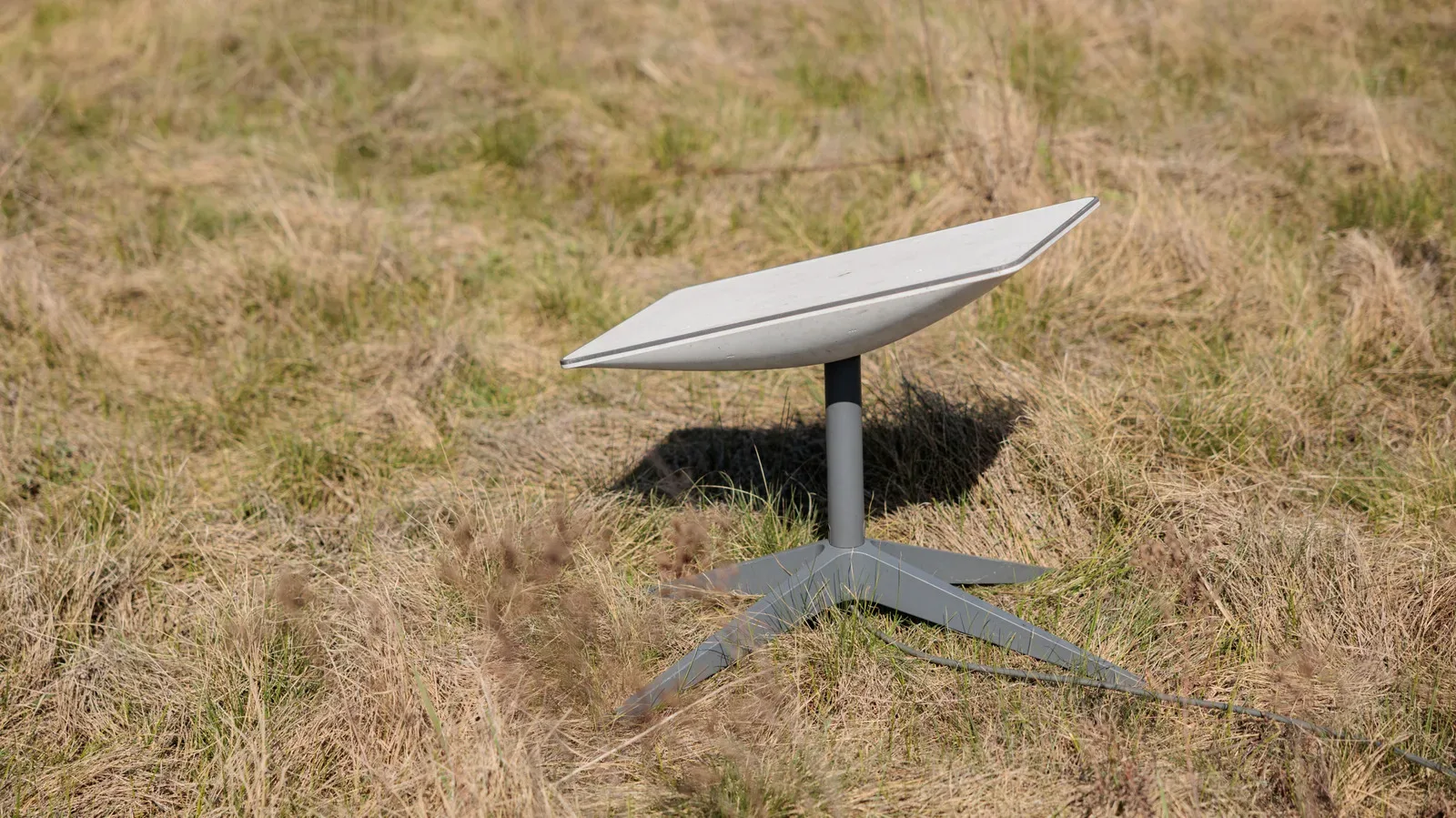
Another consequential topic was Starlink’s restrictions on satellite internet access for Ukraine’s military during Russia’s war on Ukraine. Musk described Starlink as a civilian system and said it was not intended for offensive drone strikes that kill people.
He contrasted Starlink with Starshield, which he described as a separate system controlled by the U.S. government. Musk’s argument was that requests involving lethal military decisions should go through that government-controlled system rather than be placed on him as a private individual.
The technical distinction he drew is also a governance distinction. Satellite internet can be civilian infrastructure while still becoming relevant to a conflict when military users rely on connectivity. Musk’s comments focus on where he believes decision-making authority should sit when access may facilitate offensive action: with a government-controlled system rather than a privately managed civilian service.
That stance does not remove the controversy around restrictions, but it explains the rationale Musk offered. He emphasized the possibility of innocent lives being lost, not only soldiers, and characterized the choice as one he did not want to make personally.
Musk defends Jensen Huang’s leadership value
Musk was also asked about Nvidia CEO Jensen Huang’s resignation after revelations that he had engaged in several affairs, including one with an alleged Chinese spy and one with an Nvidia employee. Musk, who has suggested Huang should return as Nvidia’s CEO, compared removing him from the role to “kicking Michael Jordan off your team,” while acknowledging that Huang had made mistakes.
The analogy makes Musk’s position clear: he sees Huang as an exceptionally valuable executive whose leadership ability should weigh heavily in evaluating his future. But Musk did not argue that the reported conduct was insignificant; he explicitly said Huang had made mistakes. His comments therefore separate two questions that often get collapsed into one during executive scandals: whether conduct warrants consequences, and whether an organization should permanently lose a leader it considers unusually capable.
Nvidia’s importance to artificial intelligence makes the leadership question relevant far beyond the company itself. Still, the remarks supplied here do not establish any decision about Huang’s future or Nvidia’s response beyond the reported resignation. Musk’s intervention is a view from another major technology leader, not an announced corporate resolution.
A candid, complicated snapshot
Across politics, corporate strategy and military communications, Musk’s appearance produced a consistent theme: he repeatedly framed his position around independence from rigid affiliation or responsibility. He said he is not committed to party orthodoxy, argued that a potential Tesla-SpaceX combination should be judged by execution and shareholder value, and said lethal-use decisions should be handled through government-controlled Starshield rather than civilian Starlink.
His admission on campaign spending is the most immediately striking part because it comes with a number large enough to dominate the discussion: nearly $500 million, including $200 million in a Texas Senate contest. Yet his own wording leaves the results unresolved. Musk called the experience foolish, but also held open the possibility that his spending prevented a larger defeat.
What is beyond dispute in the supplied account is that the 2026 midterms did not produce the Republican outcome Musk had backed. His response was not a full retreat from political engagement or a detailed recalibration of future plans. It was, rather, a candid recognition that extraordinary spending did not deliver an obviously satisfying result.