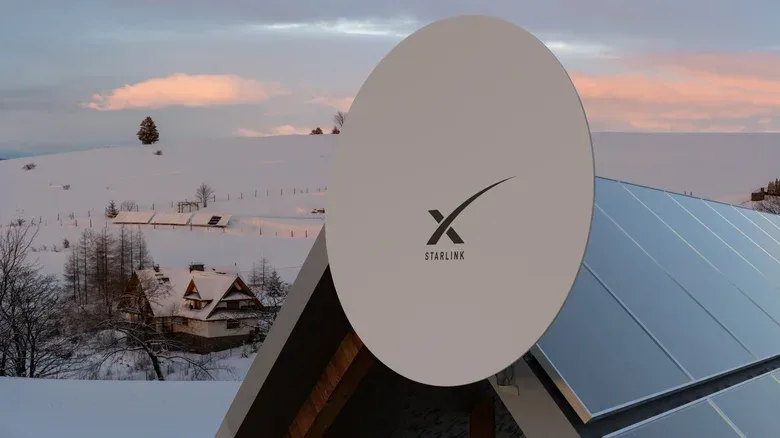

Starlink’s public-facing price story has changed dramatically since its 2020 debut, though it has not simply become cheap satellite internet. In the US, the lowest listed residential plan now starts at $55 per month, compared with the $99 monthly charge attached to the original public beta. That is a $44 monthly difference, or $528 across a year before equipment, taxes and other variables enter the equation.
The catch is that Starlink pricing now has more moving parts than the beta-era proposition. Customers can choose from residential tiers with different speed limits and network treatment. Rates can differ by location. New subscribers may encounter promotional pricing, while existing customers can face later changes tied to their region. And the hardware can be rented in some areas rather than purchased outright, shifting a large upfront expense into an ongoing obligation.
That means the headline comparison is true but incomplete: the least expensive monthly residential option is lower than it was in 2020, yet two households can still pay very different amounts for service that carries the same Starlink name.
2020: a $598 way into the “Better Than Nothing Beta”
Starlink opened its public beta in October 2020 under the unusually candid label “Better Than Nothing Beta.” The name set expectations for an early service that could provide a meaningful alternative where conventional connections were poor, while also warning that it was not fully dependable. Customers were told to expect download speeds between 50 Mbps and 150 Mbps, latency of 20 to 40 milliseconds, and occasional stretches with no connection at all.
Mbps, or megabits per second, measures data-transfer speed. It is the number typically used to describe how quickly a connection can download data. Latency measures delay: in this case, the time it takes data to make the relevant trip through the connection. For interactive uses such as online gaming, voice chat and remote control, lower latency generally matters as much as raw download speed. A connection can look quick in a download test yet feel unreliable if its response time varies or it drops entirely.
Joining that beta required a $499 hardware purchase. The kit included Starlink’s original circular dish, a mounting tripod and a Wi-Fi router. Add the first $99 service payment and the immediate cost was $598, excluding shipping and taxes. If the monthly price had remained unchanged, the first-year total would have been $1,687 including the kit.
Importantly, the 2020 arrangement was ownership, not rental. The customer paid for the hardware and kept it. That did not erase the sizable entry price or the beta’s stated outage risk, but it is a major difference from a modern rental arrangement. A buyer evaluating the old offer had a large first payment followed by a flat monthly fee; a customer considering current plans may have little or no initial equipment payment in eligible areas, but may continue paying for use of hardware they do not own.
For homes already served by reliable cable, fiber or 5G home internet, the early proposition could be hard to justify. For people limited to slow DSL or inconsistent cellular connectivity, the calculation could be different. Even a service openly framed as imperfect could have value when the alternatives were worse or unavailable.
Prices did not move in one direction
The road from the $99 beta plan to today’s $55 entry tier was not a steady discount. In March 2022, Starlink raised the residential monthly price to $110, with the change taking effect for existing users in April. Hardware also rose to $599 for new users, or $549 for customers who already had deposits. The company attributed those increases to inflation.
By 2023, residential service had already adopted a capacity-based split: $90 in areas with excess network capacity and $120 in areas with limited capacity. Capacity is central to understanding why a nationwide-looking advertised price does not guarantee a nationwide bill. A satellite network has finite resources available to serve people in a given area. When more demand competes for those resources, the service can be priced differently than it is where there is more room on the network.
That approach has become even more visible in 2026. The listed starting rate is indeed below the 2020 beta subscription, but local demand and promotions can alter what an individual pays. The useful comparison, then, is not only “2020 versus 2026.” It is also “this address, this tier and this equipment arrangement versus another address, tier and arrangement.”
What the 2026 residential tiers include
Starlink currently presents three main residential options:
- Residential 100 Mbps: $55 per month.
- Residential 200 Mbps: $85 per month.
- Residential Max: $130 per month.
All three plans include unlimited data. The first two have defined speed limits, while Residential Max has higher network priority and is described as capable of 400 Mbps or more in suitable conditions.
Network priority is a description of how traffic is treated when network resources are under pressure. In practical terms, a higher-priority plan is positioned to receive preferential treatment relative to lower-priority traffic. It should not be read as a blanket promise that every home will always reach the highest cited speed. The Max plan’s 400 Mbps-or-higher figure is explicitly conditional on suitable conditions.
The 100 Mbps and 200 Mbps labels make the lower plans easier to understand at a glance, but buyers should not mistake the tier name for a complete account of connection quality. Speed is one part of the experience; latency, stability, local network conditions and any service interruptions remain relevant. The original beta made that reality unusually explicit, and the broader lesson remains useful when comparing internet plans.
In May 2026, the three residential rates increased by $5, $5 and $10 respectively. Later, in October, additional location-based adjustments were announced. Some Residential Max subscribers were told their bills would rise to $156 per month, while others were told their price would decrease. The listed $130 Max rate is therefore a reference point, not a guarantee of the same final charge in every location.
Rental reduces the opening cost, not necessarily the long-term commitment
The hardware model is among the most consequential differences between the two periods. Rather than requiring every new household to spend hundreds of dollars for a dish before service begins, Starlink now offers equipment rental in several regions. Some qualifying orders have been available with no equipment payment due upfront.
That may make the service more accessible for a household that cannot or does not want to commit to a hardware purchase. But “no upfront cost” is not synonymous with “free equipment.” A $10 monthly rental charge was introduced in June 2026, although the fee was reportedly waived for some new orders in July. More fundamentally, rented equipment remains Starlink’s property.
Subscribers who cancel must return the entire kit within 30 days or pay its retail price. That return condition is a meaningful planning detail. Ownership can mean a large initial bill and retained hardware; rental can soften the initial cash outlay but leaves the subscriber responsible for returning a complete kit at the end of service. Anyone comparing the two models should distinguish monthly service cost from hardware access cost.
Promotional pricing can be useful—and easy to misunderstand
Promotions add another layer. Some new subscribers have received discounts of as much as 50% through November 30, 2026. Certain discounts can last as long as the qualifying subscription remains active. That is potentially valuable, but it does not turn a temporary or eligibility-based offer into the standard regional price.
Existing subscribers on limited-time deals keep their discount until the offer ends. Afterward, regional pricing applies. Changing plans while on a promotion can also end the discount. Put plainly, the price shown at checkout should be treated as the beginning of the question, not the final answer. The plan’s regular regional rate, the discount’s duration, whether switching tiers changes eligibility, the rental terms and the equipment-return requirement all affect the true cost of choosing the service.
This is particularly important for anyone whose internet connection supports a gaming PC, console downloads or other bandwidth-heavy household use. The monthly plan tier is only one component of a home setup. Hardware upkeep is separate, too; desktop owners looking after the rest of their system can review this guide to cleaning a PC GPU safely. A faster connection cannot solve a local hardware problem, just as a clean PC cannot resolve a location-specific network constraint.
Roam is priced differently because it is a different proposition
Starlink also offers portable Roam plans, which should not be folded into the residential comparison. Roam is available for $55 per month with 100GB of high-speed data; speeds decrease after that high-speed allowance is used. Roam Unlimited costs $175 per month for those who do not want that cap.
The distinction matters because residential plans are described as unlimited-data home options, while the $55 Roam plan has a defined high-speed-data allotment. Similar-looking monthly prices can represent very different trade-offs. Comparing them requires checking not just the dollar figure but whether the plan is intended for a fixed home connection or portable use, and whether high-speed data is unlimited or capped.
The practical takeaway: availability remains the product
The strongest case for Starlink remains availability rather than a universal claim of being the least expensive home internet option. Cable, fiber and 5G home internet can cost less or provide a better fit where they are readily available. Satellite service becomes more compelling where conventional broadband is slow, unstable or absent.
From 2020 to 2026, Starlink has moved from a $499 hardware purchase plus a $99 beta subscription—and explicitly acknowledged interruptions—to a menu of speed tiers, regional pricing, promotions and possible equipment rental. The cheapest residential subscription is $44 per month lower than the public beta’s price. Yet a prospective subscriber should not stop there. The relevant number is the total arrangement available at their location: the local monthly rate, any promotional end date, the plan’s speed and priority, the equipment terms, and the cost or responsibility that follows cancellation.