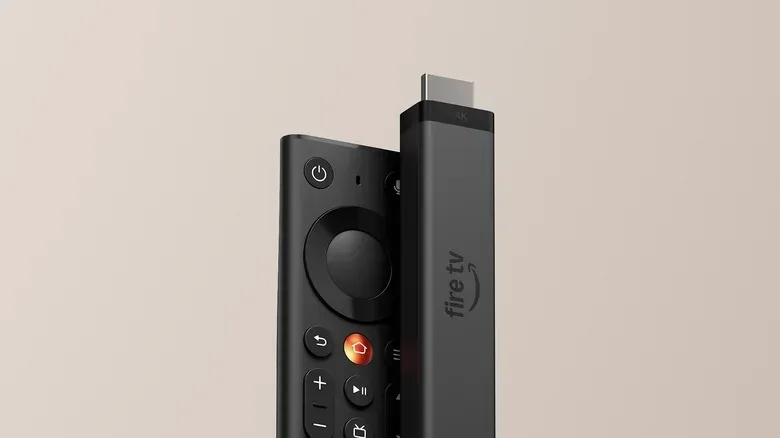
Amazon has introduced a refreshed Fire TV Stick 4K, framing the compact streaming player as part of a newer generation of Fire TV hardware. The headline changes are familiar but meaningful for anyone who has watched a streaming box take an awkwardly long pause before opening an app: a slimmer body, updated internal hardware, Wi-Fi 6 support and company-claimed gains to startup, app-launch and playback speed.
The new stick is priced at $60 at retail. Amazon says it will be offered for $30 during next week’s Prime Big Deal Days event. It is available to order in the US, Canada, Japan, Mexico, the UK, Ireland, Germany, France, Italy, Spain, Switzerland, Australia and New Zealand, with US shipments expected to begin in late October.
For console players, PC users with a living-room display, and anybody whose television has become a permanent home for video apps, the practical appeal is not that a streaming stick turns a TV into a gaming machine. It is that the small device handles the part of screen time that happens before, after and around playing: catching a show, putting on a stream, changing inputs less often, or using a separate interface when a TV’s built-in software is sluggish. Amazon’s claims therefore deserve attention, but also a sensible amount of raised-eyebrow calibration.
The speed claims are specific, but they are still Amazon’s claims
Amazon says the new Fire TV Stick 4K turns on faster than earlier models, launches apps more than 35 percent faster and begins content playback almost 20 percent faster. It also says the device is roughly 20 to 40 percent faster than a similarly priced 4K streaming stick from another major brand.
The company further says it compared its new player with the built-in software experience on three top-selling 4K smart TVs. Using the three most popular apps on Fire TV as its measure, Amazon says the Stick played content faster on average than each of the televisions it tested.
Those numbers may sound like a clean scoreboard, but they should be read as manufacturer performance claims rather than a universal guarantee. The details of the test method have not been provided here: there is no outlined list of comparison devices, app versions, network conditions, test repetitions or definition of precisely when playback was judged to have started. Each of those variables can alter the time a person experiences between pressing a button and seeing something on screen.
That does not make the comparison useless. It simply defines what it is. The announcement establishes the direction Amazon is pursuing: reducing everyday interface delay. A user is more likely to notice a faster app launch than a theoretical specification bump, because app launches, home-screen navigation and starting a video are repeated constantly. Whether the advertised percentage improvements hold in a particular home will depend on factors beyond the stick itself, including internet service, wireless coverage and the app being opened.
Why faster menus matter more than a spec-sheet duel
Streaming hardware often lives or dies on friction. A 4K television can have an impressive panel while its built-in interface gradually feels heavier, more crowded or less responsive than the display deserves. A separate stick gives the owner another route to apps and media playback without replacing the television.
For gaming households, that separation can be particularly handy. A console may remain the preferred device for games, while the Fire TV stick occupies an HDMI input for video services and Alexa features. That does not require treating the new stick as a console replacement; the announcement does not position it as one. Rather, it can be an inexpensive way to give a TV a current, dedicated streaming interface, especially if the built-in interface is the part that feels slow.
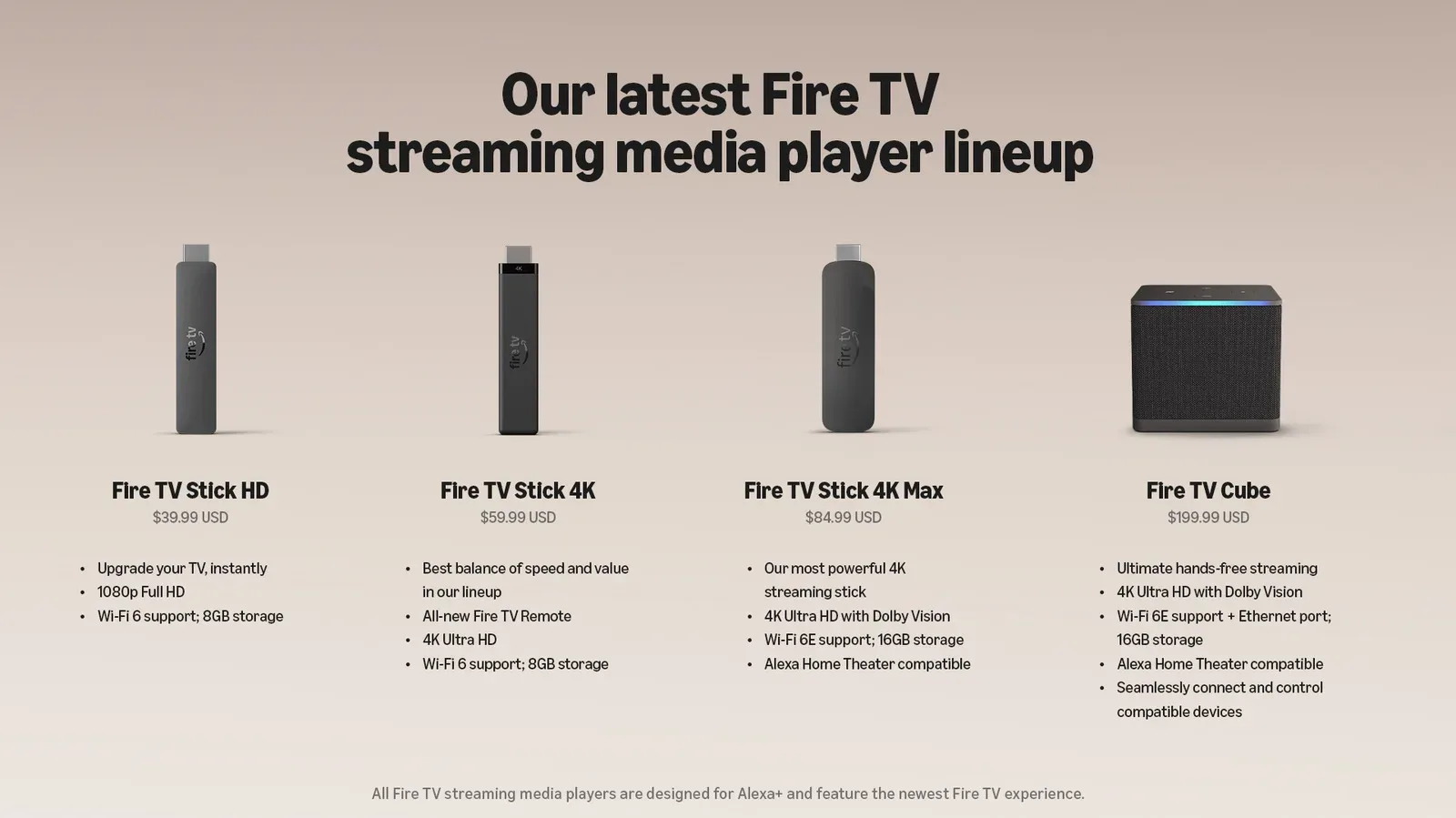
Amazon is also simplifying the naming around its 4K devices, removing the “Select” and “Plus” labels previously used to distinguish multiple 4K dongles. That tidying effort should make a purchasing page less like a minor side quest. For more on the broader naming cleanup, see Amazon’s streamlined four-device Fire TV lineup.
Slimmer hardware, with one potentially useful cable change
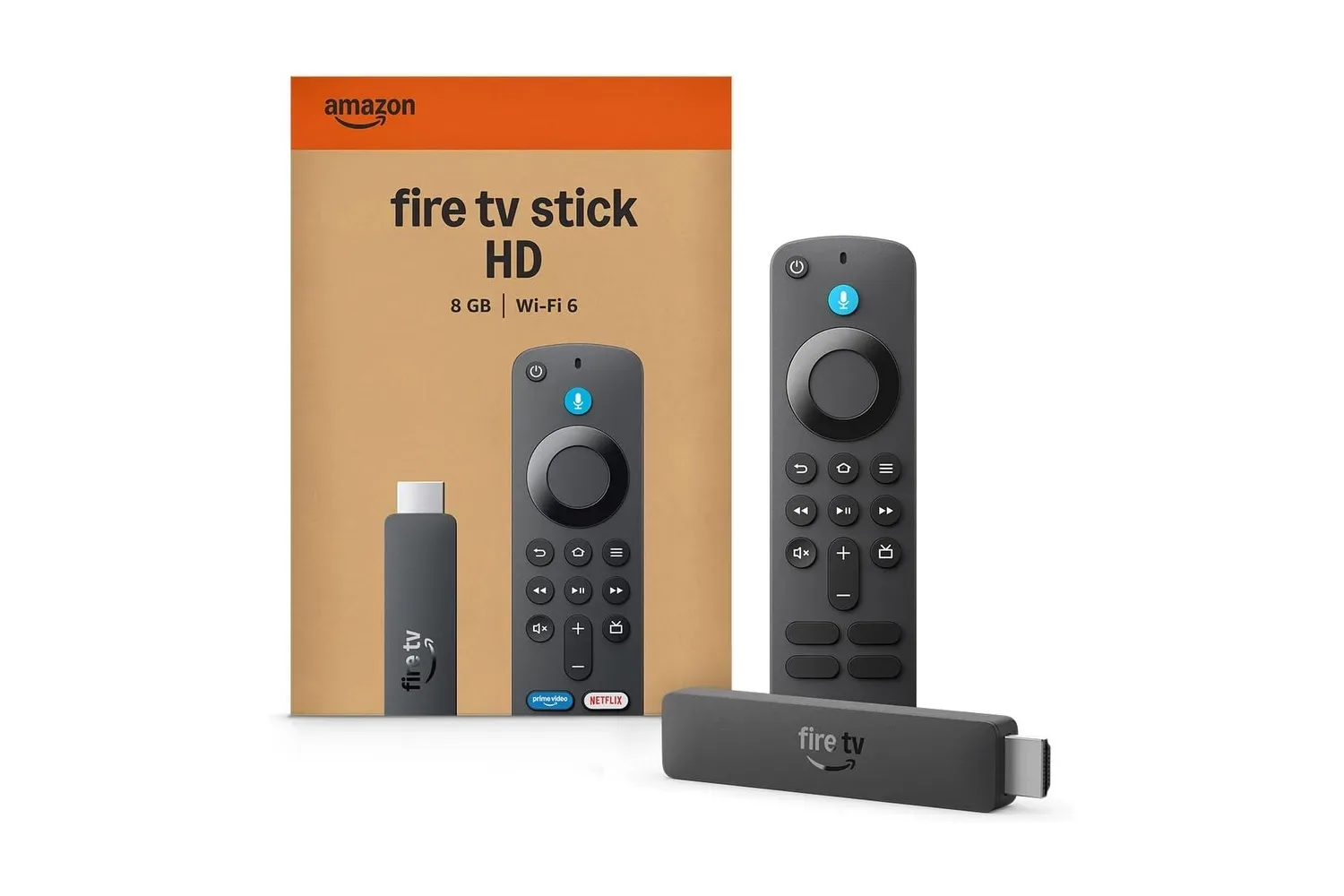
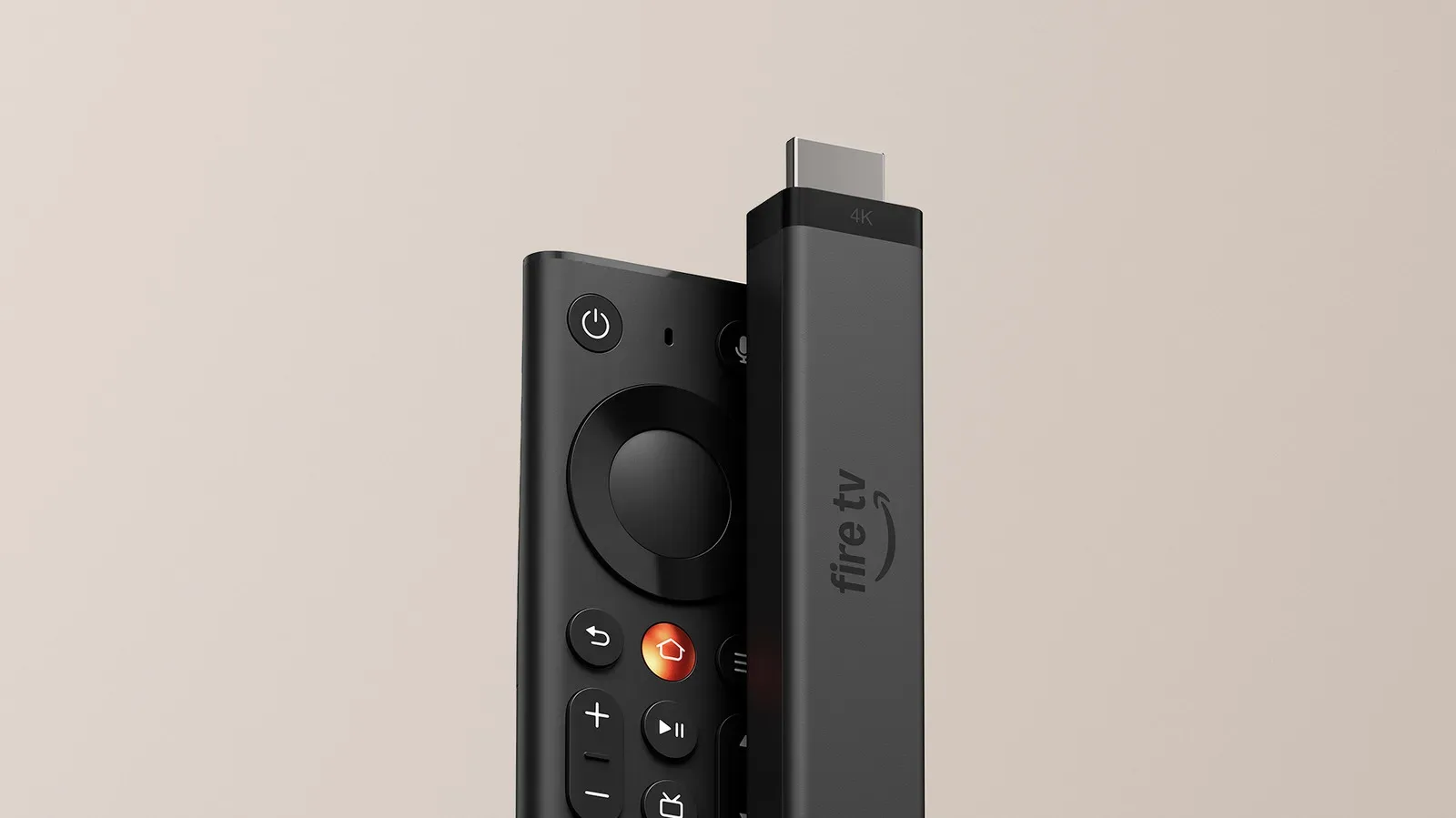
The new Fire TV Stick 4K uses a thinner form factor similar to the Fire TV Stick HD introduced earlier this year. Its most practical physical change is the ability to draw power through a TV’s USB port using the supplied cable. In setups where that arrangement works, it can remove the need to run a cable to a wall socket.
This is a small feature with a large potential impact on cabinet sanity. Streaming devices are frequently attached to wall-mounted TVs, crowded entertainment units or displays with too few conveniently located outlets. A USB-powered setup can mean fewer visible cables and fewer things competing for the same power strip. Owners can still use a wall outlet if they prefer.
There is an important distinction between a cleaner setup and a promise that every television USB port will suit every installation. The announcement says the new stick is capable of using TV USB power with the included cable; it does not provide a universal compatibility list or describe the behavior of every television port. Anyone planning a cable-free look should treat the included option as an appealing possibility, while keeping the wall-power route in mind.
What is inside the new Fire TV Stick 4K
Amazon lists 8GB of internal storage and a quad-core processor clocked at 1.7GHz. The stick supports Wi-Fi 6, Bluetooth 5.3 and Bluetooth Low Energy, and handles 2160p, 1080p and 720p output at up to 60 frames per second.
Wi-Fi 6 is a wireless networking standard. Its relevance is not a magical promise that every broadband plan suddenly becomes faster. Its purpose is more efficient wireless networking, particularly useful in homes with multiple connected devices. The benefit a buyer sees will still depend on the router and network around the device. A Fire TV Stick with Wi-Fi 6 support does not itself upgrade an older router, but it can take advantage of compatible network equipment.
Bluetooth 5.3 and Bluetooth Low Energy refer to wireless connectivity standards for accessories and devices. The announcement does not provide an exhaustive accessory-compatibility list, so it would be wrong to turn those specifications into promises about any particular controller, headset or peripheral. At a basic level, the support signals current-generation wireless connectivity within the stick.
2160p is another name for 4K resolution in this context. The stated 60fps ceiling means the hardware can output supported video formats at up to 60 frames per second, rather than implying every video source will arrive at that rate. Resolution, frame rate, the app’s own stream and the network all influence what viewers actually receive.
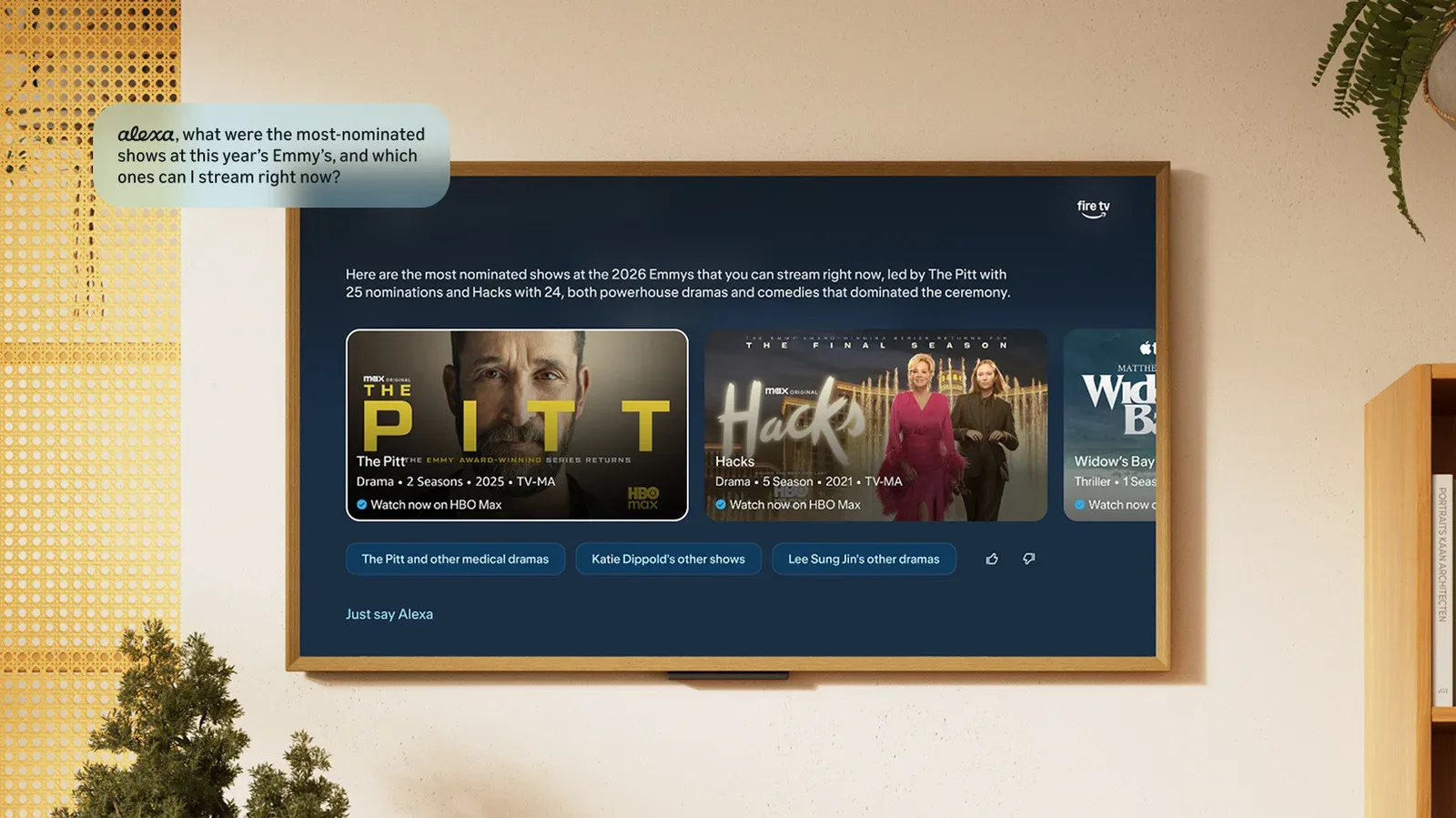
The device will run Amazon’s Vega operating system, include Alexa+, and ship with the new Fire TV experience. Amazon has also updated the Fire TV interface and companion app to better integrate Alexa+. The announcement identifies this as a meaningful software pillar of the release, even if a buyer’s day-to-day verdict will probably come down to the less glamorous questions: how quickly the desired app opens, whether search is useful and whether the home screen feels manageable.
A remote designed for the dark, the couch and human thumbs
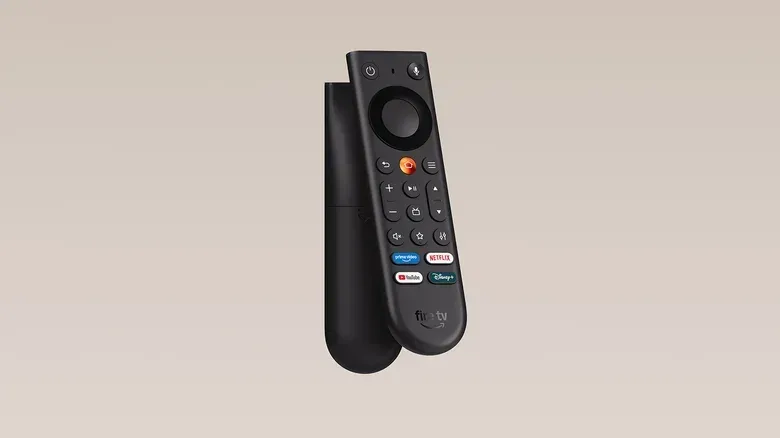
Amazon’s redesigned Fire TV Remote may be the more immediately felt change. Its top edge is flat, where the power and microphone buttons sit, while its weighted lower section is curved. The idea is simple: a person should be able to tell which end is which by touch, rather than pointing the remote at the TV upside down and discovering it has chosen chaos.
The company says several controls have distinct tactile markers. The Home button uses a metal surface, while the power, microphone and Back buttons have different shapes or indentations. These are modest physical choices, but they address a real remote-control problem: most buttons become anonymous once the lights are down. Tactile differentiation is an accessibility-minded convenience as well as a quality-of-life change for anyone who does not want to look away from a film or game stream to locate Home.
A customizable star button, previously reserved for the more premium controller, is also coming to this Fire TV Remote. Owners can assign it to open a preferred app or to toggle functions such as closed captioning or Screen Magnifier. That makes the button more useful than a fixed shortcut because it can reflect how a specific household uses the device. Someone who regularly needs captions may value a one-press route to them; someone else may reserve it for the app they use most.
The new remote can control TV functions including power and volume. Amazon says it works with Amazon Ember TVs and Fire TV streaming media players launched from 2019 onward. The Stick ships with this remote, which will also be sold separately for $15.
The Remote Plus is waiting until early next year
Amazon also previewed a Fire TV Remote Plus for early next year. This higher-end model is set to replace the Alexa Voice Remote Pro and will add an aluminum housing and backlit buttons. Backlighting is particularly straightforward in its appeal: it makes the controls easier to see in a dark room without relying entirely on tactile memory.
The forthcoming Remote Plus will also work with Find My Remote. Users will be able to ask an Echo speaker, Echo Show display, another Alexa device or the Alexa app on a phone to trigger a sound from the remote. That feature is not a cure for every lost-remote mystery, especially if the remote has somehow migrated behind furniture or into another room, but an audible signal is a practical first line of defense.
Because the Remote Plus is not due until early next year, buyers of the new Fire TV Stick 4K should distinguish between what arrives in the box now and what has merely been previewed. The standard Fire TV Remote is included; the aluminum, backlit Remote Plus is a later product.
Who the new stick appears to suit
The new Fire TV Stick 4K looks most compelling for a few clear use cases. It suits people who want a 4K streaming interface for a TV that either lacks a satisfying built-in platform or feels slow in daily use. It also suits buyers who care about a tidier installation and may be able to power the device from a television’s USB port. The $30 promotional price, if available to a prospective buyer during the event, is naturally a very different proposition from the $60 standard price.
Existing Fire TV owners face a more personal calculation. The new model’s case rests on Amazon’s claimed performance uplift, the thinner design, Wi-Fi 6 support, Vega OS, Alexa+ integration and a redesigned tactile remote. Those are concrete upgrades, but the announcement does not establish that every older stick will feel obsolete. Someone content with the speed and software of their present device may find little urgency, while someone tired of slow launches or a remote that disappears into the upholstery may see a clearer reason to move.
Most importantly, the new Fire TV Stick 4K’s promise is not a wildly different category of entertainment hardware. It is an attempt to make a very familiar one less irritating: faster starts, fewer cables, more current connectivity and controls that can be identified without visual confirmation. That is hardly the most cinematic pitch in the world, but after one too many loading spinners, it may be the one people appreciate most.