Amazon has refreshed its Kindle range from the entry-level reader through the Paperwhite and color-capable Colorsoft, putting a shared design cue at the center of the update: every model now uses a flush-front display. The formerly recessed screen on the basic Kindle is gone, while the surrounding colors are designed to flow around the device body rather than stopping at a contrasting front panel.
The practical story is less about any single spectacular new feature than a clearer division between three reading tiers. The 6-inch standard Kindle emphasizes compact size and portability. Paperwhite remains the step-up choice for waterproofing, a warm reading light and longer quoted battery endurance. Colorsoft is the premium route for an edge-to-edge color display. Above each of those families, Amazon is also leaning into aluminum-backed or aluminum-housed editions with more storage and, in the Signature models, convenience features such as automatic lighting and tap-based page turns.
For readers who treat a handheld library a bit like a daily-carry gaming device, the design changes may matter as much as raw storage. Weight, texture, screen edges, charging habits and the way a device disappears into a pocket or bag tend to shape whether it gets used every day. These new Kindles appear aimed directly at those decisions.
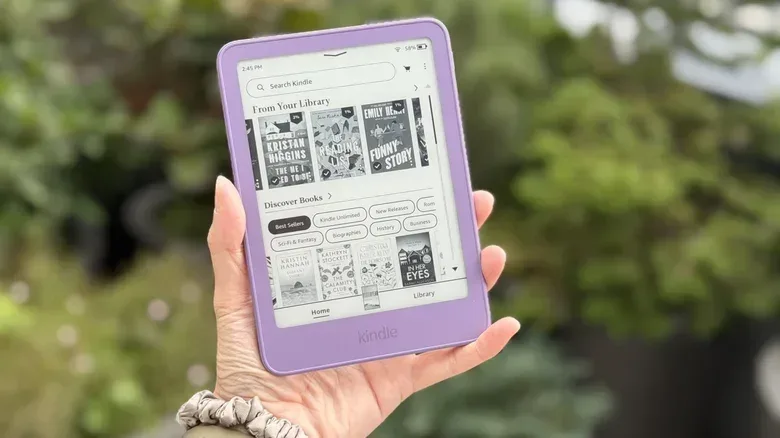
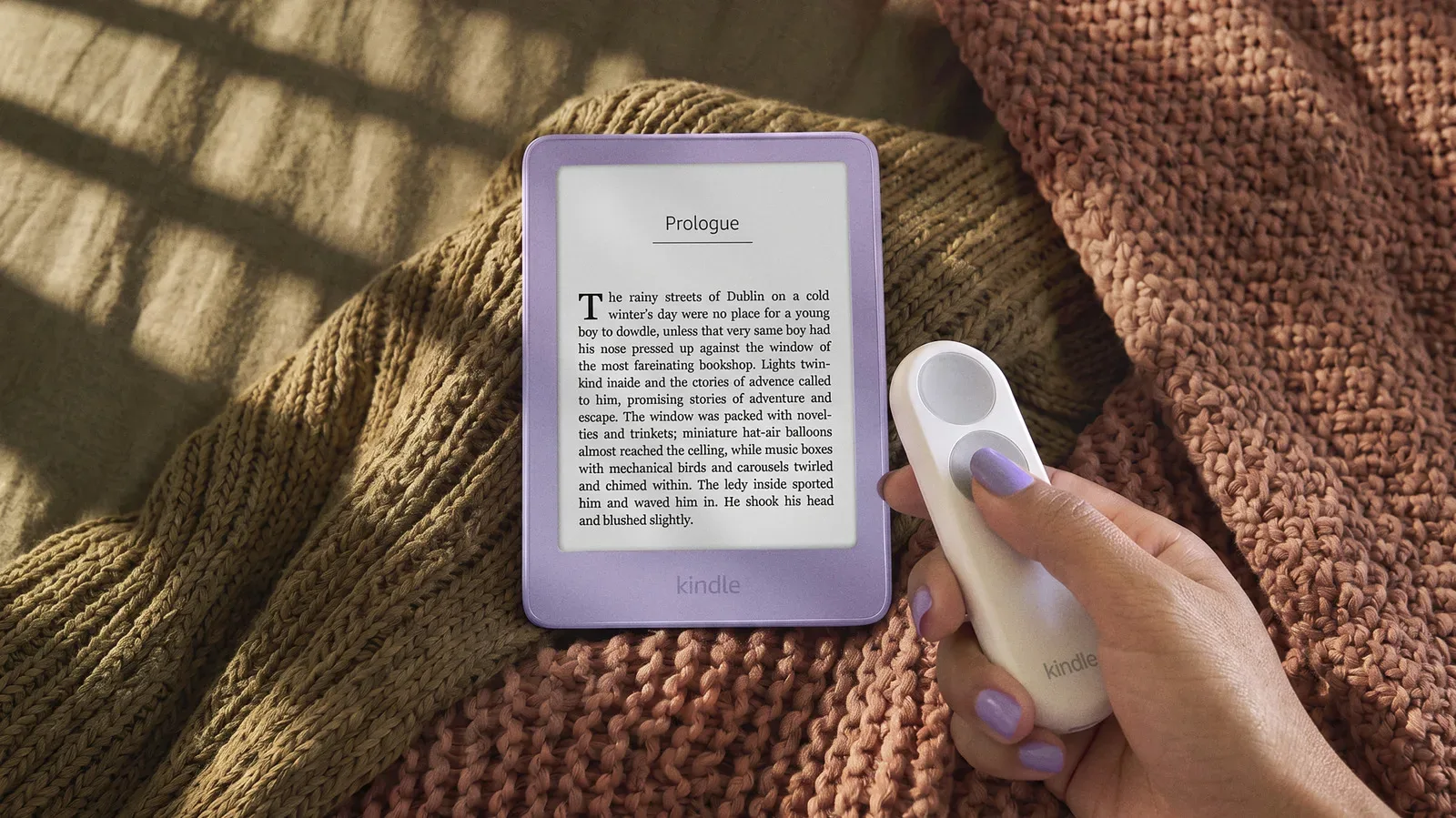
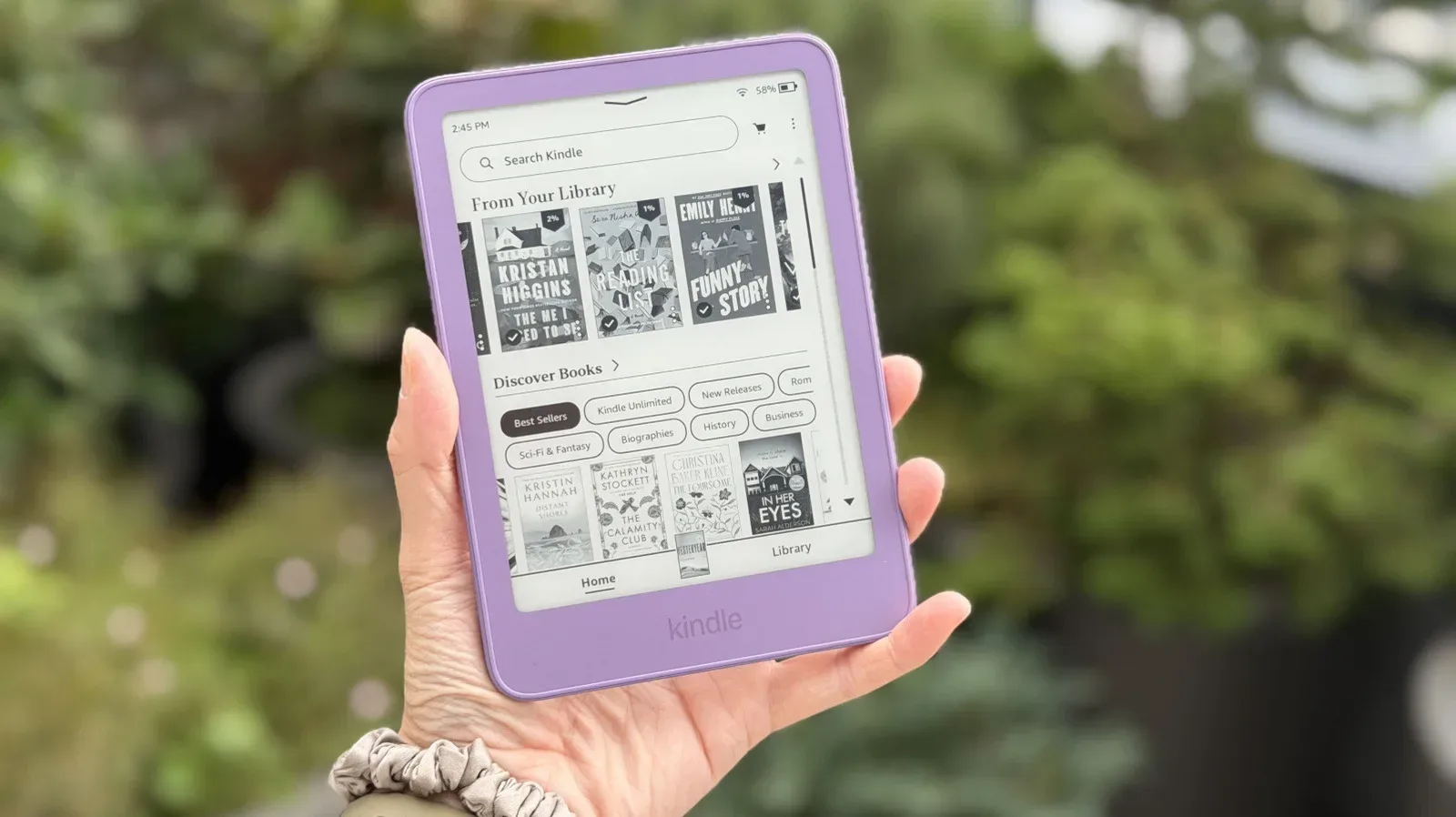
The basic Kindle gets smaller, thinner and no longer has a recessed screen
The entry Kindle has a 6-inch display and measures 6.8mm thick. Amazon says that makes it 1mm thinner than its predecessor. At 140 grams, it is also positioned as the company’s most pocket-sized Kindle. The company rates it for up to six weeks on one charge and says it opens books 30 percent faster than the preceding entry-level model.
Those figures need a little context. A flush-front display means the visible screen area sits level with the surrounding front surface rather than lower inside a bezel. It can make a device look more unified and may leave fewer edges around the display for dust to catch on. It does not, by itself, tell us anything about resolution, panel type or real-world reading quality; none of those additional details were provided here. But it is a meaningful change in the base Kindle’s physical presentation, bringing its front closer to the broader family design.
The standard version includes 16GB of storage and starts at $150 with lockscreen ads. It comes in Ube, a purple named for the Filipino purple yam, and Graphite. The quoted six-week battery figure is an estimate, not a promise for every reading routine. Brightness, wireless use, time spent navigating the store and other settings can affect any portable device’s endurance.
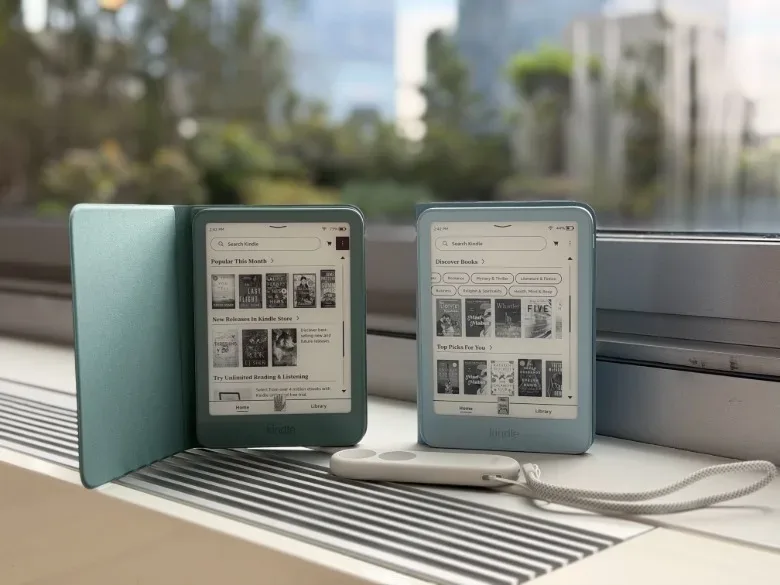
There is also a more upscale version of the entry Kindle. It moves to an aluminum back, doubles storage to 32GB and is 20 grams heavier than the non-aluminum model. Its colors are Alpine Sky Aluminum and Seaglass Green Aluminum. Amazon describes the aluminum model as having a more premium feel, but buyers should view that as a material and handling preference rather than an indication that it offers a different reading screen or stated battery rating.
That 20-gram difference is worth interpreting in proportion. The lighter model is listed at 140 grams, so the aluminum version’s increase is not enormous, but it is substantial enough to be a consideration for readers specifically shopping the small Kindle because they want the lightest possible device. Conversely, buyers who prefer a cooler, more rigid-feeling metal back and want 32GB without moving up to another Kindle family may find the trade sensible.
Paperwhite keeps the waterproof, warm-light formula
The new Kindle Paperwhite is thinner and lighter than its previous equivalent, though Amazon did not provide the exact new weight or thickness in the available details. It continues to offer waterproofing and an adjustable warm light, two features that make its role in the lineup clear.
Adjustable warm light refers to the ability to shift the display illumination toward warmer tones. The feature is generally about personal reading comfort and preference, particularly when reading in dimmer environments. It should not be confused with the e-reader’s main display technology or with a guarantee of better sleep; the available information only establishes that the Paperwhite includes adjustable warmth.
Amazon says this is its largest-screen and highest-contrast Paperwhite yet, and that the higher contrast helps readability in bright sunlight. Contrast ratio is the separation between light and dark areas: more contrast can make text stand out more distinctly against a page-like background. It is a useful specification in principle, though Amazon has not supplied a numerical contrast measurement here, so direct comparisons beyond the company’s own Paperwhite claim are not possible.
The regular Paperwhite has 16GB of storage, comes in Graphite and starts at $200. Amazon gives it a battery estimate of up to 12 weeks, double the estimate stated for the new entry Kindle. That is a headline difference for someone who reads for long periods away from a charger, although the result will naturally depend on use conditions.
The Paperwhite Signature Edition adds an aluminum back, 32GB of storage, automatically adjusting lights and a double-tap gesture for page turns. It costs roughly $50 more than the regular Paperwhite and is available in Graphite or Seaglass Green. An auto-adjusting front light changes illumination based on ambient conditions, removing some manual brightness adjustment. The double-tap page-turn option is also a small but potentially useful accessibility and convenience feature: it gives readers another way to advance through a book without reaching for a touchscreen control.
A preview of the aluminum Signature hardware found the Paperwhite and Colorsoft units thin, light and cool to the touch, with responsive movement between book pages and the home screen. Rapid page advances using Amazon’s newly announced Page-Turn-Cover did not show noticeable lag in that brief demonstration. That is encouraging, but it remains a limited preview observation rather than a long-term assessment of performance, construction or battery life.
Colorsoft focuses on edge-to-edge color and clarity
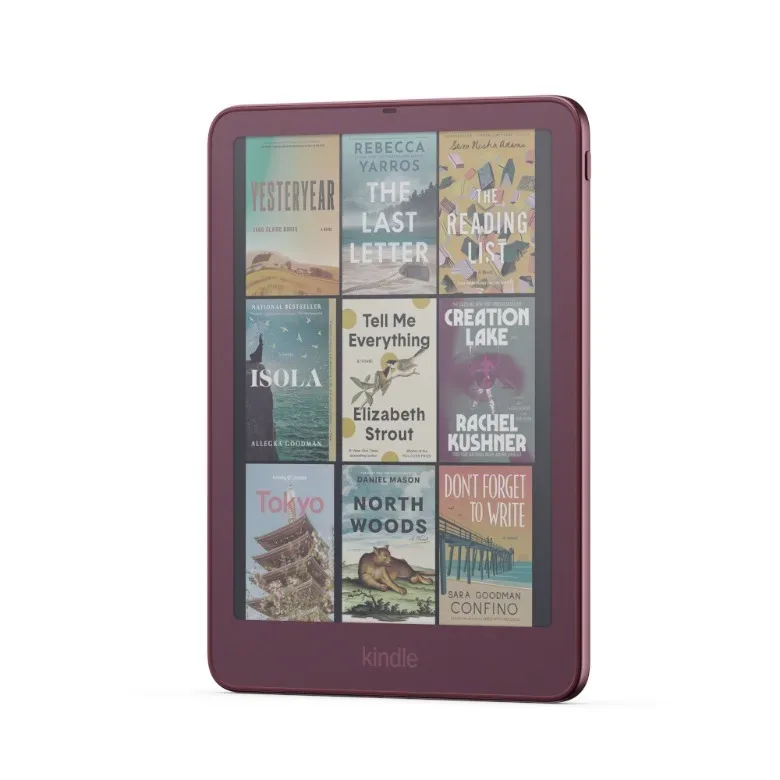
Colorsoft remains Amazon’s color-reading branch, and its new display has been redesigned for edge-to-edge color and improved clarity. The standard Kindle Colorsoft offers 16GB of storage, comes in Graphite and starts at $290. The Colorsoft Signature Edition begins at $320 and adds aluminum housing, 32GB of storage, an auto-adjusting front light, dock charging and double-tap page turns. It will be sold in Graphite and Fig.
Edge-to-edge color describes how the color display presentation extends across the front design rather than appearing bounded by a prominent raised or recessed frame. In a reading device, color can be relevant for illustrated books and other content where visual differentiation is part of the experience. The supplied information does not specify the Colorsoft display’s resolution, color gamut, refresh behavior or how its clarity compares numerically with prior hardware, so those are details prospective buyers will need to verify separately when making a buying decision.
Dock charging on the Colorsoft Signature Edition means it can charge through a compatible dock rather than requiring a cable every time. That does not make the dock a stated included accessory; the information only identifies the charging capability. It is the kind of feature that could suit a fixed bedside or desk routine more than readers who simply charge occasionally via cable.
The pricing also makes the family split unusually straightforward. On the listed starting prices, the Colorsoft commands a considerable premium over the $150 entry Kindle and $200 Paperwhite. That premium is chiefly the decision point: choose Colorsoft if color is a meaningful part of the intended reading library, not merely because it is positioned as the most expensive option. Readers who primarily want a small monochrome device may find the base Kindle’s compact form more relevant, while those wanting waterproofing, warm lighting and the longest quoted battery rating have a clearer reason to consider Paperwhite.
Colors, finishes and the sensible way to compare models
Color is a more visible part of this generation than it is in many e-reader refreshes. The standard Kindle is offered in Ube and Graphite; the aluminum version in Alpine Sky Aluminum and Seaglass Green Aluminum. Paperwhite is Graphite, while its Signature Edition adds Seaglass Green. Colorsoft is Graphite, and its Signature Edition brings Fig alongside Graphite.
A brief hands-on look suggested the Ube unit had a notably textured, slightly scratchier paint feel rather than a uniformly smooth finish. However, that impression was expressly uncertain: it could have been specific to the sample unit, and Amazon has said its soft-touch paint is similar to the prior generation. It is best treated as a reason to handle a unit if surface feel is important, not as an established characteristic of every Ube Kindle.
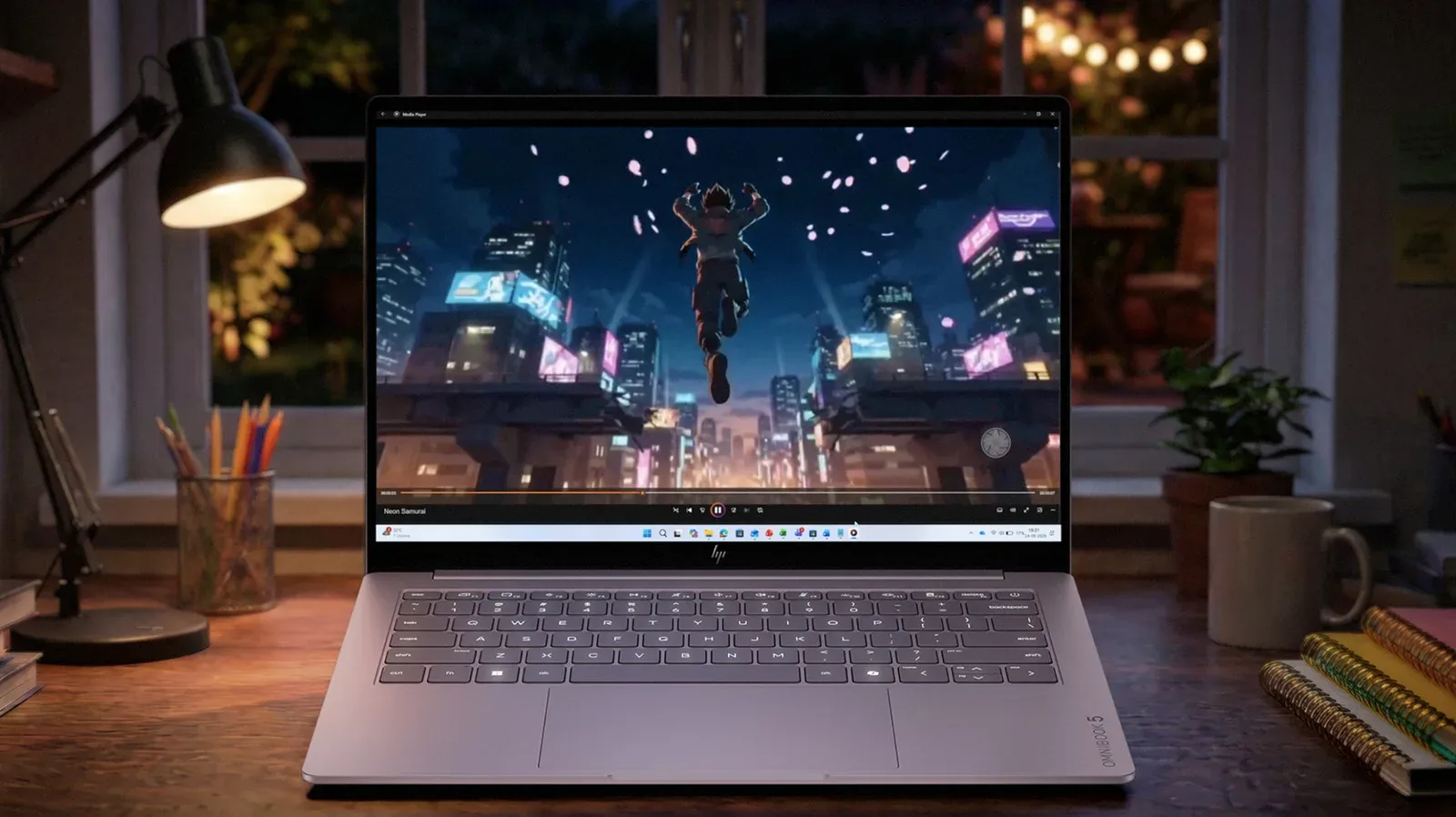
As with other personal hardware—whether an e-reader, a handheld console or a laptop such as the HP OmniBook 5—the specification that sounds most impressive is not automatically the one that fits a person’s routine. Here, comparing the models in a deliberate order is useful:
- Start with screen needs. Pick Colorsoft only if color is genuinely valuable; otherwise compare the standard Kindle and Paperwhite.
- Then consider environment. Paperwhite is the model explicitly described as waterproof and equipped with adjustable warm light.
- Consider size and charging cadence. The 140-gram, 6-inch basic Kindle is the clear compact option; Paperwhite has the longest stated battery estimate at up to 12 weeks.
- Finally decide whether the upgrades justify their cost. Aluminum construction, 32GB storage, automatic lighting, dock charging on Colorsoft Signature and double-tap turns are feature-specific reasons to move upward—not universal necessities.
Kids editions and regional rollout
Kids versions will be available across all three Kindle families. They include child-friendly covers and an Amazon Kids+ subscription, with prices starting at $180. Since the provided details do not identify subscription duration, parental-control specifics or individual configurations, families should confirm those particulars before choosing among the models.
The new entry Kindle and its aluminum variant are available now in the US, Canada, Mexico, Brazil, the UK, Germany, France, Italy, Spain, Ireland, the Netherlands, Belgium, Sweden, Poland, Japan, Saudi Arabia, the UAE, Egypt and Australia. The Paperwhite and Colorsoft launches are proceeding through preorders in those same regions.
Ultimately, Amazon’s new lineup does not force every reader into a single definition of “premium.” It makes compactness, weather-ready reading, color, extra storage and metal construction separate choices. The flush-front redesign gives the range a more consistent identity; the harder question remains which one is worth carrying through an entire backlog of books.
Shop the products
Check current price, model and availability at the retailer.