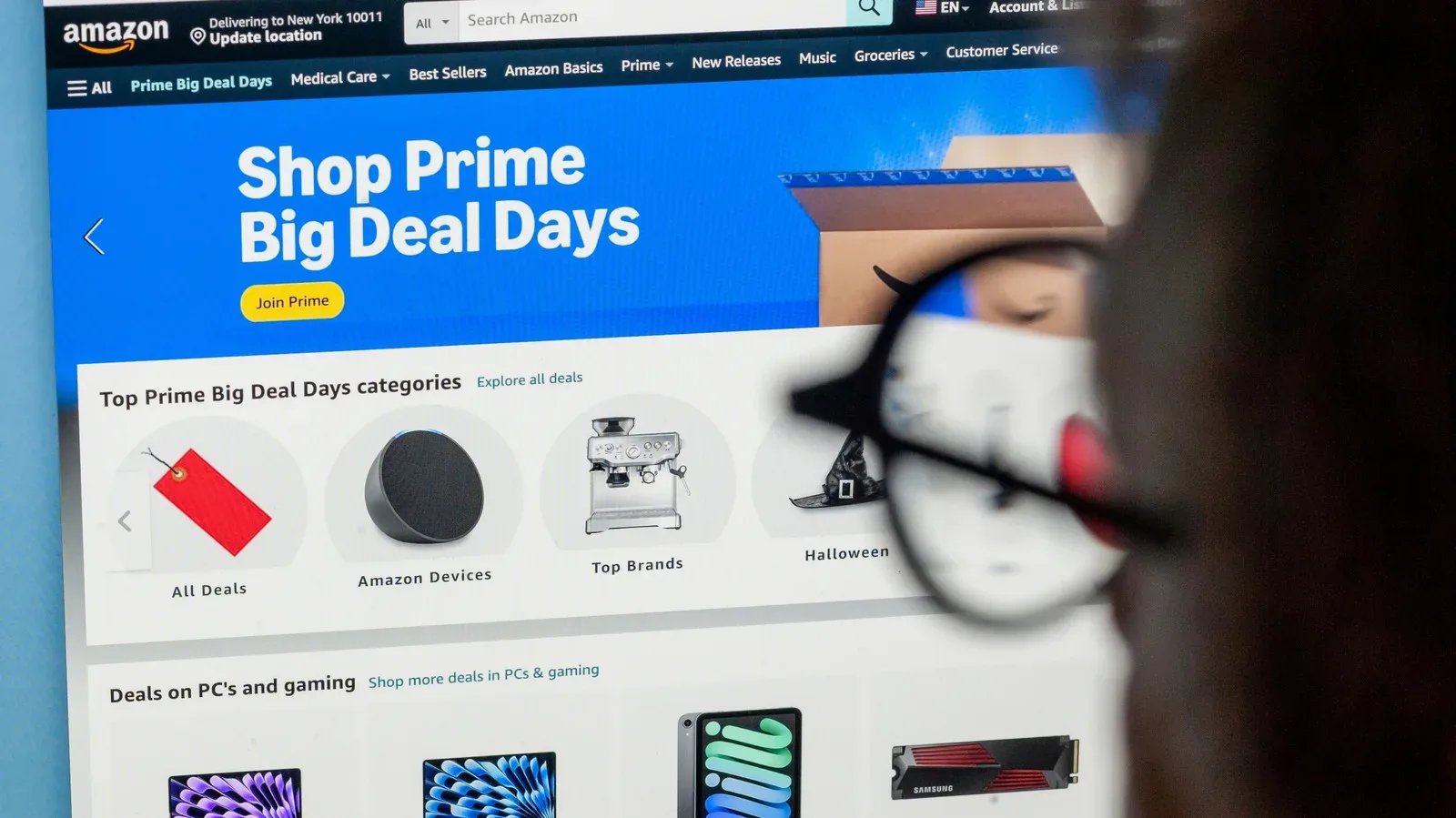
Amazon’s Prime Big Deal Days is scheduled to return for 48 hours on October 6 and 7, 2026, positioning the retailer’s autumn sale as an early opportunity for people weighing up entertainment, streaming and home-tech purchases before the holiday period. The event begins at 12:01 a.m. PT on October 6.
The sale is described as having millions of offers across 35 categories, but its most useful lesson for game and tech shoppers is simple: a large sale event is not a reason to buy everything with a price badge. It is a short window to check a prepared list, understand who can access which offers, and compare a promoted discount with the value of the device or service actually being purchased.
Amazon has said its own hardware will receive some of the biggest reductions. That group includes Fire TV Sticks, Fire TVs, Ring cameras, Echo smart speakers, HD tablets and Kindle e-readers. An early example cited ahead of the event is a 64% reduction on a Fire TV 4K Streaming Stick. Those products are not game consoles, but they can matter to the same household budget as gaming gear: a streaming device, television or audio product can change how a living-room entertainment setup is used without replacing the games hardware already there.
The important dates and deal-drop schedule
Prime Big Deal Days lasts from October 6 through October 7. Amazon says new limited-time offers will arrive three times each day:
- 12 a.m. PT
- 8 a.m. PT
- 1 p.m. PT
These rotating offers will appear under the label “Today’s Big Deals.” They are limited-time deals and can disappear when stock runs out. That distinction matters. A sale with a stated end time is not necessarily a deal that will still be available at that end time; inventory can close it earlier.
For practical planning, shoppers outside Pacific Time should convert the three drop times before the event begins rather than relying on a reminder set for the wrong zone. More importantly, do not treat all three drops as mandatory shopping appointments. A better approach is to identify the specific product categories that matter, check the first relevant drop, and leave the page if the price or item is not right. The modern version of avoiding impulse purchases is not opening a dozen browser tabs and calling it research.
Prime membership: what is actually gated
Prime Big Deal Days is designed around Prime membership. Amazon will still have thousands of daily deals that non-members can shop, but the retailer says its best discounts and offers during the event will be reserved for members. Signing in is important because the logged-in account is how eligible shoppers see the member price or the newest discounted price.
The standard Prime membership is listed at $14.99 per month, with a 30-day free trial available to eligible people who want to assess the service before committing. Amazon also says an annual plan costs 23% less than paying month to month. College students and adults aged 18 to 24 can receive 50% off a membership, alongside 5% cashback on select beauty, fashion, electronics and other items.
Related coverage includes Amazon Prime Big Deal Days 2026: Dates, Membership Details and Deal Schedule.
That does not automatically make a membership worthwhile for one sale. The sensible calculation is personal: write down the likely event savings on items you already intended to buy, then compare that number with the membership cost you expect to incur. Also consider whether the non-shopping benefits have value to you, including Prime Video and Amazon Music. A free trial is still a subscription arrangement to manage, so shoppers should understand its terms and keep track of the point at which it changes into a paid membership.
In retail language, a member-exclusive deal means access to a particular price or promotion is tied to the subscription. It does not mean every item on the site is unavailable without membership, nor does it prove that every member offer is the best possible price for every buyer.
What tech and entertainment shoppers should watch
Amazon’s own device lineup is the clearest category to monitor. Fire TV Sticks and Fire TVs are relevant for households looking to add or update streaming access. Echo speakers may appeal to people building a connected audio setup, while Kindle and Amazon HD tablets serve different reading and general-use needs. Ring cameras belong in a different practical category altogether: home monitoring rather than entertainment. Placing all of them on one wish list simply because they share a storefront would be a mistake.
There are also expected offers from brands including Soundcore by Anker, Samsung, TCL, Hisense, Bissell, Breville, iRobot, KitchenAid and Shark. The list is broad enough that it should be read as a sign of scope, not as a guarantee that every model from every brand will be discounted. Product names, model numbers, storage capacities, screen sizes and included accessories can all make two seemingly similar listings materially different.
For a gaming-adjacent living-room purchase, the useful questions are straightforward:
- What specific problem does this device solve?
- Is it replacing a working product, or adding an extra function that will rarely be used?
- Does the listing identify the exact model?
- Is the listed discount based on a price you can meaningfully compare, rather than the sheer size of the percentage?
- Will the purchase consume funds set aside for games, subscriptions, repairs or other priorities?
That final question is unglamorous but helpful. An entertainment setup is usually a collection of interdependent costs rather than one dramatic purchase. A streaming stick may be inexpensive, but it can be attached to continuing service subscriptions. A new TV may have a headline sale price while still requiring room, cables or additional equipment in a particular setup. Saving money and spending less are not interchangeable achievements, a fact that sale banners tend to overlook with heroic consistency.
A checklist for the 48-hour window
Preparation has more value than frantic browsing once the clock starts. Start with a small list of products that were already under consideration, then record the exact version wanted and a price that would make the purchase sensible. Do not substitute a different item merely because it has a bigger percentage reduction.
- Log in early: Prime-only prices are tied to an eligible signed-in account.
- Confirm the model: Check capacity, screen size, generation and included accessories where applicable.
- Watch the drop windows: “Today’s Big Deals” can sell out before the advertised period ends.
- Separate needs from curiosity: Put replacements, planned gifts and optional upgrades in different groups.
- Check delivery expectations: Fast delivery is useful only if it is available to the particular address and item.
- Keep a ceiling: Decide the maximum acceptable spend before seeing the countdown timer.
Prime members may have access to delivery as fast as 30 minutes through standard delivery vehicles or Prime Air drone delivery in selected cities across Arizona, Florida, Kansas, Louisiana, Michigan, Nebraska and Texas. Millions of other items are eligible for free same-day or next-day delivery for members in more than 10,000 U.S. cities and towns. Availability, however, depends on the product and location, so neither option should be assumed for a time-sensitive purchase.
The broader fall release calendar can make budgeting especially worthwhile for players who are also keeping up with new software and other entertainment. PC-game spending does not pause because a retail event has opened another tab; recent interest in fashion-focused games on Steam is one reminder that niche releases can compete for the same discretionary budget as hardware upgrades.
What Prime Big Deal Days is—and is not
This will be the fourth annual version of the autumn event. It began in 2022 under the name Prime Early Access Sale and was renamed Prime Big Deal Days in 2023. Its purpose is to provide a fall counterpart to the better-known summer Prime Day period, ahead of holiday shopping.
That timing gives it a clear use case. Someone who already knows they need a household device, a streaming product or a gift can assess offers early instead of leaving every purchase to the final weeks of the year. But it is not a complete buying guide, and the claim that millions of offers will be available should not be mistaken for proof of value on any individual listing.
For shoppers, the most durable strategy is also the least theatrical: decide what would be useful, verify exactly what is being sold, check the member terms, and buy only if the final price fits the plan. Everything else—limited quantities, ticking clocks and oversized percentage labels—is merely the boss music.