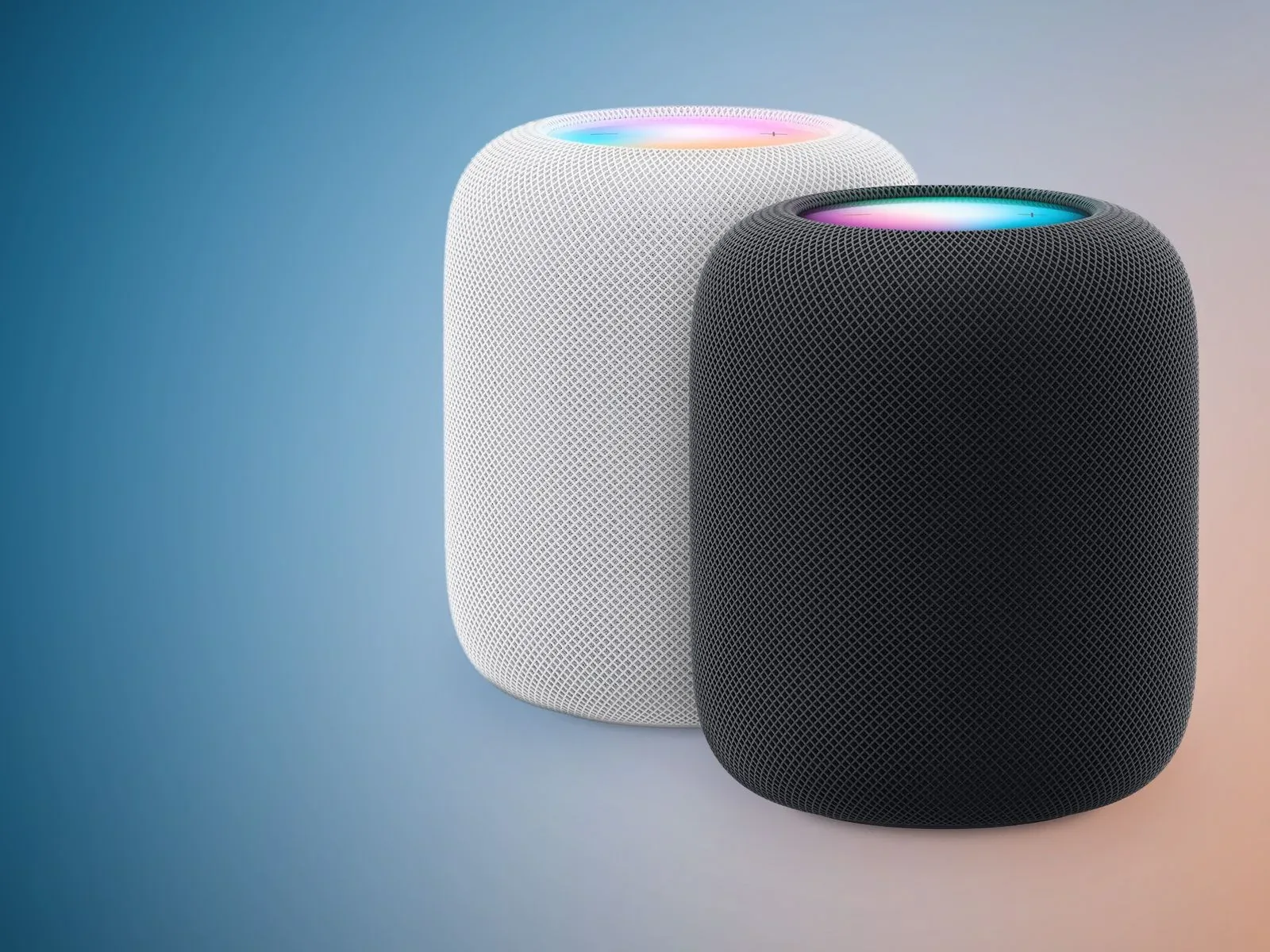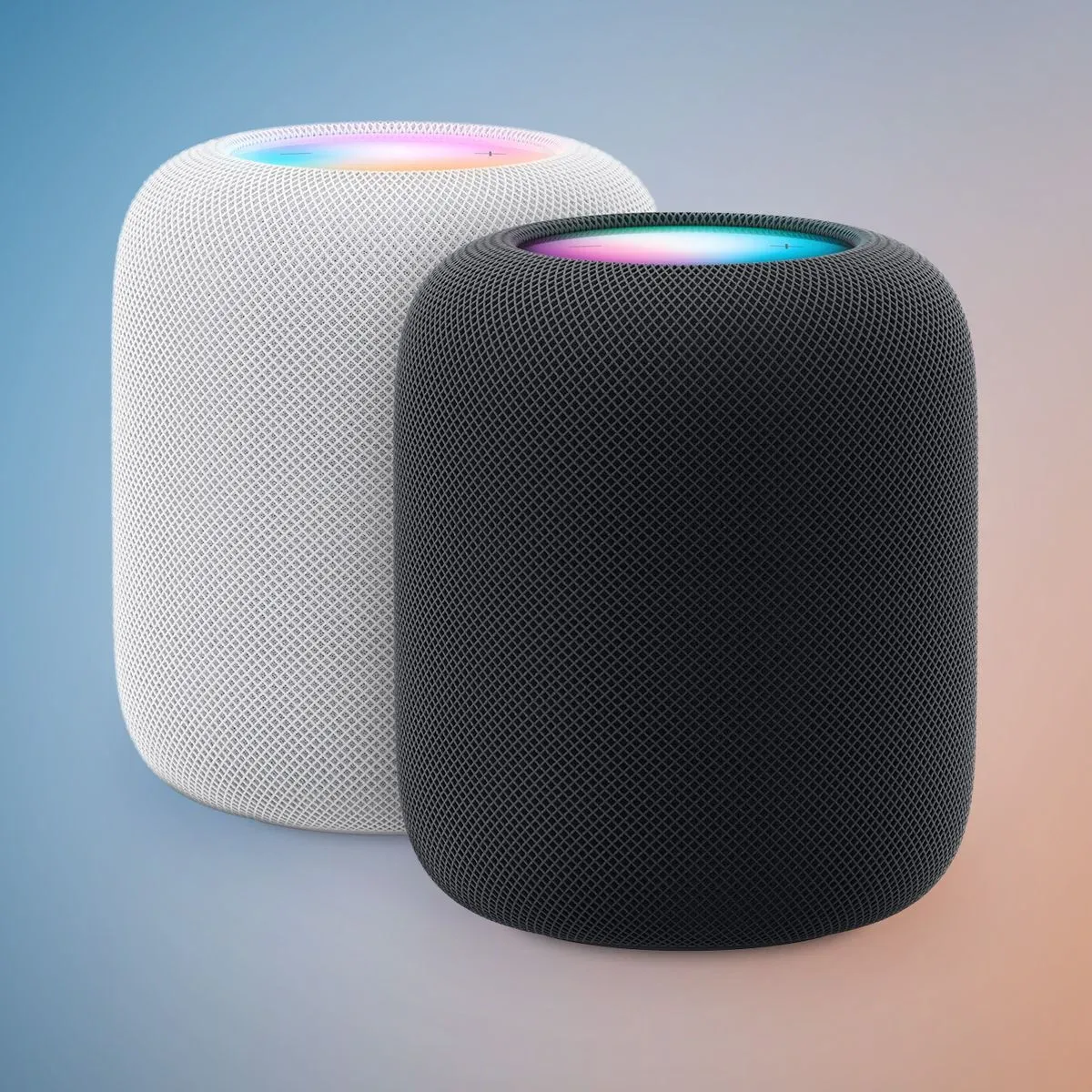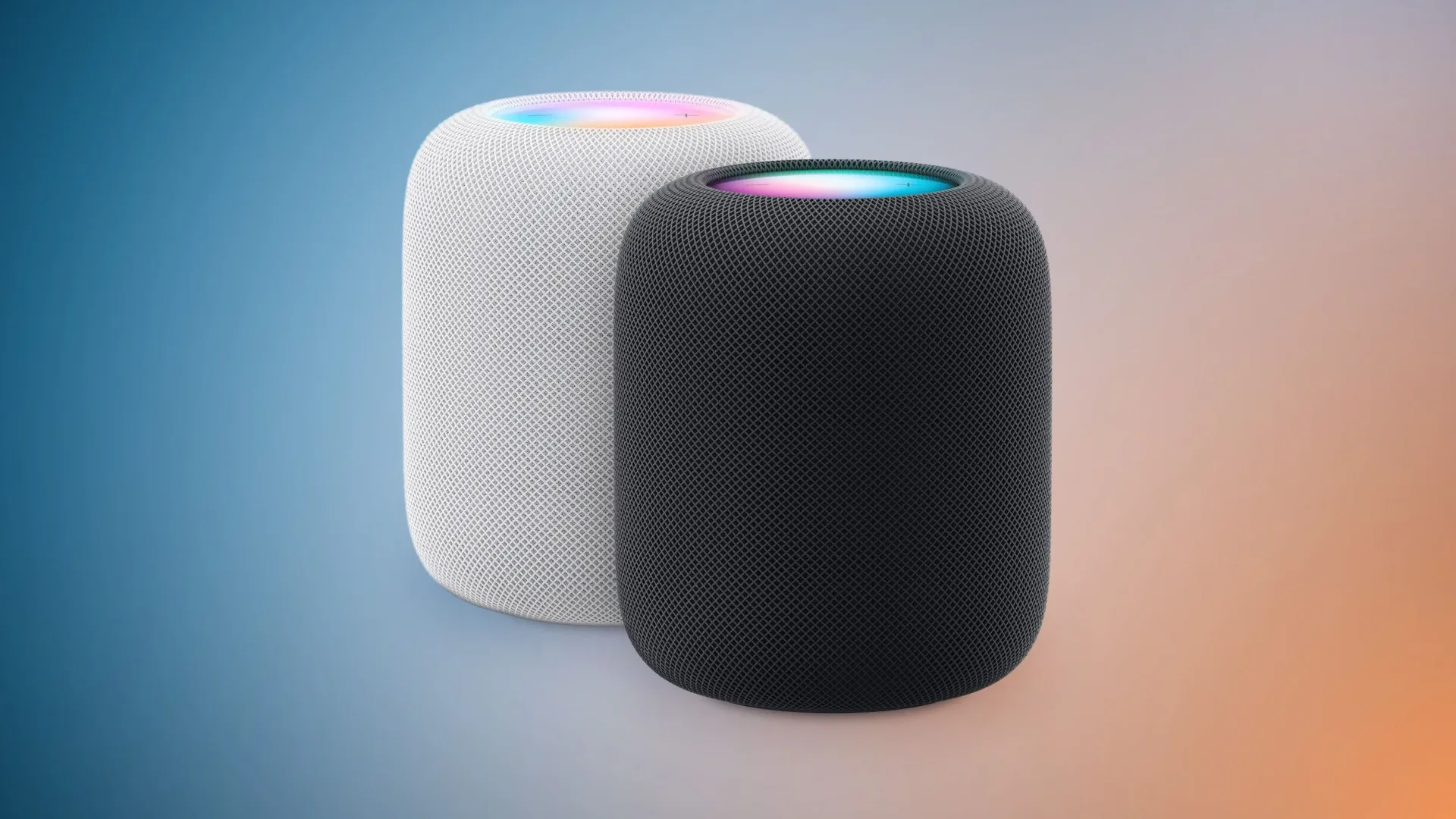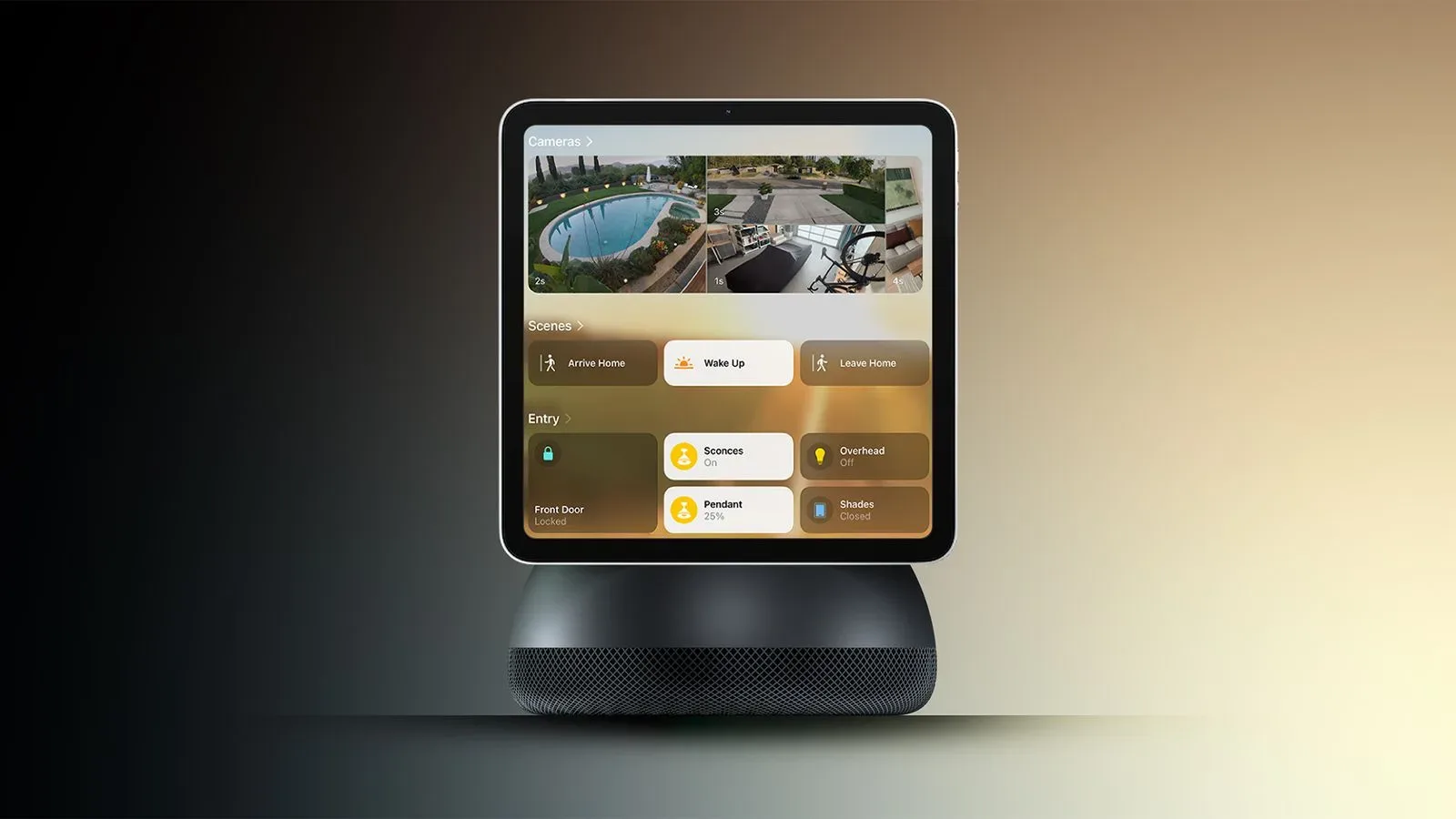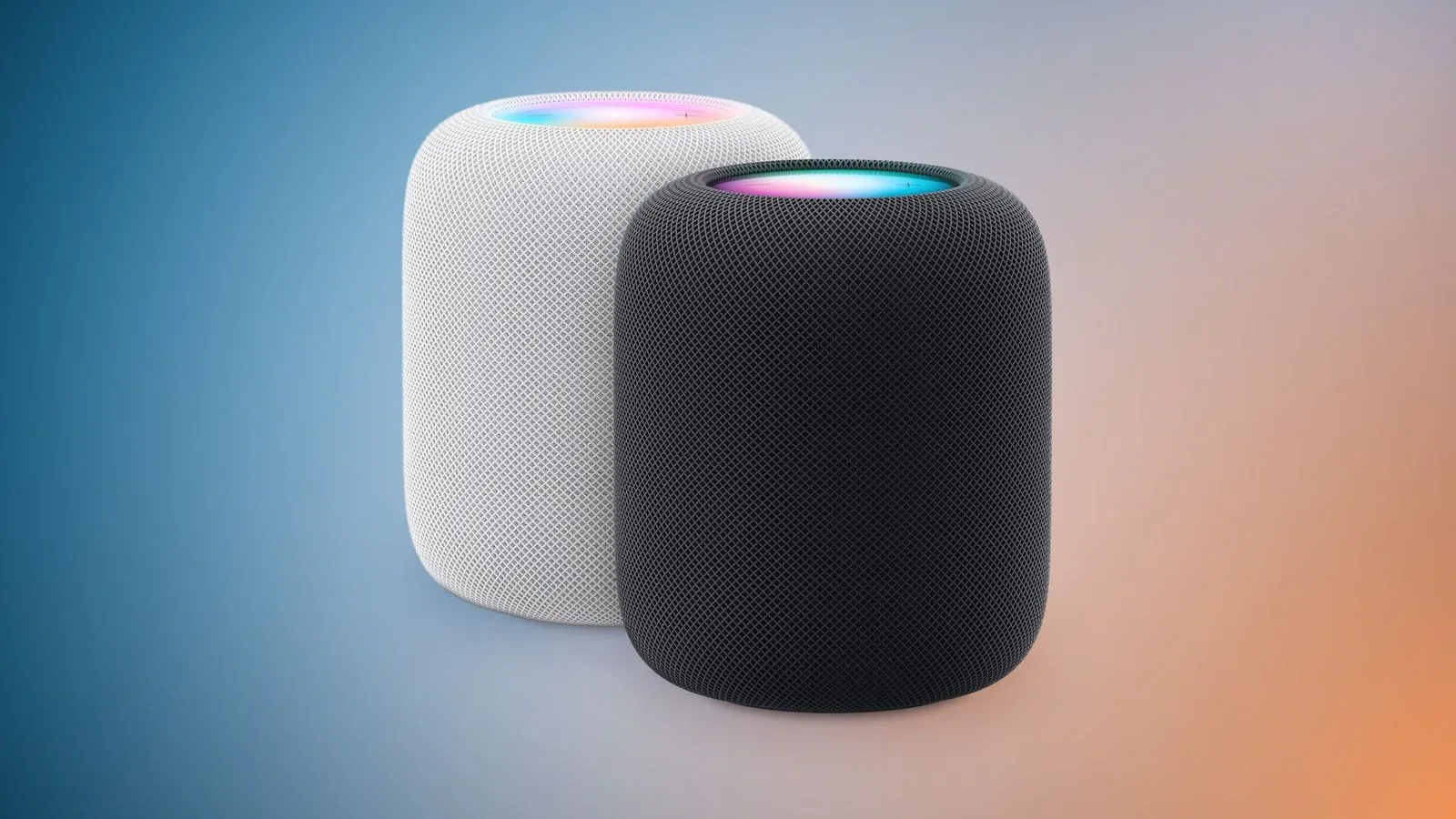
Apple’s larger HomePod has reportedly not been abandoned. The company is said to be aiming to update the full-sized smart speaker eventually, even though the nearer-term product schedule is expected to center on a new HomePod mini, a new Apple TV 4K and an all-new smart-home hub.
That distinction matters. “Eventually” is not a launch window, and the available reporting does not establish a model name, release date, design, final specification list or price for the next large HomePod. It does, however, point to an important continuing role for the product: Apple appears to still see value in a premium speaker that can also act as a home-theater companion for Apple TV 4K owners.
The current full-sized HomePod returned in 2023 after the original model was discontinued in 2021. That unusual stop-and-return history makes a prospective update more significant than a routine annual refresh. The speaker is a relatively specialized item in Apple’s wider hardware lineup, but it fills a clear role for households that want a pair of matching speakers as their Apple TV 4K’s default audio output.
What is expected on October 13—and what is not
A new HomePod mini, new Apple TV 4K and a new Apple smart-home hub are expected to be announced on Tuesday, October 13. The larger HomePod is not expected to be part of that set of introductions.
For prospective buyers, that creates a more nuanced decision than a simple “wait or buy” verdict. Someone looking specifically for the smaller speaker, an updated streaming box or a smart-home control device may receive clearer information very soon. Someone whose priority is the room-filling audio and stereo-pair use case of the full-sized HomePod has a less defined wait ahead. There is evidence of a future update, but no stated timing for it.
It is also worth keeping the products separate. The HomePod mini and the large HomePod share the broad smart-speaker idea, but their place in a setup is not identical. The full-sized model is the one described as a convenient option for Apple fans building a home-theater arrangement around Apple TV 4K. A forthcoming mini refresh should not automatically be read as a replacement for a larger model refresh.
Siri AI may be the central upgrade
The most consequential potential addition is support for Apple’s more intelligent Siri AI. This is not merely a software toggle in the context of the current speaker: it would require a faster processor than the one in today’s full-sized HomePod.
The current model uses Apple’s S7 chip, a chip also associated with Apple Watch Series 7. A next-generation speaker with stronger on-device processing could be better positioned for more demanding assistant features. The reporting does not spell out precisely which Siri AI capabilities would reach a new HomePod, how those capabilities would work on a speaker, or whether every feature available elsewhere would carry over. Those questions remain open.
Still, the chip requirement explains why a new large HomePod could be more than a cosmetic revision. In practical terms, an updated processor would be foundational hardware: it is the component that makes a newer class of software feature feasible. Audio hardware can matter most to listeners, but a smart speaker’s long-term usefulness also depends on how capably it can understand and respond to requests.
Why the processor matters in a smart speaker
A chip is the device’s main processing component. For a speaker that is meant to handle voice interaction as well as playback, it has to support the operating system and the assistant’s computational demands alongside ordinary speaker functions. Saying that Siri AI needs a faster chip does not guarantee a particular level of responsiveness or functionality. It does mean the existing S7-based model is not expected to be the platform for that more advanced Siri experience.
That makes the potential upgrade relevant even to buyers who are primarily interested in music or television sound. Smart speakers tend to receive value from both acoustics and ongoing software capabilities. If Apple’s newer assistant features become a central part of its smart-home direction, the hardware capable of supporting them could become the more future-facing option.
Audio and connectivity are also on the likely-upgrade list
Other likely improvements include better audio quality, fresh color choices and Apple’s custom-designed N1 chip, with Wi-Fi 7 and Bluetooth 6 support. These are reported expectations rather than confirmed product specifications, so they should be treated as possibilities—not a shopping checklist for a device that has not yet been unveiled.
Audio quality is the most obvious consideration for the large HomePod’s intended audience. Its appeal is not limited to issuing voice requests; it is also an audio component for a living-room setup. Any acoustic changes could be more meaningful in that context than an incremental aesthetic adjustment, but there are no specific claims yet about drivers, sound modes, room sensing or other details. Until Apple states what has changed, “improved audio” is the appropriate level of certainty.
The prospective N1 chip is notable because it would bring newer wireless standards into the discussion. Wi-Fi is the local wireless network connection used by devices in a home, while Bluetooth is a short-range wireless technology commonly used to communicate with nearby accessories. Wi-Fi 7 and Bluetooth 6 are names for newer generations of those standards. The information available does not quantify a performance gain for HomePod use, so it would be premature to promise faster playback, better range or a specific reliability improvement. Their inclusion would instead suggest more current connectivity hardware in a future model.
For players and households managing a busy entertainment center, the basic practical point is that a smart speaker does not operate in isolation. It sits among a television, an Apple TV 4K, phones and a home network. Updated connectivity could matter to the overall setup, but the real-world benefits would depend on the rest of the network and devices involved.
The Apple TV 4K pairing use case remains the key one
The large HomePod’s clearest gaming-adjacent and entertainment-focused advantage is its Apple TV 4K integration. Two full-sized HomePods can be configured as the Apple TV 4K’s default audio output, creating stereo sound. Stereo means audio is delivered through left and right channels, which can give effects, music and dialogue more separation than a single speaker can provide.
That setup is likely why the speaker still has a defined place despite being a niche product. For someone who already uses Apple TV 4K as a living-room media box, the pair can function as a dedicated default audio solution rather than as occasional portable speakers. It is an ecosystem-oriented proposition: the benefit comes from the way the components work together, not simply from owning one smart speaker.
The expected Apple TV 4K update could therefore make the delayed timing of a large HomePod refresh especially interesting. Apple may be preparing updates across several parts of the smart-home and home-entertainment picture, but the devices will not necessarily arrive at once. Buyers should avoid assuming that news of one product establishes an upgrade schedule for every other part of the system.
Apple’s wider hardware strategy has also continued to include devices beyond the living room. For a separate look at the company’s laptop ecosystem and current retail positioning, see this report on select M5 MacBook Air configurations. The comparison is not about a shared feature set; it is a reminder that Apple buyers often evaluate hardware as a connected collection of devices, with different upgrade cycles for each category.
Price is an immediate consideration, not a future-speculation exercise
The present full-sized HomePod costs $349 in the United States. Apple raised the price in June, after the 2023 model launched at $299. That $349 figure also matches the original HomePod’s launch price in 2018, effectively bringing the product back to its first-generation starting point.
There is no reported price for the next model. That absence is especially important now: a prospective update with a faster chip, possible audio work and newer wireless support could be positioned differently, but there is no basis to state whether Apple would maintain, raise or lower the current price. Anyone considering a purchase should judge today’s $349 model on the features it has today, rather than on unannounced capabilities that a later model may or may not receive.
The practical split is straightforward. Buyers who need the full-sized speaker now for an Apple TV 4K stereo arrangement can evaluate the current product at its current $349 price. Buyers chiefly interested in more intelligent Siri functionality, possible connectivity modernization or a revised audio design have a reason to follow the next large HomePod—but should recognize that its arrival date remains unspecified.
What remains unknown
- When Apple will announce or release the next full-sized HomePod.
- Its final name, appearance, colors and audio hardware.
- The exact Siri AI functions it would support.
- Whether Wi-Fi 7, Bluetooth 6 and the N1 chip will be included in the finished product.
- Its U.S. price and availability in other regions.
- Whether any changes would alter the existing Apple TV 4K stereo-pair experience.
For now, the important signal is continuity. Apple reportedly intends to update the large HomePod rather than leave the category behind. The October 13 announcements may clarify the company’s immediate smart-home direction, but the premium speaker looks set to be a later chapter—one whose main question is not whether it will have a faster chip, but when Apple is ready to say what that chip and the rest of the hardware actually enable.