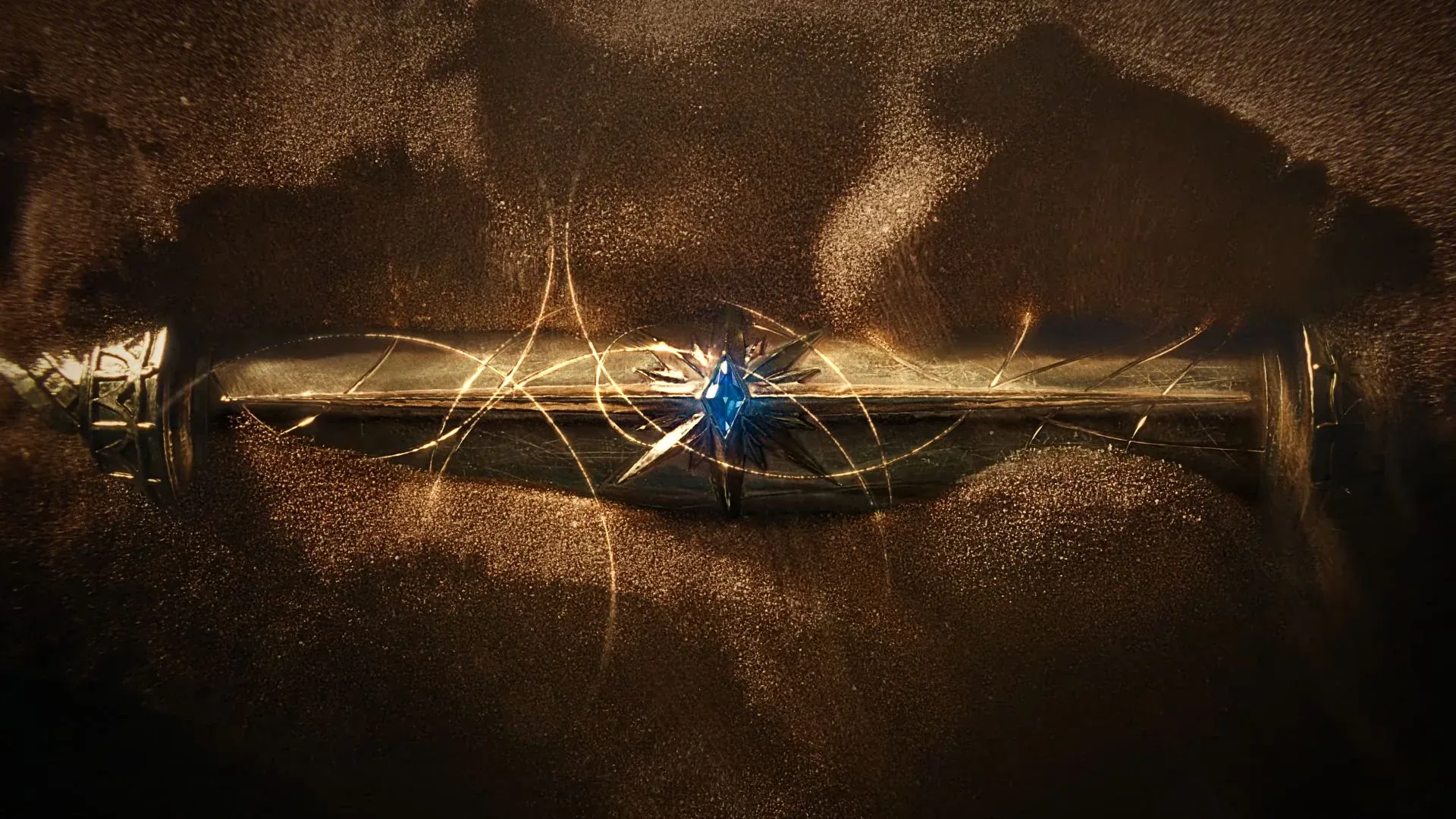
The wish list for The Elder Scrolls 6: Sentinel is already enormous in the imagination of role-playing fans, but former Skyrim lead designer Bruce Nesmith has put forward two particularly grounded priorities: ladders that can actually be climbed, and mounts that do more than carry a rider from one place to another.
Neither sounds like the sort of headline feature usually associated with a giant fantasy open world. That is exactly what makes the comments interesting. A working ladder can be just a ladder until players, non-player characters, collision, animation, combat, pathfinding, loading, and level design all have to agree on what happens around it. A horse can be a simple fast-travel aid until the game must decide how it behaves in a fight, around obstacles, and alongside other characters.
Nesmith’s point is not that these systems are impossible. It is that a feature which looks small from the player’s perspective can create a long chain of technical and creative decisions for a development team.
Why Skyrim’s ladders were usually shortcuts, not climbable objects
In Skyrim, ladders generally function as transitions: interact with one and the character is moved to the destination, or use stairs instead. That approach avoids depicting the entire climb and, crucially, avoids needing the game to simulate every awkward situation that could occur while somebody is on the ladder.
For more context, explore That Old Isopropyl Alcohol Bottle Could Be the Wrong Tool for Cleaning Your PC.
Nesmith called the request for climbable ladders “very strange,” but argued that their absence limits the ways artists can build multilayered locations. A ladder is more than scenery when it becomes traversable. It can connect roofs, balconies, towers, mine shafts, docks, ruined floors, and narrow interior spaces without requiring a full staircase. That potentially gives environment artists more ways to establish verticality—the sense that a space has meaningful height as well as width.
The catch is that verticality needs rules. Nesmith described the kind of question programmers must answer: what happens when a non-player character, or NPC, is partway down a ladder just as the player starts climbing from below?
“Does the player go through the NPC? Is he blocked by the NPC? Does the NPC stay on the ladder? Does the NPC go back up and know to wait and then come back down?”
Related coverage includes Former Skyrim Lead Designer Wants Elder Scrolls 6 to Solve Ladders and Mounts.
Each option has consequences. Letting characters pass through each other may keep movement flowing, but can look unnatural. Blocking the player makes physical sense, yet creates the risk of a character being trapped behind someone who cannot move. Having the NPC retreat requires it to recognize the conflict, choose an appropriate direction, navigate safely, and resume its original behavior. Even that is only one example; it does not settle what occurs if combat begins, if an NPC is fleeing, or if multiple characters converge on the same tight route.
The technical term behind the headache: pathfinding
Pathfinding is the process a game uses to work out where an NPC can travel and how it should get there. In a broad open-world game, a ladder is not merely an animation for the player. If NPCs can use it, it becomes part of their navigable route network. The game needs to understand the ladder’s entrances and exits, whether it is occupied, when an NPC should wait, and what alternative it should choose if the route is unavailable.
Collision is another practical issue. In game development, collision refers to the rules that stop—or intentionally allow—objects and characters from moving through one another. A ladder narrows movement to a small shared space. That makes cases involving players, NPCs, weapons, and different animation states much more visible than they might be on an open road.
Nesmith said that programmers asked design to provide answers to this kind of problem before they could estimate the programming time involved. That is an important distinction. The question is not simply whether a team can create a climbing animation. It is whether the team is prepared to specify, implement, test, and support all the interactions that turn a climbing animation into a dependable system across a large game.
More ladders could change level design, not just movement
There is a straightforward player-facing appeal to seeing a character climb rather than instantly appear on a higher floor. Nesmith believes the change could make a world feel more immersive. But the larger opportunity may lie behind the scenes, in how locations can be laid out.
When a team does not expect players to climb ladders, it has fewer reliable ways to connect short vertical distances. Stairs may be the preferred solution, or a ladder may simply be decorative while an interaction teleports the character to another point. Proper climbing could let a smaller building have a usable roof route, allow a structure to have several compact levels, or make a vertical route feel different from a wide staircase.
That does not automatically make every environment better. More routes also mean more situations to test. The key value is flexibility: artists and level designers gain another tool, while engineering and design teams accept the task of making that tool behave consistently.
Nesmith’s explanation also gives useful context to an easy assumption: “other games have ladders, so this should be simple.” Games can solve the same apparent feature in very different ways. One might restrict NPC use, prevent combat on ladders, use highly controlled spaces, or make the ladder a brief transition rather than freely simulated movement. Design choices reduce complexity, but they also define what the player can do.
Mounts need decisions too
Nesmith’s second request is a better implementation of mounts. He acknowledged that dissatisfaction with mounts is a common concern among Skyrim players, while emphasizing that horses are difficult systems in their own right.
In Skyrim, as he put it, the player can ride a horse, but that is effectively the extent of its function. His preferred direction is broader: the player might fight while mounted, or a mount might take part in the fight alongside its rider.
That proposal has obvious fantasy appeal, but it raises a different set of systemic questions. Mounted combat changes the player’s position and movement speed, affects the range and direction of attacks, and introduces the mount as another active presence in an encounter. If the animal can fight too, the game must establish how it selects targets, avoids hazards, responds to player commands, and handles crowded spaces.
Those are not arguments against the feature. They explain why “better mounts” is a broad design goal rather than a one-button upgrade. The decisions affect combat balance, controls, animation, NPC behavior, and the basic readability of a battle. A mount that participates meaningfully could make travel feel less detached from the rest of the adventure, but only if the rules are clear enough that it does not become an unpredictable extra problem for the player.
Immersion is often about continuity
Both requests share a common theme: continuity. A ladder that can be climbed makes the route seen by the player match the route taken by the character. A horse that can do more than transport its rider can remain relevant when travel turns into danger. In both cases, the goal is not necessarily spectacle. It is reducing the gap between an object’s visible role in the world and the actions the player is allowed to perform with it.
There is a limit, however. Open-world development is always a matter of choosing where to spend time and effort. Nesmith said the Skyrim team chose to put its efforts into other areas rather than solve the full set of ladder problems. That framing matters when interpreting his hopes for Sentinel: these are informed preferences from a veteran developer, not confirmation of features in the upcoming game.
What this does—and does not—tell players about Sentinel
Nesmith’s comments identify two places where a future Elder Scrolls game could feel more reactive and physically coherent. They do not establish that climbable ladders, mounted fighting, or fighting mounts are confirmed for The Elder Scrolls 6: Sentinel.
Still, the remarks are a useful reminder that the most memorable changes in a role-playing game are not always the largest bullet points. Sometimes they are the mundane interactions that let spaces work the way they look as though they should. A ladder in a tower and a horse on a road may seem minor until their limitations shape how a world can be built and explored.
If the next game does pursue either idea, the real measure will not be whether the feature appears in isolation. It will be whether climbing, NPC behavior, travel, and combat form a coherent set of rules. That is the unglamorous work behind a seemingly simple request—and why a question as ordinary as “can I climb this ladder?” can become a serious open-world design problem.