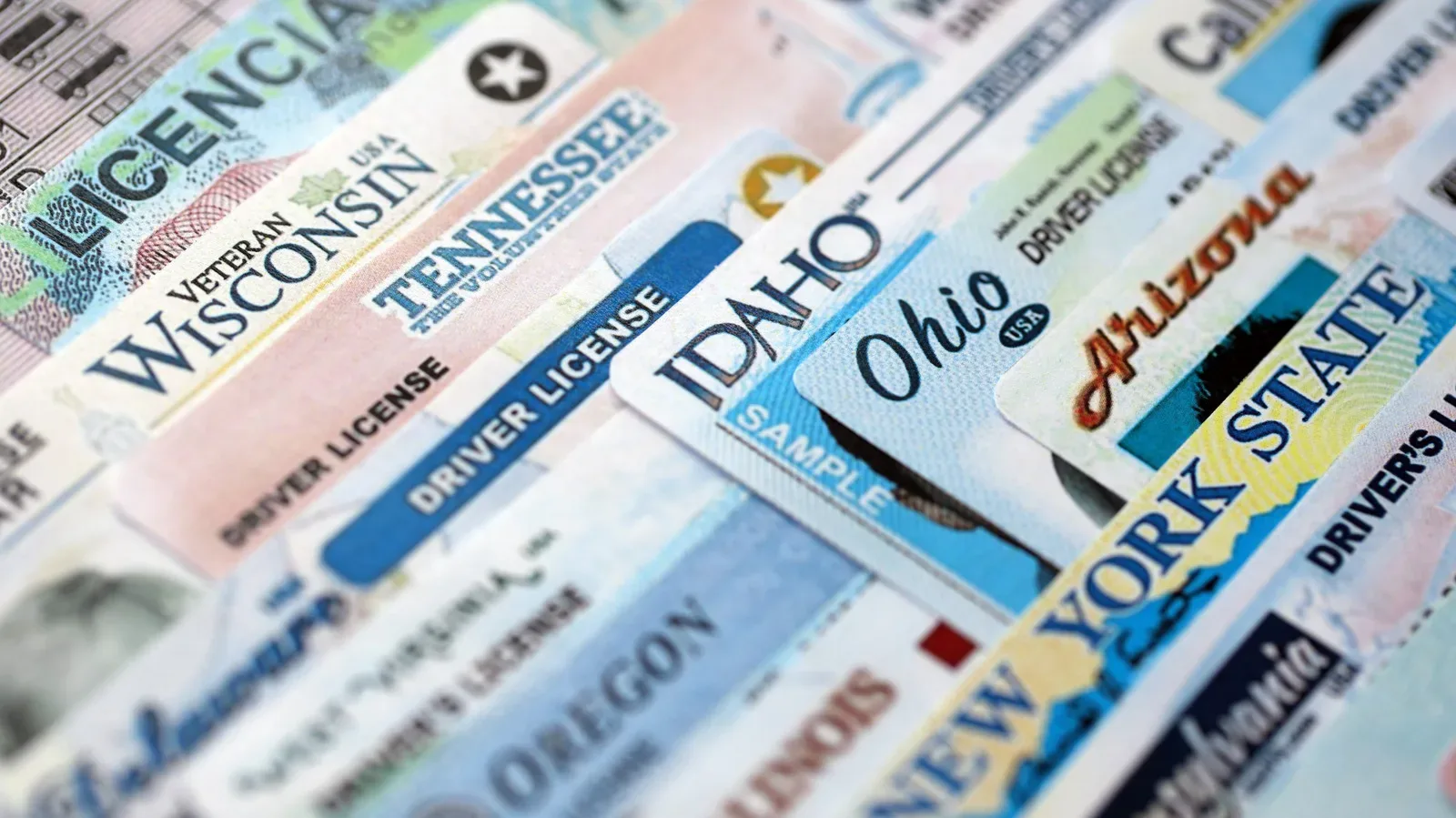
A reported cache of more than 153 million scans of U.S. and Canadian driver’s licenses has brought an alarming reminder that the most mundane real-world checkpoint—handing over an ID—can create a long digital tail. The documents were reportedly offered through a dark-web service called Nexus, which also listed medical cards, employment records and residence cards.
Nexus is no longer operating, and its login page states that the service is unavailable. That is preferable to an active storefront for identity documents, obviously, but it does not erase the underlying risk. Once a scan has been copied, sold or redistributed, closing the shop is not the same as putting every file back in the vault.
The FBI has opened an investigation. Available reporting points to a Louisiana-based identity-verification company, IDScan, as a possible origin for the material, although the cause and scope remain matters for investigators to establish. For people who use digital services, buy collectibles, rent cars, attend events, or simply play games online, the episode is a useful reason to think seriously about identity data as something more sensitive than a routine administrative formality.
What reportedly appeared online
The scale of the alleged collection is the most striking part: more than 153 million license scans from the United States and Canada. The listings reportedly extended beyond licenses to several categories of documents that can reveal highly personal information or be used in identity-related fraud.
A cybersecurity journalist who examined the operation received a scan of his own driver’s license from the criminals and reported that other affected people had also verified the accuracy of their records. The group also displayed a driver’s license scan belonging to Secretary of Defense Pete Hegseth. Those examples do not independently prove every record in an enormous claimed database, but they are a deeply troubling indication that at least some of the material was authentic.
The operation was promoted on Exploit, a Russian-language cybercrime forum, and reportedly used the journalist’s ID scan as a sample intended to draw customers. The details matter because stolen-data marketplaces do not need a long lifespan to do damage. A brief sales window can be enough for buyers to duplicate a dataset and pass it onward through other criminal channels.
IDScan is a possible lead, not a settled public finding
IDScan, an identification-verification provider based in Louisiana, has been identified as the likely source in reporting on the incident. The FBI’s New Orleans field office has launched the investigation. At this stage, it is important to keep the wording precise: an investigation is underway, and a suspected source is not the same thing as a final public determination of responsibility, method or complete affected population.
One reported connection among many potential victims is car rental through Hertz, which uses IDScan for verification. That overlap may help investigators trace how certain records entered the alleged collection, but it should not be read as proof that every Hertz renter—or every person whose identification was processed by an organization using similar systems—was included.
IDScan’s client list has included organizations such as FedEx, Motorola and Jack Henry. Target, also listed at one point, said it was not involved in this incident. The retailer said it uses some of IDScan’s hardware but does not transmit guest data through it; Target was subsequently removed from IDScan’s website. That distinction is an important one in breaches involving vendors: a company can use a provider’s equipment or services without sending the particular category of data at issue through the affected workflow.
Why an ID scan is more serious than a password leak
A password can be changed. A driver’s license number, home address, photograph, birth date and other details commonly visible on an ID cannot be replaced nearly as cleanly. A renewed card may have a different issue date or document number, depending on the jurisdiction, but it does not undo the exposure of information already captured in the original scan.
That makes document leaks different from the familiar advice cycle after a compromised gaming account: reset the password, enable multi-factor authentication, and move on. Those are still good security habits, but they do not solve the whole problem when the compromised item is a government-issued identity document.
High-quality document images can potentially support social-engineering attempts, account-recovery fraud, impersonation schemes and applications made using someone else’s personal details. Criminals may also pair ID scans with information from unrelated leaks. The danger is often less like a single dramatic boss battle and more like persistent background damage: scattered bits of information that become more valuable when assembled.
There is also a human cost to the normalization of ID uploads. People may be asked to show or scan identification at vehicle-rental counters, restricted events, financial services, package-related interactions, age-gated purchases and other everyday moments. The convenience of a fast verification flow is real. So is the obligation to limit collection, protect the data that is retained, and clearly explain what happens after the scanner flashes.
Practical steps if you may have shared an ID
No public notice in the supplied information establishes a complete victim list. That means people should avoid assuming they were exposed solely because they used a business connected to a named provider—and avoid assuming they were safe simply because Nexus went offline. Sensible account and identity hygiene is worthwhile regardless.
- Watch financial and credit activity. Review bank and card accounts, and consider checking credit reports for accounts or inquiries you do not recognize.
- Use strong, unique passwords. Password reuse turns one compromised login into a potential chain reaction across storefronts, email, gaming platforms and payment services.
- Turn on multi-factor authentication. Prefer an authenticator app or a security key where available, rather than relying only on text messages.
- Be skeptical of “verification” messages. A leaked ID image can make a scammer sound more credible. Do not provide a one-time code, password, full Social Security number or fresh ID image because an unexpected caller, email or message demands it.
- Secure the email account behind your accounts. Email is often the reset key for everything else. Review recovery methods, active sessions and forwarding rules.
- Document suspicious activity. Keep dates, screenshots, account notices and case numbers if something appears wrong. Records can help when disputing fraudulent activity.
People with specific concerns about identity theft can consult consumer-protection guidance and their local motor-vehicle authority for options that apply in their state or province. The right response can vary by location and by the kind of suspected misuse, so blanket advice to replace a license immediately is not always the most useful first move.
What this means for game and collectibles communities
The gaming and collecting worlds are not separate from the wider identity ecosystem. Digital storefronts, marketplace accounts, convention ticketing, shipping services, financing tools, age checks and high-value peer-to-peer sales can all involve personal data. A compromised identity document does not automatically mean a game account or a collection is at risk, but it can make targeted phishing attempts more believable.
Collectors in particular should be careful with messages about expensive items, shipping exceptions, account holds or alleged authentication disputes. A scammer who knows a name, address and date of birth may be better equipped to imitate customer support or a buyer. Verify requests by navigating independently to the official service or app; do not use links or phone numbers supplied in an unsolicited message.
That same caution applies to the wider hobby economy. The appeal of frictionless transactions should not lead anyone to send ID photos casually in direct messages. Where verification is truly necessary, use established channels and understand why the document is needed. And when evaluating a service, data minimization deserves to be part of the checklist alongside price, reputation and convenience—much as collectors are encouraged to inspect the status and condition details behind a supposedly special item in this guide to understanding “vaulted” Funko labels.
The broader third-party data problem
This incident also fits a recurring pattern: an organization may have solid controls in one area yet still depend on a vendor, verification platform, processor or other outside service that touches sensitive data. The practical question for businesses is not just whether they collect data, but whether they genuinely need each field, how long it is stored, who can access it, and what happens when a vendor relationship changes.
A recent breach involving a third-party provider used by Discord exposed more than 70,000 government IDs. The two situations are not identical, but together they show why identity-document handling deserves extra scrutiny. A photograph of a license is not merely another customer-support attachment. It is a compact bundle of durable, high-value personal information.
For now, the central facts remain clear: a massive alleged collection of driver’s license scans was marketed through Nexus; the marketplace has since gone offline; authenticity checks indicated that genuine documents were included; and the FBI is investigating a possible connection to IDScan. The remaining questions—how the data was obtained, exactly who was affected, and how widely the files spread—are the ones that will determine the full impact.