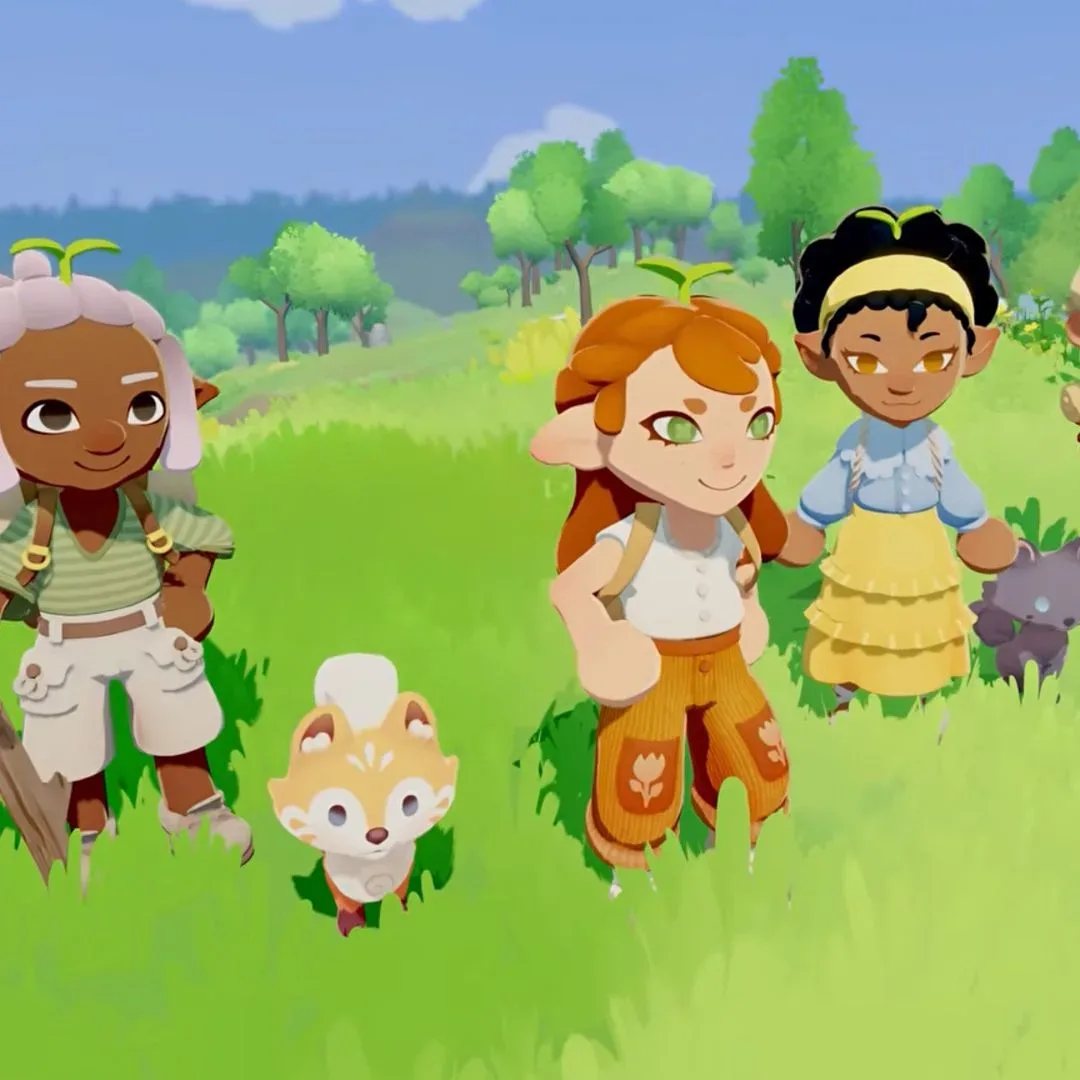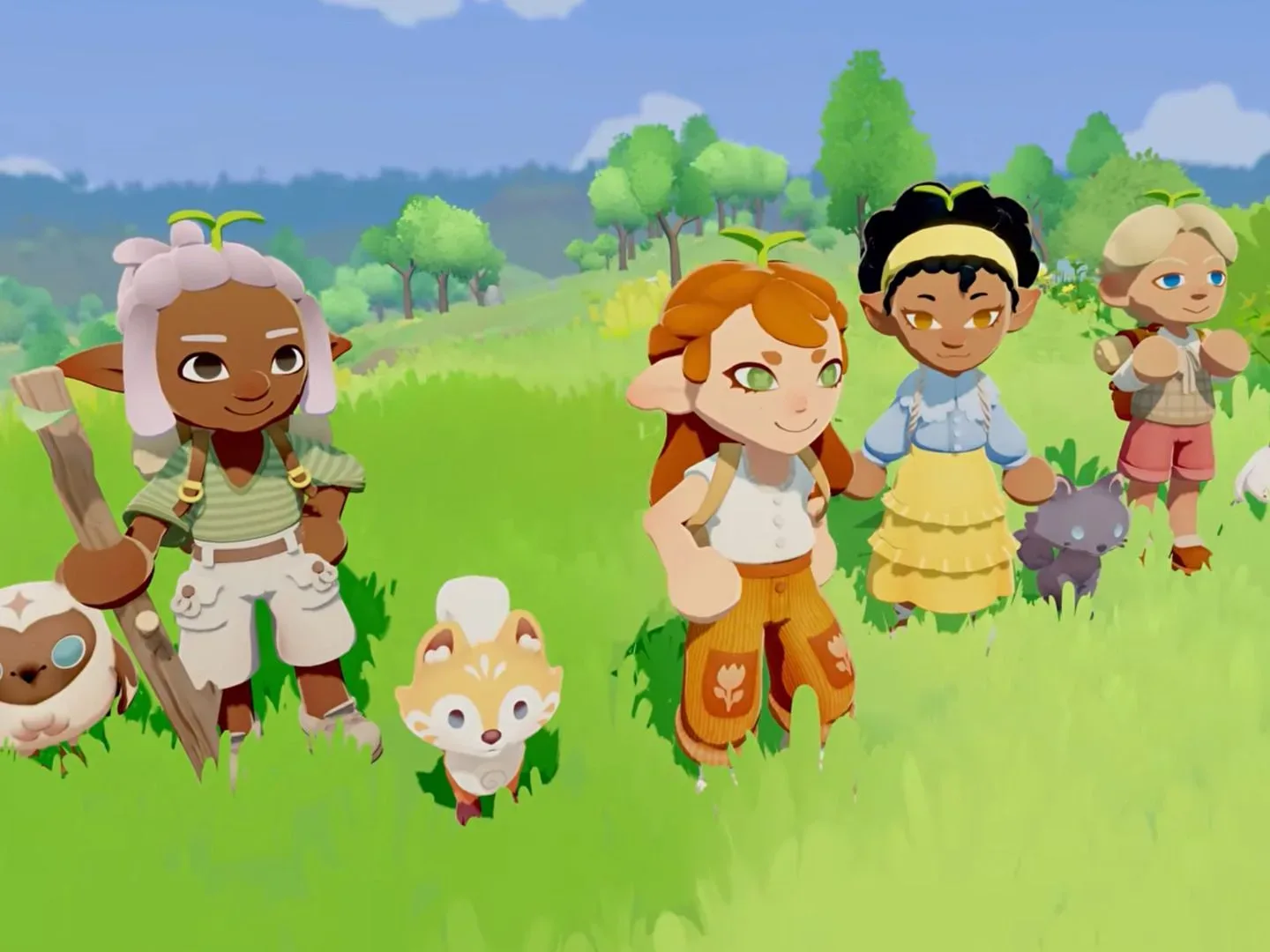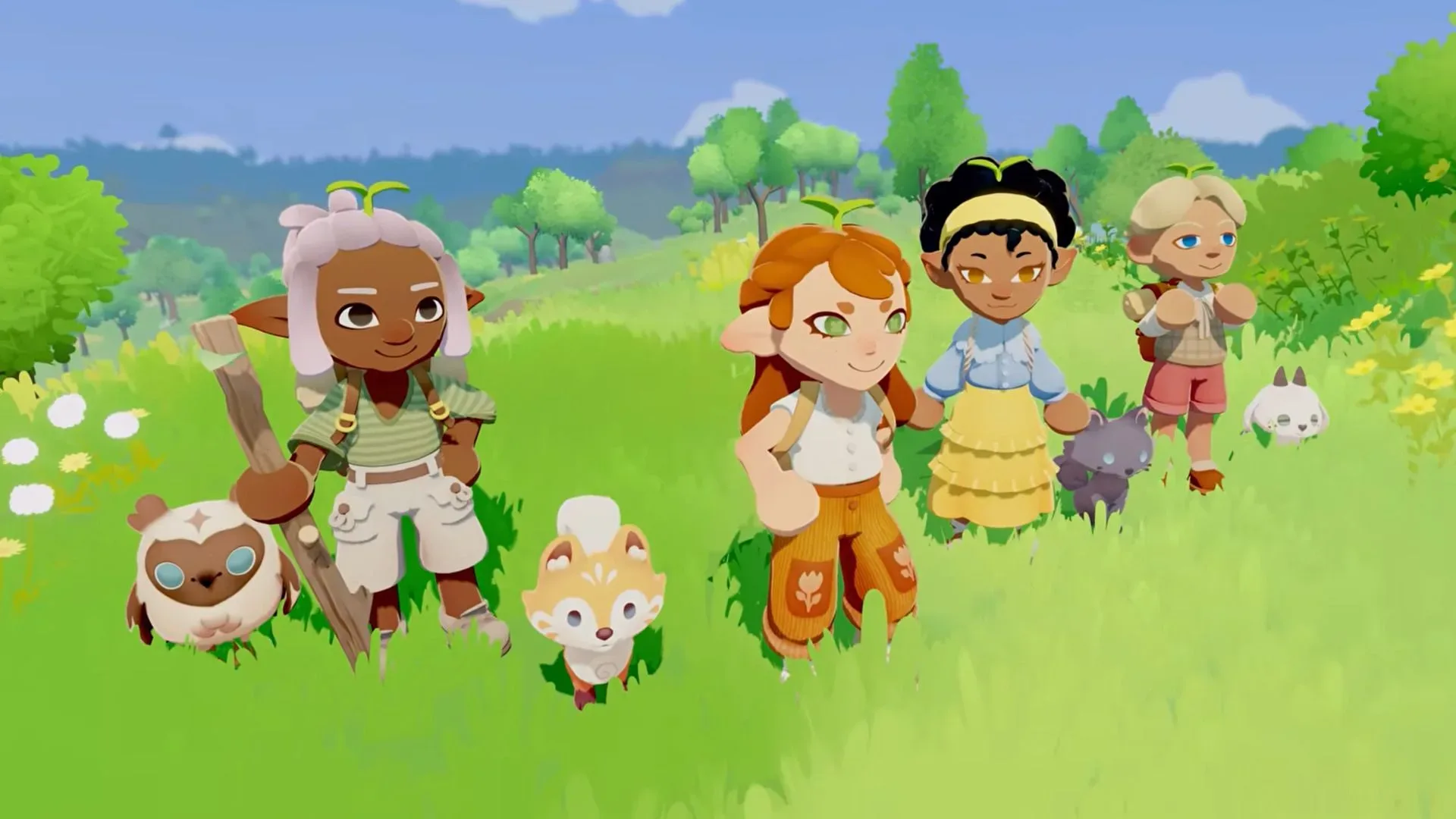
Humblets is making an unusually broad pitch for a cozy game: a fantasy journey built around relaxed exploration, collecting and crafting, but also campsite building, fishing, cooking, gliding, collectible cards and card battles. Developer Berry Bite has framed its tonal goal as a meeting point between The Lord of the Rings and Animal Crossing, while the game’s individual systems evoke several recognizable genre touchstones.
The Kickstarter campaign had passed $135,000 at the time this information was shared. That early support matters because Humblets is not presenting a single-mechanic pastoral sim. It is proposing a bundle of interlocking activities, from assembling a mobile camp to finding resources with an animal companion. The appeal will depend less on any one reference point than on whether those activities form a satisfying daily rhythm rather than a checklist wearing a woolly hat.
Berry Bite says every part of the indie project is handmade and that it commissions human artists for every card. That creative-production stance is central to the campaign’s identity, especially for a game that puts collectible card art and a handcrafted atmosphere near the center of its promise.
A cozy game with room for adventure systems
“Cozy” does not describe one fixed game design. In practice, it usually signals a lower-pressure experience where self-directed goals, pleasant routines, personal expression and discovery take priority over punishing failure states or relentless combat. Humblets appears to pursue that feeling through exploratory crafting and customization, but it is also adding systems more commonly associated with adventure and role-playing games.
Its fantasy setting takes inspiration from The Lord of the Rings and Dungeons & Dragons, though that should be read as a description of influence rather than an indication of an official crossover. For readers looking for another tabletop-fantasy angle, D&D Star Wars’ Tyro Squadron sets up a secret Rebel campaign is a separate example of how role-playing language and established adventure worlds can intersect.
In Humblets, the fantasy premise appears designed to make small-scale actions feel a little more magical. The material shown and described includes petting sheep, cooking comforting meals and even the possibility of becoming a rock. Those details may sound silly in isolation, but they establish an important tonal boundary: this is not merely a survival game with a softer color palette. It is aiming for playful, gentle interaction alongside its resource-gathering and construction loops.
The game is also said to include a pet companion assigned through a personality test. That companion will help the player locate and collect resources while exploring. This is a notable piece of the design because it gives the companion a practical role rather than leaving it as decoration alone. A personality-based assignment could help a new save feel more personal, while resource assistance potentially makes the companion part of the player’s regular routine.
What Humblets is borrowing—and what that means
The comparisons around Humblets are extensive, but each points to a distinct type of play rather than a guarantee that the game will reproduce another title’s systems exactly.
Related coverage includes Humblets Blends Cozy Village Life With Fantasy Adventure as Kickstarter Soars.
- Animal Crossing-style activities: cooking and fishing suggest slower, repeatable pastimes that can break up exploration and provide materials or goals.
- Minecraft-like building: the reference suggests players will have meaningful agency in constructing or arranging their space, rather than only selecting from a small menu of premade upgrades.
- Breath of the Wild-inspired movement and cooking: gliding could make traversal feel freer, while campfire cooking reinforces the portable, outdoorsy identity of the game.
- Collectible cards and card battles: collecting art and using cards in play can create two complementary motivations: completing a collection and learning how cards work together.
- Fantasy role-playing influences: the setting is intended to give the peaceful activities a sense of wonder and adventure.
The most interesting connective thread is the mobile campsite. Rather than centering all personalization on a permanent house or village plot, Humblets is expected to let players customize a campsite and tent that travels with them. That could make the camp a recurring expression of the player’s identity wherever the adventure goes. It also gives cooking, resource collection and the companion system a natural shared hub.
Customization is set to extend to the player avatar, the mobile camp and tent, and the companion. This breadth is important in a genre where players often value the feeling of making a place their own. The available details do not establish the depth of the editing tools or the number of options, so it is too early to treat “customization” as a promise of unlimited building freedom. Still, the stated focus makes clear that self-expression is intended to be a major pillar.
Card collecting is part of play, not a physical-collecting product
Humblets’ cards are described as both collectibles and tools for battles. That creates a familiar game-design loop: exploration and collection build a card pool, then battles give the cards a gameplay purpose. The cards’ artwork has added significance because Berry Bite says every individual card is commissioned from a human artist.
There are several unanswered practical questions. The currently available information does not explain how cards are acquired, whether duplicates exist, what a deck looks like, how difficult battles will be, or whether collecting is entirely optional. Those details will determine whether the system feels like a relaxing side activity, a strategic core mechanic or something in between.
For now, the key distinction is simple: Humblets is discussing digital, in-game card collecting. It should not be confused with a physical trading-card release or a real-world collectibles program. The appeal is tied to discovering art and building playable options within the game’s wider exploration loop.
The procedural-world question is the biggest design unknown
The most substantial caveat in Humblets’ pitch is its world generation. Berry Bite says the game will use a procedurally generated world combined with handcrafted landmarks. Procedural generation, often shortened to “proc-gen,” means that software rules create portions of a game world rather than developers manually placing every piece of terrain and every location.
That approach can be useful for variety and replayability. A generated world can support a greater sense that each player is embarking on a distinct trip, especially when a game revolves around travelling, gathering and finding resources. It can also help a game offer a larger playable space than a fully hand-built map might allow.
But proc-gen has trade-offs, particularly in a cozy game. Handcrafted spaces can give developers more control over visual storytelling, memorable scenery and the carefully paced surprises that make a small virtual place feel intimate. Generated terrain can instead risk feeling repetitive or less intentional if its rules do not create enough personality.
Humblets’ proposed compromise—generated space with bespoke landmarks—is therefore one of the project’s most consequential ideas. The landmarks could serve as memorable destinations and give exploration a curated backbone, while generation supplies variation in the routes and surrounding landscape. Whether that balance succeeds will depend on how frequently players encounter distinctive places and how much their moment-to-moment discoveries feel authored rather than merely assembled.
That is not a verdict on the game before release. It is simply the design area that may matter most to players attracted by the campaign’s emphasis on hand-made creativity. A world can be partly procedural while still containing carefully made points of interest; the remaining question is how the two layers will feel together.
A human-art commitment alongside a long development runway
Berry Bite’s statement about avoiding AI-generated work and commissioning artists for every card has resonated with the project’s handmade presentation. In this context, the claim is not just about how images are produced. It is part of a broader argument that a cozy world full of small details—wiggling plants, animals to pet and card art to discover—should reflect deliberate human craft.
Players should nevertheless separate creative intent from a finished product. Humblets has an estimated alpha delivery date of October 2027. An alpha is an early development phase, generally meaning a project is not yet feature-complete and may still change substantially as systems are built, tested and adjusted. The stated date is an estimate, not evidence that the final game will be ready at that point.
The full release is planned for Nintendo Switch, Nintendo Switch 2, PlayStation 5 and Xbox Series X. No further details are established here about platform timing, feature parity, performance or how the campaign’s gameplay systems will appear on each machine. Those are sensible items for prospective backers and interested players to watch as development progresses.
Why the pitch is finding an audience
Humblets’ momentum is understandable because it identifies several desires that often overlap without always being served by the same game: a calm place to spend time, a fantasy landscape to explore, a camp to personalize, a companion to care about, art to collect and enough strategy to give routine activities some extra texture.
The challenge is scope. Building, fishing, cooking, gliding, procedural exploration, collectible cards, battles and deep customization all require careful prioritization. A feature-rich list alone does not guarantee cohesion. The encouraging part of the pitch is that many of these systems can feed the same central loop: travel through the world, gather resources, return to or improve the camp, prepare food, customize the player’s space and discover cards or landmarks along the way.
If Berry Bite can make that loop feel relaxed rather than overloaded, Humblets could occupy a compelling middle ground between village-life comfort and light fantasy adventure. Its campaign has already generated substantial interest; the next meaningful measure will be how clearly the project turns those appealing ideas into a coherent alpha on its current October 2027 estimate.