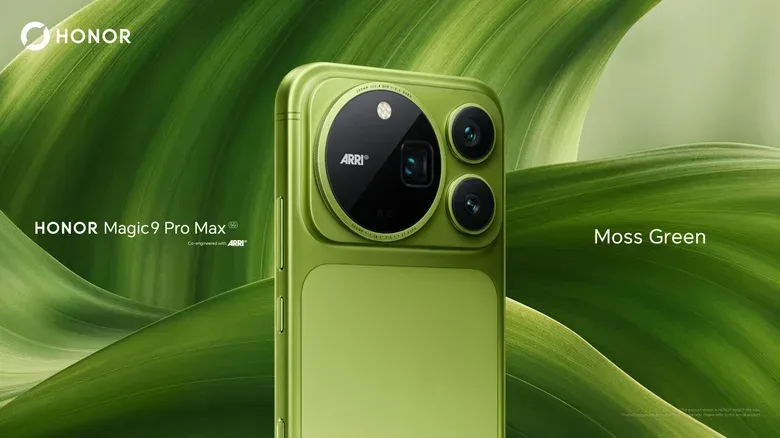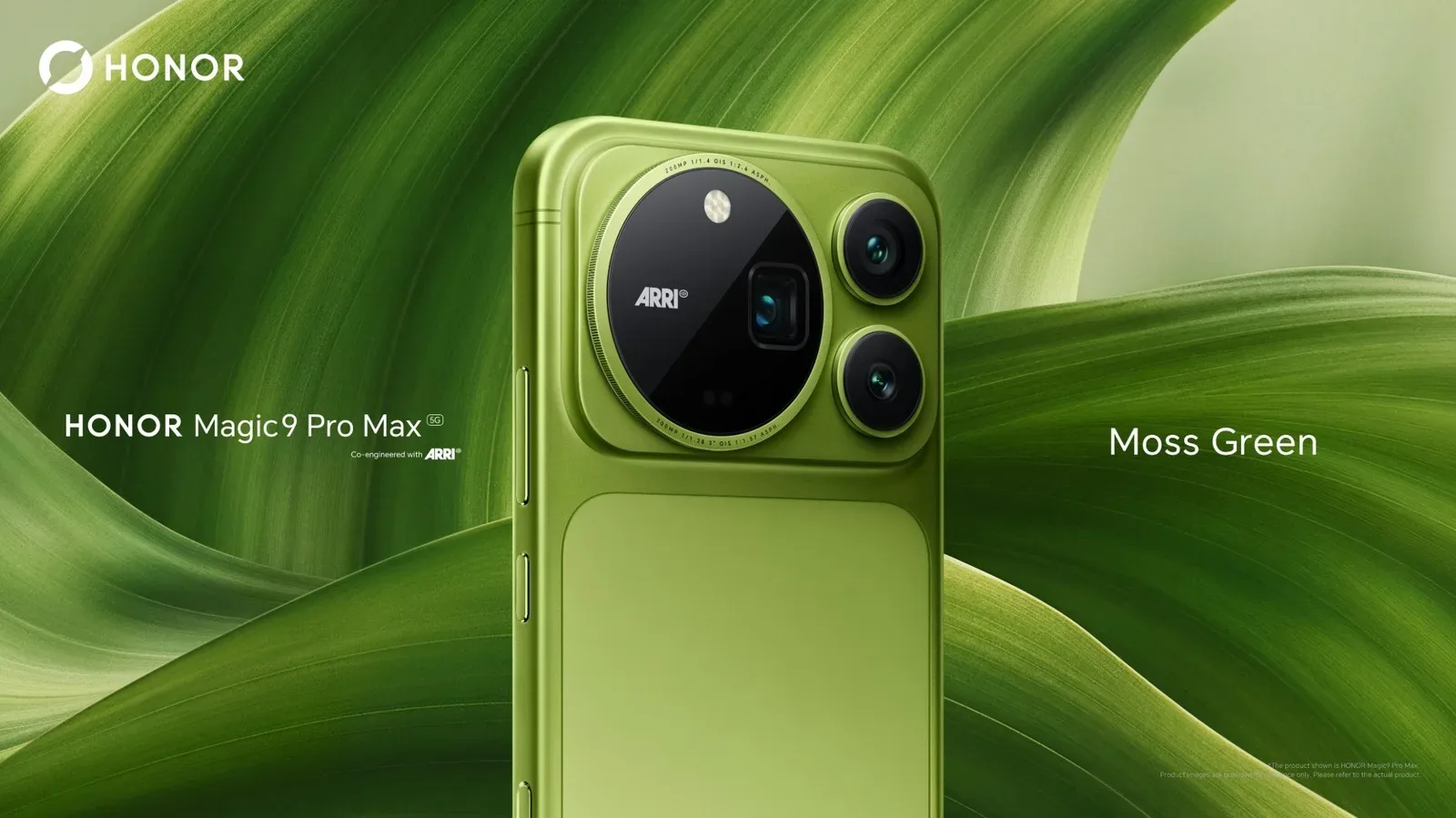
Honor is positioning the Magic 9 Pro Max as a flagship phone for people who would rather talk about color science, camera rigs and cinema framing than merely count megapixels. Its new top-end handset is the company’s first flagship to benefit from its partnership with German cinema-camera maker Arri, and the pitch is unusually direct: bring parts of a professional-oriented video workflow to a phone.
That does not turn a handset into a full cinema-camera replacement, and Honor makes several performance claims that will need independent testing. But the specification has a coherent creator-first shape. The Magic 9 Pro Max combines a triple rear camera system led by two 200-megapixel cameras, an H1 dedicated imaging processor, LogC3 video capture, Arri-made looks, a 2.39:1 cinema aspect-ratio option and a pair of teleconverter accessories developed alongside SmallRig.
It also arrives with the kind of hardware one expects from a no-compromise flagship: a Snapdragon 8 Elite Extreme Gen 6 chip, up to 16GB of RAM, up to 1TB of storage, a large LTPO OLED screen and an 8,000mAh battery with fast wired and wireless charging. In short, Honor is not treating imaging as an isolated feature. It is treating the phone as a pocketable capture, monitoring and editing-adjacent device—one that could also be a formidable mobile-gaming machine on paper.
An Arri partnership aimed at the workflow, not just the badge
Arri is best known for its Alexa cinema cameras. Honor notes that Alexa-shot films include at least six Academy Award winners for cinematography. That pedigree is why the name matters here, but its practical value on a phone depends on what has actually carried over to capture and post-production tools.
The headline is support for Arri LogC3. Log footage is deliberately flatter-looking video that retains more room for adjustment during color correction than a heavily processed, ready-to-post clip. Rather than baking strong contrast and saturation into the recording, a Log workflow is intended to preserve tonal information for the later edit.
That flexibility has a trade-off. Log video generally needs color grading before it looks finished, so it is not automatically the best choice for a quick social upload. It is most relevant to creators who want consistent results across shots, plan to edit footage, or want more control over shadows, highlights and color after recording. Honor’s stated end-to-end cinematic workflow is therefore more consequential than an Arri logo stamped alongside a standard camera app—provided the implementation is convenient and the files hold up in use.
The phone will also offer up to 87 Arri looks, along with Arri-created filters and color profiles. A “look” is a preset visual treatment, affecting qualities such as color balance, contrast and tonal mood. For casual creators, these could be the more immediately useful part of the partnership: they offer a route to a stylized finish without starting from a neutral Log image and grading manually. The key distinction is simple: Log is built for latitude and editing control; a look is built to deliver a chosen aesthetic more quickly.
Honor is also including a 2.39:1 shooting option. That is a wide cinematic frame shape, substantially wider than the familiar 16:9 video rectangle. It can make sense for a deliberately composed short film, trailer or landscape scene, but it is not a universal upgrade. Vertical platforms and conventional video players may display it with unused space, while a wider crop can exclude useful action above and below the frame. The choice is valuable precisely because it is a choice, not because every phone clip needs to impersonate a theatrical release.
Two 200MP cameras lead the rear array
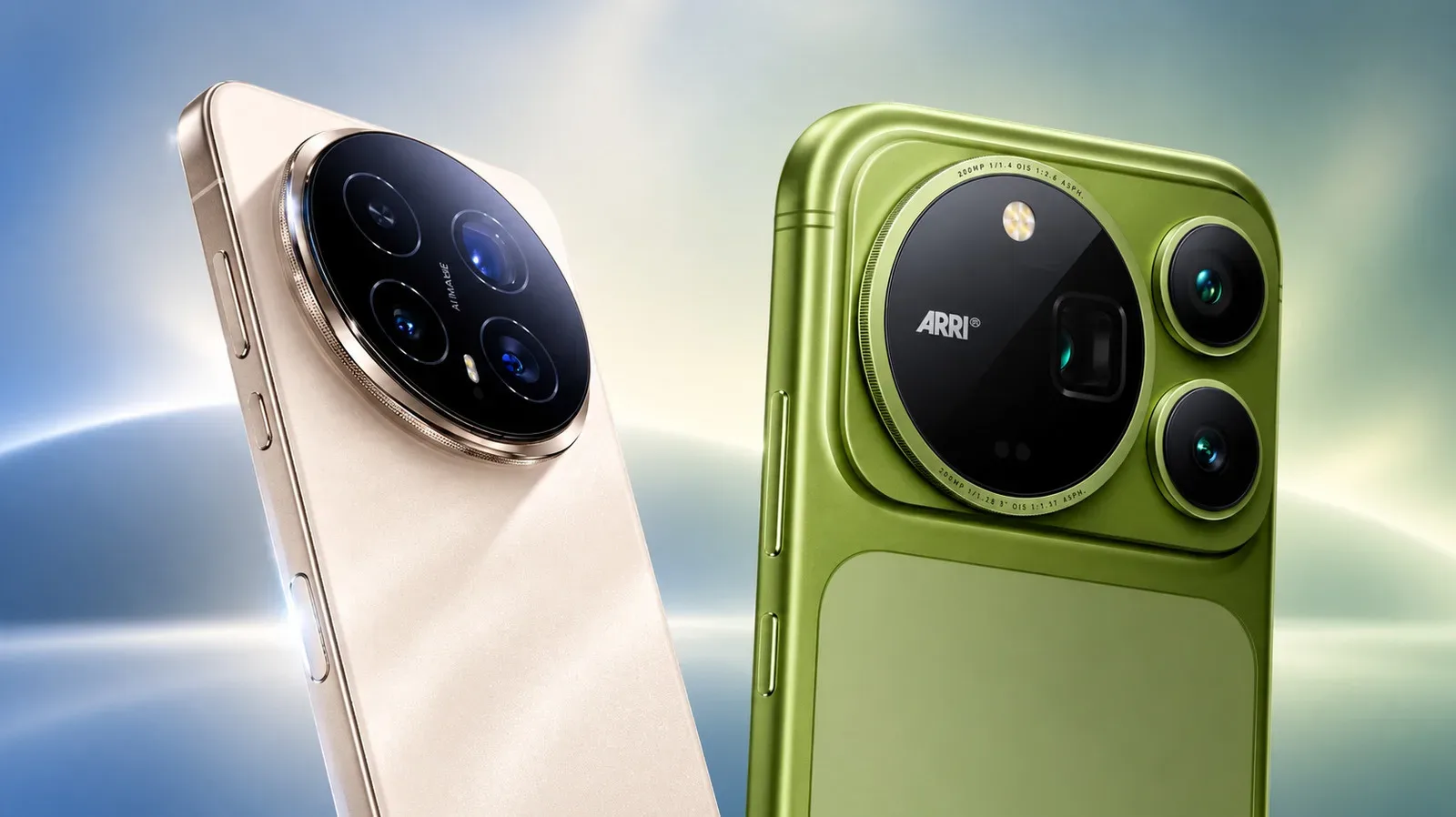
The Magic 9 Pro Max uses an Arriflex-inspired rear-camera design and a three-camera configuration:
- A 200-megapixel, f/1.57 main camera with optical image stabilization.
- A 200-megapixel, f/2.6 telephoto camera with optical image stabilization.
- A 50-megapixel, f/2.0 ultra-wide camera.
The numbers establish ambitious hardware targets, but they should be read with a little context. Megapixels describe image resolution, not a guarantee of superior photos or video. Final results are shaped by the sensor, lens, stabilization, processing, light and how the phone combines data from its cameras. A 200MP sensor can offer plentiful image data and potential cropping flexibility, while still relying on computational processing to produce its final output.
The aperture figures matter in a different way. The main camera’s f/1.57 aperture is wider than the telephoto’s f/2.6 aperture, meaning the main lens is designed to admit more light. That can be especially useful in darker scenes, where the phone has more exposure to work with. The telephoto’s purpose is reach: it frames distant subjects more tightly than the main or ultra-wide camera.
Both the main and telephoto cameras include OIS, short for optical image stabilization. OIS physically compensates for small hand movements, helping to reduce shake. Honor says the primary camera provides “gimbal” levels of optical stabilization. That is an important claim, but one best interpreted as a statement about stabilization performance rather than as a literal substitute for a separate gimbal. How well it controls walking movement, rapid panning and low-light recording remains a real-world question.
Helping to process this camera hardware is the new H1, Honor’s first dedicated imaging processor. A dedicated imaging chip is designed to handle image-related workloads separately from the main system chip. In principle, that can support sophisticated camera processing and help manage demanding image pipelines. Honor’s decision to launch H1 alongside its Arri-oriented features suggests the company sees imaging computation as central to the Magic 9 Pro Max rather than a background specification.
SmallRig accessories take the phone beyond the usual slab format
Honor is also working with SmallRig on accessories intended to make the Magic 9 Pro Max more adaptable as a camera tool. A SmallRig camera cage will let users attach either the Honor-branded Teleconverter G200 or Teleconverter G500.
Honor says these teleconverters extend focal length by 200mm or 500mm respectively. In plain language, they are intended to make distant subjects fill more of the frame—useful where an ordinary phone camera’s reach becomes limiting. The company specifically presents them as a way to capture distances that would be difficult to handle through AI-enhanced imaging alone.
There is a meaningful practical distinction here. AI-assisted zoom can use computation to improve or reconstruct the appearance of a zoomed image, whereas an external teleconverter is an optical accessory designed to extend reach before software processing takes over. Neither description alone establishes image quality, but the accessories show Honor is offering a route for people willing to carry more gear in exchange for more specialized framing options.
A cage can also make a phone easier to mount or hold securely, although Honor has not detailed every accessory configuration. It changes the proposition from “phone with a good camera” to a system that can be built up for particular shoots. That will not appeal to everyone, and it inevitably makes the compact-device advantage less compact. For creators who already use grips, lights, microphones or tripod mounts, however, the direction is clear.
Display, battery and storage support long sessions
The rest of the hardware is substantial. The Magic 9 Pro Max has a 6.8-inch OLED display with a 2,868 x 1,320 resolution, a 1Hz to 120Hz refresh-rate range and a claimed 10,000-nit peak brightness. LTPO is display technology that allows a screen to vary its refresh rate efficiently. At the low end, reducing refresh activity can help save power for static content; at the high end, 120Hz can make compatible scrolling, interface motion and games look smoother.
Peak-brightness measurements describe a display’s maximum capability under specific conditions, rather than a brightness level it will necessarily sustain across the whole screen in ordinary daily use. Still, the headline figure signals that outdoor viewing and HDR-style content are areas Honor wants to emphasize.
The 8,000mAh battery is paired with support for up to 100W wired charging and up to 80W wireless charging. Capacity and charging-rate figures are useful, but neither alone predicts day-to-day endurance or recharge times. Screen brightness, games, camera recording, cellular use and ambient heat all affect battery behavior. Video work is particularly demanding: recording, stabilization and processing can keep multiple components active at once.
Storage options of 256GB, 512GB and 1TB are consequently more than a luxury line on a spec sheet. High-resolution images and video, particularly footage captured for subsequent editing, can consume space quickly. Buyers considering Log-based shooting or extended clips should pay attention to the available capacity as closely as they do to the camera count.
There are 12GB and 16GB RAM versions, Wi-Fi 7 support, dual-SIM space alongside an eSIM, and a 55-megapixel front camera. The Snapdragon 8 Elite Extreme Gen 6 system-on-chip handles general device computing, while the H1 takes a specialized role in imaging. This combination suggests plenty of processing headroom, though gaming performance, thermal control and sustained frame rates have not been established here.
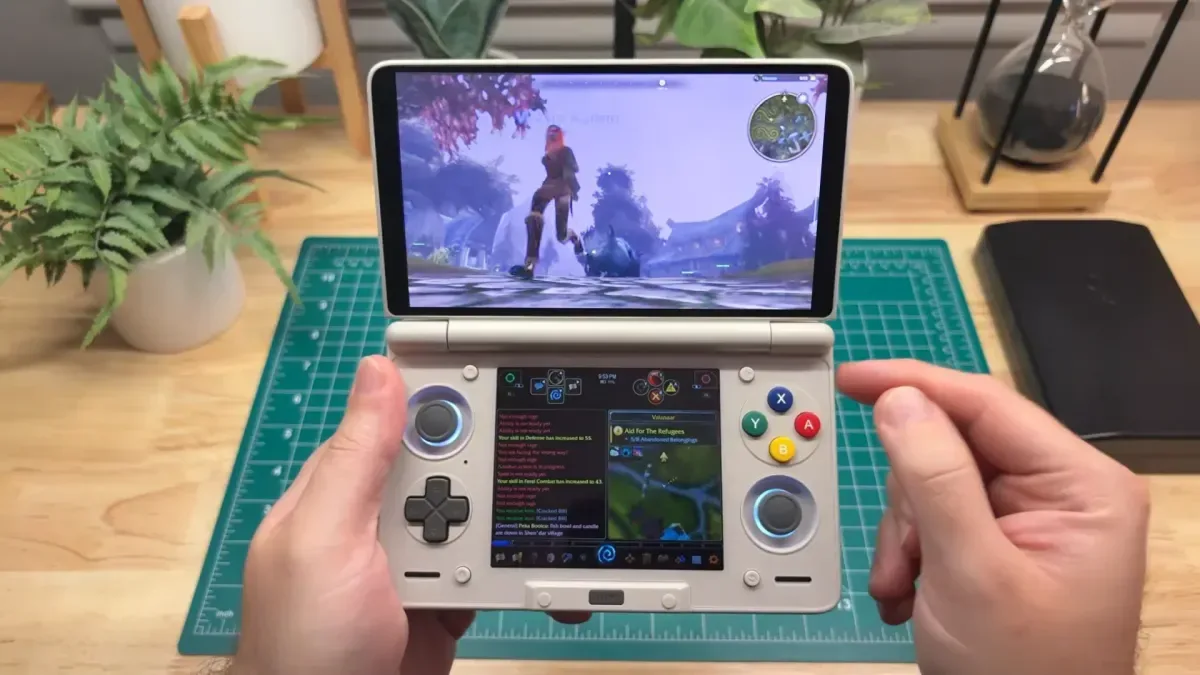
For players who do want a phone capable of serving as a serious game device between shoots, the broad display, high refresh ceiling, large battery and flagship-class processor make the specifications notable. The wider handheld space is continuing to test novel screen formats and Android-based approaches too, as seen in AYN Thor’s dual-screen Android handheld route. Honor’s device is pursuing a conventional phone form, but with unusually heavy emphasis on camera hardware and creator accessories.
Release timing and price
The Magic 9 Pro Max debuts in Malaysia at RM 5,999, approximately $1,455, for the 12GB RAM and 512GB storage model. Honor plans to bring it to the Middle East next month, followed by a Western debut at some point in January. No further regional pricing or specific Western launch date has been provided.
Ultimately, the Magic 9 Pro Max is a clear statement of intent. Many phones claim “pro” camera status through bigger sensors, more megapixels or AI features. Honor is instead pairing those familiar pillars with a named cinema-camera partner, a Log workflow, selectable cinematic framing and bolt-on optical reach. The most interesting question is not whether a phone can inherit cinema vocabulary—it plainly can—but whether Honor has made the resulting workflow reliable and accessible enough that creators will use it beyond the first impressed look at the spec sheet.