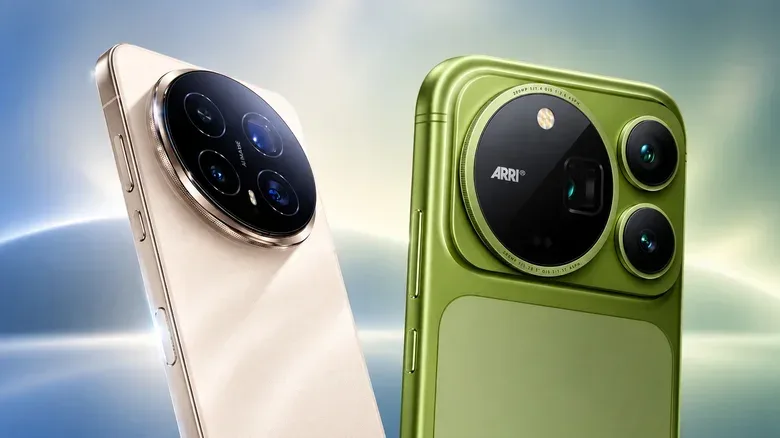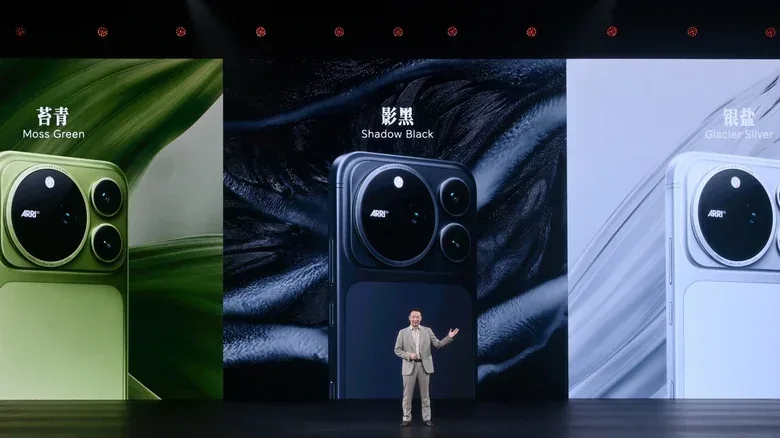
Honor’s 2026 flagship naming has taken a detour. There is no announced Magic9 Pro. In its place, the company’s top announced model is the Magic9 Pro Max, positioned above the Magic9 and Magic9 Super Edition.
That matters for anyone trying to read this as a simple Magic8 Pro-to-Magic9 Pro annual upgrade. The Magic9 Pro Max is the relevant comparison, but it is not a like-for-like nameplate continuation. Its specifications nevertheless make Honor’s priorities fairly clear: a 200MP main camera, creator-facing ARRI video options, a much larger listed battery for China, and Qualcomm’s 2nm Snapdragon 8 Elite Extreme Gen 6.
The short version is that Honor has put its largest camera upgrade on the main camera rather than the telephoto camera, and it has substantially raised battery capacity on the Chinese specification. Those gains come with caveats. Wired charging drops from 120W to 100W, the listed optical zoom changes from 3.7x to 3.5x, the new phone is heavier, and its headline battery figure is not confirmed for every region.
For the fuller spec-by-spec breakdown, this comparison of the Magic9 Pro Max and Magic8 Pro also tracks the major trade-offs. Here is what the changes mean without letting a giant number on a camera ring do all the talking.
The 200MP headline is about the primary camera this time
The Magic8 Pro already had a 200MP camera: its 1/1.4-inch telephoto sensor, listed with 3.7x optical zoom. It paired that long-range camera with a 50MP, 1/1.3-inch primary camera and a 50MP ultrawide.
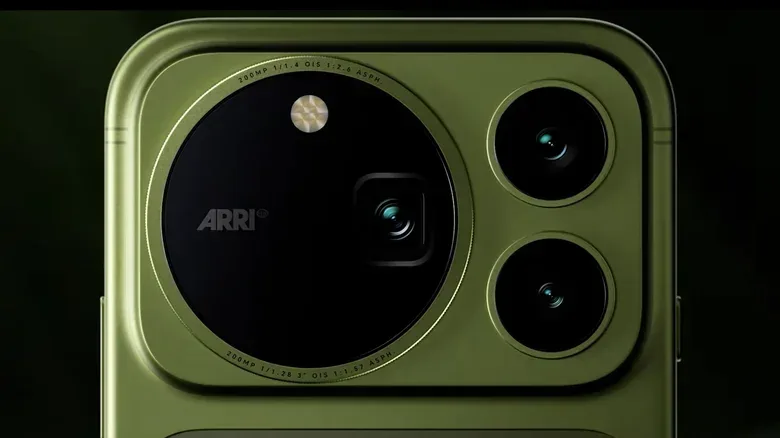
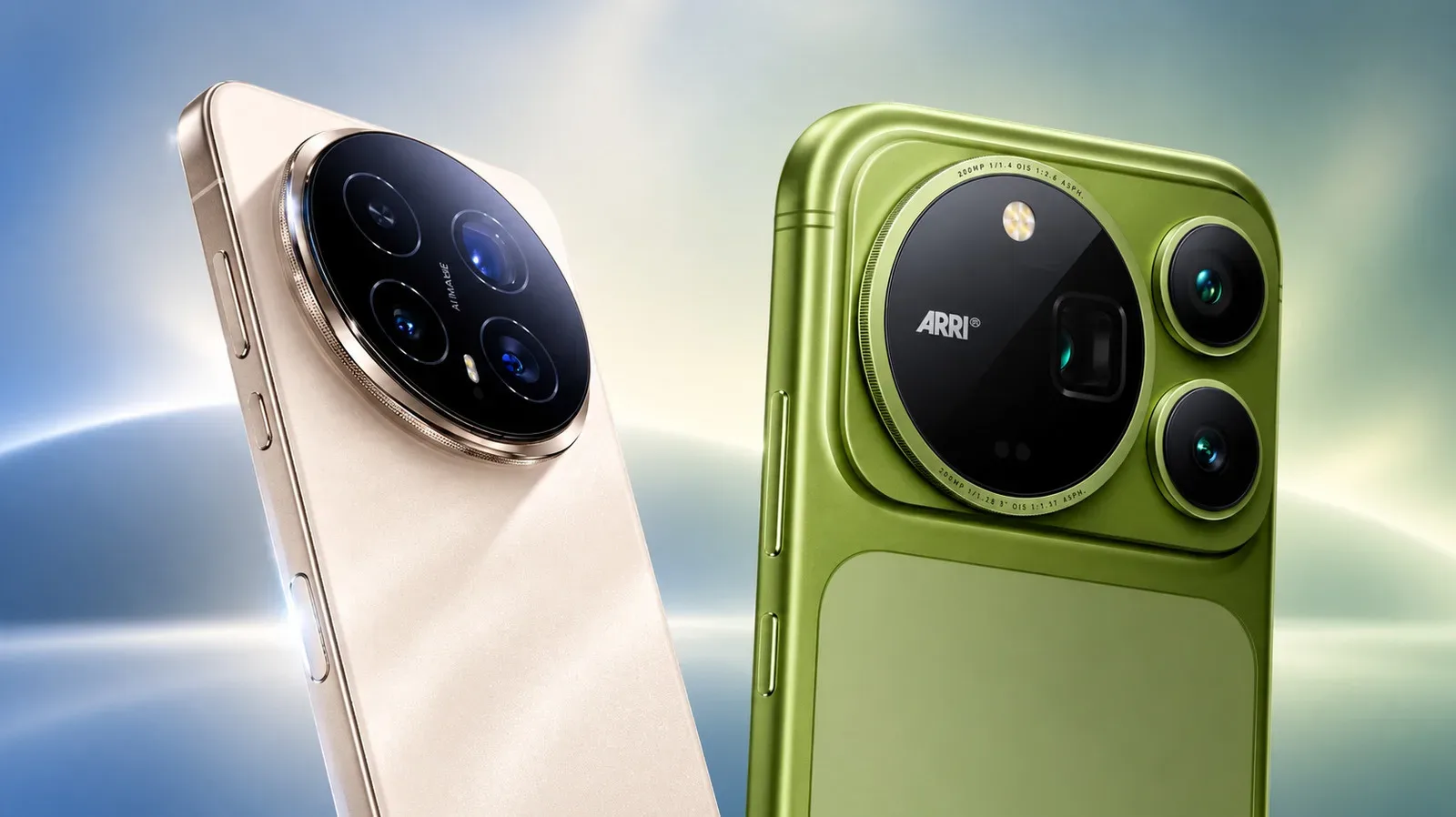
The Magic9 Pro Max keeps the 200MP 1/1.4-inch telephoto camera, but changes the primary camera to a 200MP 1/1.28-inch sensor. In plain terms, Honor is moving the high-resolution pitch to the camera expected to handle the broadest range of everyday shooting, rather than treating it as a telephoto-only bragging right. The primary sensor is also listed as slightly larger than the preceding 1/1.3-inch primary sensor.
This produces a dual-200MP specification, but it should not be mistaken for two entirely new 200MP cameras. The telephoto resolution was already present on the Magic8 Pro. The generational change is the main sensor, alongside the company’s H1 imaging chip and stronger listed stabilization.
More megapixels are not an automatic quality verdict
Megapixels describe image resolution: a 200MP sensor records a stated 200 million pixels. That is useful information, but it does not, by itself, settle whether a photo is better. Honor’s own hardware changes make that point unusually well. A camera system also involves sensor size, stabilization, image processing and the way the phone’s hardware works together.
The Magic9 Pro Max’s main and telephoto cameras are rated at CIPA 8.0 stabilization, up from CIPA 6.5 on the Magic8 Pro. CIPA ratings are a standardized way of expressing the stated effectiveness of image stabilization. The higher figure is therefore a meaningful on-paper improvement, especially since it applies to both of the phone’s headline cameras, but it is still a specification rather than a guarantee that every scene will look better.
The telephoto’s listed optical zoom is one of the places where the new model does not strictly move upward: Honor lists 3.5x on the Magic9 Pro Max, compared with 3.7x for the Magic8 Pro. That difference does not erase the retained 200MP telephoto hardware, but buyers who chiefly value the stated native zoom figure should notice it rather than assume every number advances with a newer device.
ARRI video tools are the more distinct camera story
Honor is giving the Magic9 Pro Max a more serious video-creation pitch through its ARRI collaboration. The phone includes LogC3 recording, ARRI Wide Gamut 3, 10-bit capture, 14 preset ARRI Looks and 87 predefined color gradings. ARRI Cinema Mode reaches up to 4K at 60 frames per second.
These labels can become a fog of cinema jargon, so the practical distinction is worth making. 10-bit capture refers to the phone recording more color information than a basic capture mode, while a wide-gamut workflow is intended to cover a broader range of colors. LogC3 is a recording option aimed at editing and color grading rather than a one-tap dramatic filter. Color grading is the post-production adjustment of a video’s colors and overall visual treatment.
In other words, the ARRI tools are relevant to people who intend to edit their footage and want greater control over its look. They are not inherently a reason for every buyer to pay more, nor do presets replace shooting, editing or color-grading judgment. But the combination gives the Magic9 Pro Max a clearer creative-workflow argument than “this camera has an extremely large megapixel number.”
The optional Photography Master Kit extends that message with 200mm- and 500mm-equivalent teleconverters, an imaging grip and additional accessories. A teleconverter is an accessory designed to extend the apparent reach of a camera system. The important word here is optional: it is an add-on rather than a standard part of the phone package described here.
Honor is entering a crowded premium-phone camera conversation. Oppo and Vivo are also pursuing 200MP sensors, teleconverters and elaborate imaging systems. The Magic9 Pro Max’s response is not simply another resolution escalation; its differentiator is the attempt to tie still imaging hardware to a named video and color workflow.
A huge battery claim, with regional uncertainty attached
The Magic9 Pro Max is listed with an 8,800mAh battery in China. Against the Chinese Magic8 Pro’s 7,200mAh battery, that is roughly 22% more capacity. On paper, it is among the clearest upgrades in the comparison.
Capacity and charging speed should be treated as separate measurements. Battery capacity, expressed in mAh, indicates the stated amount of charge the battery can hold. Charging wattage expresses the rated speed of the charging system. The Magic8 Pro Chinese specification lists 120W wired charging and 80W wireless charging. Magic9 Pro Max wired charging is listed at 100W, while wireless charging remains 80W.
So the newer phone’s upgrade path is larger capacity rather than a higher maximum wired-charging figure. Its wireless charging number is unchanged, and the wireless charger is sold separately. There is no need to frame that as a contradiction: Honor has made a different balance of battery capacity and wired charging specifications. It does mean that “bigger battery” should not be casually converted into “faster charging.”
The regional caveat is more important than usual. Honor has not confirmed that international Magic9 Pro Max variants will receive the 8,800mAh battery. The company already varies battery specifications across markets: the Magic8 Pro has a 7,200mAh battery in China but a 6,270mAh battery in the United Kingdom. Anyone outside China should wait for their local product specification instead of treating 8,800mAh as a universal promise.
There is a size and weight cost
The Magic9 Pro Max has a 6.8-inch display, slightly larger than the Magic8 Pro’s 6.71-inch panel, and weighs 233 grams. It is slightly heavier than the preceding Pro model. The information available does not establish how the phone feels in daily use, but the stated dimensions and weight point in the obvious direction: the bigger battery does not arrive as a purely invisible upgrade.
That will matter differently depending on the buyer. A person who values the largest stated capacity may consider additional heft a reasonable exchange. Someone who chose the Magic8 Pro because it already sat at the large-flagship end of the scale should not assume the Pro Max label is merely marketing decoration.
MagicOS 11 adds cross-device transfer support
The new handset introduces MagicOS 11, built on Android 17. Honor says it supports file transfers across compatible iPhones, Macs, Android devices and Windows PCs. Transfers involving iOS, macOS and Windows require Honor Connect.
This is a practical feature, but its value depends on the devices in a household or work setup. Android-to-Android transfers alone are not the whole proposition; the stated compatibility with iPhone, Mac and Windows is what makes the feature notable. At the same time, “supported” remains a condition worth reading carefully, particularly where operating-system versions and Honor Connect are involved. For iPhone owners who want to confirm the software on their existing device before planning any cross-platform workflow, see how to check an iPhone’s iOS version and update it.
Availability and import questions cannot be hand-waved away
The Magic9 Pro Max starts at 6,499 yuan in China, described as roughly $974. That conversion is useful as a reference point, not a local retail-price promise. Honor has not confirmed a US release, and the battery variation between China and the UK Magic8 Pro makes regional details especially consequential.
Potential importers should verify network-band support, warranty coverage and regional software differences before treating the phone as equivalent to a locally sold Galaxy or Pixel. Those checks are more than boring checkout-page homework: a flagship’s camera and battery specs are only part of the ownership equation if local carrier compatibility, support and software behavior remain unclear.
What has actually changed?
- Main camera: 50MP, 1/1.3-inch on Magic8 Pro to 200MP, 1/1.28-inch on Magic9 Pro Max.
- Telephoto: 200MP, 1/1.4-inch hardware remains, while listed optical zoom shifts from 3.7x to 3.5x.
- Stabilization: CIPA 6.5 rises to CIPA 8.0 for the main and telephoto cameras.
- Video: ARRI-oriented LogC3, ARRI Wide Gamut 3, 10-bit capture, preset Looks and predefined gradings arrive, with ARRI Cinema Mode up to 4K 60fps.
- Battery: Chinese capacity rises from 7,200mAh to 8,800mAh, while wired charging falls from 120W to 100W and wireless charging stays at 80W.
- Software: MagicOS 11 on Android 17 adds stated cross-device transfer support, with Honor Connect required for iOS, macOS and Windows transfers.
The Magic9 Pro Max is consequently a focused rather than universally linear successor. It upgrades the primary camera, stabilization, video toolset, battery capacity in China and platform hardware, but it does not win every individual line on the comparison sheet. For prospective buyers, the decision is likely to turn on priorities: main-camera resolution and editable video, battery capacity, and the willingness to accept a larger device and wait for market-specific confirmation.