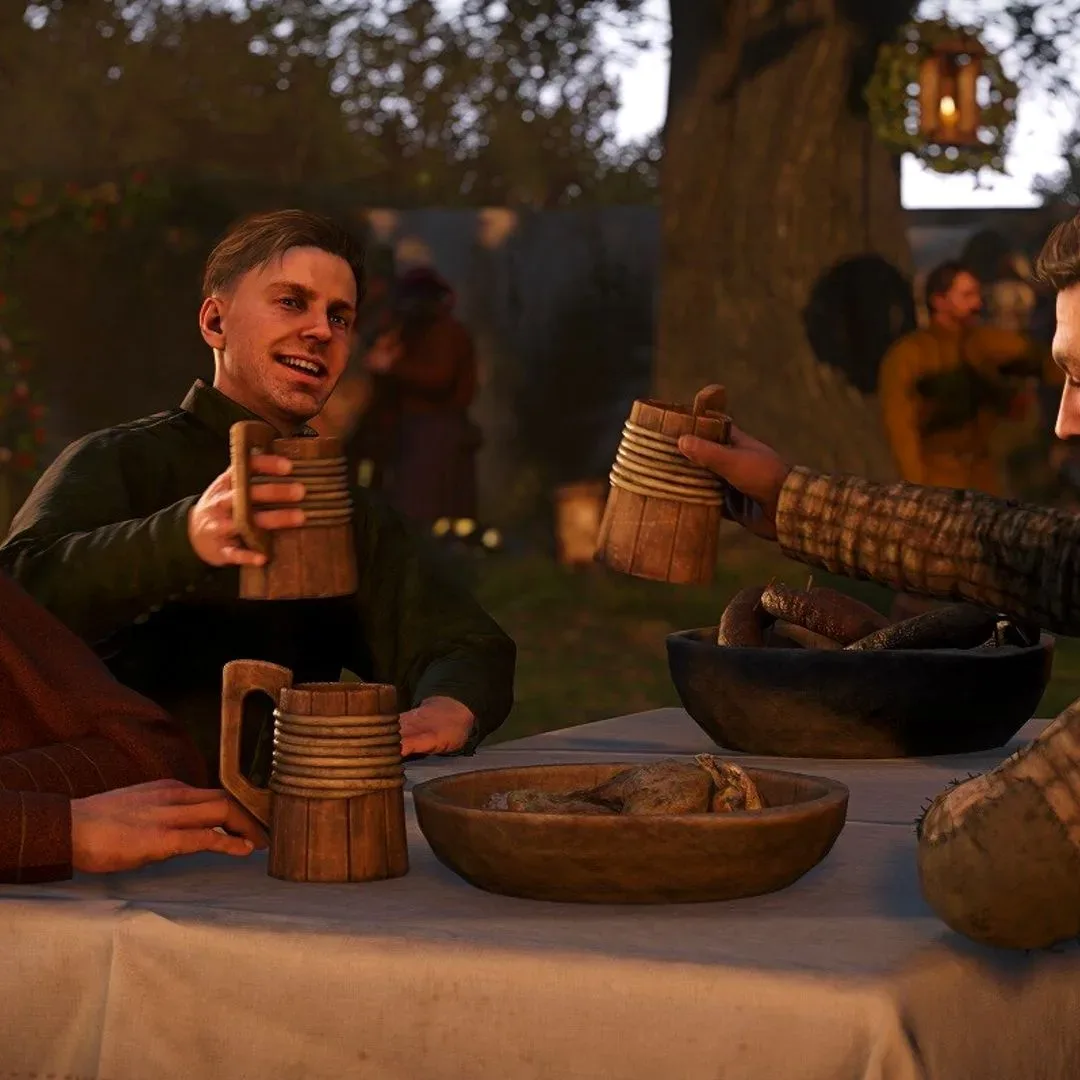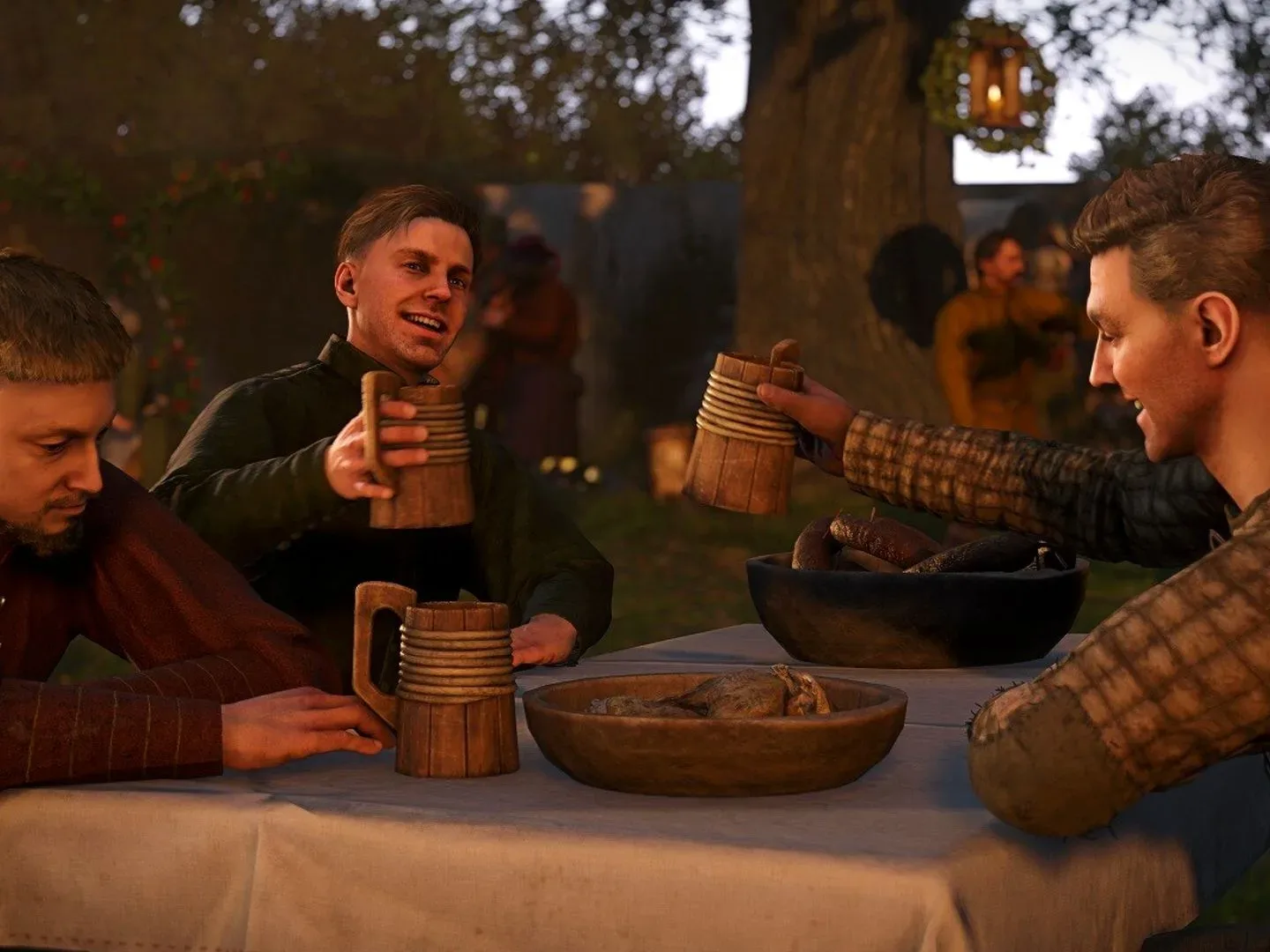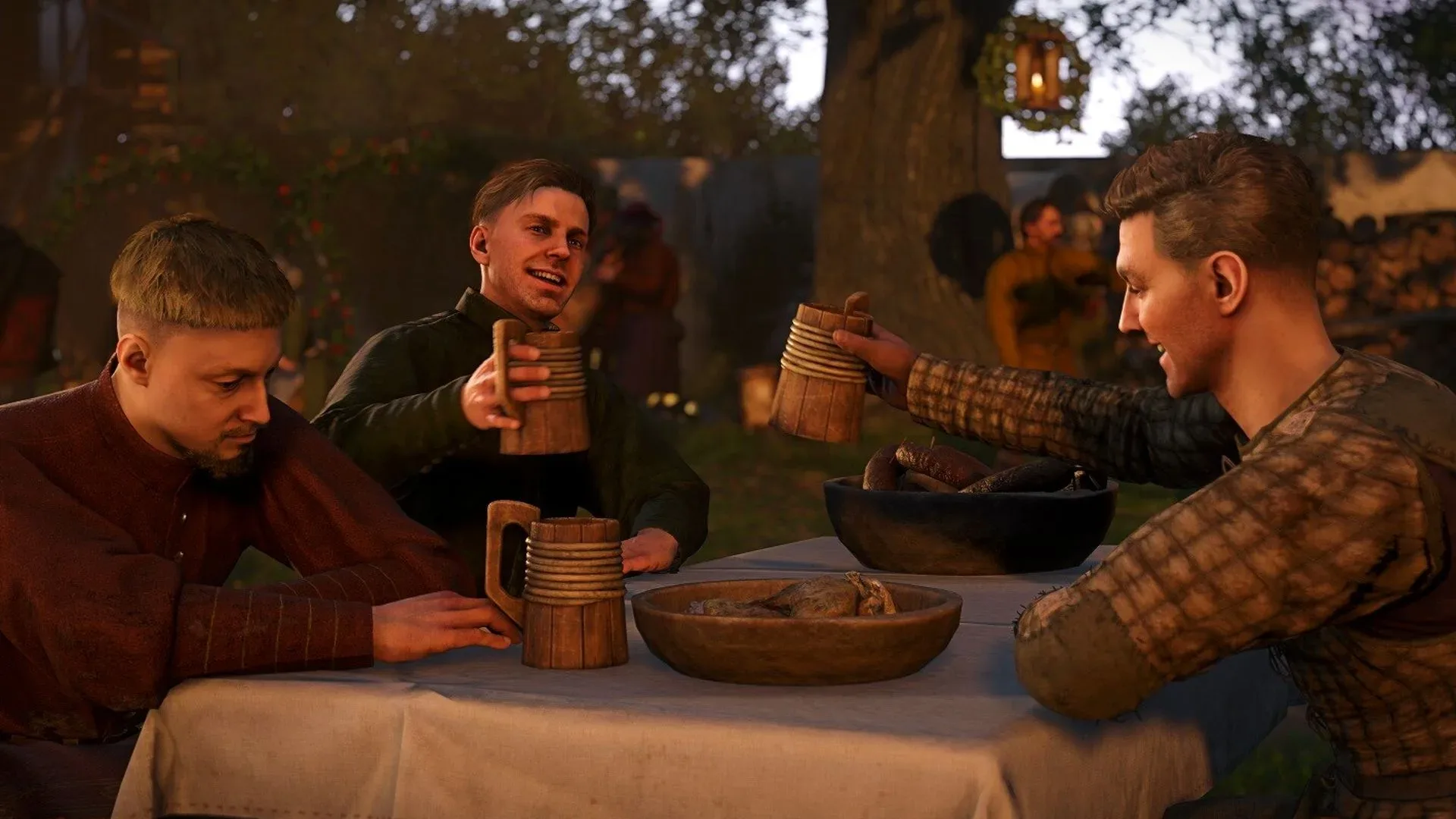
Luke Daley, the actor behind Hans Capon in Kingdom Come: Deliverance 2, has turned a fitting bit of game-world atmosphere into a real Prague venue. His medieval-inspired bar, The Nobleman, opened to the public on October 1.
The premise is pleasingly direct: a performer associated with one of modern gaming’s most memorable noblemen has created a space inspired by the kind of establishment where noblemen might gather for a drink. For fans who have spent time in the taverns of Kingdom Come: Deliverance 2, it offers a tangible counterpart to one of the game’s most recognizable social settings—though it requires an actual trip to the Czech capital rather than a fast-travel prompt.
A real-world tavern idea with game-adjacent appeal
Daley had discussed the goal of opening a hospitality business months before The Nobleman’s launch. He described a long-standing desire to run a pub, restaurant, or café: something physical, personal, and rooted in a community.
“Ever since I can remember, I’ve always wanted to run a pub, a restaurant, a cafe, something,” Daley said previously. “Something that was bricks and mortar, something that felt real.”
For more context, explore YouTube TV at $82.99 a Month: Who Still Gets Enough Value From Live TV?.
That distinction matters. Acting, filmmaking, and streaming can all bring a person into contact with a large audience, but they are often project-based and mediated through screens, sets, productions, or platforms. A bar is a daily, place-based business. It gives its owner a regular venue in which staff, customers, neighbors, and visitors can return to the same physical room. Daley said he wanted a business he could run and be part of, while helping create a positive feeling in a community.
The Nobleman is therefore more than a character tie-in on the facts available. It is a bricks-and-mortar business that happens to have an unusually natural connection to the role for which Daley is known among players. The concept draws from the tavern and noble-house imagery associated with the game, but the stated motivation is also personal: owning and operating a real gathering place.
Why Prague is the right city for this crossover
Prague is not simply a convenient tourist backdrop for a medieval-themed venue. It is also home to Warhorse Studios, the developer behind Kingdom Come: Deliverance 2. That local connection helps explain why the opening could resonate with nearby fans as well as travelers already interested in the game’s Czech setting and historical atmosphere.
Related coverage includes Kingdom Come: Deliverance 2's Hans Capon Actor Opens The Nobleman Bar in Prague.
Early signs suggest that interest was substantial. A fan posting on Reddit said the line itself was not especially long on opening day, but that the wait was reportedly around two hours. That is a single community report rather than an official measure of footfall, so it should not be read as a precise attendance total. Still, it indicates that The Nobleman drew enough attention at launch for access to take time.
Daley has also shared images of the venue, showing a softly lit, old-timey interior. Those posts establish the intended mood, but they do not provide a complete practical guide for prospective visitors. Anyone planning a visit should avoid assuming details that have not been confirmed publicly, including opening hours, reservation policy, accessibility arrangements, food service, drink selection, events, or the precise degree to which the experience follows the game’s aesthetic.
What “medieval-inspired” does—and does not—promise
“Medieval-inspired” is an atmosphere descriptor, not a guarantee of historical reconstruction. In this case, it signals that The Nobleman looks to the kinds of places associated with historical noblemen and to the broader old-world tavern feeling that fans connect with Kingdom Come. It does not, based on the information available, establish that the venue reproduces a specific period room, serves historically reconstructed recipes, or operates as a museum-like living-history experience.
That is not a criticism; it is a useful expectation-setting distinction. A themed hospitality venue can succeed because it creates a coherent sense of place, rather than because every material and practice is archaeologically exact. The early imagery points toward calm lighting and an aged, traditional visual character. The central promise appears to be ambience and sociability: a modern bar with a medieval-inspired identity.
There is a similarly important divide between a game reference and an official in-game extension. The Nobleman’s connection to Daley and his Hans Capon role is clear. But there is no confirmed information here about official game branding, developer involvement in the business, exclusive merchandise, scheduled cast appearances, or game-related programming. Those are the types of details fans may reasonably wonder about, but they should not be presumed from the actor’s involvement alone.
Hans Capon makes the concept feel especially apt
The casting link gives the venture an obvious charm. Hans Capon is a nobleman character, while The Nobleman takes its name and inspiration from the sort of drinking establishments associated with real noblemen. It is the kind of connection that could feel forced with a different property, but here the role, the setting, and the business idea share much of the same vocabulary: taverns, rank, conviviality, and medieval-inflected surroundings.
For players, that connection is likely to be more meaningful than a generic celebrity bar. The appeal is not only that an actor has opened a venue. It is that the venture plays in the same imaginative space as the character and game world that made him familiar to this audience. Dice games and tavern drinking are among the broad social fantasies people associate with medieval RPG settings, and a Prague bar with this framing gives that fantasy a real-world venue—minus, one hopes, the messier consequences that tend to accompany game tavern quests.
It also speaks to a wider appeal of games with strongly realized places. Players do not only remember missions and combat systems; they remember interiors, towns, side activities, routines, and the sensation of stopping somewhere between larger adventures. Taverns are useful in role-playing games because they condense all of that social world-building into one room. They are places to meet people, hear stories, rest, gamble, celebrate, and occasionally begin trouble. A real establishment cannot recreate every part of that fiction, nor should it try to, but it can borrow the warmth and gathering-place quality that makes the idea enduring.
Practical expectations for interested visitors
The launch interest means prospective visitors should approach The Nobleman as a functioning public venue, not as a guaranteed walk-in attraction. The only crowd information currently available is the fan’s opening-day account of a possible two-hour wait. That may reflect launch-day excitement rather than ordinary demand, but it is enough to make a little planning sensible.
- Confirm current details before traveling. The available information confirms the Prague opening and October 1 launch date, but not operating hours, bookings, or special-event arrangements.
- Expect a bar first, not a game exhibit. Its documented identity is a medieval-inspired bar. There is no confirmed basis to expect an official exhibit, playable game station, merchandise counter, or actor appearance.
- Keep launch-day reports in perspective. A reported long wait is useful as an indication of interest, not a standing promise that every visit will involve the same queue.
- Separate mood from historical claims. The venue is presented as medieval-inspired. Visitors looking for a particular historical interpretation should not infer one without further confirmation.
A community venue rather than a novelty that exists only online
Daley’s comments make the most interesting part of this story unusually clear. The goal was not merely to attach a famous role to a themed room. He spoke about wanting something “bricks and mortar,” a place that feels real in a way screen-based creative work sometimes does not, and a business capable of fostering community.
That ambition fits a bar particularly well. Hospitality is built around repeat visits and shared presence. A successful place can become part of the routine of people who may have no connection to the game at all, alongside fans making a purposeful stop because of Daley’s role. The two audiences do not need to be mutually exclusive. A visitor can arrive for the Kingdom Come connection, while regulars may simply value the space, atmosphere, and company.
The Nobleman’s opening in Prague turns that idea from a stated plan into an operating venue. For now, the confirmed picture is refreshingly straightforward: Luke Daley has opened a medieval-inspired bar in the city connected to the game’s developer, early demand appears to have been strong, and the venture reflects his stated wish to build something local and lasting beyond his work on screen.