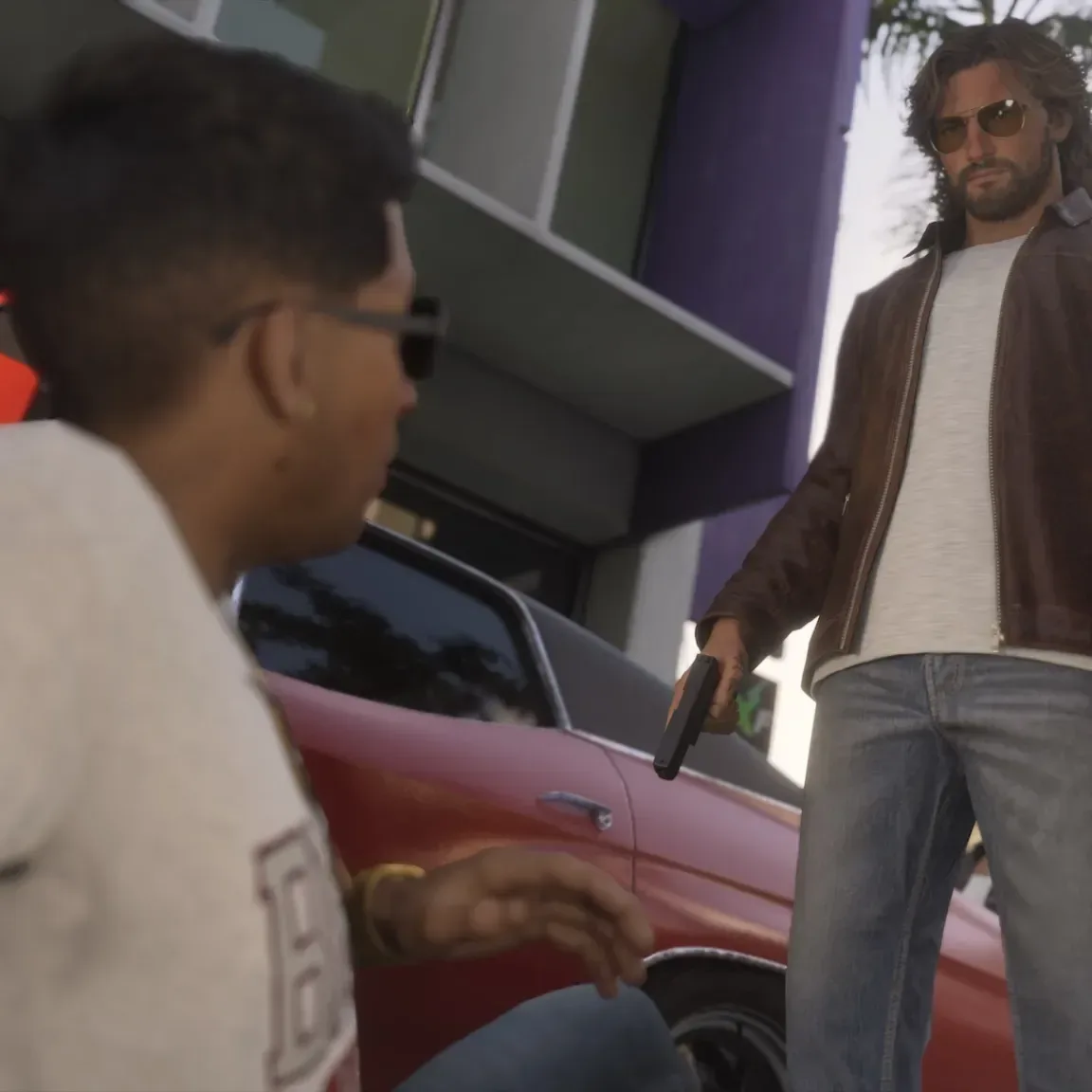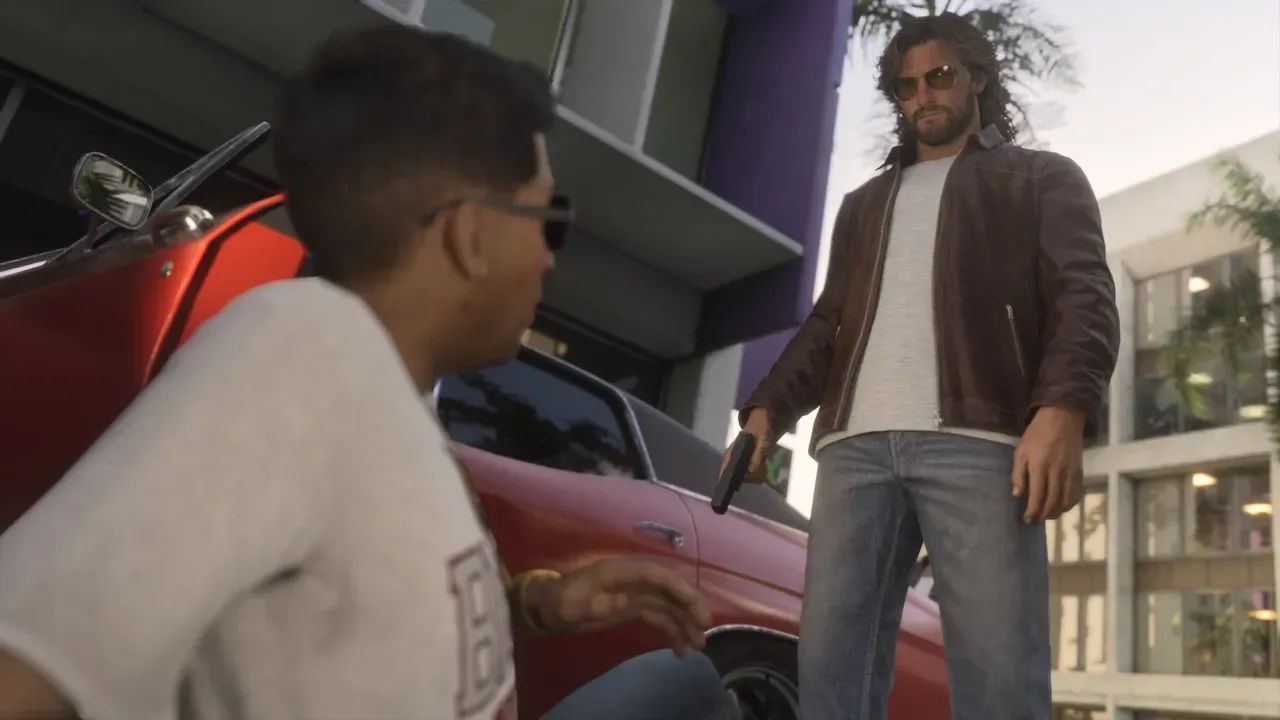
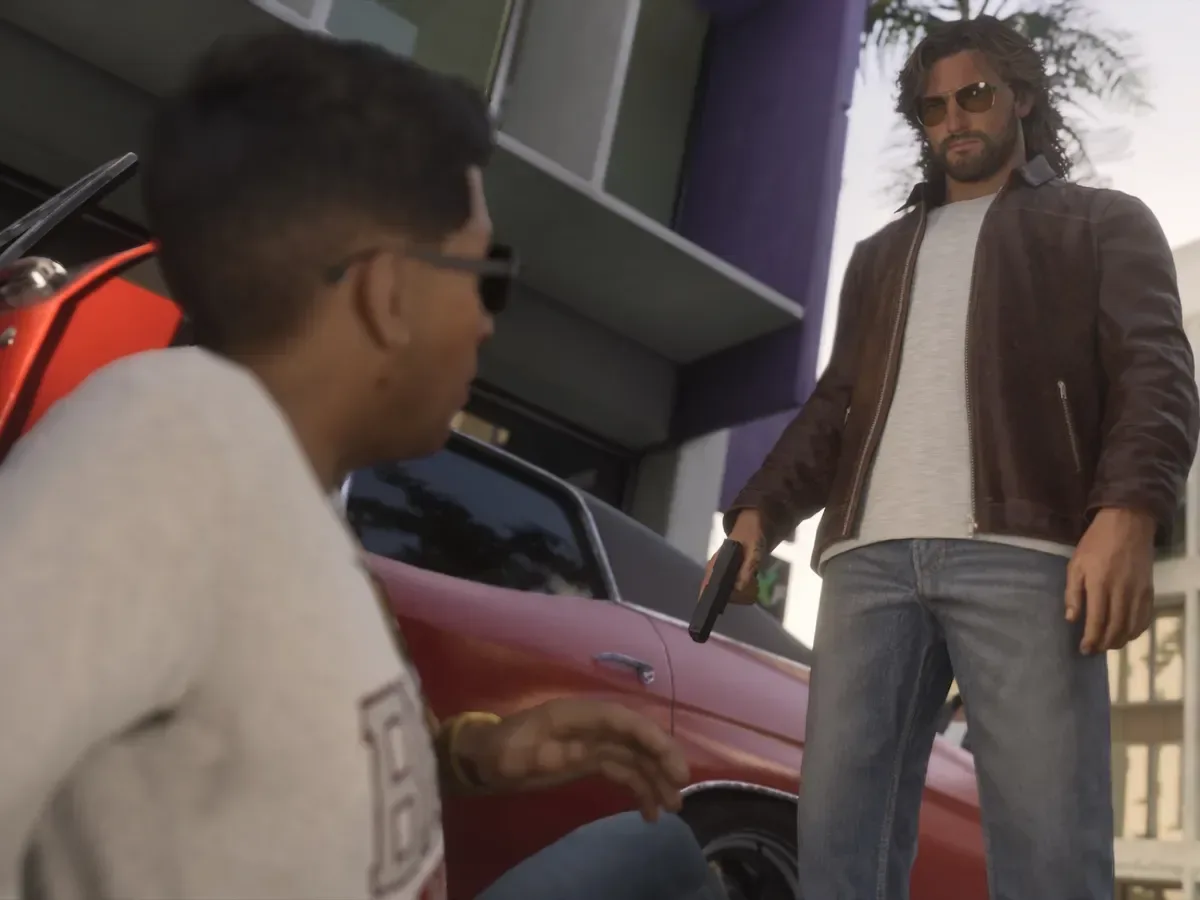
Grand Theft Auto has always sold the fantasy of a city that can be disrupted at will. Grand Theft Auto 6 is not abandoning that premise, but its new criminal profile system appears designed to make the route into chaos more deliberate—and the world’s reaction more legible.
Rockstar Games boss Rob Nelson has described the system as part of a broader effort to build on the reactive-world work behind Red Dead Redemption 2. The stated ambition is not to tell players they cannot commit crimes. It is to provide choices besides immediately using lethal force, then recognize the difference between a controlled robbery and indiscriminate killing.
That distinction is important. A criminal profile is not simply a conventional morality meter where the game calls the player good or evil. It is a record of the harshness of their conduct. The system reportedly allows players to threaten someone with a firearm to steal money rather than automatically beating or killing them. During a robbery, holding fire unless someone draws first and limiting casualties may leave the profile unchanged. Killing everyone at the scene can lower it.
In other words, GTA 6 is putting more emphasis on escalation: the chain of choices that turns a tense encounter into a catastrophe. The player can still choose the catastrophe. Rockstar’s point is that it should mean more than it did when a weapon could seemingly materialize from an inexhaustible inventory and every bystander behaved as though nothing was wrong.
A reputation system, not a ban on mayhem
“Criminal profile” could sound restrictive in a series famous for spectacular freedom, so the reported boundaries matter. Nelson’s description makes clear that players can still go on destructive rampages. They can even push their profile into an irreedeemable state, effectively rejecting the system’s attempt to distinguish comparatively restrained criminality from extreme violence.
That is a deliberately unusual framing for an open-world crime game. The game is not presenting nonviolence as the only valid answer, and the underlying activity is still criminal. Instead, it asks how far the player is willing to go after initiating a crime. A threat, a robbery, self-defense after a victim produces a gun, and an unprovoked massacre are all different situations. The profile gives the game a way to respond to those differences.
There is a potentially comic edge to that approach, too. GTA’s satire has often thrived on sudden reversals and unintended messes. A player may begin with the plan to take a vehicle or rob a person without a shooting, only for the target to resist or produce a weapon. The player then has to decide whether to retreat, escalate, or deal with the immediate threat. The scenario can still become absurd, but it becomes absurd because of a sequence of events rather than because the game treated every public interaction as consequence-free.
Weapons are part of the tension now
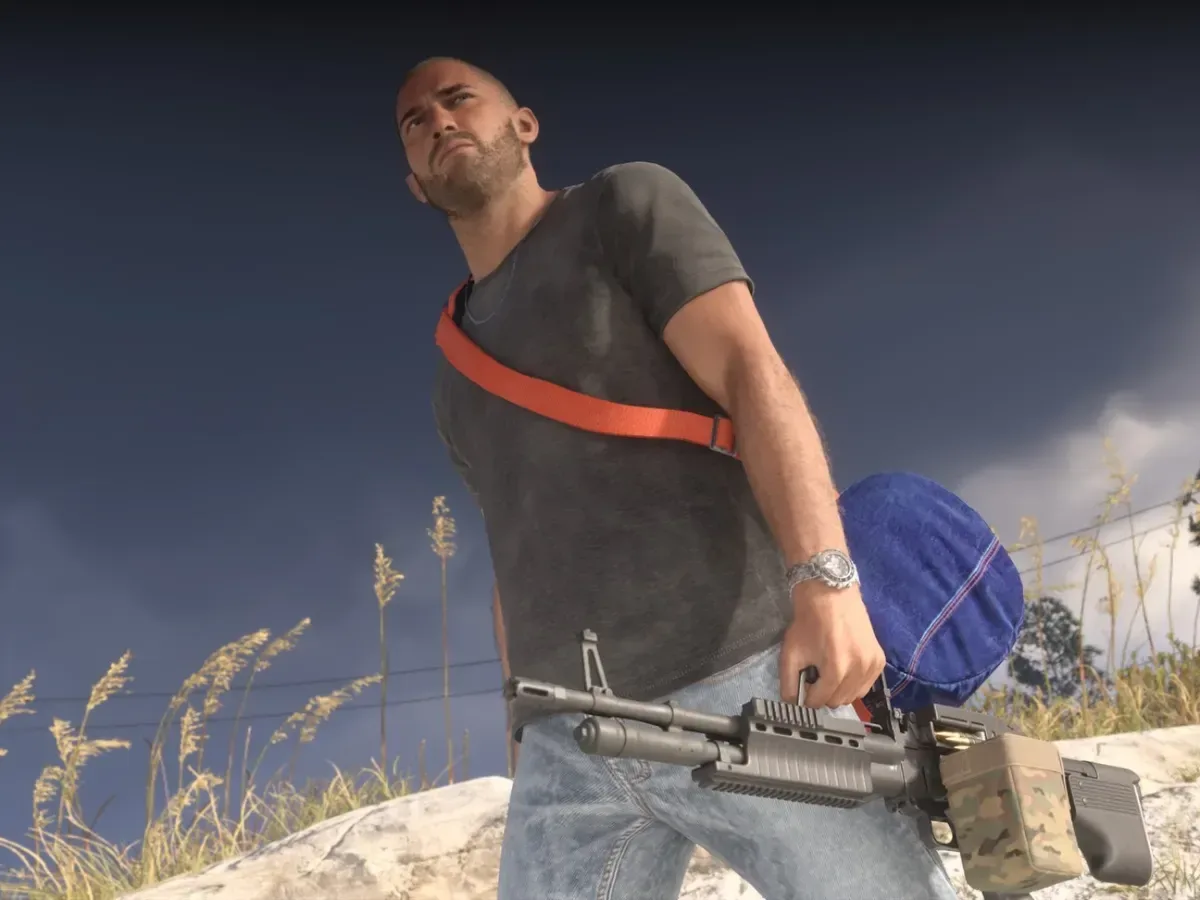
The criminal profile is closely tied to another reported design change: weapons are no longer treated as an endless set of items carried invisibly at all times. Nelson described a process in which a player calls their car, opens its trunk and retrieves a weapon. That creates a practical delay before a heavily armed confrontation begins.
Related coverage includes Rockstar Explains GTA 6's Criminal Profile System and Its New Consequences.
More significantly, it turns weapon handling into a social signal. In the earlier comparison offered by Nelson, drawing a weapon in GTA 5 did not prompt much reaction until it was directly aimed at someone. GTA 6’s NPCs are expected to respond sooner. Pulling a rifle from a trunk can cause people nearby to quietly move away, even before the player fires or explicitly threatens them.
NPC means non-player character: the civilians, enemies and other computer-controlled people who populate the world. “Reactive NPCs” is often used loosely, but here it refers to a specific kind of response. Civilians notice an alarming action, alter their behavior and may flee. Some people may be armed and fight back. A victim who is being held up might draw a weapon or attempt to take it. Those responses make the player’s preparation visible and turn a weapon from a menu selection into an event that changes the immediate scene.
This is not merely a realism flourish. It can change the rhythm of play. In the older, faster power-fantasy model, the player moves from wandering to maximum firepower in an instant. GTA 6’s described setup inserts friction: get the vehicle, access the trunk, take the weapon, watch civilians react, then decide what happens next. Friction is sometimes used as criticism, but in game design it can also be a tool for making an action feel intentional.
What “reactive world” means in practice
A reactive world is one in which the game acknowledges player behavior through systems rather than only through scripted story scenes. GTA 6’s approach, as described so far, has several layers:
- Alternative actions: intimidation can be used where direct violence might previously have been the default.
- Witness behavior: nearby civilians notice conspicuous weapon handling and move away.
- Resistance: potential victims are not guaranteed to submit; some may fight back or try to seize a weapon.
- Persistent evaluation: the criminal profile reflects the severity of the player’s choices.
- Player refusal: even the profile itself can be overwhelmed by those who prefer all-out destruction.
Each layer addresses a different gap between action and consequence. Witnesses give the player immediate feedback. Armed resistance introduces uncertainty. The profile gives longer-term meaning to conduct. The irredeemable state preserves an outlet for players who regard restraint as beside the point.
Crucially, the system seems less concerned with whether the player commits a crime than with whether violence was necessary, avoidable, retaliatory or excessive. That is why “morality-adjacent” is a useful description. It has ethical language around proportionality and casualties, but it operates inside a game built around criminal activity rather than attempting to transform GTA into a conventional heroic role-playing game.
The fault line: freedom versus a more deliberate power fantasy
The shift has understandably divided players. One side sees value in chaos that requires setup and has a believable ripple through the street. For that audience, a robbery solved through threats, nervous witnesses and an unexpected armed response may offer more stories than instantly firing into a crowd. The player still has agency, but it is agency exercised through judgment rather than raw button presses.
The opposing view is equally easy to understand. GTA has long been a place to access improbable cars, absurd weapons and reckless spectacle quickly. Any system that slows weapon access, tracks severity or spaces out the path to a supercar can feel like the game is getting between the player and its own most famous pleasures.
Nelson’s comments suggest Rockstar recognizes that tension rather than pretending it does not exist. The rampage remains available, while the normal flow of play places more value on the choices before the shooting starts. The real design question is not whether GTA 6 contains violence; it plainly does. It is whether the extra preparation and response make violence more expressive or merely more cumbersome.
That answer will vary by player. Those seeking a quick, uninterrupted fantasy of dominance may resent the added procedure. Those who want a city that appears to notice their behavior may find the procedures create stronger anecdotes: the rifle retrieved from a trunk, the civilians subtly backing away, the hold-up gone wrong because the target pushed back.
Progression is being attached to the chaos
The same philosophical divide extends beyond shootouts. GTA 6 reportedly makes stealing a supercar a longer-term prospect, potentially taking dozens of hours rather than offering immediate access. That places progression around the franchise’s usual excesses. Instead of beginning with the best toys, players work toward them.
Progression is a design term for the way a game gradually opens up capability, equipment or status. It can give goals structure and make major rewards feel earned. It can also frustrate players who consider instant access to extravagant vehicles and equipment central to GTA’s appeal. The practical implication is that GTA 6 appears to be connecting its most explosive possibilities to time, preparation and behavior more tightly than past games did.
This does not mean every action is slower, nor does the available information establish every effect of a changing criminal profile. It does, however, establish a clear direction: Rockstar wants a city where the route to violence is more visible, witnesses behave more plausibly and the player’s degree of brutality is not treated as interchangeable.
Why the experiment matters for the series
GTA 6’s commercial and critical momentum suggests its approach is not holding it back. It has been described as the highest-rated game in Metacritic history and as generating nearly $4 billion in its first 24 hours, figures that place the release among entertainment’s largest launches. Its impact is also reaching beyond play itself; GTA 6’s music conversation has already been linked to a rise in Spotify streams for artists featured around the game’s cultural orbit, as covered in our look at GTA 6’s streaming effect.
Those numbers cannot settle the argument over criminal profiles, but they do show that the debate is taking place around an enormous audience. GTA has always invited players to test the edges of its systems. GTA 6 appears to be making that testing part of the point. Restraint is an option, escalation is an option, and absolute rejection of restraint is also an option—but they are no longer meant to feel exactly the same.
For Rockstar, the bet is that consequences do not erase freedom. They give freedom a sharper outline. Whether that feels like richer role-playing or an unwelcome speed bump will depend on what each player wants from a trip through GTA 6’s world.