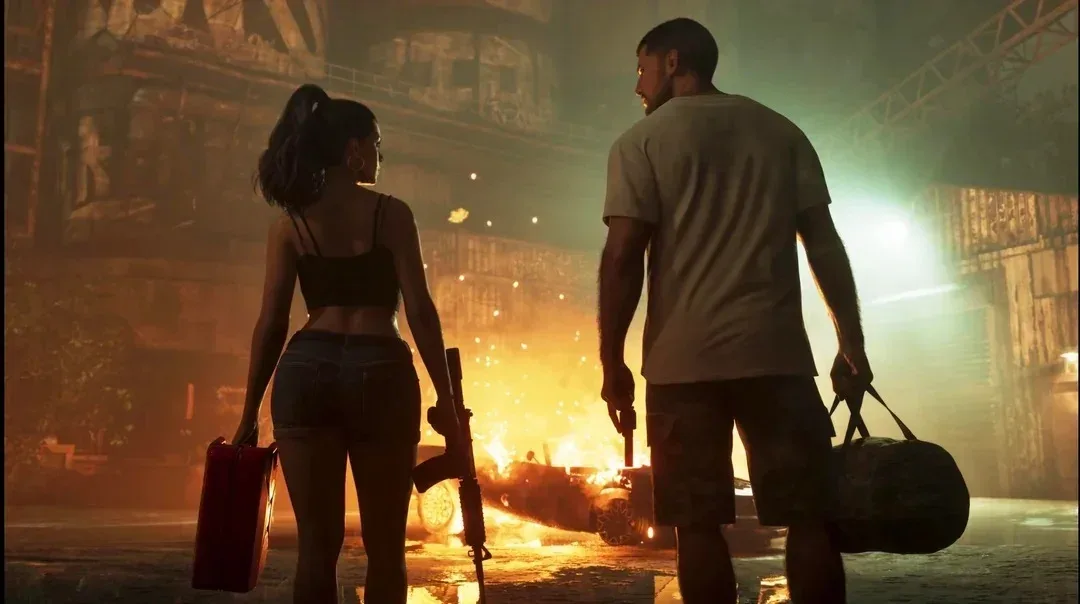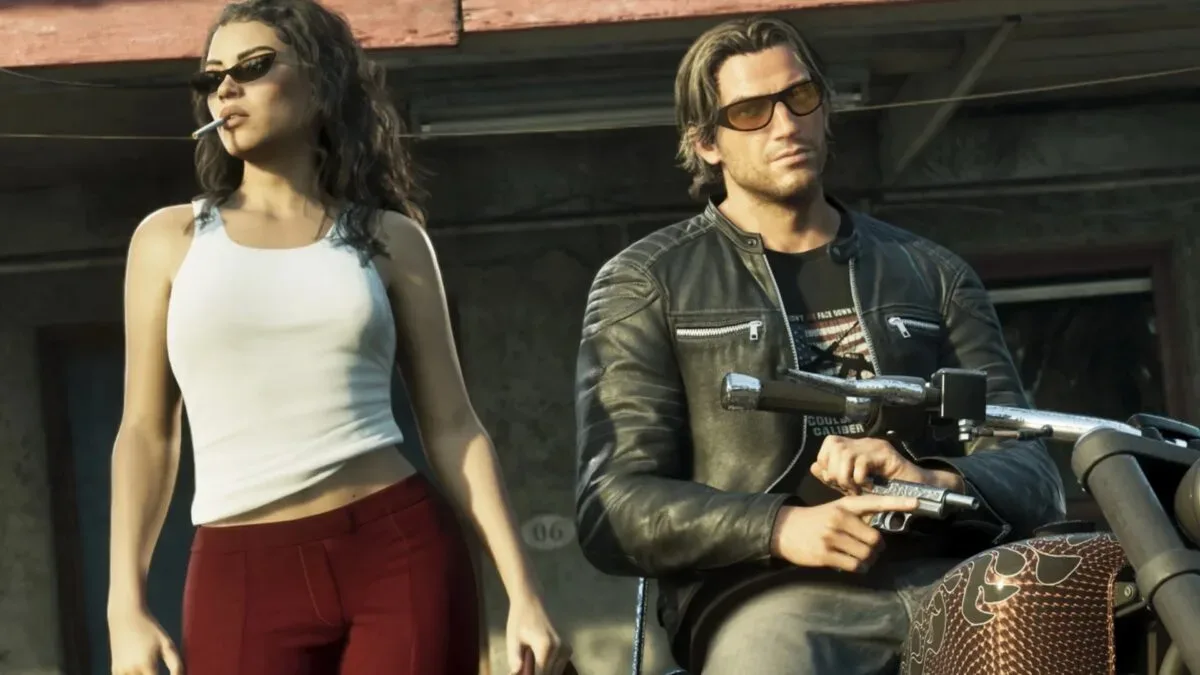
Rockstar’s next game after Grand Theft Auto 6 may not demand another near-decade-long wait. Development leads Phil Hooker and Aaron Garbut have said that the technological and organizational work completed during GTA 6’s lengthy production is meant to make subsequent projects faster to build.
That is not a release-window announcement, a confirmation of Rockstar’s next project, or a promise of annual sequels. It is, however, a meaningful statement about the studio’s intended production model after GTA 6. The central idea is straightforward: instead of treating GTA 6’s engine, internal tools and development structure as one-off work, Rockstar plans to retain the foundation and create future content from it.
GTA 6 is set to launch on November 19 and follows 2018’s Red Dead Redemption 2 as Rockstar’s next major release. The gap has made the question of what comes after GTA 6—and how long it might take—especially salient. Rockstar’s leadership is signaling that its answer is reuse, refinement and a different kind of growth rather than beginning from zero again.
What Rockstar actually said
Hooker said the studio believes the engine, tools and team established for GTA 6 will make it possible to work more quickly on future work. He described an aim to go “more sideways than upwards” in pursuit of more compelling content.
“The engine, the tools and the team we’ve built during this project will allow us to do things more quickly,” Hooker said. “I feel confident that we can build on top of this and go more sideways than upwards to build more compelling content.”
Garbut reinforced the point, explaining that GTA 6 involved foundational changes but that Rockstar does not plan to tear those changes out once the project is finished.
“We foundationally changed a lot of stuff on this project,” Garbut said. “But now it’s done, and we’re not going to rip it apart.”
The important language is not simply “more quickly.” Large games can still require years even when a studio has an established technology stack. The more concrete message is that Rockstar considers GTA 6 a platform for future development work, not a technological dead end that must be replaced wholesale when the next production begins.
Related coverage includes Rockstar Says Its Next Game Should Not Take Another Decade After GTA 6.
Why engines and tools matter so much
An engine is the underlying technology used to run a game and support major systems such as rendering, animation, simulation and world behavior. A game-development toolchain, meanwhile, is the collection of internal software and workflows teams use to build, edit, test and integrate game content. These may include systems for constructing environments, managing assets, implementing missions or coordinating the work of many developers.
Neither term means that future games become easy or automatic. A tool only saves time when teams can use it reliably, and a reusable engine does not write characters, make design decisions or remove the complexity of creating a large interactive world. But rebuilding core technology during production can consume substantial effort. Keeping proven foundations allows a team to devote more of a project’s time to the game itself.
Garbut’s remark about not “rip[ping] it apart” therefore carries practical weight. It suggests Rockstar expects its GTA 6-era foundations to remain useful enough that the next project can start from an existing base. That can reduce duplication of work and preserve the knowledge accumulated by the team while building GTA 6.
For a studio on Rockstar’s scale, the team component is as significant as the software. Tools gain value when the people using them understand their limits and workflows. A group that has spent years solving production problems together should not have to rediscover every process at the outset of its next game.
“Sideways,” not necessarily bigger
Hooker’s distinction between moving “sideways” and “upwards” is the most revealing part of the comments. While he did not spell out a product plan, the phrasing points away from the assumption that every new Rockstar release must be bigger in every measurable way than the last.
In this context, “upwards” can reasonably be read as escalating scale: more systems, more territory, more technological ambition and potentially more production burden. “Sideways” suggests using an established base to explore different kinds of content or creative ideas. That is an interpretation of the wording, not a disclosed roadmap, but it matches the stated intention to build on existing foundations.
For players, that could eventually matter in two distinct ways. First, it may mean the next standalone Rockstar game has a shorter development cycle than the period between Red Dead Redemption 2 and GTA 6. Second, it leaves open the possibility of substantial GTA 6-related content arriving on a more manageable timetable. Neither outcome has been announced, and the comments do not specify what form any future content will take.
The distinction is worth keeping clear. Reusable technology is a capability, not a release calendar. Rockstar has not named its next game, its platforms, its setting, its format or its launch timing. Nor has it promised a GTA 6 expansion or described the pace of updates. The comments establish an intention to work from GTA 6’s foundations; they do not turn that intention into a dated slate.
Rockstar has used foundations before
There is a notable precedent within the company’s history. Grand Theft Auto: Vice City arrived one year after Grand Theft Auto III, building from the earlier game’s foundations. That does not make it sensible to expect a return to an annual release cadence. The development leads’ remarks are about efficiency and reuse, not a commitment to yearly launches.
It does illustrate why a studio may view a major technical project as an investment beyond one release. Once the difficult work of establishing technology and production processes is complete, following projects can concentrate on new places, stories, activities and design priorities rather than rebuilding every supporting layer at once.
That lesson has limits. The circumstances around GTA 6 have been unusually complicated: its road to release included delays, multiple leaks and accusations of union-busting. Those issues should not be flattened into a simple story that better tools solve everything. Development schedules are affected by creative choices, staffing, testing, security, organizational decisions and many other factors that an engine alone cannot settle.
Still, the comments make clear that Rockstar sees value in carrying its completed work forward rather than discarding it. That is a more realistic basis for faster future output than any claim that modern blockbuster games are suddenly quick to make.
What this means for the post-GTA 6 wait
The safest takeaway is modest but encouraging for people exhausted by the long gap after Red Dead Redemption 2. Rockstar expects the engine, tools and team shaped by GTA 6 to give it a stronger starting point for its next production. The studio has specifically said it does not intend to dismantle the foundational changes made during GTA 6’s development.
That does not establish that a new Rockstar title will arrive in 2027, or in any other particular year. Major AAA development is not generally organized around the annual rhythm that characterized some earlier eras. A shorter wait than nearly a decade could still be a long wait in ordinary terms.
It also means GTA 6 itself may be the beginning of a technical era for Rockstar rather than a singular endpoint. If its underlying systems and workflows are durable, they may support future projects whose appeal comes from creative direction rather than simply an ever-larger technical checklist. The studio’s remarks imply that this is the goal.
For now, GTA 6 remains the immediate milestone: Rockstar’s crime drama starring Jason and Lucia is scheduled for November 19. Everything after that is still undefined. But the studio has given a clearer indication than usual of how it wants to approach the next stage—by keeping the hard-won infrastructure in place and building outward from it.
That production-minded outlook also fits a wider industry focus on the less glamorous parts of game creation: the systems that let teams iterate, ship changes and manage enormous libraries of assets. For another example of why launcher and library performance can become a technical priority at scale, see this look at an Epic Games Launcher preview focused on faster starts and library improvements.