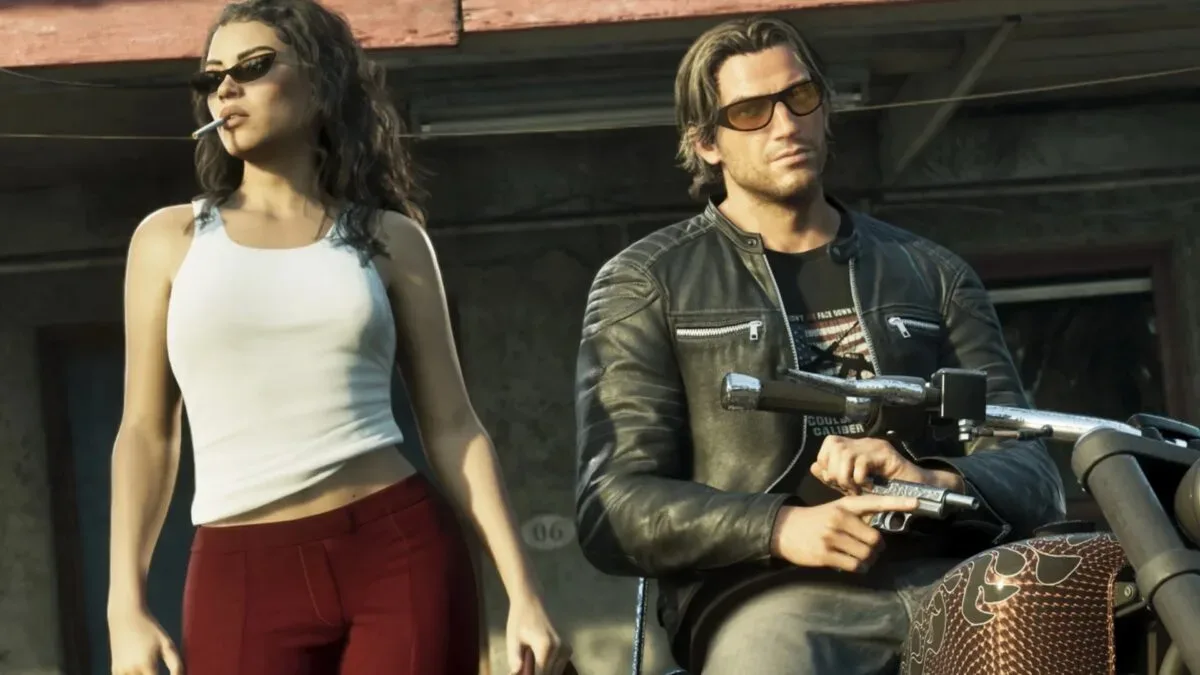
The gap between mainline Grand Theft Auto games has become part of the series’ mythology. Grand Theft Auto V launched in 2013, and GTA 6 arrives more than a decade later. Rockstar, however, believes the work completed during that long production may make its next projects less dependent on another reset-from-scratch development cycle.
Phil Hooker, Rockstar’s technical director, said the studio’s engine, development tools and team established during GTA 6 should enable faster work in the future. The important qualification is that this is a statement about capability, not a release schedule: Rockstar has not announced GTA 7, a GTA 6 follow-up, or any target window for either.
“The engine, the tools and the team we’ve built during this project will allow us to do things more quickly,” Hooker said. “I feel confident that we can build on top of this and go more sideways than upwards to build more compelling content.”
That is a notable description of how Rockstar sees the aftermath of GTA 6. Rather than treating the project solely as one exceptionally large game, the studio appears to view it as a foundation: technology, processes and personnel that can be reused and extended.
For the nearer-term GTA 6 conversation, readers can also see what current PS5 messaging around GTA VI does and does not confirm.
What Rockstar means by an engine, tools and team
Hooker’s three-part framing matters because game development is not simply a matter of having more developers work on a sequel. Each component addresses a different part of the production burden.
An engine is the underlying technology used to build and run a game. In broad terms, it is the framework that supports the game world and its systems. Building on an established engine can allow a studio to carry forward prior technical work instead of rebuilding core technology before making the new game’s content.
Tools are the internal software and workflows developers use to create, edit, place, test and manage game material. Players may never see these directly, but tools affect how efficiently artists, designers and other disciplines can turn an idea into something functioning in the game. Better-established tools can reduce friction across a large production.
Related coverage includes Rockstar Says GTA 6's Technology Could Shorten the Wait for Future Games.
The team is equally central. A group that has completed a major project together has practical familiarity with its technology and production pipeline. That does not erase the challenge of future work, but it can avoid some of the ramp-up involved in learning entirely new systems and ways of working.
None of that automatically means a smaller game, a faster sequel, or a fixed number of years between releases. It means Rockstar expects to start later projects with more of the necessary groundwork already in place.
“Sideways” rather than “upwards” is the key phrase
Hooker’s distinction between going “sideways” and going “upwards” offers the clearest indication of the studio’s thinking, even if it remains deliberately broad.
In this context, building upwards can be understood as continually increasing foundational technical complexity: replacing or dramatically reworking the underlying systems before the studio can concentrate on the actual game. Building sideways, by contrast, suggests using an established base to explore different kinds of content, settings or creative directions.
That reading is supported by artist Aaron Garbut’s description of GTA 6 as a project that changed many things at the foundational level. Garbut said that work is now complete and will not be torn apart again. Together, the comments suggest GTA 6 involved substantial base-level change, while the next phase may focus more on what can be made with that base.
It is worth resisting the temptation to turn this into a prediction that every future Rockstar release will be quicker. “More quickly” is a relative production goal, not a promise of a specific launch date. A project can benefit from mature technology and still take a long time if its ambitions, content requirements or scope are extensive.
Why GTA 7 is only an example for now
GTA 7 is the obvious name that comes to mind when discussing Rockstar’s future, but there is no announced GTA 7 project in these comments. Hooker’s remarks support the idea that a future Grand Theft Auto could inherit GTA 6’s technical and organizational groundwork. They do not confirm a title, setting, platforms, structure, scale or development timetable.
The same caution applies to speculation about smaller projects or spin-offs. Rockstar’s history includes Vice City arriving less than a year after GTA 3, but that past release pattern does not establish what the company will do after GTA 6. The new comments leave open the possibility of different kinds of projects; they do not identify one.
That uncertainty is especially important for fans evaluating a headline about a shorter wait. The strongest supported takeaway is narrower: Rockstar believes the assets it has built for GTA 6 can make future development more efficient than the foundational work required for this project. Whether that advantage produces a new Grand Theft Auto sooner, supports a different game first, or is offset by fresh ambitions remains unknown.
What this could mean in practical terms
For players, the upside is not merely the prospect of fewer years on the calendar. Reusable technology can allow a studio to devote more attention to content and ideas after the foundational work is finished. Hooker explicitly connected the ability to build on GTA 6’s foundation with making “more compelling content.”
That is a meaningful distinction. Faster production does not necessarily mean cutting corners or making work smaller. In an ideal case, it means spending less time reconstructing the base and more time using established systems for new creative work. Garbut’s comments reinforce that the studio does not expect to undo the fundamental changes made during GTA 6.
There are still limits to what can be inferred. Rockstar has not detailed which engine systems or tools are being retained, how broadly they can be reused, or how its future teams and projects will be organized. The company also has not attached dates to its optimism. Any claim that GTA 7 will arrive within five years, within a decade, or on a particular platform would go beyond what has been said.
The bottom line: an encouraging production signal, not a roadmap
After the long interval following GTA V, Rockstar’s comments provide a reason to think the GTA 6 era may leave the studio in a stronger position than it began. The engine, toolset and experienced team behind the new game are described as durable investments rather than one-off work.
But the statement is best read as a development outlook, not an announcement. GTA 7 remains unannounced, and Rockstar has not specified what it will make next or when it will arrive. For now, the concrete news is that the studio expects the foundational work behind GTA 6 to make its future projects more efficient—and potentially free more room for the content that players actually experience.