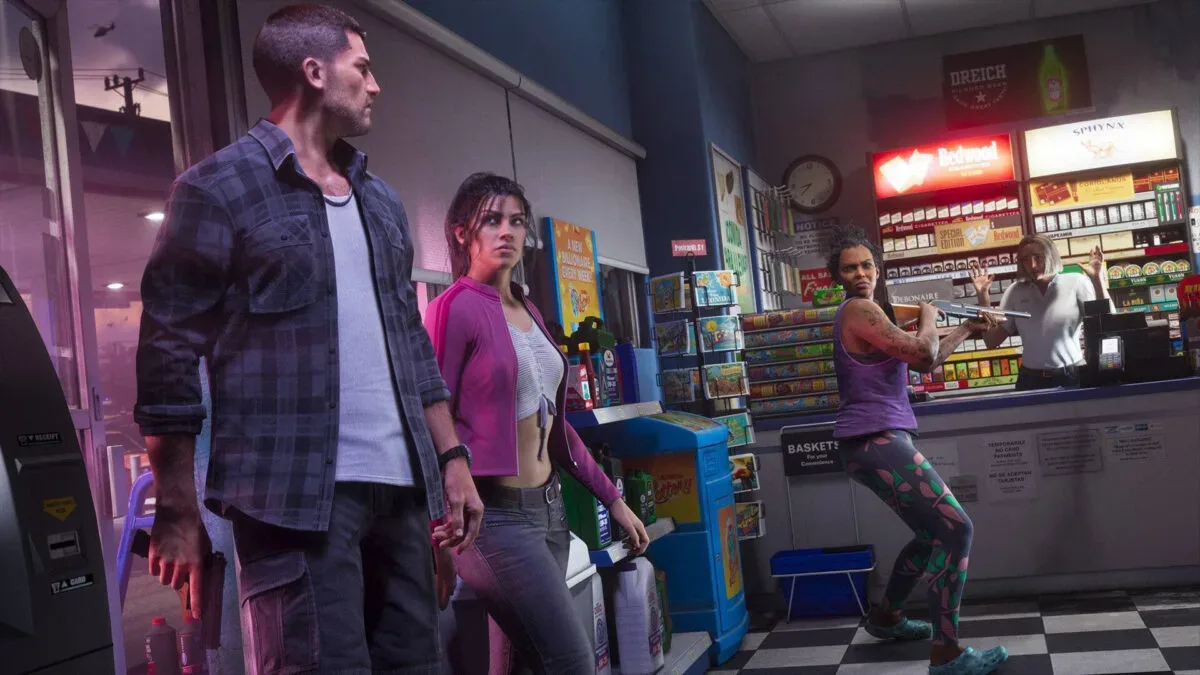

Grand Theft Auto VI is not merely another enormous entertainment launch. In Peter Moore’s view, it has arrived at a moment when the wider games business badly needs a reminder of what a major release can do: capture public attention, demonstrate creative ambition, and create momentum across the many companies and people involved in getting games to players.
Moore, whose career includes leadership roles at Sega of America, Xbox marketing and operations at Microsoft, and EA, described the launch as significant beyond the audience that waited 13 years for a new Grand Theft Auto. His central point is simple: after a difficult period defined by studio closures, redundancies, canceled projects, and considerable uncertainty, a successful GTA 6 can serve as a high-profile vote of confidence in the medium’s ability to make ambitious work and reach an enormous audience.
“The video game industry could really use a moment like this,” Moore wrote. He paired that serious assessment with a callback to one of gaming’s more memorable promotional stunts: an AI-modified image replacing his well-known Grand Theft Auto IV tattoo with a GTA 6 version. The original tattoo was revealed at E3 2006 as confirmation that GTA IV would launch simultaneously on Xbox 360 and PlayStation 3.
Why one launch can feel bigger than one game
Moore’s argument is not that a single hit erases the problems facing individual studios or workers. He explicitly pointed to the damage caused by closures, job losses, canceled projects, and instability. Those are structural challenges, and a blockbuster’s sales do not automatically reverse them.
Rather, he frames GTA 6 as an opportunity for the industry to demonstrate its scale and cultural reach at a time when confidence matters. He called it more than the arrival of an exceptionally anticipated title, saying it can remind people of games’ “extraordinary power” to create, innovate, entertain, and bring people together.
That distinction matters. A release can be commercially successful for its publisher while also becoming a broader industry event. In the latter case, its impact is measured not only in copies sold or revenue reported, but in the attention it brings to game development, retail, platform technology, and the people who may be considering a future in the field. That is the kind of “shot in the arm” Moore hopes GTA 6 provides.
What “the ecosystem” means here
Moore used the term ecosystem to describe the connected parts of the business that can be touched by a major release. In this context, it includes:
- Developers and studios: The teams and companies that create games, whether they are building huge releases or smaller projects.
- Publishers: Businesses that fund, market, distribute, and support games.
- Retailers: Companies that sell games and related hardware or products to players.
- Technology partners: Firms whose tools, platforms, services, or hardware are part of the route from development to play.
- Future creative talent: People who may look at a landmark game and see the creative possibilities of working in games.
Moore’s formulation is aspirational, not a guarantee of a financial benefit for every business in that chain. Still, it explains why industry figures can see a game as important even when it is made by one studio and released by one publisher. An event-scale launch puts a spotlight on the entire medium. It can make conversations about game design, technology, storytelling, production, platforms, and careers more visible to people who might otherwise not be following the business closely.
Related coverage includes Peter Moore Sees GTA 6 as a Crucial Moment for the Wider Games Industry.
A commercial start that needs careful reading
GTA 6 appears to have begun strongly on the commercial front, but the numbers circulating around the launch should be treated with appropriate caution. Rockstar has not publicly disclosed official sales or revenue figures.
Earlier analyst forecasts reportedly placed potential launch-week revenue as high as $5.2 billion. More recent estimates put revenue at roughly $1.65 billion as of the previous day. Those figures are estimates, not company-confirmed results, and they do not establish a final launch-week total. They are nonetheless a useful illustration of the extraordinary expectations surrounding the game and the scale at which observers believe it could perform.
Revenue is the money generated through sales before attempting to answer every question about how it is divided among the businesses involved. It is not interchangeable with copies sold, profit, or the income ultimately received by a particular developer, publisher, platform holder, or retailer. Keeping those terms separate is especially important when estimates are being discussed during an enormous launch, because large headline figures can convey the size of demand without offering a complete picture of the underlying business results.
The absence of an official figure also leaves room for uncertainty. It is reasonable to say the early commercial picture looks substantial; it is not reasonable to present a forecast or third-party estimate as a confirmed Rockstar total. Moore’s broader case does not depend on pinning down that exact number. The attention around the release, and the expectation of major demand, are already central to why he sees it as consequential.
Moore’s perspective comes from a long industry career
Moore’s comments carry particular context because he has worked across several prominent parts of the games business. He previously served as president of Sega of America. At Microsoft, he was corporate vice president of the home and entertainment division with responsibility for Xbox marketing and operations. He later became CEO of EA.
That background covers publishing, platform operations, marketing, and the commercial side of games. It also helps clarify why his comments focus on more than the game itself. GTA 6 is a creative work, but it is also a major release moving through a broad network of development, publishing, hardware, distribution, marketing, and retail relationships.
His tattoo callback also ties the current moment to a prior Grand Theft Auto launch. The GTA IV tattoo reveal at E3 2006 was a striking way to communicate the game’s simultaneous arrival on two major console platforms. The revived joke acknowledges the long-running cultural footprint of the series, while the more serious message emphasizes what Moore believes this new installment represents for the business now.
Ambition is the point Moore wants the industry to retain
Moore said he has watched the industry reinvent itself repeatedly and argued that games are at their best when they dare to dream big. It is a broad statement, but within the context of his post it is directed at a specific concern: a business weathering uncertainty should not lose sight of its capacity for large-scale creative work.
For players, that may sound abstract compared with the immediate excitement of a long-awaited GTA. Yet it has practical relevance. Games of this scale become shared cultural reference points. They draw attention from people who play regularly, people returning to games for a particular release, and people who are simply curious about the conversation surrounding them. A successful launch can therefore function as a reminder that games are not a niche interest, but a medium capable of generating communal excitement on a vast scale.
For people working in games—or thinking about doing so—the significance Moore describes is more about visibility and possibility than any promise that conditions will change overnight. He specifically included “the next generation of creative talent” among the groups he hopes will benefit from GTA 6’s energy. A game that commands this level of interest can spotlight the fact that the industry remains a place where large creative ideas can be pursued, even after a period he characterized as punishing and uncertain.
What GTA 6 can and cannot represent
There is an understandable temptation to treat a major launch as a referendum on the whole industry. Moore’s remarks are more measured than that. He does not claim GTA 6 will solve the hardships he listed. Instead, he presents it as a chance to restore some momentum and remind the public, businesses, and aspiring creators of the medium’s potential.
That makes the distinction between a symbolic boost and a structural solution useful. A symbolic boost is renewed enthusiasm, positive visibility, and a powerful shared event. A structural solution would mean directly resolving issues such as closures, redundancies, or project cancellations. The available information supports the former as Moore’s hope; it does not establish the latter as an outcome.
Even so, symbols can matter. The language around GTA 6’s launch is about a game becoming a moment: a focal point for players and an argument for games’ reach, ambition, and ability to command the broader public’s attention. Moore sees value in that precisely because the sector has been through a bruising spell.
For GTA 6 players, the immediate concern may be the streets, missions, characters, and strange details waiting to be found. If you are getting started, our GTA 6 saving guide explains how autosave works and when to protect your progress manually. Beyond the game itself, however, Moore’s message is about the weight a release like this can carry. Its commercial performance remains subject to official confirmation, but its place as a major cultural and industry event is already clear.