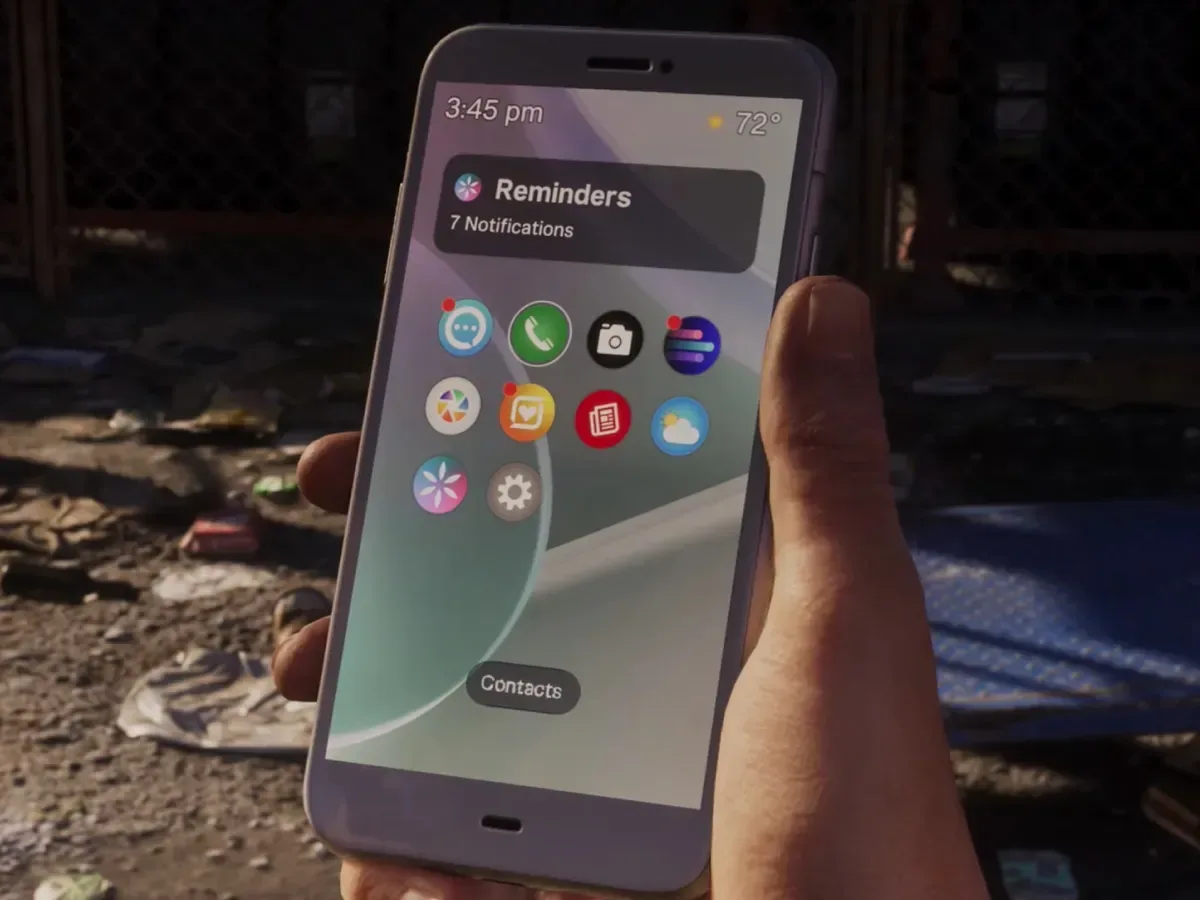
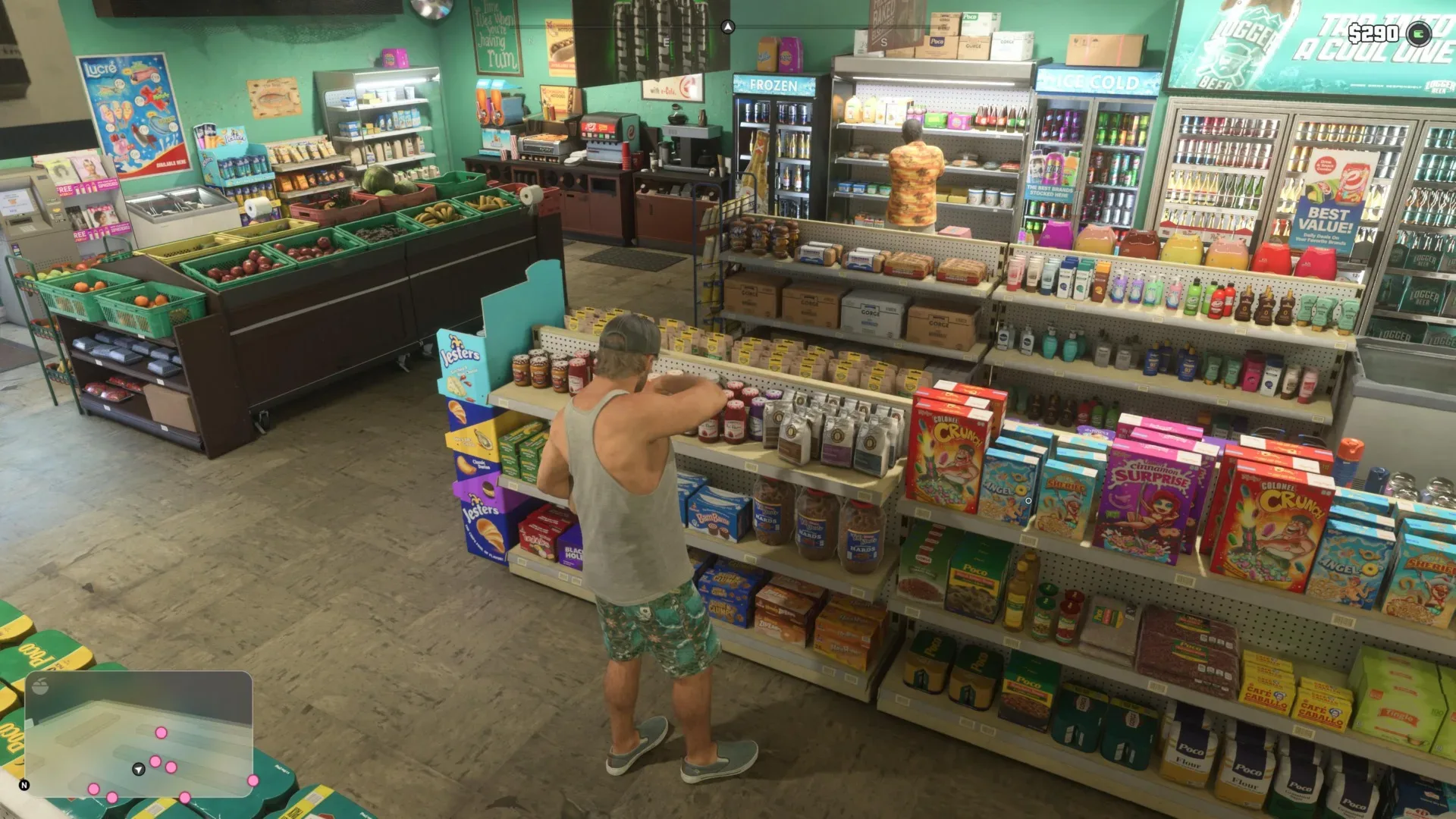
Grand Theft Auto VI is taking a decidedly player-friendly position on retail hours: if a player needs a haircut at 3 a.m., the barber will be there. So will the nail salon, the coffee counter, the shop selling energy drinks and croissants, and the retailer with a hat that may be useful after a particularly conspicuous crime.
More than 700 stores in GTA VI will operate 24 hours a day, seven days a week. The approach applies across the game’s shops and services rather than reserving late-night access for a small number of convenience stores. The basic constraint is money, not a clock on the door.
Katie Pica, Rockstar Games’ design director for player systems and progression, explained that the team chose accessibility over strict simulation. The decision was driven by the frustration of reaching a desired destination only to find it closed. It also creates more opportunities for store robberies, since a robbable business will be available regardless of the in-game time.
Why Rockstar chose convenience over shop-hour realism
This is a notable design choice because GTA VI is also described as having transit systems with time-sensitive behavior. Players may need to wait for buses and trains, and those services can be delayed when crimes or accidents interfere with them. That sort of systemic detail makes the always-open stores stand out.
But realism in an open-world game is not one switch that is either enabled or disabled. It is a collection of rules, each with a cost to the player and a benefit to the fiction. Waiting for a bus can make a city feel active because the wait is part of observing and navigating the world. Arriving at a barber, food shop or clothing retailer only to be told to return hours later may be more likely to interrupt a player’s immediate plan.
Pica indicated that balancing operating hours had been difficult in Red Dead, a game with fewer kinds of stores. Scaling that problem to more than 700 locations would mean accounting for many types of destinations and the numerous reasons a player might visit them. A closed shop is not merely decorative flavor when it blocks a character customization choice, a purchase, a mission-adjacent errand or an opportunistic robbery.
In practical terms, the system removes a form of scheduling friction. A player exploring late at night will not need to sleep, wait, leave the area or make a return trip simply to change hair, buy a drink or browse clothing. That does not make the city less detailed by default; it makes this particular set of interactions dependable.
What “player convenience” means in an open-world game
Player convenience is a design term for reducing obstacles that do not add enough value to justify the time they demand. It does not necessarily mean making a game easy. A difficult driving sequence, a tense escape or a dangerous robbery can be meaningful challenges because success depends on decisions and execution. A locked door caused solely by the in-game hour usually asks for waiting rather than skill.
Related coverage includes GTA 6 Keeps More Than 700 Stores Open 24/7 for Player Convenience and Better Robberies.
GTA VI’s 24/7 policy therefore appears targeted at keeping the game’s useful activities within reach. The player can decide that a late-night stop is part of a plan rather than an activity dictated by the game’s timetable. That is especially helpful in a world where time may pass while traveling, pursuing objectives or simply getting distracted by whatever is happening on the street.
It also avoids the awkward mismatch that can occur in games with a persistent day-and-night cycle: a player sees a business, remembers it, reaches it after an extended journey, and discovers that the interaction has been temporarily disabled. Closing times can create atmosphere, but they can also turn discovery into a delay.
Rockstar’s stated reasoning makes clear that GTA VI is choosing the latter concern. The world can still have a changing time of day and transit affected by events, while commerce remains available as a reliable player-facing system.
Round-the-clock businesses also mean round-the-clock robberies
The other half of the decision is much more recognizably Grand Theft Auto: an open business provides a potential robbery target. If every store is accessible at every hour, then the game does not need to limit that kind of criminal activity to a narrow slice of the day or night.
This matters because store robbery is not simply a shopping interaction with a weapon drawn. It can become an emergent encounter: the player chooses a target, commits the crime, manages the immediate response and deals with the consequences of being seen. Keeping stores open ensures these opportunities exist when a player chooses to pursue them.
The word emergent is useful here. It refers to gameplay that comes from systems interacting, rather than from a single fixed, scripted event. A player might visit a shop to change appearance, notice the option to rob it, and make a spontaneous decision. A time-based closure system could remove that branch of possibility before the player even enters the building.
There is a straightforward tonal benefit, too. Late-night retail locations can serve as scenes for ordinary purchases, cosmetic changes or crimes. The same business can support different player intentions without requiring the world clock to cooperate. That flexibility is likely what Pica meant by better gameplay opportunities.
Services, food and clothing will be available whenever players need them
The confirmed examples cover several categories of interaction:
- Personal styling: hair and nail services can be used at any time.
- Food and drink: coffee, energy drinks and croissants remain purchasable overnight.
- Clothing and accessories: players can pick up items such as hats whenever they have the funds.
- Crime opportunities: stores remain available as robbery locations around the clock.
These examples suggest that the rule is designed around the broad utility of shops, not just a single system such as character customization. A hairstyle change is immediately legible, but a reliable food or clothing stop can be equally useful to a player who is already out in the world and does not want to abandon their current activity.
It is worth separating what is confirmed from what is not. The stated policy establishes 24/7 access to the game’s stores and services, with more than 700 locations in total. It does not, by itself, define every store’s inventory, every possible service, robbery payouts, police response, or whether individual locations will have other unique rules. Those details should not be assumed from the general opening-hours decision.
A selective approach to immersion
The contrast between delayed transit and perpetual retail is not necessarily a contradiction. It demonstrates a selective approach to immersion: simulate details when they make the city feel responsive, but loosen them when they repeatedly prevent players from doing things they reasonably expect to do.
Transit delays can communicate that a crash or crime has affected the broader city. They connect an event to the environment around it. Store closures, by comparison, would often communicate only that the player arrived at the wrong moment. Both are realistic ideas, but they offer different kinds of play.
That distinction is particularly important for a large open world. The more destinations a game includes, the more chances there are for a player’s route to be disrupted by a schedule. With over 700 stores, a comprehensive opening-hours system could become a frequent source of dead ends. The always-open rule trades a measure of simulation for consistent access at scale.
Players who enjoy role-playing can still choose to visit businesses at times that feel natural to them. The difference is that the game will not force everyone into that rhythm. Someone can treat a 3 a.m. haircut as a strange, city-that-never-sleeps moment; another player can simply use it to alter a character before moving on to the next activity.
What players can take from the announcement
The clearest implication is simple: do not plan your shopping, styling or store-holdup ambitions around business hours. If a location is a shop or service in GTA VI, it is intended to be usable at any point in the day-night cycle, provided the player can pay where payment is required.
That should make impromptu sessions easier to manage. A player can travel at night without worrying that basic customization and purchase options have disappeared, and can continue exploring rather than detouring into time-skipping behavior. It may also make overnight play feel busier, because locations that might otherwise be inactive remain part of the city’s usable fabric.
For players focusing on other systems, our guides cover practical options including how to adjust or turn off motion blur in GTA 6. The store-hours policy is a different kind of accessibility decision, but it follows a similar player-centered logic: let people spend more time on the version of the experience they want to have.
There is still an amusing limit to the freedom. A new haircut may be available at 3 a.m.; using the salon as the opening act for an armed robbery remains, at minimum, an extremely questionable bit of customer etiquette. GTA VI’s stores may never close, but the people inside are unlikely to appreciate that particular scheduling choice.