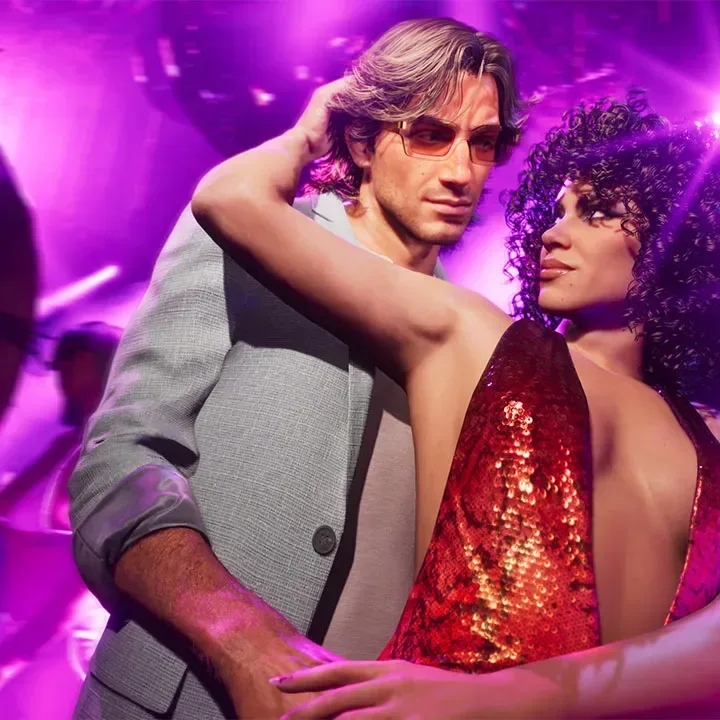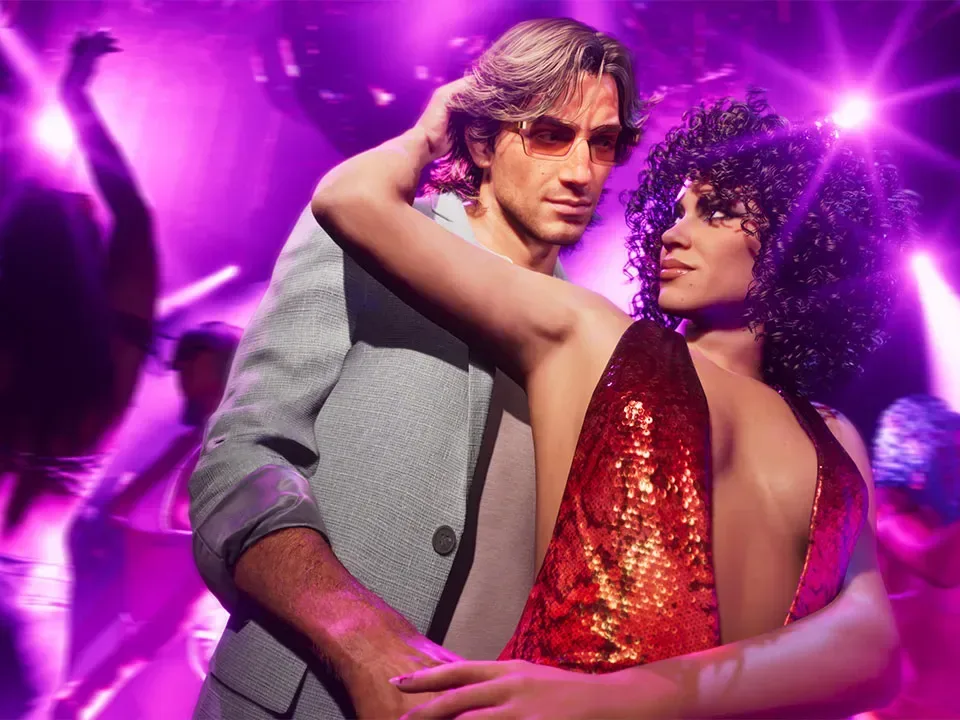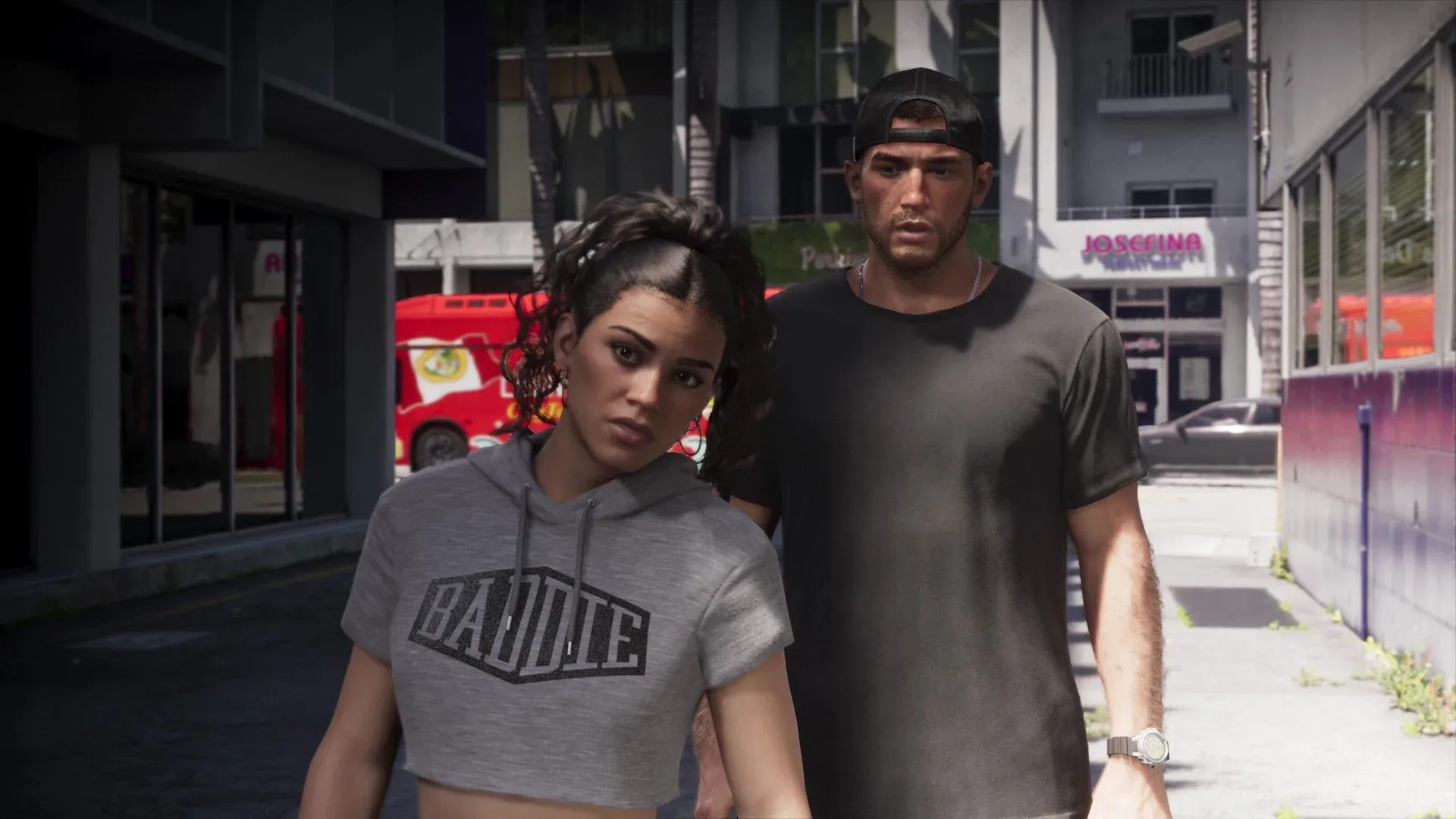
Nintendo has not announced Grand Theft Auto 6 for Switch 2, and its public position is admirably un-dramatic: the decision belongs to Take-Two and Rockstar Games.
When asked whether the upcoming open-world game could reach Nintendo’s new hardware, Nintendo of America president Devon Pritchard said it would be “a conversation for Take-Two and Rockstar,” adding that Nintendo had nothing to announce. That is not a confirmation, a denial, a cryptic tease, or a secret map marked “Vice City, probably.” It is simply the present state of play: no Switch 2 version of GTA 6 has been revealed.
The answer matters because Switch 2 has renewed the familiar question of which major third-party games might finally come to a Nintendo system. The console is positioned as a more capable successor to Switch, and games cited as examples of its third-party potential include Cyberpunk 2077, a recent The Witcher 3 remaster, and Call of Duty: Modern Warfare 4. Meanwhile, GTA 6 is also set to arrive on Xbox Series S, a point that naturally invites fans to compare platforms and imagine a portable Rockstar epic.
But those comparisons do not amount to a port announcement. Whether a game can run on a piece of hardware, whether its publisher wants to fund the work, and whether the resulting release meets the developer’s standards are three very different questions. Nintendo’s statement addresses none of them beyond making clear that it has no news to share.
What Nintendo actually said — and what it did not
Pritchard’s wording puts responsibility in the expected place. Rockstar develops GTA 6, while Take-Two is Rockstar’s parent company and handles the broader business side of bringing its games to market. Nintendo can offer a platform and work with publishing partners, but it cannot announce a Rockstar release on their behalf.
That distinction is important in an era when a short answer can become a ten-car pileup of speculation. “Nothing to announce” does not mean a Switch 2 edition is impossible. It also does not mean one is secretly underway. It means exactly what it says: there is no announced version at this time.
There is a practical reason for restraint here. A game’s platform plans can involve technical work, production scheduling, quality assurance, release timing, marketing, and commercial agreements. Even if a version were technically feasible, that would not tell players whether it is currently being considered, how it might perform, or when it could ship. None of those details have been provided.
“That’s going to be a conversation for Take-Two and Rockstar, but nothing to announce on my end at this time,” Pritchard said.
Related coverage includes Nintendo Says GTA 6 on Switch 2 Is a Matter for Take-Two and Rockstar.
For players hoping to carry a full GTA 6 adventure onto a train, sofa, or the traditional place where handheld hardware has been asked to do its most important work, the only responsible takeaway is patience. The handheld dream remains a dream, not a product listing.
Why the question is being asked now
Switch 2’s arrival has made Nintendo’s third-party catalogue a bigger subject than it was during much of the original Switch era. A stronger system can broaden the kinds of games publishers may consider bringing to the platform. That does not erase hardware differences, nor does it mean every current blockbuster will arrive. It does mean the conversation is no longer limited to whether a title skipped Nintendo hardware entirely.
The cited examples show why observers have started looking at ambitious games differently. Cyberpunk 2077 and a remastered The Witcher 3 are technically demanding, large-scale releases, while Call of Duty: Modern Warfare 4 represents another high-profile third-party series entering the Switch 2 conversation. Their presence establishes that publishers can pursue bigger productions on the device. It does not supply a direct performance comparison for GTA 6.
Technical terms, briefly: a port is a version of a game adapted for another platform. It can range from relatively straightforward work to substantial redevelopment, depending on the original technology and target hardware. A remaster generally revisits an existing game with updates such as improved assets or presentation, rather than being an entirely new game. Neither label tells us enough, by itself, to predict how a separate game will perform on separate hardware.
That is why “it runs Game X” should not be treated as a guarantee that “it runs Game Y.” GTA 6 has its own design, systems, rendering demands, ambitions, and production priorities. Without details from Rockstar or Take-Two, declaring the project easy, impossible, inevitable, or imminent would be guesswork wearing a confident little hat.
Rockstar’s existing Switch catalogue sets a limited precedent
Rockstar is not absent from Nintendo Switch. The publisher has released Red Dead Redemption, Grand Theft Auto: The Trilogy – The Definitive Edition, and L.A. Noire on the original Switch. Those releases establish that Rockstar has supported the platform, and they give Nintendo players some legitimate reason to ask about future games.
At the same time, the catalogue also defines the limits of what can be inferred. Rockstar has not announced Red Dead Redemption 2 for Switch, and it has not announced GTA 6 for Switch 2. Prior support is evidence of a relationship and a history of releases; it is not an obligation to release every newer game on every Nintendo platform.
The difference between a back-catalogue release, a compilation, and a new blockbuster is commercially and technically meaningful. A company may choose one route without choosing another. That is a mundane explanation, but mundane explanations are often the ones that survive contact with an actual press release.
Nintendo is emphasizing range, not one particular game
Pritchard framed Nintendo’s approach more broadly than GTA 6. Nintendo has long described its audience as spanning ages 5 to 95, and Pritchard said offering a diversity of experiences remains important to the company. In practical terms, that positioning leaves room for a broad software library rather than defining Switch 2 through one genre, age rating, or flagship third-party launch.
GTA is obviously a very different proposition from Nintendo’s traditional family-facing mascots, but a varied catalogue is precisely the point of that statement. A platform can host games aimed at many types of players without every publisher committing to every release. Nintendo’s stance is about the kinds of experiences it wants available; it is not a promise concerning GTA 6 specifically.
Nintendo’s wider audience has also long supported unusual projects and crossovers in its orbit. For a rather different example of that creative energy, see this Pokémon Emerald project with a Mushroom Kingdom twist. That sort of Nintendo-adjacent enthusiasm is a world away from a formally licensed GTA 6 port, but it illustrates why platform questions generate so much attention in the first place.
A crowded November sharpens the contrast
The speculation arrives during a conspicuous release window. Nintendo’s The Legend of Zelda: Ocarina of Time remake is scheduled for November 5, with GTA 6 due two weeks later. The two releases could hardly be more different in tone and audience appeal, yet their close timing has made the pair a talking point, even inspiring a comedy sketch that likened the double bill to a games-industry version of “Barbenheimer.”
For Nintendo, a major Zelda release demonstrates confidence in its own audience during a crowded calendar. For Rockstar, GTA 6’s scheduled release remains one of the year’s biggest events. The overlap does not create any confirmed connection between GTA 6 and Switch 2, but it underlines why players are imagining all possible ways to fit both games into their autumn plans.
There is also a more modest lesson here. A game’s cultural scale does not determine its platform list. Nintendo can launch a major first-party remake near GTA 6’s release; Rockstar can release GTA 6 on its announced platforms; and neither fact answers the question of a Switch 2 edition. The industry contains more moving parts than a message-board prediction chart can comfortably hold.
What to watch for next
For now, players should separate confirmed information from reasonable curiosity. The confirmed information is straightforward:
- Nintendo has no GTA 6 announcement for Switch 2.
- Pritchard directed the question toward Take-Two and Rockstar.
- Rockstar already has several releases on the original Switch.
- Rockstar has not announced Red Dead Redemption 2 or GTA 6 for a Nintendo platform.
- GTA 6 is scheduled to arrive two weeks after the November 5 launch of Nintendo’s Ocarina of Time remake.
Everything else remains unconfirmed. That includes whether a Switch 2 version exists in planning, whether it could arrive alongside the announced release, whether it would follow later, and what compromises or enhancements it might involve. Players looking for a definitive answer should wait for a statement from Rockstar or Take-Two rather than reading GPU tea leaves until the cup starts demanding a frame-rate target.
Nintendo’s answer may be brief, but it is useful. Switch 2 is clearly part of a larger effort to welcome a wider set of games, including major third-party releases. GTA 6 is not currently one of the announced games in that effort. Until that changes, the possibility is an interesting question—and nothing more official than that.