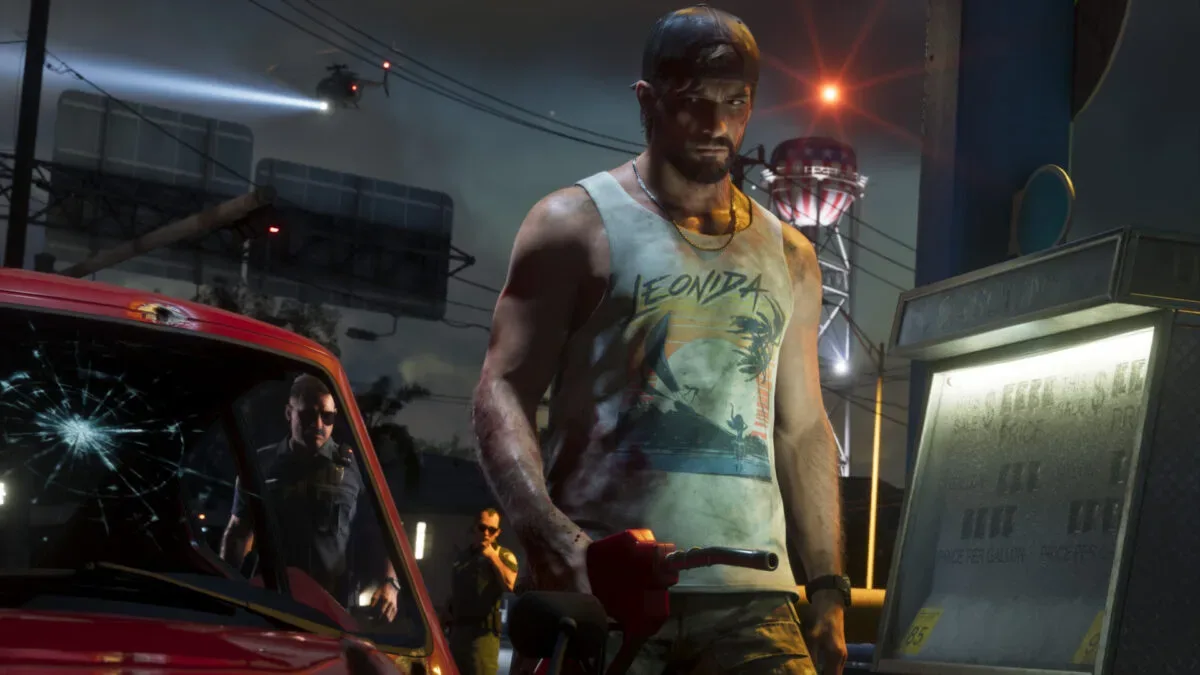
Grand Theft Auto’s famously long sequel wait has become a flexible internet yardstick: if something changed between Grand Theft Auto V and Grand Theft Auto VI, it is apparently large enough to be expressed in loading-screen art. India’s Prime Minister Narendra Modi has now applied that meme to national development, posting a 10-slide GTA-styled carousel on X and Instagram that compares India in 2013 with India in 2026.
The post was headed “Between GTA 5 and 6, here’s how India upgraded” and carried the line, “India is playing a whole new game!” Its basic idea is uncomplicated: the 13-year period regularly invoked in GTA 6 jokes also spans a period in which India has changed substantially. The slides use a visual language associated with Rockstar’s promotional and loading-screen art, translating a political progress message into a gaming reference recognizable well beyond conventional policy communication.
It is an unusually direct example of a political leader using a game-release meme as the structure for a domestic message. That has helped it travel, but it has also made the limits of the format more visible. A carousel can present a clean before-and-after story; it cannot, on its own, establish the definitions, context, trade-offs, or methodology behind the statistics it selects.
What the GTA-styled carousel claims
The graphics contrast 2013 with 2026 through a group of economic and infrastructure measures. Among the changes highlighted are lower mobile-data prices, increased solar-power capacity, a fall in extreme poverty, improved sanitation figures, railway electrification, and a decline in domestic far-left terrorism. The post also describes India as the world’s fastest-growing major economy.
Those are all politically meaningful subjects, rather than arbitrary numbers chosen merely because they fit a meme template. Mobile data prices speak to access and affordability; solar capacity concerns energy generation; sanitation and railway electrification are public-infrastructure measures; and extreme poverty is a measure with immediate social significance. The inclusion of domestic security adds a further layer, positioning the comparison as one of national stability as well as economic development.
But the carousel’s framing should be read accurately. These are claims made by the political post, presented as a selected account of progress across 13 years. The supplied material does not provide the figures used in the slides, their sources, the exact measures applied, or the baseline and end-point definitions. It therefore supports reporting that those measures were highlighted, not treating the graphics as independent proof of each claim.
Why the distinction matters
Terms such as “extreme poverty,” “capacity,” and “fastest-growing major economy” can sound self-explanatory while carrying technical choices beneath the surface. Poverty measures depend on a stated threshold and methodology. Solar capacity generally describes the maximum potential output of installed generating equipment, which is not the same thing as electricity actually produced over a given period. A growth ranking depends on which economies are categorized as “major,” the period being measured, and the economic measure used.
That does not make the concepts unusable. It means they need their accompanying context before they can carry more weight than a social-media graphic can reasonably hold. The GTA comparison is effective because it condenses a broad period into an instantly familiar premise. Its weakness is the same compression: national change becomes a score screen.
Related coverage includes Narendra Modi Uses GTA 6 Meme to Frame India’s 2013-to-2026 Progress.
A meme built around a long wait
The joke works because GTA 6 has become one of the most visible entertainment events on the horizon. The gap since GTA 5’s 2013 release has been a recurring online punchline, with people using it to mark transformations in technology, culture, personal lives, and public life. Modi’s carousel moves that joke from individual nostalgia to national messaging.
In gaming terms, “upgrade” is especially convenient political language. It suggests forward motion, measurable improvement, and a clear contrast with an earlier version. It can make complicated changes feel immediately legible: 2013 is the old build, 2026 is the new one. Yet nations are not software releases, and the comparison is designed to persuade rather than to function as a neutral report card.
There is a further irony in borrowing GTA’s imagery for this purpose. The series is celebrated for enormous open worlds and sharp social satire, not for straightforward progress narratives. A GTA-inspired visual can generate instant recognition even when its message is far more earnest than the games’ usual tone. That friction is part of why the post has attracted attention: it is not just a government statistic graphic, but a government statistic graphic dressed in an aesthetic audiences associate with mischief, excess, and cultural parody.
For more on how GTA 6 has already become a useful shorthand in political messaging, see this look at GTA 6 being invoked as a British success story.
The AI-art issue is part of the reception
The slides imitate the stylized, character-led presentation familiar from Rockstar artwork, but their AI-generated appearance has itself become part of the conversation. That matters because an image model’s polished surface can create a curious mismatch with the message: the post seeks the cultural specificity and visual confidence of a hugely recognizable game, while the apparent AI production can make the homage feel less precise and less personal.
Visual style is doing real work here. The artwork is not simply decoration around the figures; it is the hook that gets viewers to stop, recognize the GTA reference, and interpret the “upgrade” framing before reaching the detailed claims. When audiences perceive the art as artificial or generic, they may judge the broader message through that lens as well.
The response has not been uniformly dismissive. Many social-media users were surprised to see India’s prime minister engaging so openly with GTA 6 discourse. That surprise is evidence of the crossover’s reach: a gaming meme has become familiar enough to support a message aimed at a far broader audience than dedicated players.
Why the reaction became political rather than merely playful
Other users answered the carousel with their own AI-generated images. Their counter-message focused on higher food and gas costs, while some argued that this sort of online performance would not meaningfully help secure Gen Z support. The replies illustrate the fundamental limitation of the “before versus after” meme. Once it establishes a template for picking indicators, opponents can use exactly the same template to select a different set.
That is not a flaw unique to this post. Political communication often emphasizes the measures that best support its argument. The GTA format simply makes that selection process unusually obvious. One set of slides can foreground connectivity, sanitation, energy, rail infrastructure, poverty, and security. Another can foreground household costs. Both can use the same language of upgrades, patches, or a changed game world, while reaching completely different judgments about what daily life looks like.
The meme’s virality therefore does not settle the policy argument. It reveals which questions are easy to circulate online: What changed? Who benefited? Which numbers should count? And does a high-level national metric match someone’s experience of prices, services, or opportunity?
What “viral” does and does not tell us
A viral post has achieved attention and replication; it has not necessarily won agreement. Here, the range of reactions is important. Surprise, amusement, approval, criticism, and satirical imitation can all boost visibility. In that environment, a GTA 6 reference is less a guaranteed appeal to younger voters than a shared vocabulary through which supporters and critics can compete for attention.
That is why gaming references have become attractive in public messaging. They arrive with a ready-made audience, visual shorthand, and discussion cycle. GTA 6 in particular is positioned to dominate social feeds and headlines in the weeks ahead. For a politician, borrowing that momentum offers reach. For the audience, it also creates an immediate invitation to remix, challenge, or ridicule the original claim.
The practical takeaway: treat the post as framing, then inspect the measures
The useful way to read the carousel is neither to dismiss it because it is a meme nor to treat it as a self-validating statistical report. It is a piece of political framing built around real-world subjects that deserve direct examination. Its value as communication lies in making a 13-year comparison memorable. Its evidentiary limits lie in what a 10-slide social post leaves out.
- Separate the visual hook from the underlying assertion. GTA-inspired presentation tells viewers how the message wants to feel; it does not establish the statistic.
- Ask what a measure means. Terms including poverty, growth, capacity, and affordability require definitions and a stated measurement period.
- Check what the comparison excludes. A national development claim can spotlight infrastructure and macroeconomic growth while leaving household costs or regional variation outside the frame.
- Expect rapid counter-memes. A format optimized for social sharing is also easy for critics to reuse with rival data points and priorities.
Modi’s post is, above all, evidence of GTA 6’s unusual cultural footprint. Before the game’s arrival, its title is already operating as a universal timestamp for change and a piece of instantly recognizable visual shorthand. In this instance, it has been repurposed to tell a story about India’s development from 2013 to 2026—one that has proven easy to share, but equally easy to dispute.