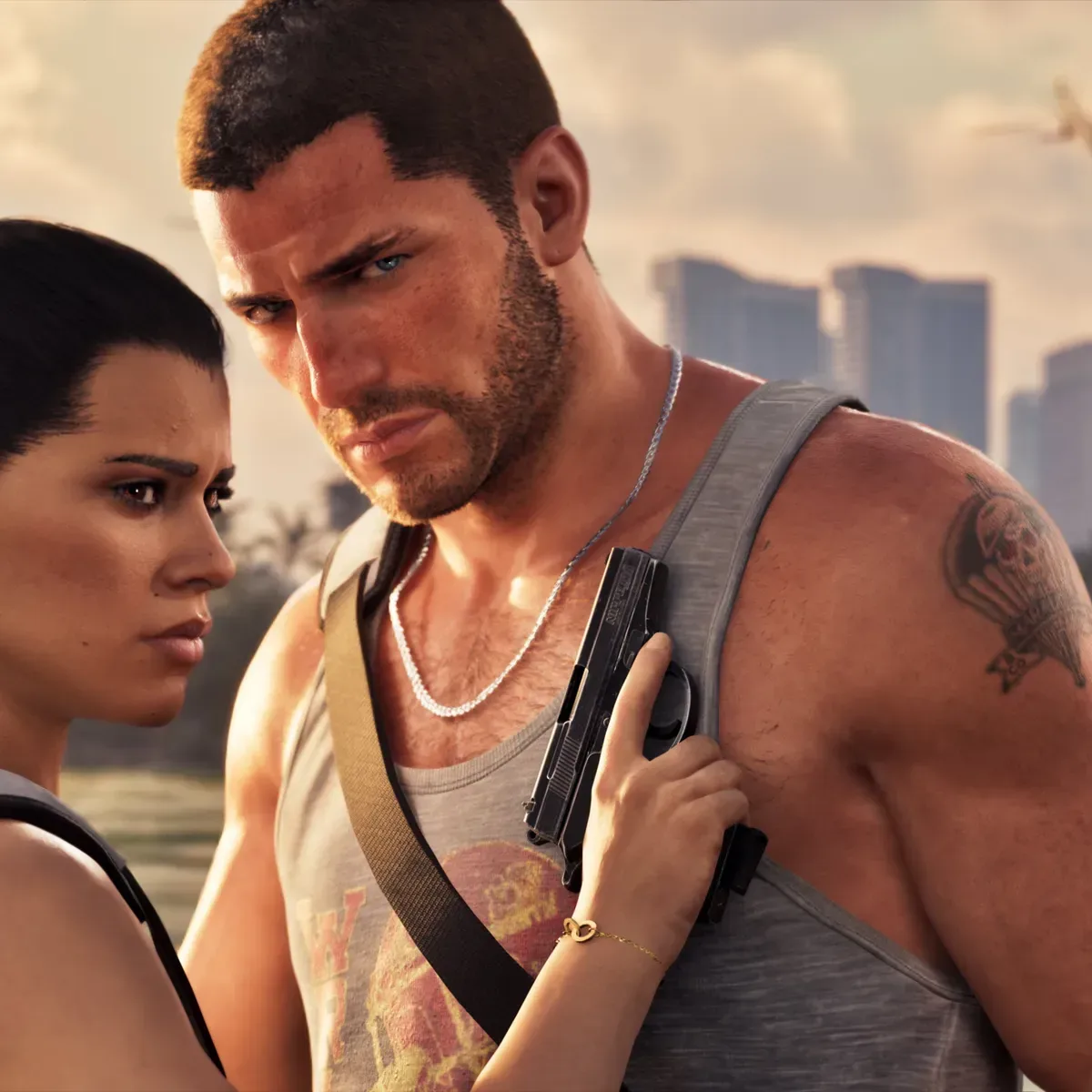
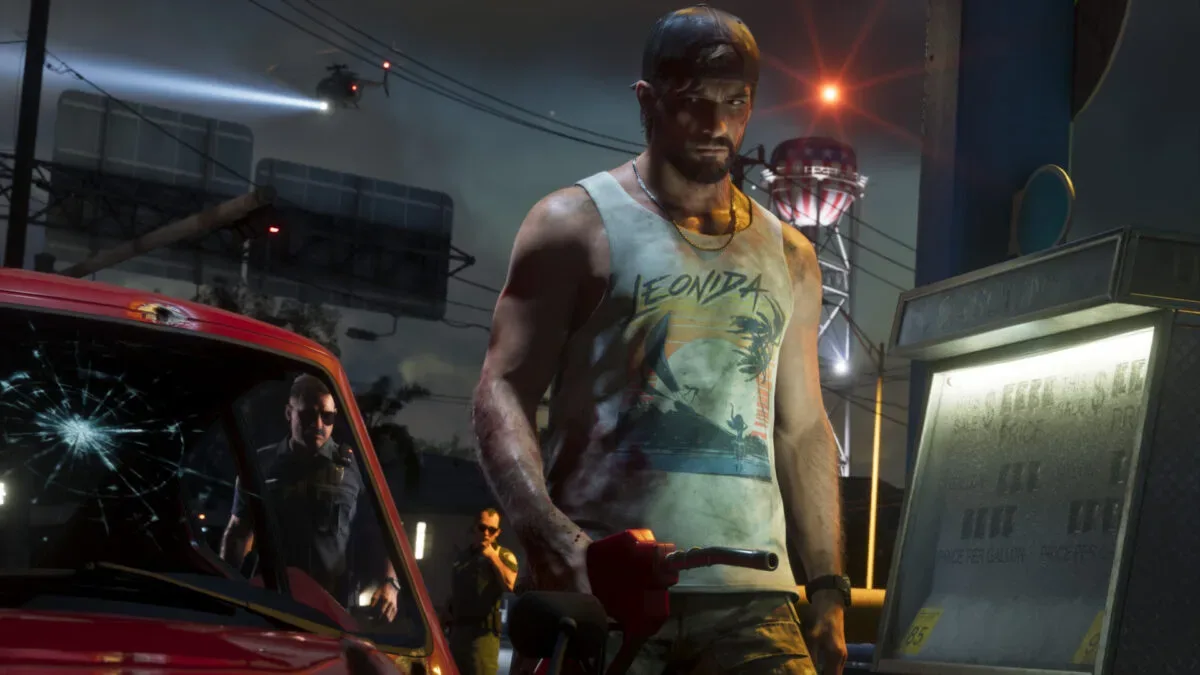
Every extended wait creates its own language. In the case of Grand Theft Auto 6, the language was simple, flexible, and tailor-made for the internet’s habit of treating every absurd headline as another milestone in an increasingly unbelievable timeline: “We got X before GTA 6.”
That joke has a deadline now. Grand Theft Auto 6 is due to launch on November 19, ending a 13-year gap since Grand Theft Auto V and closing the window in which practically any unusual event could be used as evidence that reality had somehow outpaced Rockstar’s next open-world crime drama.
Its impending disappearance is not a tragedy, exactly. No meme is owed an endless life. But it is a small cultural shift worth noticing. The phrase became useful because it did more than say a game had taken a long time to arrive. It gave people a compact way to register how much life, news, technology, and online culture can change while a highly anticipated game remains just beyond reach.
Why the joke worked
The format relied on a very clear premise: GTA 6 was not yet available. Put nearly any surprising development in the blank, add “before GTA 6,” and the sentence immediately acquired a second meaning. The event itself might be serious, trivial, impressive, or outright strange. The joke was about the contrast between that event occurring and the famously prolonged wait continuing.
That is what made the meme unusually durable. It was not tied to one clip, one image, or one narrowly defined reference. It was a snowclone—a reusable phrase template in which speakers replace a fixed slot with new material. The constant portion carried the shared context; the new “X” supplied the day’s surprise. A good snowclone survives because audiences understand its rules immediately, and this one required no explanation for people already aware of the wait.
It also worked as gentle exaggeration. A single delayed game cannot literally serve as a measuring stick for every event in modern life. Yet the construction made the elapsed time feel tangible. Instead of saying, “This has been a long development and release cycle,” a post could name something that seemed improbable and let the comparison do the work.
The joke’s versatility was also its defense against fatigue. The same wording could be revived whenever a fresh event supplied a suitably ridiculous, momentous, or ironic contrast. Even a gaming-industry development could qualify. On the eve of launch, for example, people could joke about GTA 6 receiving Game of the Year recognition before players had the game in hand—a scenario that has a real procedural explanation, as covered in this look at how Grand Theft Auto 6 can be considered for 2026 awards before purchase.
The fact that the joke could accommodate a technical awards-calendar quirk and a random bit of everyday internet weirdness tells you why it stuck around.
Launch changes the tense—and the premise
Once GTA 6 launches, “We got X before GTA 6” no longer describes an ongoing wait. That is the key issue, not whether users can physically type the sentence. They obviously can. But a meme’s timing is part of its meaning, and this one is powered by a condition that is about to vanish.
After release, the line changes from a live observation into a retrospective one. People may still use it to discuss the years leading up to launch, and it may reappear ironically when looking back at old posts. But it cannot react to the present in quite the same way. The punchline has already happened.
That distinction matters because memes are often less like permanent sayings and more like temporary social tools. They help people express a shared feeling at the right moment. In this case, the shared feeling was anticipation mixed with disbelief: anticipation for Rockstar’s next game, disbelief at how many other things had happened while people were still waiting.
GTA 6’s arrival ends that particular emotional arrangement. Attention will naturally move to the game itself: what players make of it, what conversations it provokes, and what comes next for the series. None of those future discussions are supported by the launch timing alone, so there is no need to predict them. The point is narrower: waiting has been the meme’s subject, and waiting is no longer the central fact once the game is out.
The final-hours effect
The last stretch before a major release has its own odd energy. The remaining time is short enough to count, but long enough for people to keep refreshing feeds, making jokes, and searching for one final opportunity to mark the occasion. The source material places the countdown at roughly 13 hours before the game’s official New Zealand launch, which makes the meme’s expiration feel especially immediate.
That near-finished countdown encourages a ritualized kind of humor. People know the template is almost obsolete, so every potential use of it becomes a candidate for a “last good one.” The joke is no longer merely about the delay; it is about the end of the delay and the looming retirement of the joke that delay produced.
There is a pleasingly self-referential quality to that. A meme built on postponement is now being commemorated because it can no longer be postponed. Its farewell is part of the same online behavior that made it popular in the first place: turning a shared countdown into a communal bit.
Thirteen years is enough time for a shorthand to become culture
The 13-year span between Grand Theft Auto V and Grand Theft Auto VI is more than a number in this context. It is the factual foundation that made the phrase legible. A short wait can frustrate fans, but it generally does not create an all-purpose reference point. A wait that lasts across many cycles of online conversation does.
During that kind of span, an anticipated release stops being only a product people want to play. It becomes an idea repeatedly invoked in jokes, speculation, arguments, and wishful thinking. The meme captured that transformation without needing to make a claim about the game’s eventual quality. It was never fundamentally a review of GTA 6 or a verdict on Rockstar. It was a joke about duration.
That separation is important. Fans could use the phrase whether they were intensely excited, casually interested, skeptical, or simply amused by the scale of the cultural wait. The meme demanded only one piece of shared knowledge: GTA 6 still had not launched.
In that sense, the phrase was a kind of timestamp. Posts using it will remain readable later because they identify their own era: the period when GTA 6 was anticipated but unavailable. Once the game arrives, that era does not disappear, but it becomes a completed chapter rather than the present tense.
Retiring a meme does not mean pretending it never existed
Internet jokes do not receive formal retirement ceremonies. Most simply become less useful. A phrase can be beloved and still be done. Repeating it after its factual premise has expired risks turning a once-timely observation into a stale reference, much like endlessly repeating a line after the larger culture has moved on.
That does not require anyone to police humor or declare a forbidden phrase. It simply explains why the meme’s natural endpoint is launch day. The best version of “We got X before GTA 6” was always one that felt current. Its effectiveness depended on the audience recognizing the wait as unfinished.
There is still a brief window for the format to land exactly as intended, and the final pre-launch hours are likely to produce plenty of attempts. But November 19 represents the boundary. After that, the line becomes history—a record of the long road from GTA V to GTA VI, and of the internet finding one remarkably efficient way to laugh at the passage of time.
For a meme, that is a respectable legacy. It did its job, lasted as long as the wait required, and leaves just as the thing it measured finally arrives.