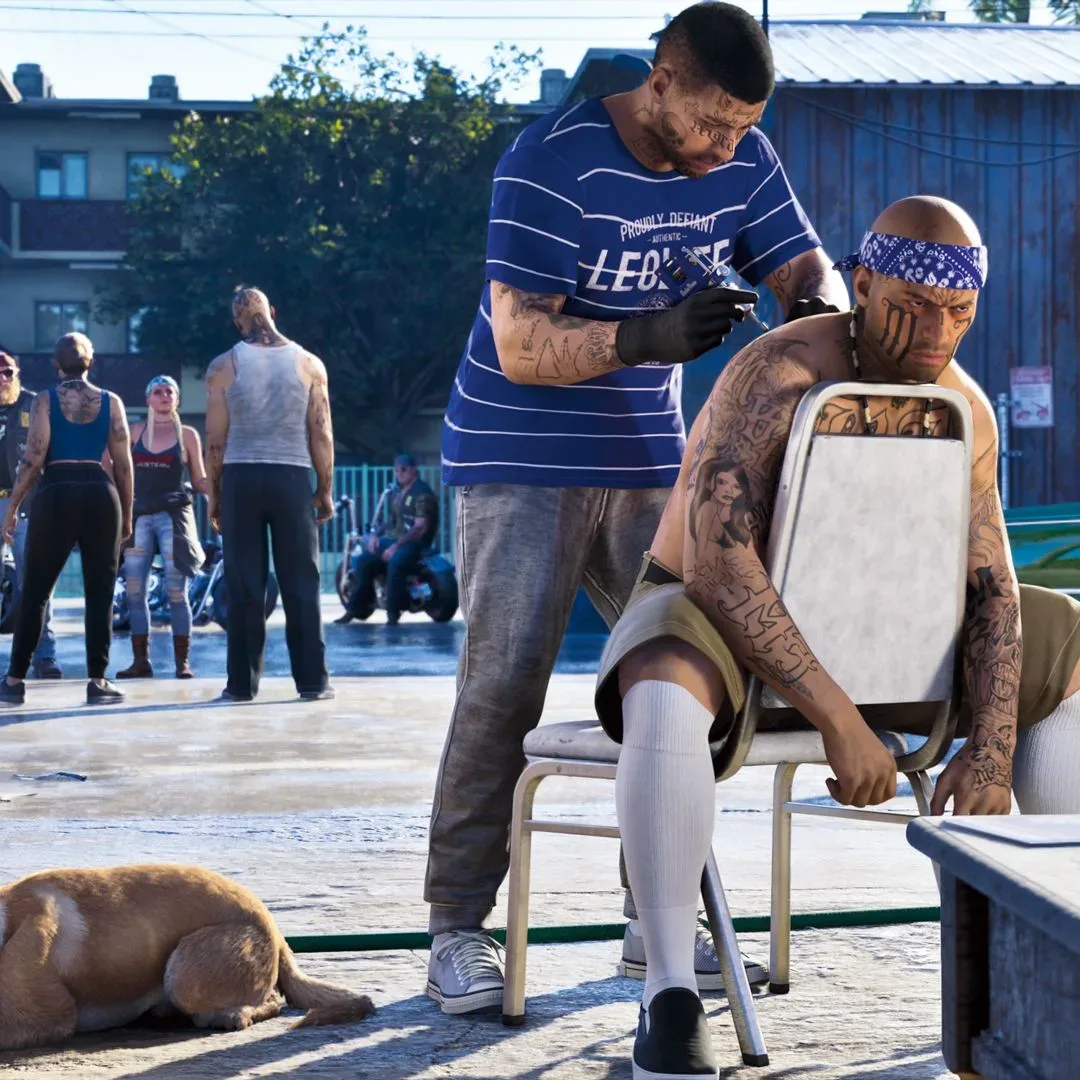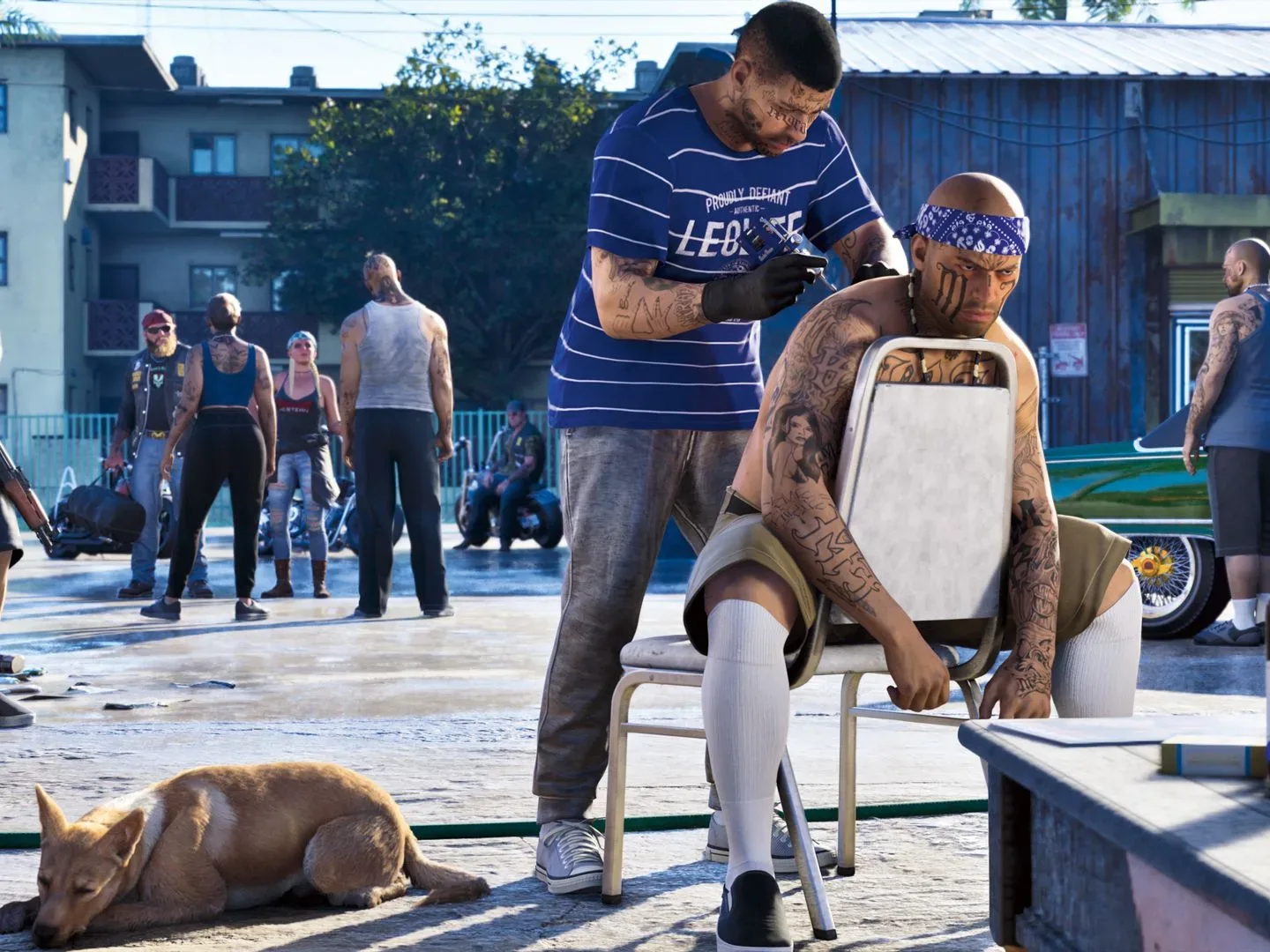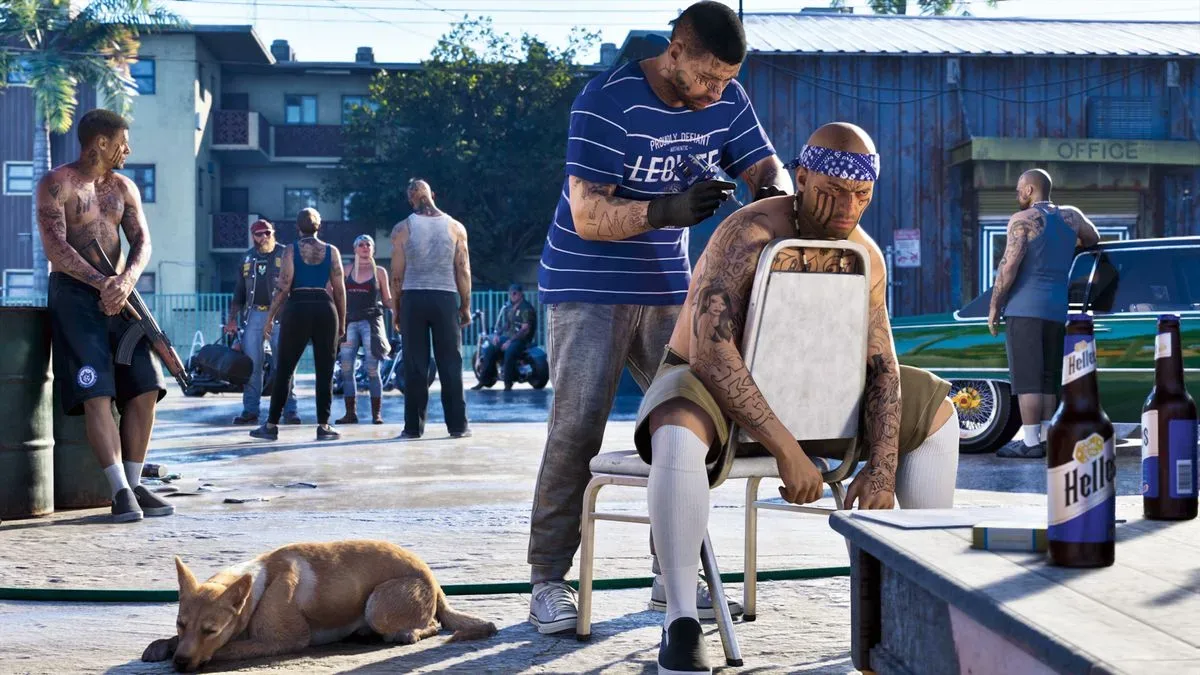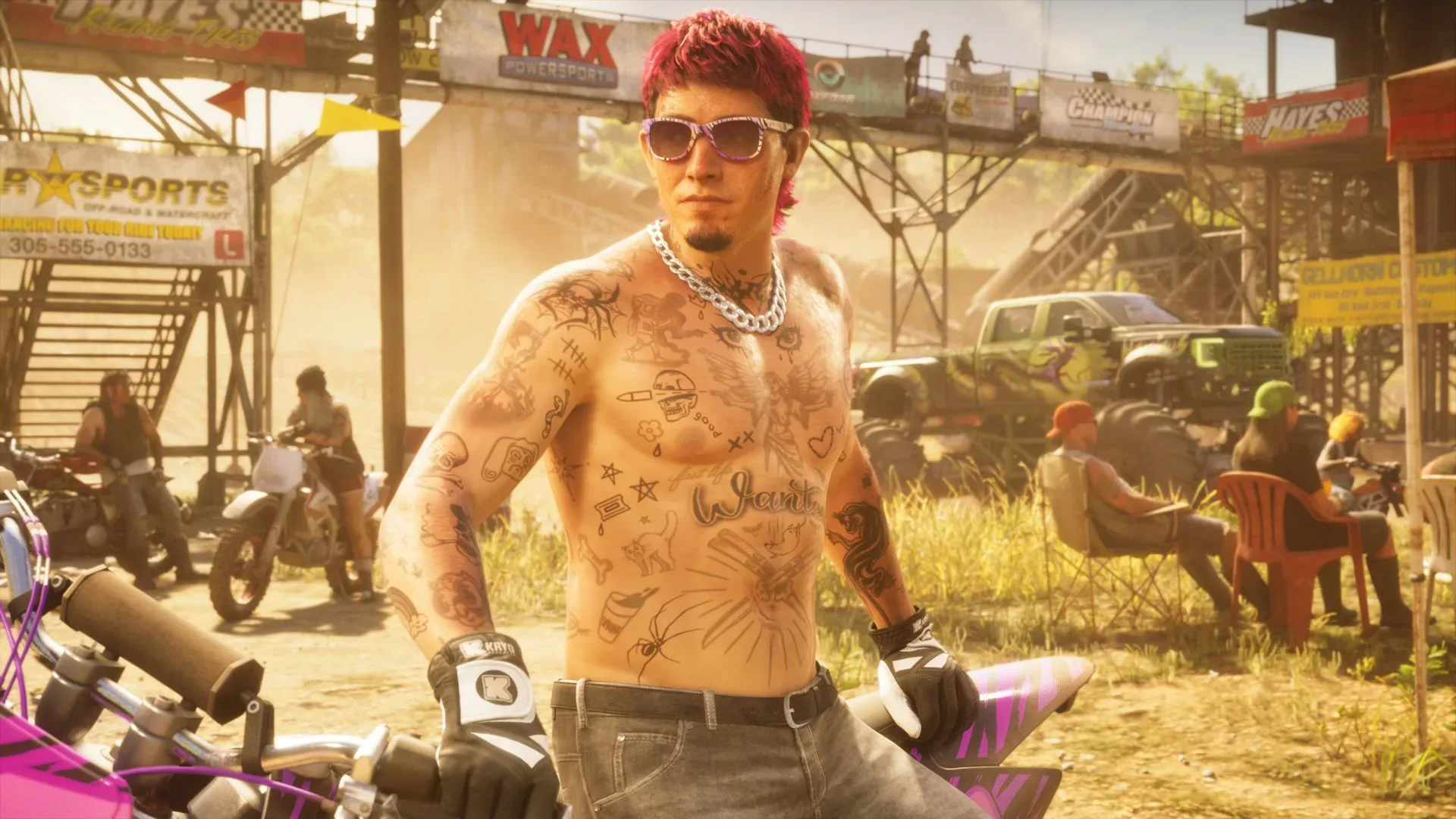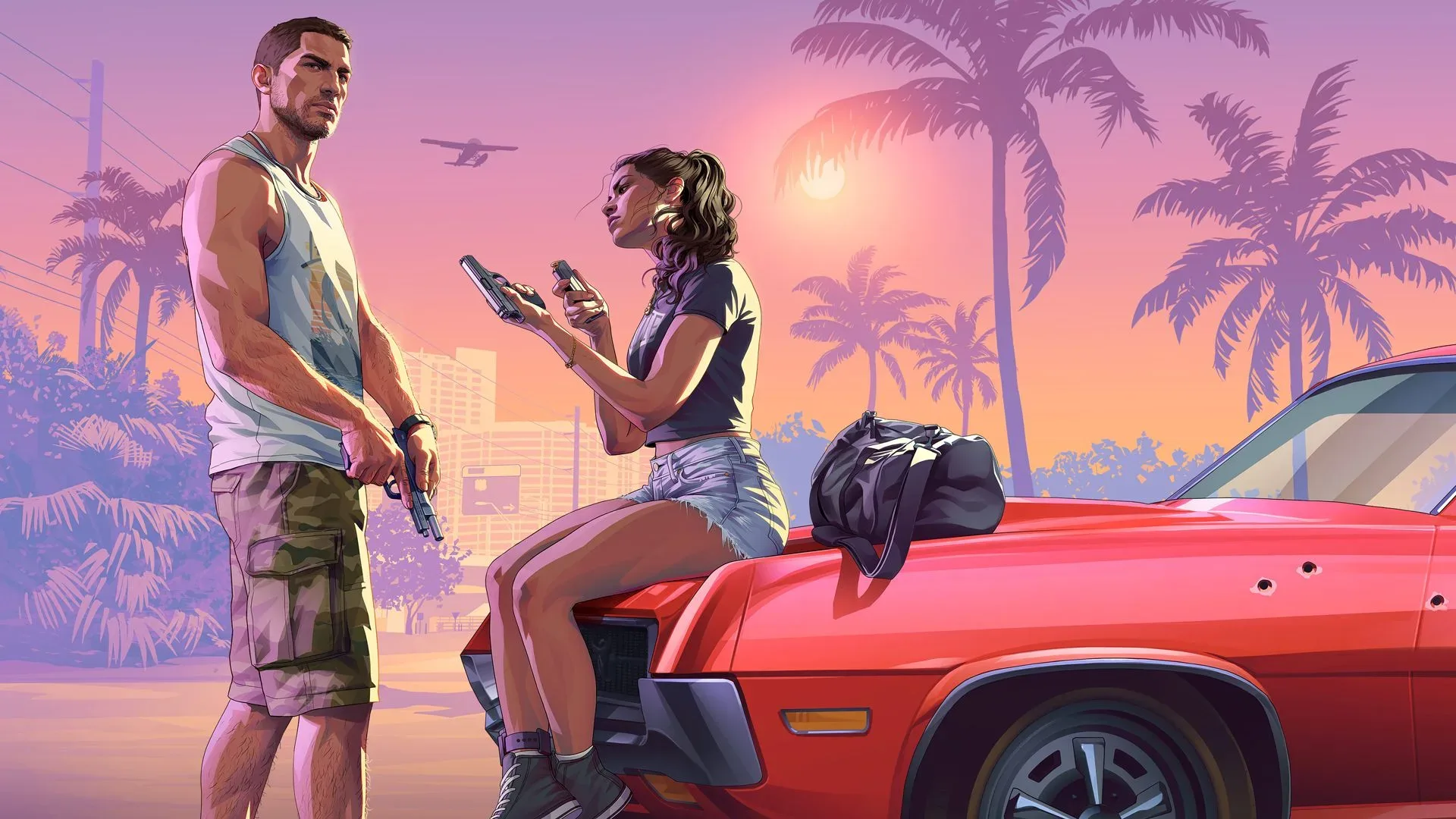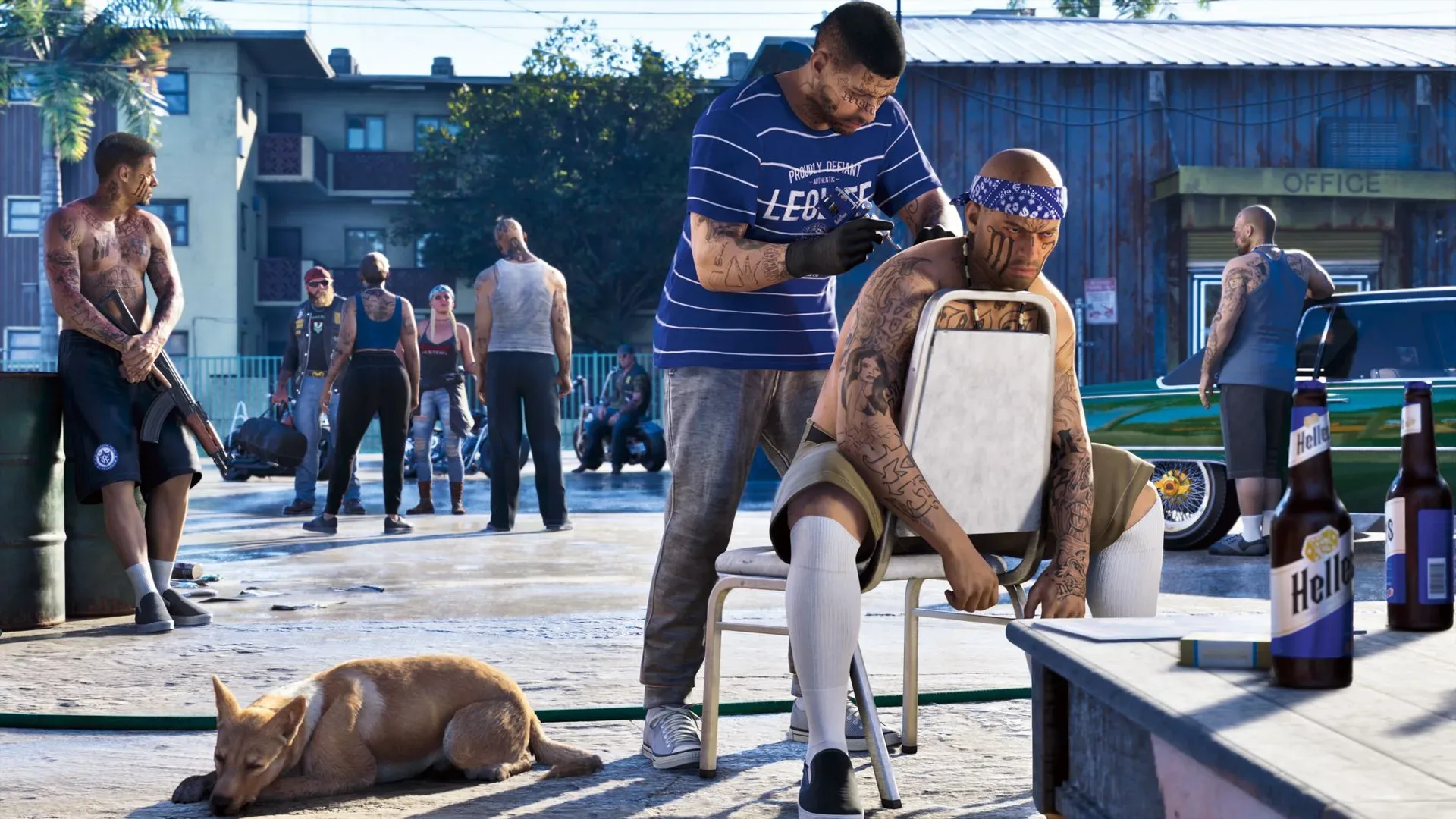
Grand Theft Auto 6 is being framed as a more role-play-friendly entry than earlier games in the series—but its developers’ emphasis is not simply on piling up activities. The stated goal is to give players room to decide what a session looks like, whether that means pursuing the game’s central action or inhabiting Vice City at a much slower pace.
Aaron Garbutt, one of the game’s heads of development, described the intended flexibility in everyday terms: visiting a shop for cigarettes and beer, taking the train, or heading to a club. “You can have your life in the game,” he said. It is an evocative line, but the surrounding comments matter just as much. The pitch is not that every player must treat GTA 6 as a virtual daily-life simulator. It is that the city should accommodate players who want to do that at a given moment.
That distinction could be central to how GTA 6 balances its open-world scale. Grand Theft Auto has long offered diversions beyond missions and driving, but the developers are describing a model in which those diversions can become a player’s preferred rhythm rather than a long list to clear.
What “more RPG” appears to mean here
“RPG” can mean very different things. In some games, it points to numerical character builds, equipment statistics, branching dialogue choices, or class systems. None of those specific mechanics were detailed here. The information available instead points to role-playing as player expression: choosing a lifestyle, pace, and set of activities within a responsive city.
In that sense, GTA 6’s role-playing promise appears to concern agency over routine. A player could be motivated by movement through the city, shopping, nightlife, or other optional activities without that being treated as a detour from the “real” game. Another player might focus largely on vehicles, missions, and crime-driven systems. Both approaches are intended to be valid ways to spend time in Vice City.
Rob Nelson, also a head of development, identified the design risk plainly: systems can backfire when players feel they are being forced upon them. His description suggests that Rockstar is trying to avoid a structure where new features continually demand attention simply because they exist. Instead, the aim is to let people discover the parts of the game they enjoy and settle into them.
“You don’t want to feel like you’re foisting things on the player and then have them reject those things,” Nelson said.
That is a useful principle for a game likely to contain many interacting activities. Optional content can broaden an open world, but abundance alone does not make it meaningful. If a game constantly interrupts the player to explain, unlock, or require another system, choice can start to feel like administration. Nelson’s comments point toward a softer approach: activities should be available to lean into rather than obligations that compete for attention.
Related coverage includes GTA 6 Aims for a More Personal Role-Playing Sandbox Without Overloading Players.
Vice City’s buses are a small detail with big implications
One especially revealing example is public transportation. Phil Hooker, another lead developer, said he is personally focused on making sure Vice City’s buses run on time and go to the correct places. He described taking buses during playtesting instead of driving to his destination, specifically to make sure the routes function as intended, and said he has memorized them.
That does not confirm the full scope of GTA 6’s transit systems, nor does it tell us exactly how every player will interact with them. It does establish that buses are being treated as more than scenery. A functioning network has to be internally coherent: vehicles need routes, stops need destinations, and travel has to work when a player chooses to rely on it rather than commandeering a car.
For most Grand Theft Auto players, driving may remain the fastest and most natural way to cross the map. That is precisely why the bus detail stands out. It suggests Rockstar is investing in an alternative that supports a different kind of play: observing the city, following a routine, or simply travelling without taking the wheel.
Public transit also serves a broader world-building function. In an open-world game, a city feels more credible when its systems continue to make sense from perspectives other than the player’s. A route that is dependable enough for a developer to test personally can make Vice City feel like a place with infrastructure, not only a playground designed around car chases.
Optional systems still need to coexist with core GTA mechanics
The comments do not suggest GTA 6 is abandoning the systems people immediately associate with Grand Theft Auto. The Wanted system is specifically described as one of the game’s core role-playing mechanics. The key idea is that players may be able to spend substantial stretches of time without engaging it.
The Wanted system, in this context, is the game’s mechanism for responding to player crime and drawing law-enforcement attention. It is a core source of pressure and escalation in the series’ sandbox formula. Being able to avoid it for hours would be meaningful not because it removes it, but because it lets the player determine when the high-intensity side of the experience takes over.
That creates an interesting tension. GTA’s identity has been built around freedom to cause chaos as much as freedom to explore. Rockstar’s developers now appear to be articulating a broader form of freedom: the option to pursue quiet, ordinary, or self-directed time in the same city. The activity itself may be mundane; the agency to treat it as a worthwhile part of a play session is the more significant design point.
It also helps explain why a large collection of side activities could be both exciting and potentially daunting. A massive menu of things to do can overwhelm players if it operates like a checklist. But if activities are woven into the city and allowed to remain optional, the same density can make the world more accommodating. Players can engage deeply with a favorite pastime, sample several systems, or ignore them without feeling that they are failing to play efficiently.
Why developer priorities matter as much as feature lists
Feature lists often tell players what is in a game. These remarks reveal more about how Rockstar wants its systems to feel. Garbutt’s focus is the ability to shape a personal day in Vice City. Nelson’s is resistance to feature overload. Hooker’s is the reliability of a seemingly humble part of the city’s simulation. Together, those priorities describe a game trying to make its breadth usable rather than merely impressive.
That does not answer every practical question. There are no confirmed details here on progression, character statistics, mission requirements, rewards for side activities, or the exact relationship between routine role-play and the main storyline. Players should be careful not to read an expansive promise of choice as confirmation of every RPG convention. The developers have spoken about direction and philosophy, not a comprehensive mechanical breakdown.
Still, individual developers publicly stressing usability and player preference is notable. Creative leadership often shapes a game through these granular priorities, a subject echoed in broader conversations about how development experience influences the finished work, including the value of fresh eyes in shaping a major remake.
A city built for different kinds of GTA sessions
The strongest takeaway is not that GTA 6 will require players to role-play every mundane detail. It is nearly the opposite. Rockstar appears to want a player who feels like taking a train or bus, visiting a shop, or going out for the evening to find those choices supported, while leaving the player who wants to get straight into driving and high-stakes action equally free to do so.
That is an ambitious promise because it depends on restraint. More activities are valuable only if they do not turn into demands. More simulation is valuable only if it does not create friction for players who would rather move quickly. And a more personal open world works only if its different systems—transit, nightlife, shopping, criminal pressure, and the rest—can coexist without one approach invalidating another.
For now, GTA 6’s developers are presenting Vice City as a place where players can establish their own habits instead of following a prescribed lifestyle. If that balance holds, the game’s RPG-like quality may come less from conventional character-sheet mechanics and more from something harder to build: an open world that accommodates both a carefully chosen routine and the impulse to break it.