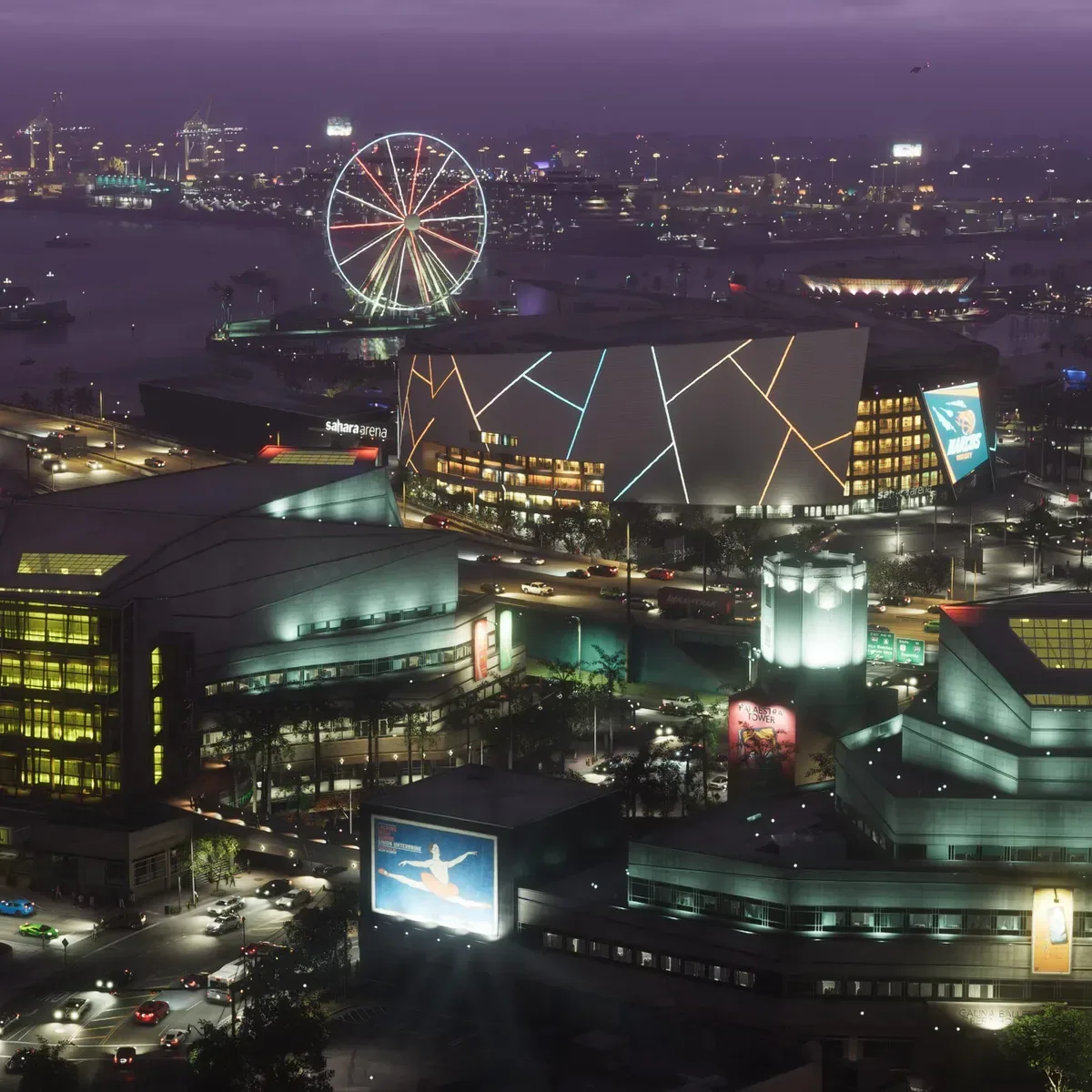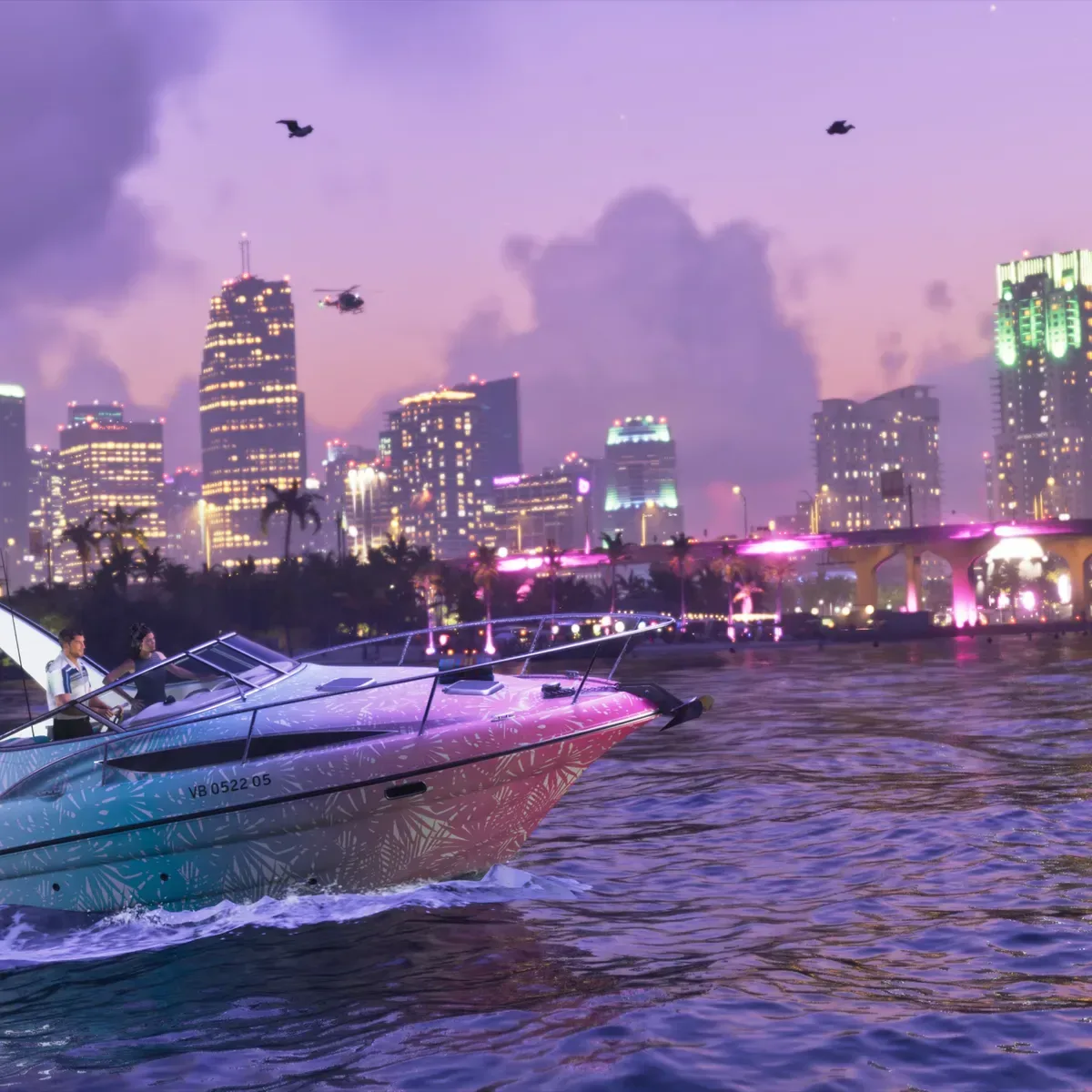
Grand Theft Auto VI’s campaign is moving far beyond the conventional trailer-and-billboard playbook. Rockstar Games is building a conspicuous real-world association between Miami and Vice City, the fictional city that serves as GTA 6’s setting, through arena signage, football-stadium advertising, a forthcoming basketball promotion, merchandise and at least one mural. A Vice City-branded Goodyear blimp is also reportedly travelling south from Ohio, potentially toward Florida.
The scale is notable because the campaign is not simply borrowing Miami’s visual language. It is placing the fictional brand into major local venues and civic spaces, effectively asking residents, tourists and sports audiences to encounter “Vice City” as a temporary public-facing layer over the actual city. That strategy has produced a split response among officials: some see the promotion as a chance for tourism and revenue, while others object to associating Miami with a game series centered on crime and violence.
A Miami campaign built around Vice City
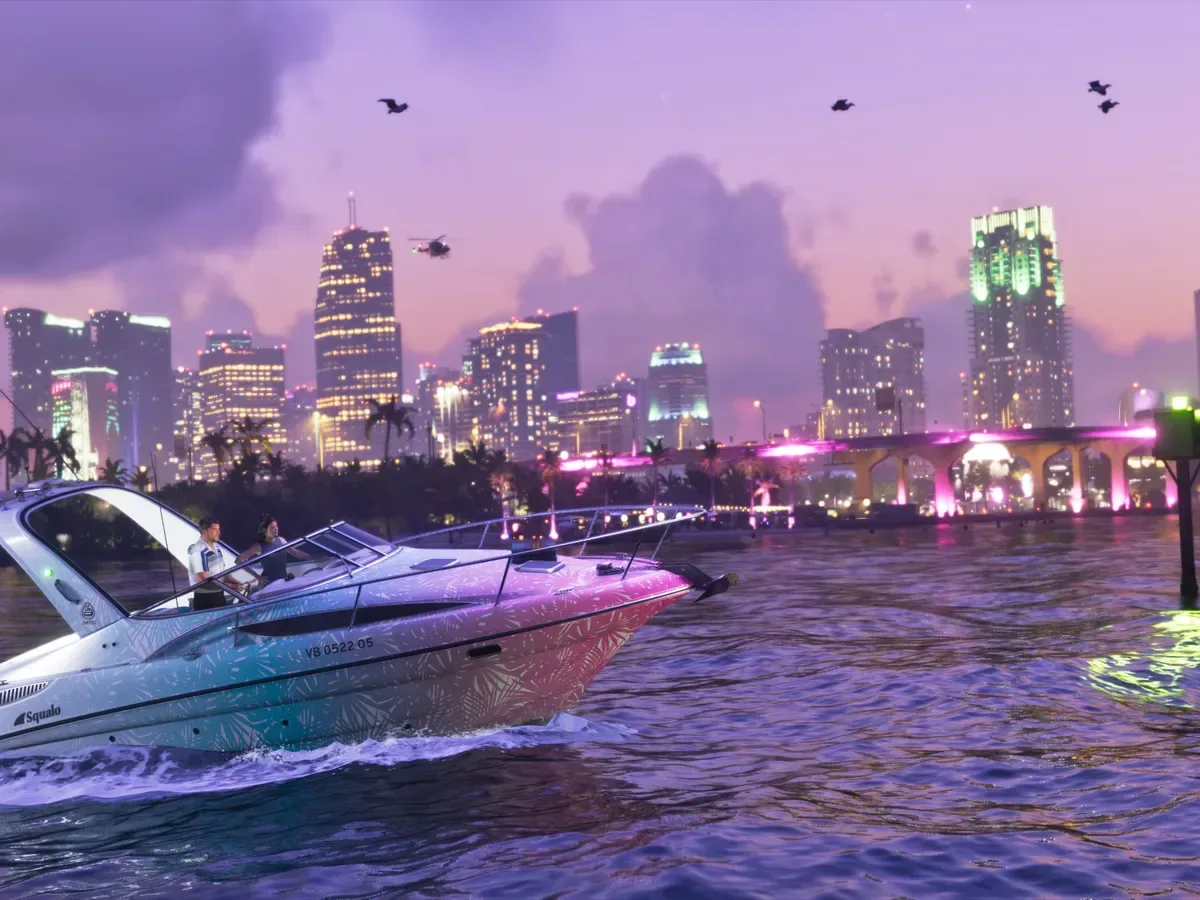
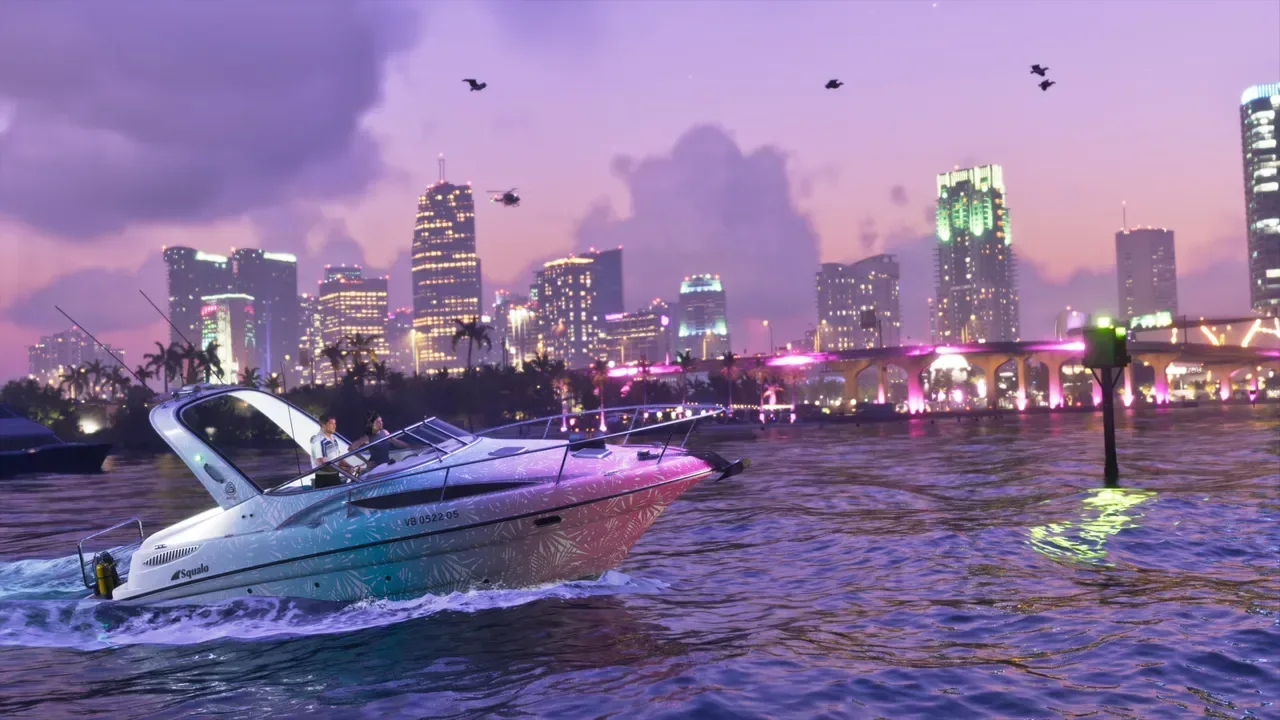
GTA 6 is scheduled to release on November 19. Its promotional activity has already included a major gameplay reveal on Netflix, game-related merchandise and an album of original music created for the game. The Miami activation makes the campaign especially visible because Vice City is GTA’s fictionalized take on the city rather than an unrelated setting being used for ad space.
That distinction matters. A standard activation is a marketing event or installation designed to create direct public engagement with a brand. Here, Rockstar’s activations are also an exercise in world-building: branded objects, sports presentations and street-level art make the game’s setting feel temporarily present in the location that inspired it. The intention appears to be less about communicating a new gameplay feature than turning a setting into an event.
One early centerpiece arrived in September, when Rockstar paid just under $1 million for a glowing “Welcome to Vice City” sign mounted atop the Kaseya Center, home of the Miami Heat. The sign is a particularly direct piece of place-based advertising. It uses a recognizably real Miami landmark to welcome people to an invented Miami, making the boundary between the two part of the campaign’s central joke.
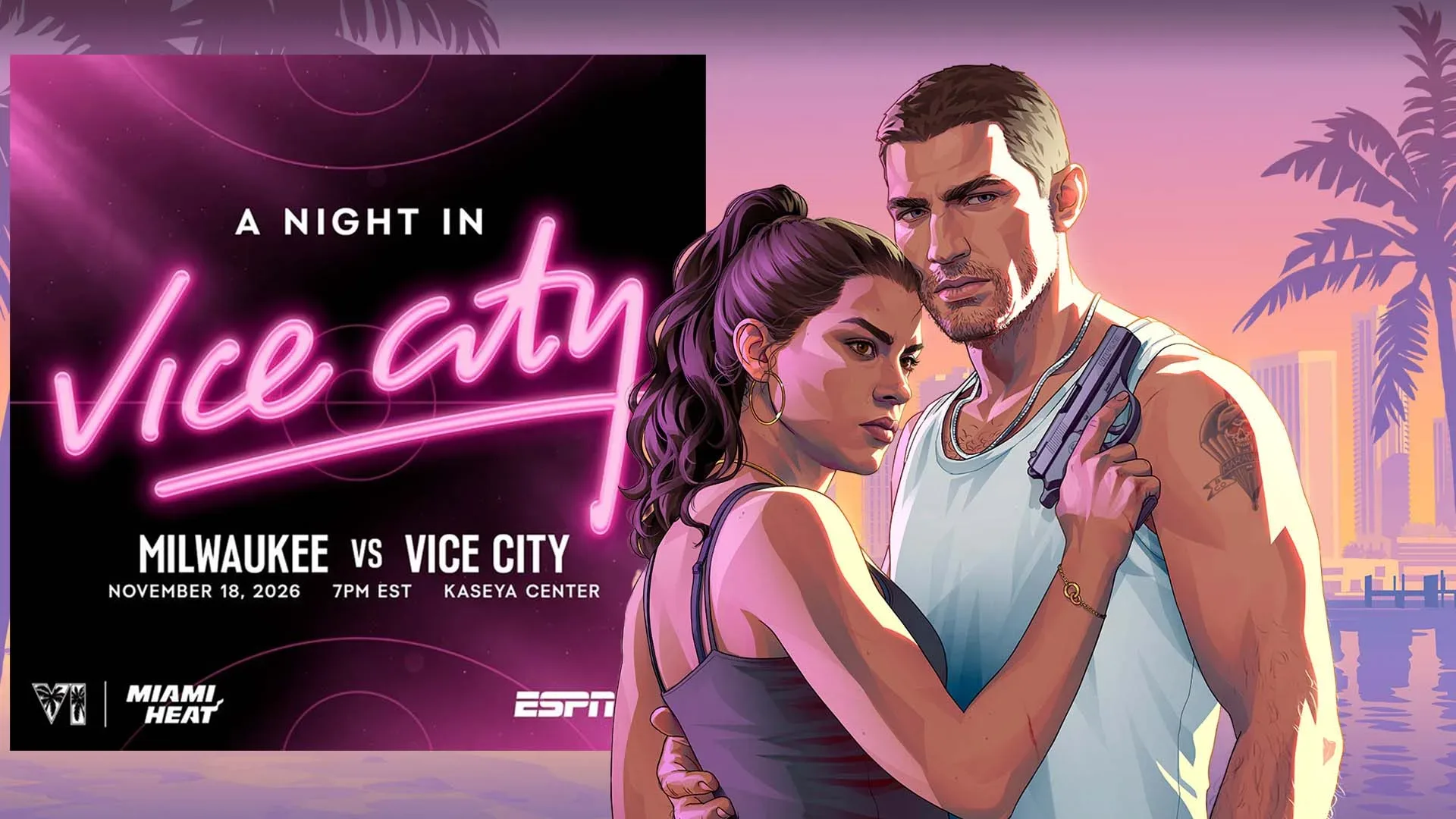
The Kaseya Center promotion will extend to an NBA regular-season game on November 18, when the Heat face the Milwaukee Bucks. The court will be Vice City-themed, the teams will wear previously unseen GTA 6-inspired jerseys, and Vice City merchandise will be sold at the arena. Rockstar and the NBA are presenting the occasion as “a night in Vice City.” The date, one day before GTA 6’s listed release, makes the game a launch-eve event as much as a sponsorship.
Football advertising has already reached Hard Rock Stadium
Miami’s Hard Rock Stadium, home of the Miami Dolphins, has also hosted GTA 6 advertising. The venue’s jumbotron displayed promotion for the game and its release date. After touchdowns, a GTA 6-themed animation used the phrase “In for VI,” adapting the Roman numeral in the title to football’s six-point touchdown score.
That is a compact example of how a sports partnership can do more than put a logo in front of an audience. The campaign folds the game’s name into a live-game ritual, using a familiar scoring moment to reinforce the title. For viewers who may not follow game marketing closely, it communicates the existence of GTA 6 in an instantly readable way. For established fans, it turns an ordinary stadium moment into a small piece of launch-season theatre.
Related coverage includes GTA 6's Miami Marketing Push Grows With Vice City Sports Events, Stadium Ads and a Blimp.
Sports venues also give the campaign a kind of scale that online advertising cannot easily reproduce. A large display at a live game is shared by the people in the stadium, viewers at home and attendees posting clips or photographs. Rockstar’s choice to use both NFL and NBA contexts broadens that reach without needing to reveal more about the game itself.
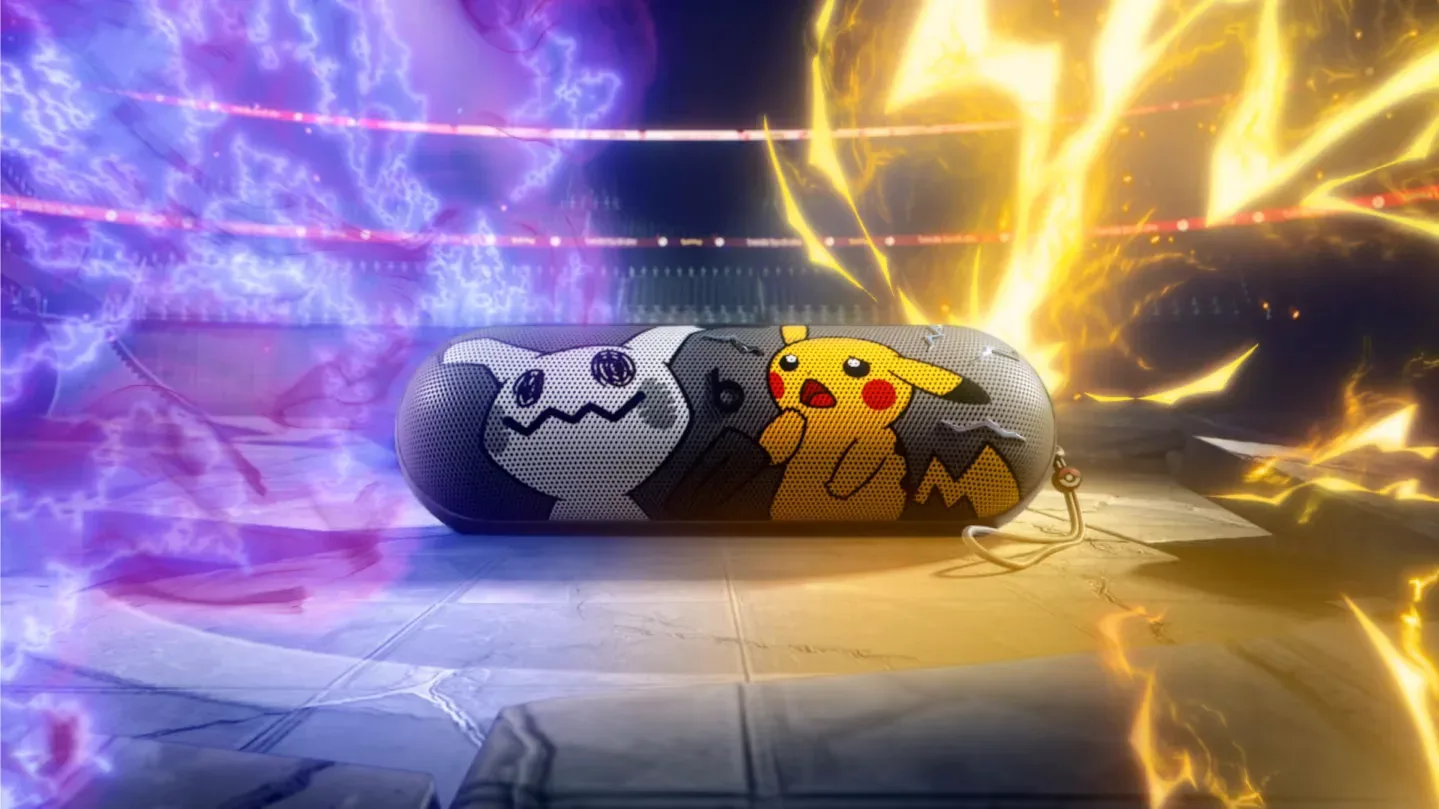
Physical merchandise is part of the equation, too. Branded goods can make a one-night event carry on after the final whistle or buzzer, while also converting the campaign into a retail opportunity. Gaming promotions increasingly overlap with product collaborations in other entertainment categories; for a recent example of a character-driven audio tie-in, see the Pokémon × Beats Pill speaker collaboration. GTA 6’s Miami activity is different in tone and format, but it similarly treats the game identity as something that can exist beyond a screen.
The blimp remains a reported possibility, not a confirmed Florida appearance
A Goodyear blimp carrying Vice City branding has reportedly been seen flying out of Ohio and heading toward North Carolina. It has been speculated that the airship could ultimately travel to Florida for sporting events or other planned promotional appearances. At present, its eventual destination and role have not been confirmed.
The distinction is important. The blimp’s branding is evidence of a wider physical campaign, but it does not establish a specific Miami schedule. If it does reach Florida, it would be among the more conspicuous components of a rollout already designed for visibility at city scale. An aerial ad is difficult to ignore, and it would complement the stadium activity by putting Vice City branding above the same regional landscape the game is fictionalizing.
Rockstar has also installed at least one Vice City mural in Miami. Together with the Kaseya Center display and stadium placements, that suggests a campaign mixing permanent-looking visual landmarks with short-lived event moments. The practical advantage is variety: a mural can be encountered by passersby, arena signage can dominate a skyline view, and sports broadcasts reach audiences who may never visit Miami.
Why some officials object to the partnership
Not everyone sees the campaign as an uncomplicated win for the city. County Commissioner René Garcia has publicly objected to Miami’s association with the game, saying he is uncomfortable with it. His objection centers on GTA’s portrayal of the city as a place of criminality and killings, rather than merely the size or commercial nature of the advertising.
Garcia’s concern is that the collaboration links Miami with a game he characterizes as depicting the city as a crime haven and murder capital.
This is a reputational argument. Vice City may be fictional, but the marketing deliberately depends on the audience recognizing Miami beneath the name. The closer Rockstar’s installation and event strategy brings the two together, the more directly it invites the question of whether the city is endorsing a satirical, crime-focused depiction of itself.
Other officials reportedly take the opposite view, arguing that the campaign could draw tourists and generate revenue. Neither position is difficult to understand. High-profile entertainment campaigns can bring attention, visitors and commercial activity to a host city. But GTA’s brand is built around mature criminal satire, so Miami’s participation carries cultural baggage that would not accompany every game partnership.
The disagreement also illustrates the difference between allowing advertising and actively collaborating on a location-based promotion. A conventional ad buy is often perceived as a commercial transaction. A proposed transformation of a major public area can feel like a stronger civic association, especially when the campaign’s fiction is visibly modeled on the host city.
Airport and Miami Beach plans are still unsettled
Garcia and other officials are reportedly trying to halt negotiations that would expand the Miami campaign. Reported possibilities include advertising at Miami International Airport and a $4 million transformation of Miami Beach. The expansion had been expected to begin as soon as October 15, though an unnamed official has expressed doubt that the relevant agreements would be completed in time.
Those reported plans should therefore be treated as proposals under dispute, not completed activations. The difference is substantial. The Kaseya Center sign, Hard Rock Stadium advertisements, mural and announced Heat game provide concrete evidence that the campaign is already active. Airport advertising and a Miami Beach transformation remain dependent on negotiations that may not produce a final deal on the originally anticipated timetable.
For players, the uncertainty does not change GTA 6’s listed November 19 date. It does show that the final weeks of promotion may remain fluid. Rockstar has established a clear appetite for large, real-world displays, but the limits of its Miami footprint will partly depend on whether city and county stakeholders are willing to authorize further use of prominent locations.
What this says about the GTA 6 launch strategy
The campaign’s most striking feature is its emphasis on recognition rather than explanation. Nothing in the public Miami activity described so far confirms new missions, systems, platform plans or gameplay mechanics. Instead, the promotion repeatedly says one thing: Vice City is arriving, and it is arriving with enough cultural weight to occupy arenas, broadcasts and public spaces.
That approach makes sense for a title whose setting is already central to its identity. The “Welcome to Vice City” sign, themed basketball court and touchdown animation all rely on the same simple connection. They take a place players expect to explore digitally and make it visible in a real-world city strongly associated with that fiction.
It also means the campaign is likely to be judged in two different ways. Fans may view the spectacle as a fittingly oversized countdown to a major release. Local decision-makers and residents may instead weigh the economic upside against whether the depiction of Miami is one they want to help amplify. The campaign’s friction is not separate from the marketing; it is a consequence of Rockstar choosing to make the real city inseparable from Vice City’s launch image.
For now, the confirmed sports and venue activity ensures that GTA 6 is already highly visible in Miami. The pending airport and Miami Beach discussions, plus the possible Florida appearance of the Vice City blimp, will determine whether Rockstar’s final pre-release push becomes still larger—or meets a civic limit before launch day.