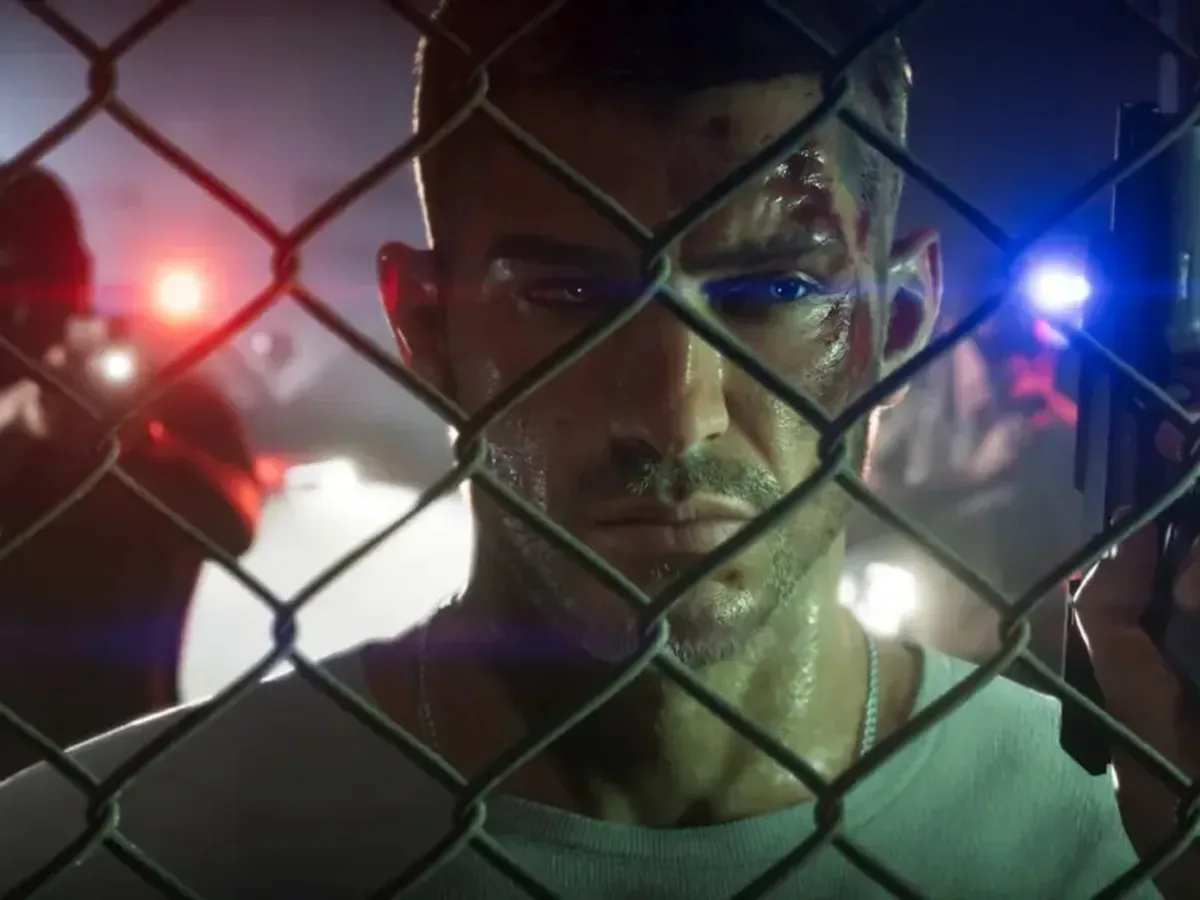
Grand Theft Auto VI may not turn every famous Florida attraction into a playable destination. Rockstar Games has indicated that Leonida, the game’s fictionalized take on the state, is being built through selection rather than exhaustive replication. That means major real-world theme-park names and their direct equivalents are not guaranteed to appear, even as the studio pursues what it describes as a full Florida experience.
The clarification came in a discussion with Rockstar senior vice president of environment art Paul MacPherson about landmarks including Disney World, SeaWorld and Universal Studios. MacPherson did not rule out an individual attraction by name, nor did he provide a definitive list of locations that will or will not make the final game. The important distinction is that Rockstar is not treating Leonida as a checklist of Florida tourism stops.
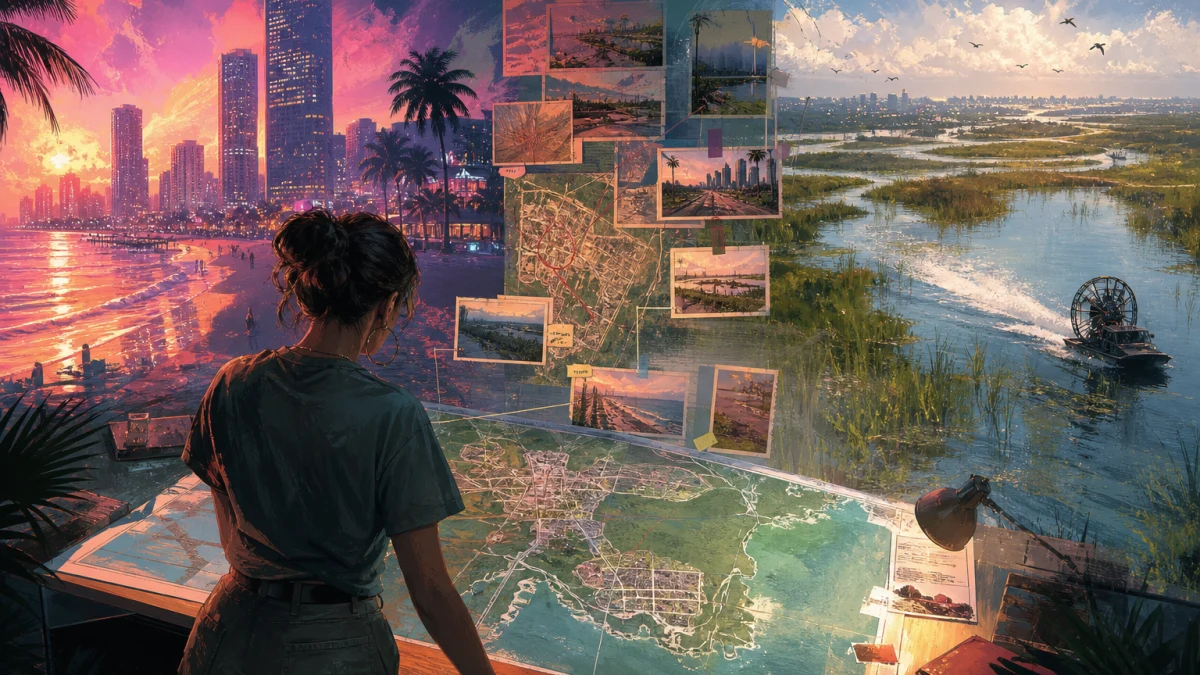
Instead, the environment team weighs a broad mix of elements before narrowing the world down with the game’s design and narrative teams. That list includes landscapes, towns, buildings, landmarks, views, vegetation and rock formations. Put plainly: a recognizable place has to earn its space by helping the game function, not simply by being famous in Florida.
“We have to constantly evaluate the diversity of landscapes, towns, structures, landmarks, vistas, plant species, rock formations and everything else before we work with design and narrative to distill a list down that best works with and serves the game’s needs,” MacPherson said.
For players hoping to find a precise digital counterpart to every major park, that is a reason to temper expectations. For players more interested in whether Leonida feels coherent, varied and specific, it offers a clearer explanation of how Rockstar is approaching the setting. The target is a convincing interpretation of Florida, not a one-to-one tourism simulator.
Leonida is a fictional place, not a Florida directory
“Fictionalized” matters here. A fictionalized setting draws on the identity, atmosphere and recognizable traits of a real place while retaining the freedom to rearrange, exaggerate, combine or omit locations. In an open-world game, that freedom can be as important as visual detail. Roads, districts and landmarks need to work together for travel, missions, character scenes, encounters and exploration.
That does not mean a setting becomes less authentic simply because it excludes a real-world headline attraction. A game world can communicate its regional identity through a mix of urban areas, coastal spaces, smaller towns, natural terrain, roadside structures, nightlife, wildlife and local visual textures. MacPherson’s description of the selection process points to exactly that kind of balance: the team is considering not only named landmarks, but the terrain and environmental details that give places their character.
It is also worth separating what Rockstar has suggested from what it has not confirmed. The comments support the idea that GTA 6 will not necessarily include direct stand-ins for every large Florida attraction. They do not establish that all theme-park-like entertainment areas are absent from Leonida, and they do not identify a specific attraction as definitely cut. Until Rockstar offers more precise detail, claims that any one park is conclusively in or out go beyond the available information.
Related coverage includes GTA 6 May Skip Florida's Biggest Theme Parks as Rockstar Focuses on Leonida's Identity.
For a broader look at the distinction between official details and speculation surrounding the setting, see what Rockstar has confirmed about Leonida and GTA VI map-size rumors.
Why a massive theme park is not an automatic open-world priority
Large theme parks sound like an obvious fit for a satirical crime series set in a Florida-inspired world. They are visually distinctive, culturally familiar and full of potential jokes. But their recognizability alone does not settle the game-design question.
Game design is the process of deciding how a game’s systems, spaces and player activities work together. An environment needs more than impressive scenery. It needs a purpose: perhaps it supports a mission, offers repeatable activities, creates useful routes through the map, gives players reasons to return, or reinforces story and character themes. If a location only provides a brief novelty visit, it may not justify the amount of work required to make it feel alive and believable.
A theme park is particularly demanding because players naturally expect a lot from it. There are entrances and exits, crowds, rides, shops, food spaces, backstage areas, parking, security, signage and many opportunities for interaction. If a world invites players to explore freely, a highly visible park could prompt questions about which rides work, what can be entered and whether there are activities beyond looking around. The more culturally prominent the real-world inspiration, the higher those expectations can become.
Rockstar’s own history provides a limited example of the distinction between including a landmark-inspired attraction and making it a deep destination. Grand Theft Auto V included a Venice Beach-inspired boardwalk and pier area where players could use a roller coaster and Ferris wheel. Those features gave the waterfront an identifiable recreational character, but they did not turn the pier into a large, system-heavy amusement park. The location’s value was also in what it contributed to the wider city: a place to pass through, see and revisit amid other open-world activity.
That comparison does not predict GTA 6’s exact structure. It does, however, illustrate why “there is a park” and “there is an expansive theme-park simulation” are very different propositions. Rockstar’s comments suggest that the studio is making those choices around the needs of Leonida as a whole.
What Rockstar has said will be part of the world
The possible absence of direct counterparts to every famous attraction should not be read as a sign that Leonida will lack places with depth. Rockstar has said GTA 6 will include a zoo that players can explore. Animals are also a significant part of the game’s world, with more than 170 types of creatures planned, including rare and legendary breeds that can be studied.
That is one of the more concrete indications of how exploration could be distributed across the map. A zoo is an attraction in the broad sense, but it can also connect directly to a wider wildlife focus. Rather than isolating animal encounters inside one entertainment complex, the game can potentially make fauna part of the setting’s broader identity. The available information does not spell out the exact mechanics of studying animals or the role of rare and legendary breeds, so it would be premature to label the feature a collection system, a mission track or anything else more specific. Still, the stated scale of animal variety indicates that wildlife is more than incidental decoration.
MacPherson’s list of environmental considerations makes that emphasis easier to understand. Plant species, rock formations and different types of landscape are not usually the details people name when imagining a Florida-inspired game map, yet they are central to regional atmosphere. They help distinguish one stretch of the world from another and can make a trip across the map feel like travel through a place rather than movement between disconnected mission arenas.
Rockstar has also said it spent extensive time researching Florida directly, including visits to nightlife venues such as strip clubs and nightclubs. Research of that kind should not be mistaken for a promise that every observed site appears in the game. Its practical value is broader: it can inform the visual language, social atmosphere and environmental texture of a fictional setting. The ultimate result remains filtered through satire, narrative needs and the realities of building an interactive world.
What “the full Florida experience” can reasonably mean
MacPherson framed the goal as delivering the full Florida experience even where exact real-world locations are not present. That phrase is necessarily subjective, but his explanation provides useful boundaries. Rockstar appears to be pursuing an experience assembled from diverse environments and landmarks, rather than promising exact geographic coverage.
For players, the practical takeaway is to evaluate future GTA 6 reveals in terms of variety and function. A place inspired by Florida does not need to duplicate a famous gate, ride or logo to feel tied to the state. Conversely, a highly recognizable spoof would not by itself make Leonida feel complete if the rest of the world lacked meaningful differences in its communities, scenery and activities.
This is also a sensible way to approach fan speculation. Screenshots, trailers and rumors can encourage people to identify parallels with real buildings or regions, but similarity is not confirmation. Rockstar’s statement leaves room for inspired-by destinations, altered composites and entirely original locations alongside more immediately recognizable references. The studio’s selection process means omission can be intentional design, not evidence that an area has received less attention.
A selective map can still be a richer one
Open-world scale is often discussed as though more named places automatically create a better map. Rockstar’s comments point to a different measure: whether locations serve the game. A carefully chosen town, landscape or attraction can have more lasting value than a huge but thinly interactive replica built mainly for recognition.
That does not eliminate the appeal of a Florida-style theme park in GTA 6. It remains a natural subject for speculation because it could offer a vivid setting for comedy, conflict and spectacle. But the official message is more measured. No exact equivalents to Disney World, SeaWorld or Universal Studios have been promised, no specific park has been ruled out, and Leonida’s identity will not rest on reproducing every tourism landmark.
What has been signaled is a world shaped around environmental diversity, narrative purpose and game design, with an explorable zoo and a broad range of animals among the confirmed points of interest. As more of Leonida is shown, the meaningful question will be less “Which real attraction was copied?” and more “How do its places work together as a GTA world?”