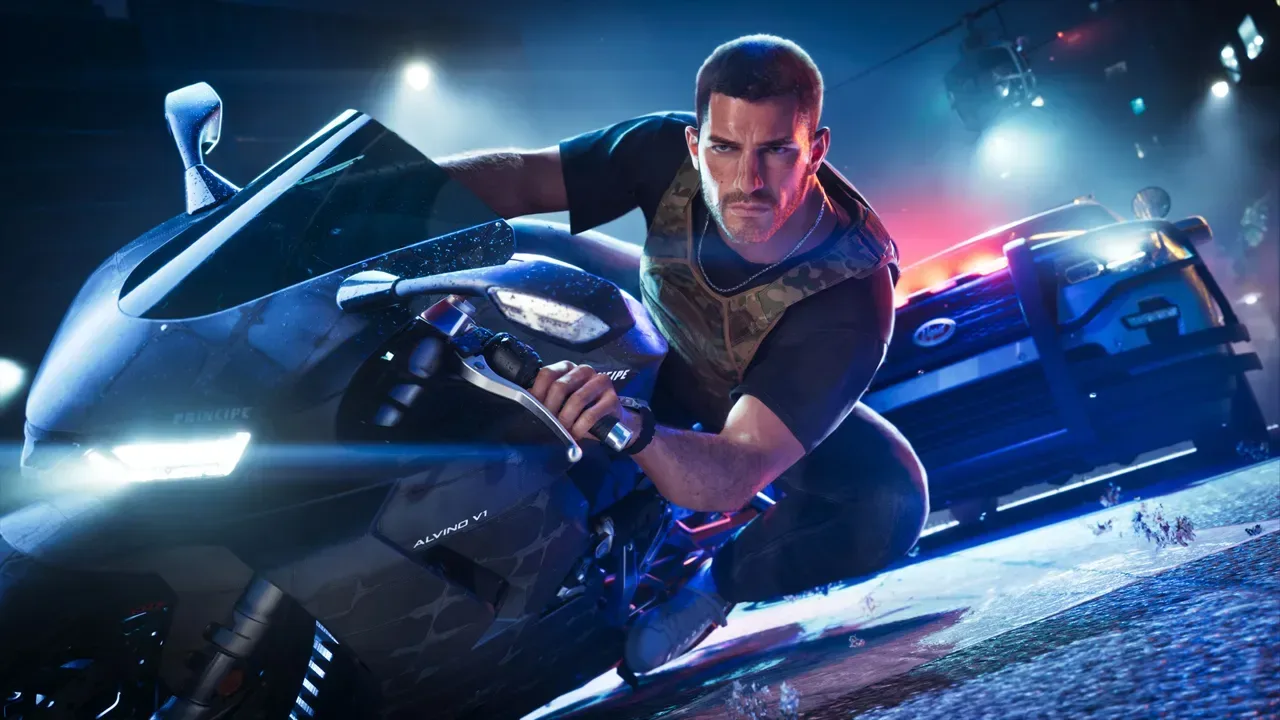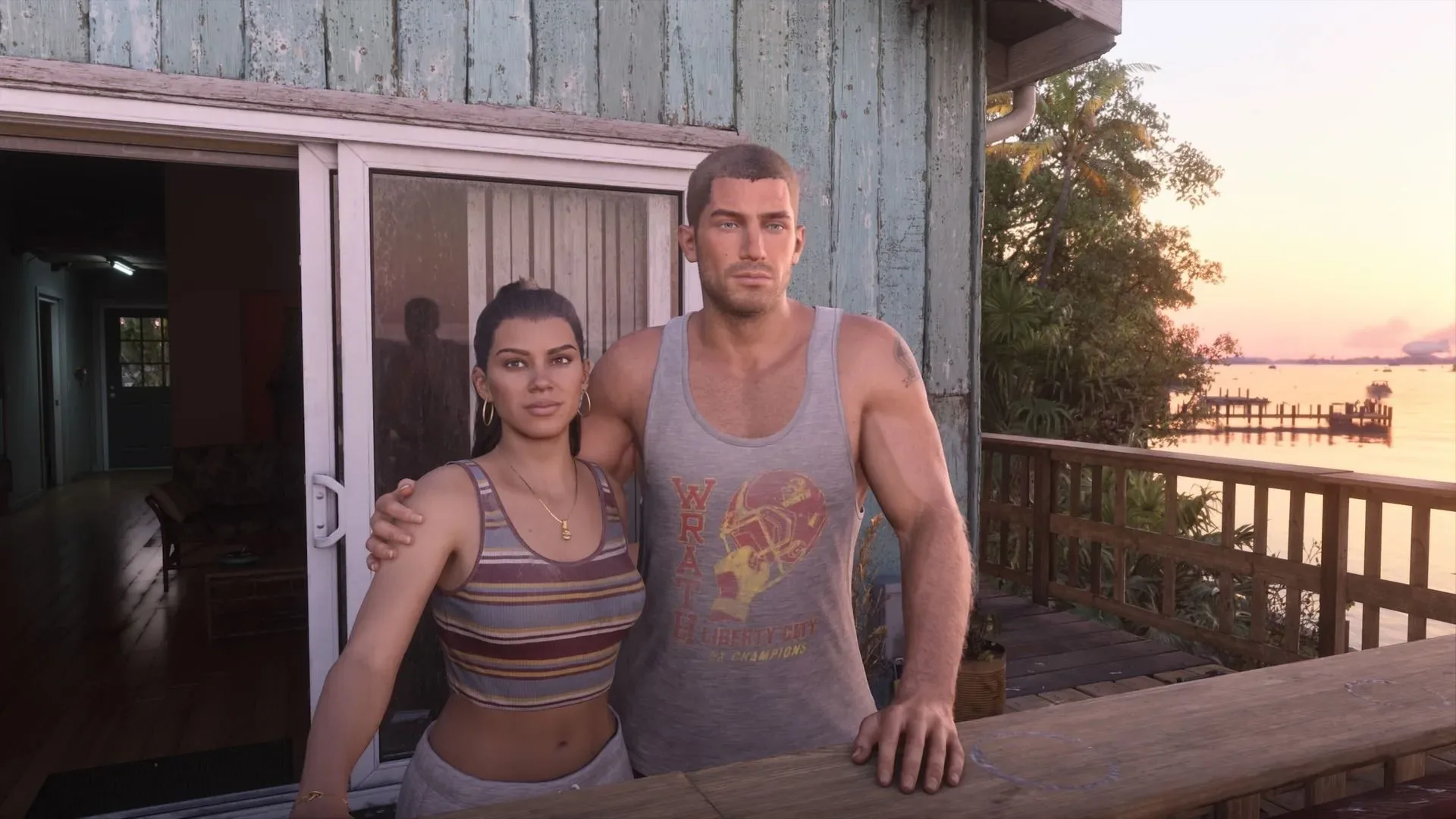
Grand Theft Auto 6 has arrived at a scale that invites an obvious question: what will the rest of the games business try to copy? The answer may be: not much—not directly, anyway.
Estimates place GTA 6 sales at just under 50 million copies, with revenue above $4 billion. Those are extraordinary figures, though they should be read as estimates rather than a confirmed final tally. They nevertheless frame the argument made by Rhys Elliott, head of market analysis at Alinea Analytics: GTA 6 is less a repeatable corporate playbook than a rare culmination of timing, anticipation, investment and audience attention.
In that reading, the game is a potential high-water mark for a particular kind of AAA blockbuster. It demonstrates what the largest, longest-developed and most widely anticipated release can achieve when virtually every condition breaks in its favor. It does not automatically demonstrate that another company can approve a similarly vast project and expect a similar outcome.
That distinction is important for players, studios and publishers alike. A giant success can influence the medium without being a viable template. GTA 6 may change expectations for the genre and for blockbuster launches, while still being too singular to inspire sensible one-for-one copies.
Why GTA 6’s numbers do not make it easy to imitate
“AAA” is commonly used to describe games backed by the largest budgets, teams and marketing efforts. But it is not a guarantee of success, nor does it define a single genre or production method. GTA 6’s commercial performance is especially striking because it sits at the intersection of several hard-to-reproduce factors: a long-running series, an enormous pre-release audience, years of anticipation, and the kind of broad cultural attention that few games command.
Elliott’s view is blunt: executives should not look at a huge result and decide to greenlight their own billion-dollar Grand Theft Auto. That is less a claim that major publishers will stop funding ambitious games than a warning about false cause and effect. The result is visible. The full set of circumstances behind it is not something a competitor can simply purchase or schedule.
GTA 6 also arrived after roughly 13 years of anticipation, with a decade described as one of sustained community attention alongside a notably tight-lipped development process. Time alone is not a substitute for anticipation, but the long gap matters. It gave the release an unusually large runway in the public imagination. A new open-world crime game, even an expensive and polished one, would begin without that exact accumulated momentum.
Nor is a famous label by itself an answer. The challenge is not merely to build a large map or assemble a costly production. It is to create a game that players see as an event rather than simply another release in a crowded calendar. The available evidence suggests GTA 6 became that kind of event. That status is valuable, but it is also inherently difficult to manufacture.
Related coverage includes GTA 6's Record-Breaking Success May Be the End of an AAA Era, Analyst Argues.
The industry has seen the danger of chasing the previous phenomenon
The broader point draws on a familiar pattern in games: a breakthrough hit can prompt companies to pursue a perceived formula instead of asking whether they possess the conditions to make a distinct, sustainable game. Elliott points to prior waves of “next Fortnite” projects and attempts to produce a “World of Warcraft killer.”
Those labels are useful shorthand for a costly mistake. Chasing a phenomenon means treating a successful game’s visible traits as the reason it succeeded, then trying to reproduce them after the market has already moved on or without a comparable community, creative identity or long-term plan.
Fortnite and World of Warcraft are invoked here not as simple genre checklists, but as examples of games that became much larger than their basic mechanics. Their successes were cultural and social as well as commercial. A game marketed as their replacement has to convince players to leave behind friends, routines, sunk time and existing communities. That is a dramatically harder proposition than launching a good standalone game.
The same logic applies to GTA 6. Copying the outer shape of a colossal open-world blockbuster would not copy its position in popular culture. A rival can respond to the demand GTA 6 makes visible—demand for ambitious, detailed games and major shared moments—but a literal attempt to create “the next GTA 6” would risk being judged against a once-in-a-cycle release from its first trailer onward.
“GTA 6 feels more like a swansong for this kind of game,” Elliott argued, calling it a watermark and bookend rather than a template for what comes next.
What “last of its kind” actually means
Calling GTA 6 “the last of its kind” should not be mistaken for a claim that AAA games, open worlds, Rockstar projects or sequels are over. None of that follows. Red Dead Redemption 3 and The Elder Scrolls 6 are specifically identified as future games that would face a formidable challenge in matching GTA 6’s impact, not as games that cannot exist or succeed.
The phrase instead captures the possibility that the economics and risk tolerance behind a project of this apparent magnitude may be increasingly exceptional. The source material refers to industry headwinds, without detailing them, and frames the wider environment as uncertain. In such a climate, an individual blockbuster can look even more like an outlier: proof that the ceiling remains extremely high, but not proof that every company should spend toward it.
It is also useful to separate three ideas that are often lumped together:
- Commercial scale: how many copies a game sells and how much revenue it generates.
- Production scale: the resources, time and organizational capacity involved in making it.
- Cultural scale: how far a game reaches beyond regular players into online conversation, mainstream attention and collective anticipation.
GTA 6 appears to be unusually large on all three fronts. A competitor might match one dimension without matching the others. A game can be a financial success without being a worldwide cultural event. It can have an ambitious world without generating 13 years of pent-up demand. And it can become widely discussed without providing a viable return on an ever-expanding production budget.
That is why the analyst’s argument is more interesting than a simple victory lap. It proposes that GTA 6’s magnitude may be evidence of a past model reaching its most spectacular expression, rather than a starting gun for an industry-wide spending race.
Practical implications for players and publishers
For players, the immediate practical implication is expectation-setting. GTA 6 can raise the perceived ceiling for detail, spectacle and the scale of an open-world release. But it is unreasonable to assume every large release that follows should be evaluated as though it had the same history, resources or audience buildup. Different games will need to earn attention on their own terms, whether through a narrower focus, a different structure, a more distinctive premise or a different relationship with their communities.
For publishers, the argument favors judgment over reflex. A sensible response to a giant hit is not necessarily to avoid large games; it is to distinguish between learning from demand and cloning a result. The former might mean studying why audiences respond to polished, expansive experiences or why a major release can become a social occasion. The latter means presuming that enough money and familiar genre features can recreate a phenomenon.
Those are fundamentally different strategies. The first asks what a publisher can make that fits its own strengths. The second starts with someone else’s triumph and tries to reverse-engineer it. The latter is especially risky when the target is described in billion-dollar terms.
For the GTA audience, the success also means Vice City is likely to remain a focal point for conversation well beyond launch. The game’s early online life has already supplied viral stunts, bugs and absurd player-created moments, as explored in our look at GTA 6’s viral Leonida clips. That kind of communal afterlife is part of what makes a blockbuster feel larger than its sales total: players do not merely finish it and move on; they keep generating stories around it.
None of this means GTA 6 must be treated as untouchable. Players can still debate its design, mission structure, technical performance, storytelling and the experience of exploring Vice City. Enormous sales are not a substitute for criticism. But market performance can reveal something separate from critical judgment: the exceptional ability of a release to concentrate attention.
A milestone, and a warning against easy lessons
GTA 6’s estimated sales and revenue make it a landmark launch. Elliott’s analysis adds a necessary note of restraint to the numbers. The lesson is not that the industry has discovered a dependable route to another mega-blockbuster. The lesson may be that the circumstances producing this one are unusually difficult to repeat.
That leaves gaming in the “new, less certain” phase Elliott describes. Uncertainty can sound ominous, particularly when discussion turns to escalating costs and risk. Yet it also resists the idea that the future must be built from copies of the present’s biggest winner. If GTA 6 is a bookend for one chapter of AAA ambition, the next chapter will need more than another map, another huge budget or another attempt to borrow a cultural phenomenon’s aura.
GTA 6 may be remembered as a defining blockbuster precisely because it was so difficult to duplicate. For an industry accustomed to studying winners, that could be its most useful—and most uncomfortable—lesson.