
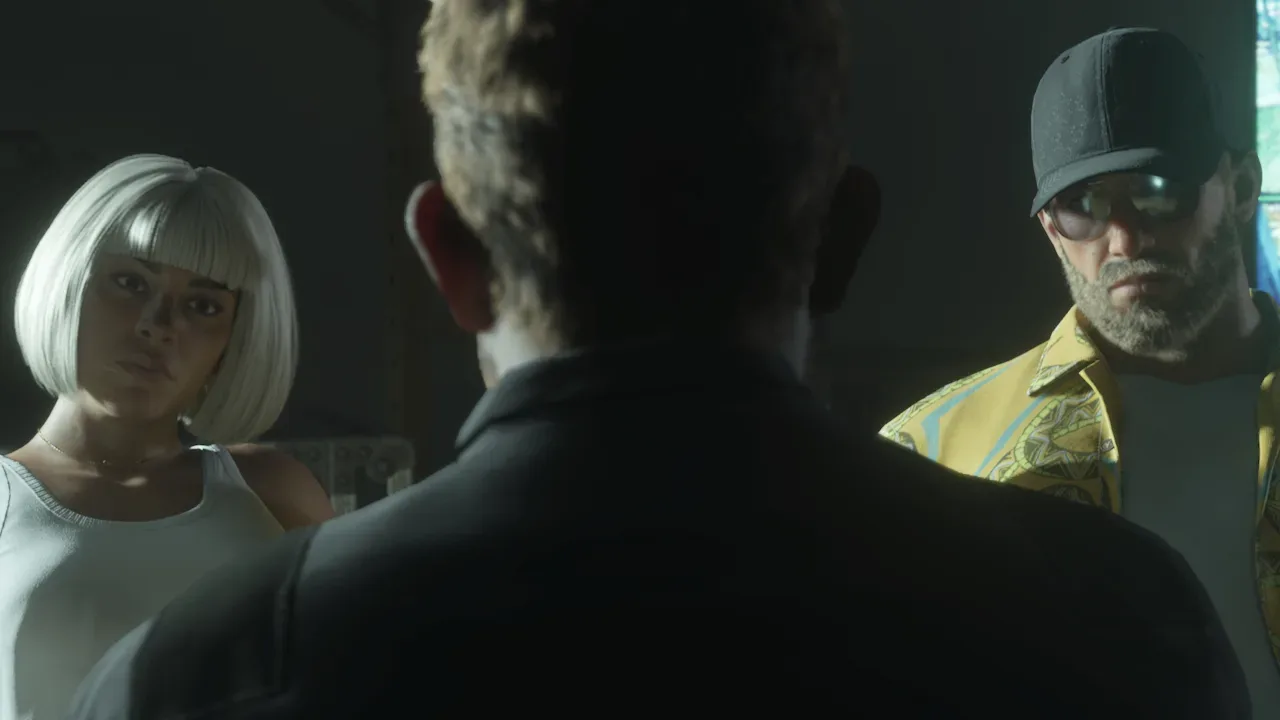
Grand Theft Auto 6’s open world is already producing the sort of unscripted scenes that can make a game clip travel farther than a mission walkthrough. Just four days after release, players have been circulating footage of spectacular vehicle mishaps, odd physics reactions, texture problems, accidental-looking stunts and petty crimes carried out with unexpectedly mundane objects. The clips are largely separate from the main story, making them a relatively spoiler-light glimpse at the everyday disorder players are finding around Jason and Lucia’s Leonida.
That distinction matters. An open-world crime game is built around authored missions and characters, but it also has to manage traffic, pedestrians, vehicles, collision detection, object physics and streaming world detail at the same time. When those systems meet in ways a developer did not specifically stage, the result can be a memorable escape, a bizarre failure, or a moment that looks too perfectly timed to be real. The early GTA 6 clips appearing online contain all three.
A bridge launch, a banana rescue and an improbable trick shot
Among the standout moments is footage described as Jason being slingshot from a bridge. Another clip turns what initially appears to be a potentially disastrous accident into a striking trick shot. There is also a moment in which a banana appears to prevent something worse from happening.
Without the full inputs, game state and unedited lead-in for every clip, it is sensible not to declare exactly which individual system caused each outcome. But they are recognizable examples of emergent gameplay: events created through the interaction of game rules rather than a pre-scripted sequence. A ramp, a vehicle, an uneven collision, momentum and a nearby character can combine into an outcome nobody planned as a formal mission beat.
That is one reason short GTA clips work so well online. They tend to have a clean visual premise—a precarious car, a bad decision, an object in the wrong place—and then an abrupt payoff. The player does not need to know a quest giver, a faction or an earlier plot turn to understand a vehicle taking an unexpected flight.
The sandbox is doing as much work as the story
Other circulating scenes emphasize player improvisation rather than accidental physics. Shopping carts have been highlighted as potential weapons, a reminder that an object does not need to look dangerous to become part of a chaotic encounter. One clip also frames a stickup in which a firearm apparently is not necessary.
These situations are not the same thing as a mission feature list. They are snapshots of players testing boundaries: what can be moved, carried, aimed, driven into or repurposed. In a large sandbox, that curiosity is often a game of its own. Rather than immediately pursuing the next objective, players probe systems for reactions and share the most surprising results.
The early response suggests plenty of people are doing precisely that instead of rushing only through the campaign. Open-world games can support radically different pacing: one player can move methodically from mission to mission, while another spends an evening provoking traffic pileups, experimenting with vehicles or simply following an odd sightline across the map. The viral clips document the latter approach particularly well because unexpected outcomes are inherently more shareable than routine progress.
Related coverage includes GTA 6's Early Viral Clips Are Already a Showcase for Open-World Chaos.
Players interested in treating the road network as part of the sightseeing rather than merely a route to an objective may also want to review this GTA 6 auto-drive guide. The core appeal of these circulating videos is not efficient travel, of course; it is what can happen when a normal trip stops being normal.
When the world breaks: void falls and texture failures
Not every amusing clip is a clean piece of sandbox magic. Footage has also shown Jason falling through the environment into a void, while another example points to world textures failing to load at a deeply inconvenient moment.
In technical terms, a texture is the visual surface detail applied to a 3D model: the image information that helps a wall resemble brick, a road resemble asphalt, or an object show its intended material. A collision boundary, by contrast, is the invisible shape the game uses to decide where a character or vehicle can stand, hit or pass through. When a character appears to fall beneath the world, it can indicate that the expected collision did not hold them in place. When surfaces look absent or incomplete, the visible assets may not have appeared as intended.
Those explanations are general descriptions, not a diagnosis of every video. Short social clips often lack enough context to establish whether an issue is repeatable, what triggered it, or whether it occurred after an unusual chain of events. Still, the visual effect is easy to understand: the illusion of a living place briefly gives way to the machinery underneath.
Such moments are funny precisely because GTA 6 otherwise asks players to accept a convincing, active setting. A missing surface or a sudden descent into an empty space clashes with that promise in an instant. The contrast can be more memorable than a small, ordinary graphical flaw, especially when it interrupts a scene that was supposed to be dramatic, dangerous or mundane.
Transport is the recurring star of the chaos
Vehicles are central to several early clips, including an unconventional solution to picking somebody up, an apparent head-on collision that arrives in an unexpected place, and a scene framed as a cautionary tale about texting while driving. That concentration is unsurprising. Cars bring speed, mass, obstacles and other road users together, making them ideal engines for both deliberate stunt attempts and unintended comedy.
A head-on crash is a simple example of systems colliding literally and figuratively. The game has to interpret vehicle position, direction, speed, impact and the surrounding environment. For the player, however, the readable story is much simpler: someone was going the wrong way, or something went very wrong at exactly the right moment for a video.
There is an important practical difference between watching that spectacle and recreating it. Clips can remove the quiet setup, failed attempts and reloads that preceded a dramatic outcome. They also may reflect a rare interaction that is difficult to repeat. Treating any one viral moment as a guaranteed trick, reliable exploit or standard behavior is a mistake unless it can be reproduced consistently with clear steps.
Why spoiler caution is now part of the clip economy
The comedy is arriving alongside a more familiar launch-week hazard: story spoilers. While many players are moving through GTA 6 at a leisurely pace or simply roaming the open world, some have already progressed far enough to encounter late-game revelations. Search tools and video recommendations can surface those moments even when someone is looking for something unrelated.
That makes the current wave of mostly context-free chaos clips especially useful for players who want a taste of the game without plot information. A shopping cart incident, physics launch or texture breakdown reveals little about character arcs. A search result, video title or thumbnail tied to a late-game scene can reveal far more than intended before the player has even pressed play.
- Be specific with searches: looking for broad gameplay or individual story scenes can increase the chance of encountering unwanted results.
- Prefer spoiler-light clips: emergent stunts and technical oddities generally carry less narrative context than mission footage.
- Remember that recommendations can be the problem: a search for one harmless scene may lead to unrelated late-game material.
- Do not assume every shared clip is a guide: funny accidents often depend on conditions that are unclear or difficult to recreate.
Early evidence of a community play space
The significance of these videos is not that each one proves a specific technical problem or establishes a new must-do activity. Their value is cumulative. Together, the bridge launch, improvised weapons, traffic disasters, world-loading oddities and outlandish pickup methods show players using GTA 6 as a shared stage for micro-stories that sit outside the main narrative.
That is the durable appeal of systemic chaos. A game can provide missions, but a lively open world also gives people raw materials for anecdotes: the near miss that became a stunt, the object that unexpectedly became useful, the road trip ruined by a collision, and the glitch that turns a normal scene into a trip beneath the map. Each clip is brief, but it invites the same question: what happens if somebody tries one more strange thing?
More of these moments will likely continue to appear as players spend time wandering rather than simply accelerating toward the ending. For now, GTA 6’s early viral footage is a reminder that, in a game this large, some of the most entertaining scenes are not the ones anybody wrote.