
There is a peculiar contradiction at the heart of reviewing a massive open-world game: the job demands a decisive verdict on a world specifically designed to resist being fully exhausted. GTA 6 makes that contradiction especially visible. One reviewer working ahead of release logged around 120 hours on the game’s own counter before writing, while the PS5’s system clock recorded substantially more time. The story was complete and overall completion had reached 80%, yet unexplored parts of Leonida, unmastered systems, and unexpected encounters remained.
That is not necessarily an admission that a review was incomplete. It is a useful clarification of what a review of an enormous game actually represents: an informed judgment formed under a fixed deadline, rather than a claim that every activity, road, challenge, and scripted surprise has been seen. GTA 6’s size appears to turn that ordinary critical reality into a central part of the experience.
120 hours is a lot of time—and not unlimited time
It is tempting to treat 120 hours as a near-total accounting of a game. In practice, it is a finite working window filled with more than playing. A reviewer must make progress, investigate side activities, learn systems, write notes, form comparisons, verify impressions, and eventually turn all of that into coherent criticism before an embargo lifts.
An embargo is the agreed time before which coverage cannot be published. It creates a hard finish line. Reviewers may receive access weeks beforehand, but those weeks also include sleep, meals, ordinary responsibilities, and the considerable writing process itself. The issue is not simply whether the campaign can be completed. The harder question is whether enough of the surrounding game can be sampled to understand what players will encounter when they stop following the most direct route.
“Time is the biggest enemy.”
That pressure changes how someone moves through an open world. A player with no deadline can spend an evening driving nowhere in particular, role-playing a routine, experimenting with an activity, or pursuing a distraction because it sounds amusing. A reviewer has to make decisions about opportunity cost. Every hour spent lingering is an hour not spent assessing something else, and every untested system is potentially relevant to the final assessment.
There is an important distinction here between completion and coverage. Completion is a progress measure: the story may be done, a percentage may rise, and tracked objectives may be cleared. Coverage is critical understanding: whether the reviewer has seen enough of the missions, mechanics, tone, pacing, optional material, and emergent behavior to explain what the game does well and where it falls short. They overlap, but they are not identical.
GTA 6 apparently makes downtime part of the assignment
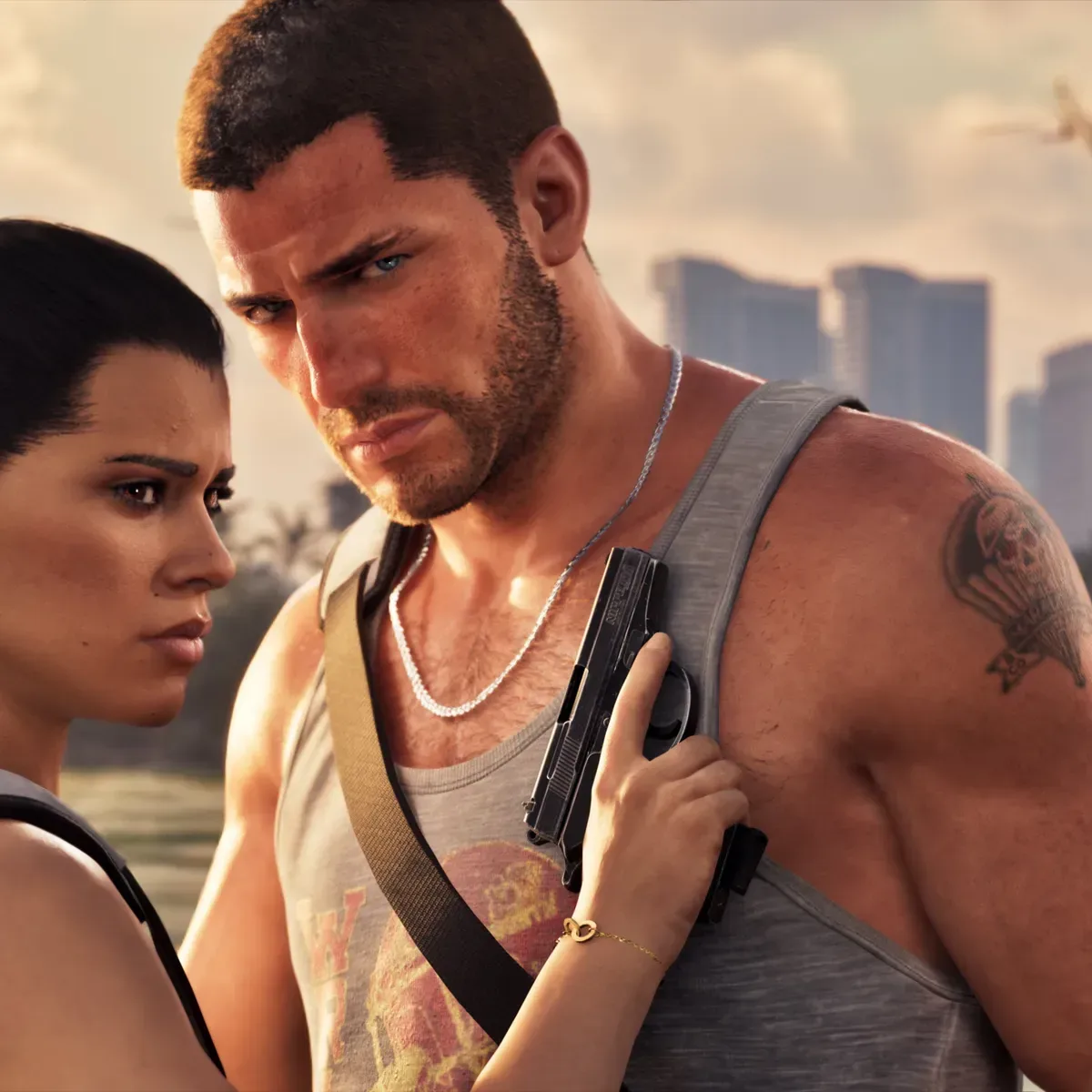
The time problem becomes more complicated because GTA 6 reportedly builds meaningful progression into activities that resemble downtime. Spending time with protagonists Jason and Lucia can include sitting on a couch to watch television programs or play in-universe video games. Those moments may look optional from the perspective of someone racing toward credits, but they are part of how the world establishes its texture and the relationship between its leads.
Related coverage includes GTA 6 Review Process Reveals 120-Hour Race Against the Clock.
More directly, the game’s Focus skill is described as both highly useful and unusually difficult to improve. Focus is a skill, meaning a player-facing statistic or capability that can be developed through play. Raising it may require activities involving attention or effort, including minigolf, time at a shooting range, meditation, and fishing.
That design creates a double demand. These pursuits cost real-life time during a review period, but ignoring them could produce an incomplete sense of progression and of the game’s broader rhythm. For a game that asks players to inhabit a place rather than merely clear a mission list, the seemingly small activities are not automatically disposable flavor.
It also hints at a practical lesson for players. Anyone beginning GTA 6 with an instinct to rush the main story may want to leave room for its quieter systems, particularly if Focus has a tangible gameplay benefit. The available details do not establish exact upgrade requirements, rewards, or optimal routes, so it would be premature to turn that into a guide. But the principle is clear: leisure activities can carry mechanical value as well as atmosphere.
Why 80% can still mean there is a huge amount left
After the story was completed and the game reached 80% overall completion, the reviewer still described a great deal left to discover and master. Later exploration of an out-of-the-way area led to a bizarre scripted encounter that became one of the reviewer’s personal favorites. The location was characterized as somewhere players would have little obvious reason to visit.
That anecdote matters because it distinguishes two ways open-world games create surprise. Scripted encounters are authored events designed to occur in particular circumstances or places. They are not necessarily random, even if a player stumbles into them unexpectedly. By contrast, an emergent encounter arises from systems interacting—such as traffic, AI behavior, physics, and player choices—without a single prewritten scene dictating the outcome.
GTA 6 seems interested in both. A hidden scripted episode rewards curiosity, while the earliest moment that convinced this reviewer of the game’s power grew out of a mundane traffic collision. Together, those examples suggest that Leonida’s appeal is not only in major missions or visible map markers. It is also in the confidence that a detour could produce either carefully placed weirdness or a small personal story generated by the world’s ordinary rules.
For players, that means a completion percentage should not be treated as a verdict on whether the game has anything left to offer. It measures some tracked progress; it cannot perfectly quantify personal discoveries, unexpected interactions, or a favorite stretch of road that never appears on a checklist. An 80% figure can coexist with genuinely new experiences, especially in a world large enough to accommodate obscure spaces and contextual scenes.
The small crash that sold the fantasy
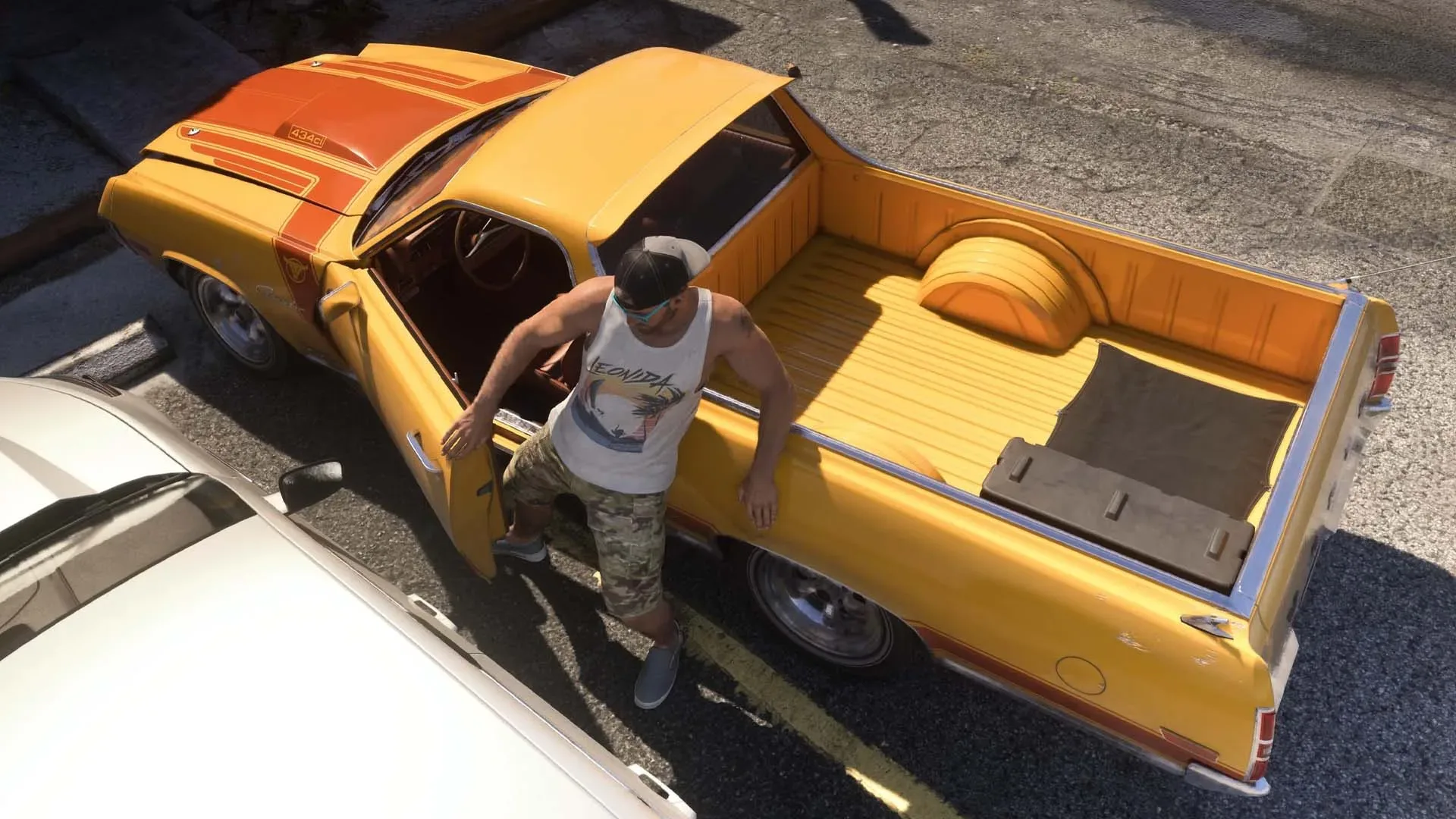
The reviewer’s first strong sign that GTA 6 had fully worked came only a few hours in, in the Keys. With limited money available, they customized Jason’s old Vapid ’70 Ganado with a new paint job and engine work. Soon after leaving the modification shop, another driver made an illegal turn and collided with the car.
Nothing in that sequence needs a headline-scale set piece. The response is what makes it revealing: pulling over, inspecting the damage, and feeling irritated that recently spent money seemed wasted. That is a strong example of player investment. The game had made a virtual car feel sufficiently owned, and virtual cash sufficiently consequential, that a routine accident registered as a personal annoyance rather than disposable scenery.
It is also a useful way to think about the phrase “immersion,” which can otherwise become vague praise. Immersion does not have to mean that a game is indistinguishable from reality. In this case, it means the game’s systems, setting, and player choices combined well enough that the reviewer reacted within the fiction’s logic. The damaged car mattered because its upgrades had been chosen and paid for. The traffic incident mattered because the world made space for the inconvenience.
That does not prove that every collision, upgrade, or traffic behavior will create the same reaction for every player. It does, however, illustrate how a convincing open world often earns its effect through modest details. The car is not memorable only because it has a model name or an engine upgrade. It becomes memorable because the player is given a reason to care about it before the world casually puts it at risk.
A review is a snapshot, not Leonida’s final map
The reviewer had extensive series familiarity, having played every GTA entry, including the PlayStation-era games, and previously reviewed GTA 5 in 2013. That kind of experience can help place a new entry within a long-running franchise: it supplies reference points for how a world, its activities, and its ambitions have changed. It cannot eliminate the limitations of a deadline, especially in a game that still offers discoveries after more than a hundred hours.
It is worth separating that limitation from a defect. No reasonable player will experience GTA 6 in precisely the same order, with the same attention, or under the same pressure as someone preparing launch coverage. A review is valuable because it evaluates the game from deep, concentrated exposure; it is not a replacement for the many individual stories players create once the calendar is no longer running.
For readers deciding what to do with a review score, the sensible approach is to read beyond the number. The five-star verdict tells you the reviewer’s overall assessment was exceptionally positive. The surrounding account provides the more interesting context: a campaign can be finished, systems can be examined, dozens upon dozens of hours can be invested, and the game can still preserve corners that feel fresh. That is a meaningful claim about scope, but it also establishes the healthy uncertainty that accompanies any giant open world.
GTA 6’s early conversation has already included viral side content, including a Mandy scene that became an early talking point. The account of the review process gives that kind of reaction added context. In a game built to contain diversions, personal routines, and remote surprises, a single memorable scene may be only one thread in a much larger fabric.
The biggest takeaway is less about an exact hour count than the tension the count exposes. GTA 6 can reward efficiency, but some of its identity appears to live in activities that do not look efficient at all: fishing, meditation, games within the game, a customized old vehicle, or an unexplained route into a forgotten corner of the map. A deadline may force a reviewer to choose. Players, fortunately, can let the road take longer.