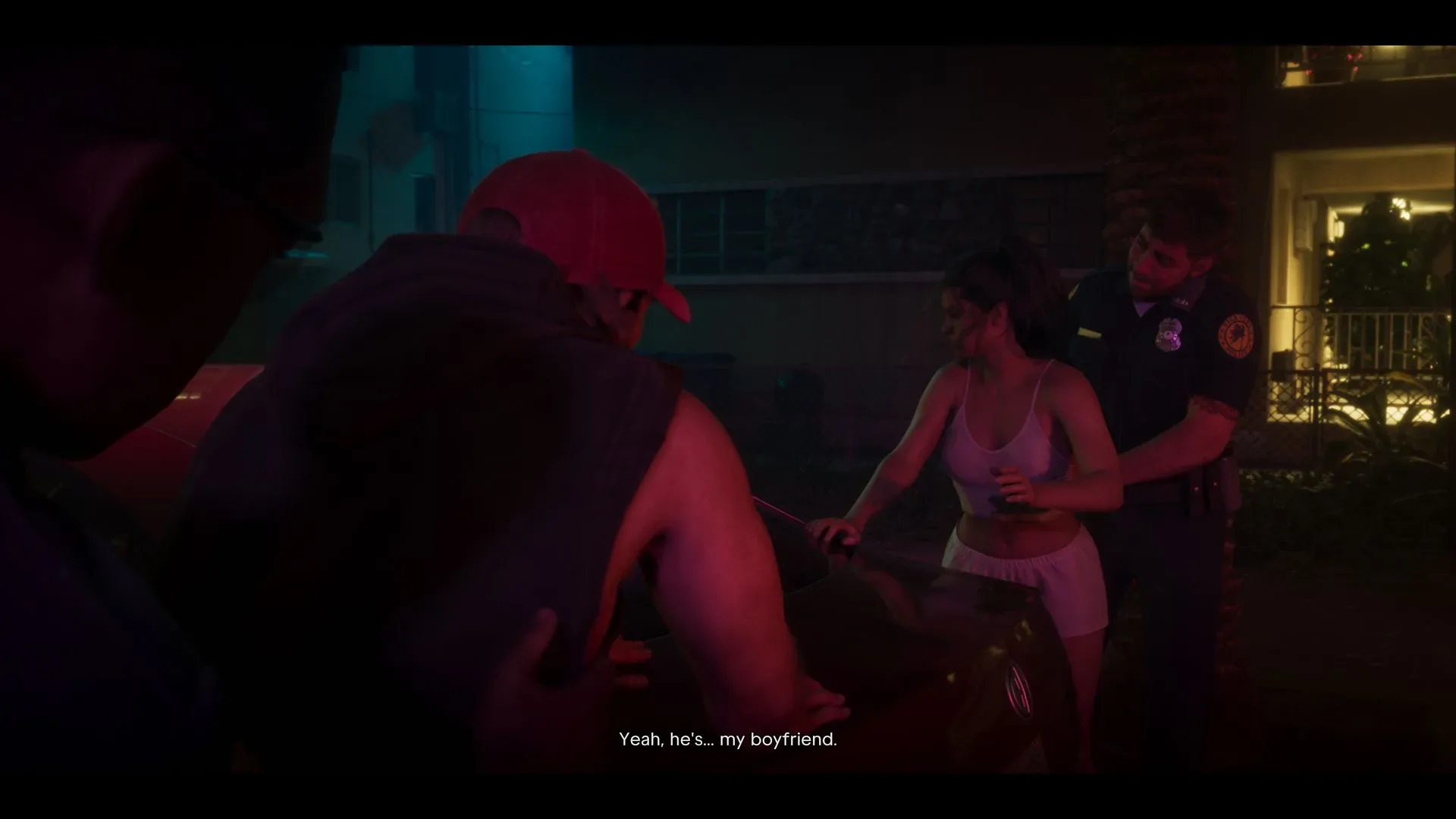
Grand Theft Auto 6 is out on Xbox and PS5, and some of its most memorable details appear to be the ones players could easily miss. Rockstar Games’ open-world crime series has always depended on the friction between player freedom and a highly authored world. GTA 6 seemingly pushes that idea into very small actions: getting out of a car when another vehicle is parked too close, eating while carrying a drink, or attempting to dispose of an empty container properly.
Those moments are not the headline-grabbing robberies, chases or story developments people usually associate with Grand Theft Auto. They are brief transitions that occur at the edge of regular play. But they matter because they can determine whether an open world feels like a place with physical constraints or a stage that yields whenever a player presses a button.
The reported examples center on protagonists Jason and Lucia and suggest a particular design priority: preserving believable actions when common game shortcuts would be much easier to use. That does not make every tiny interaction essential to completing the game. It does make wandering, experimenting and occasionally making a mess of a routine action a larger part of the experience.
A parked-car problem gets a bespoke response
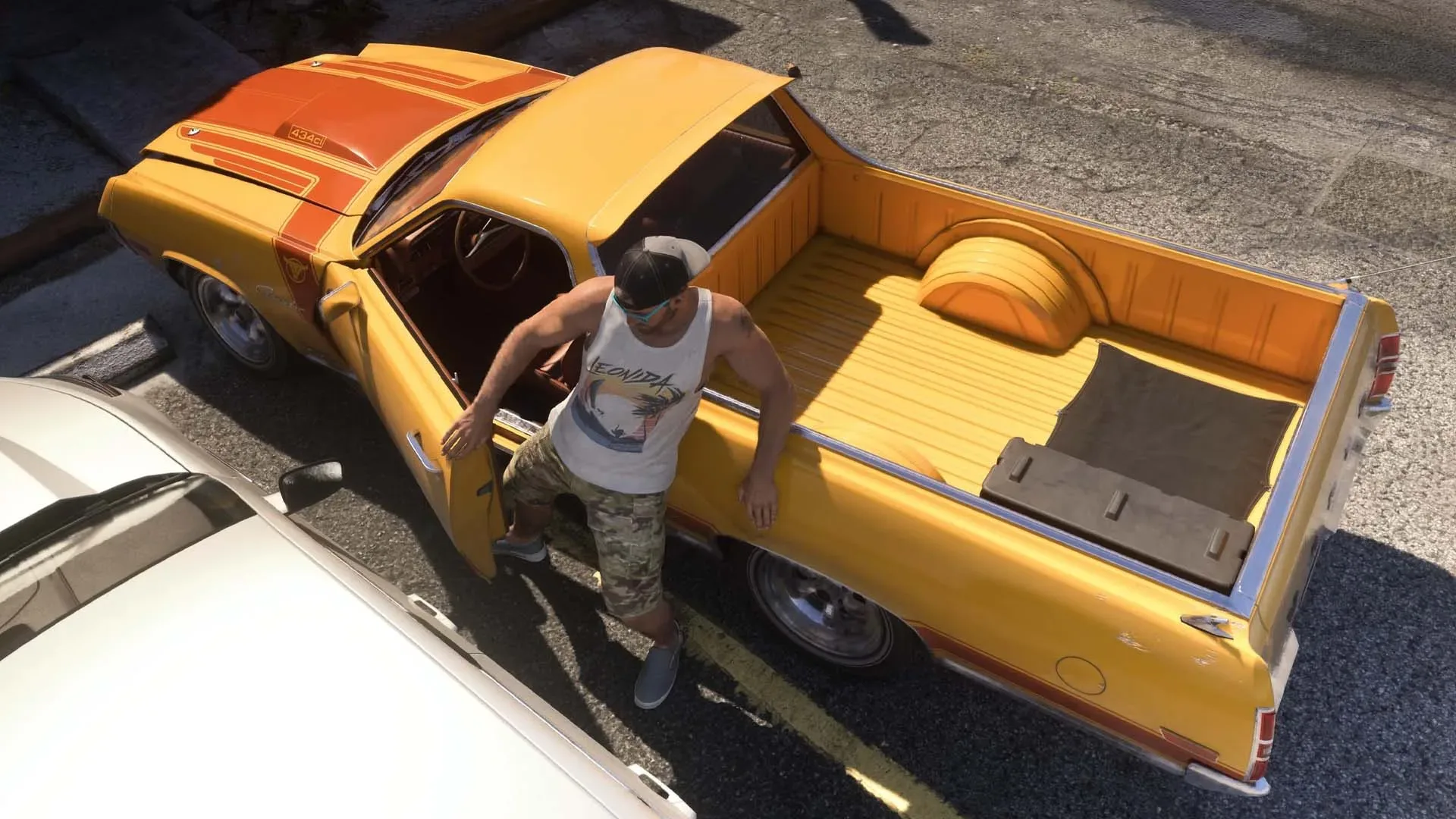
One especially clear example occurs when a vehicle is parked close enough to block a door from opening fully. Rather than having Jason or Lucia simply appear outside the vehicle, or having the door visibly pass through the obstruction, GTA 6 includes an animation in which the character squeezes in or out.
It is a modest situation with a meaningful effect. In an open-world game, entering and exiting cars is repeated constantly. If the response to an awkward parking job ignores the location of nearby objects, the world’s physical rules can feel negotiable. A tailored movement for that cramped gap acknowledges the obstruction and lets the situation play out instead of skipping past it.
That distinction is useful when discussing game animation. An animation is not only decorative motion. In this case, it is also feedback: the game is communicating that space around the vehicle matters. The player may have parked carelessly, but the character still has to deal with the outcome in a recognizable way.
There is a practical implication for players, too. Tight parking no longer appears to be only an annoyance or a setup for visual clipping. It may be worth watching what happens when a familiar interaction is placed under unusual conditions. GTA 6’s larger world can reward that curiosity without tying it to a mission marker or a formal collectible.
Eating, drinking and carrying more than one thing
Food and drink interactions reportedly have a surprising number of connected animations. Jason and Lucia can eat a burger while holding a soda, then switch between the two. The characters can also open a drink one-handed while holding and firing an assault rifle with the other hand.
Related coverage includes GTA 6's Small Animations Make Vice City Feel Remarkably Alive.
That is a tiny but telling piece of interaction design. A game with separate, isolated actions might allow a character to eat or drink only after putting everything else away. GTA 6 instead appears to account for the combination of objects already in the character’s hands. The result is less about realism in the strictest sense than continuity: the character does not need to reset into a generic state whenever the player changes tasks.
The image is also perfectly suited to Grand Theft Auto’s absurd tone. Carrying a drink while using an assault rifle is not a model of sensible behavior, but the ability to animate it makes the chaotic player-created moment feel more specifically observed. The game can support something ridiculous without pretending the held items ceased to exist.
These examples should not be read as confirmation of a complete simulation of every object or every possible hand position. They are evidence of particular interactions that have been observed. Still, they point to a world in which seemingly disposable activities receive more attention than players may expect.
What “procedural animation” means in the trash-can example
After finishing a drink, Jason and Lucia can attempt to throw the empty container into a nearby trash can. Crucially, the toss does not always succeed.
This is described as a procedural animation. In general, that term refers to motion that is generated or adjusted by game systems in response to the scene, rather than being one unchanging prerecorded movement played identically every time. The available evidence here supports a narrow conclusion: the disposal attempt can produce different outcomes, including a miss.
A failed toss may sound like an insignificant flourish, but variability can make a routine action more convincing. A guaranteed, perfectly centered throw would read as a button-triggered canned sequence. A result that can go wrong gives the gesture a little uncertainty and preserves the comedy of a player watching their virtual outlaw fail at basic trash disposal.
It also provides an example of why “more detailed” does not necessarily mean “more frictionless.” A game can make an interaction visually richer while allowing imperfection. That imperfection is part of the point. The action is not merely a clean-up command; it is an event that takes place in the world.
Why these details matter more than a checklist of features
Open worlds are commonly judged by scale: the size of the map, the number of activities or the length of the campaign. Those measurements are useful, but they do not fully explain why one environment encourages players to linger while another feels like a route between objectives.
Small reactive animations contribute to what could be called environmental credibility. That is not a claim that the world is real, nor does it require every system to behave exactly like real life. It means the game gives situations consequences that match what the player sees. A blocked car door leads to a constrained exit. Holding food and a drink affects what the character does next. A thrown can may not land where intended.
None of these actions is likely to alter the main story. Their value lies in making unscripted play feel acknowledged. When a player deliberately tests an awkward scenario—or simply stumbles into one—the game may have a response ready.
That can also explain why players may keep discovering details well after beginning the game. The most notable scenes in a campaign are presented deliberately. Minor animations are often found through coincidence: parking badly, trying an item while holding another item, or testing an object near a bin. Their discovery depends on a willingness to slow down and try things that do not obviously advance progress.
Vehicle damage remains part of the curiosity
One reported experiment involved driving a car at a wall in an empty parking lot to see how much punishment the vehicle could take before it stopped functioning. The setup points to another area where GTA games invite experimentation: the boundary between a vehicle’s visual damage, its mechanical condition and the player’s expectations.
However, the available account does not specify the exact outcome of that collision. It is therefore best not to treat the incident as confirmation of a particular damage model, crash behavior or vehicle failure threshold. What is clear is that GTA 6 continues to invite players to probe systems outside structured missions, and surprising animation work has been encountered during that process.
That restraint is important. A short clip or an isolated encounter can demonstrate one behavior, but it cannot establish how every car, object or location responds throughout the game. GTA 6’s interesting details are strongest when presented as observed moments rather than turned into sweeping promises about every possible interaction.
How to spot more of GTA 6’s incidental work
Players interested in these details do not need a special route, challenge or completion guide. The useful approach is to pay attention to mundane actions and altered conditions:
- Park close to other vehicles and observe how Jason or Lucia exits.
- Try using food and drinks while the character is already carrying another object.
- Watch object disposal attempts rather than assuming they resolve perfectly.
- Test ordinary actions in open spaces, near obstacles and in slightly inconvenient positions.
- Separate what is directly observed from what is inferred about broader systems.
The point is not to turn every sidewalk into a laboratory. It is to recognize that GTA 6’s animation work can be most visible when the player departs from the cleanest possible version of an action. A poorly positioned car, a full set of hands or a nearby bin can reveal as much about the game’s character as a more conventional scripted sequence.
For readers following other aspects of the two protagonists’ story, Joking Joystick’s GTA 6 relationship status guide examines how Jason and Lucia’s bond changes. The animation details described here concern a different layer of the game: not the narrative relationship between the pair, but how their movements and objects in the world are handled moment to moment.
A big game built from very small responses
The reported car-door squeeze, food-and-drink handling, imperfect trash-can toss and surprising vehicle experiment all illustrate the same principle: scale alone is not GTA 6’s story. The game’s world is also defined by its responses to ordinary, awkward and occasionally silly player behavior.
Some of the best open-world details are the ones nobody needs to see in order to finish a mission. They are there for the player who parks too close, carries too much, takes a needless shot at a bin, or drives into a wall simply to see what happens. GTA 6 appears determined to meet at least some of that curiosity with motion that feels specific to the moment rather than like a shortcut around it.