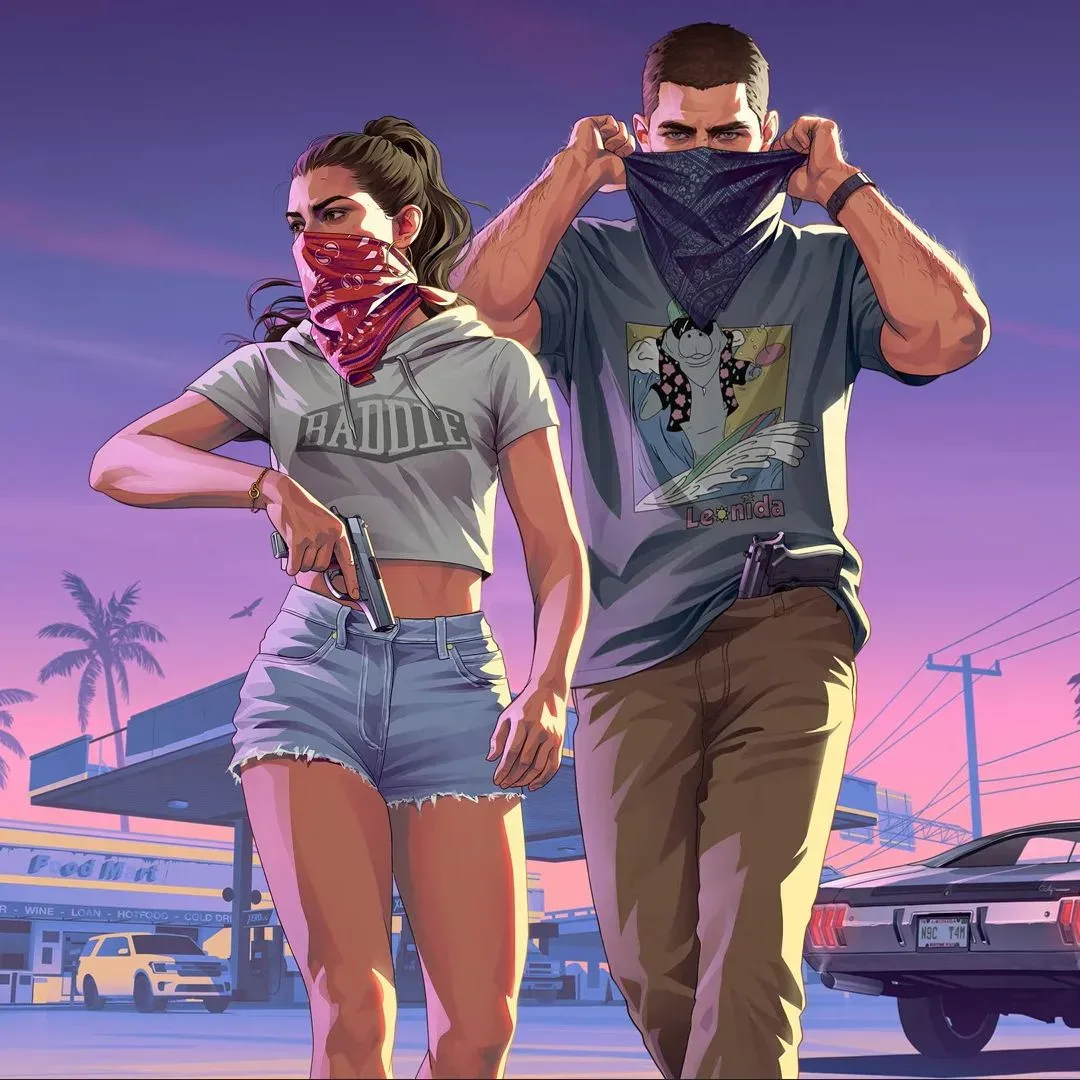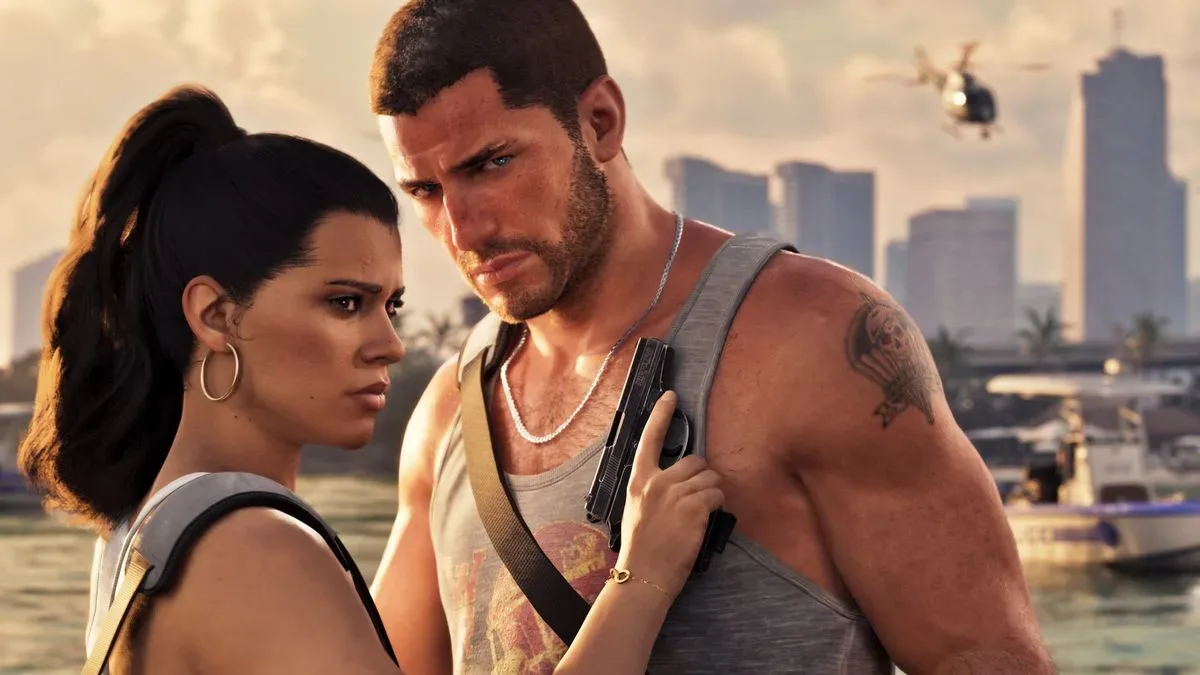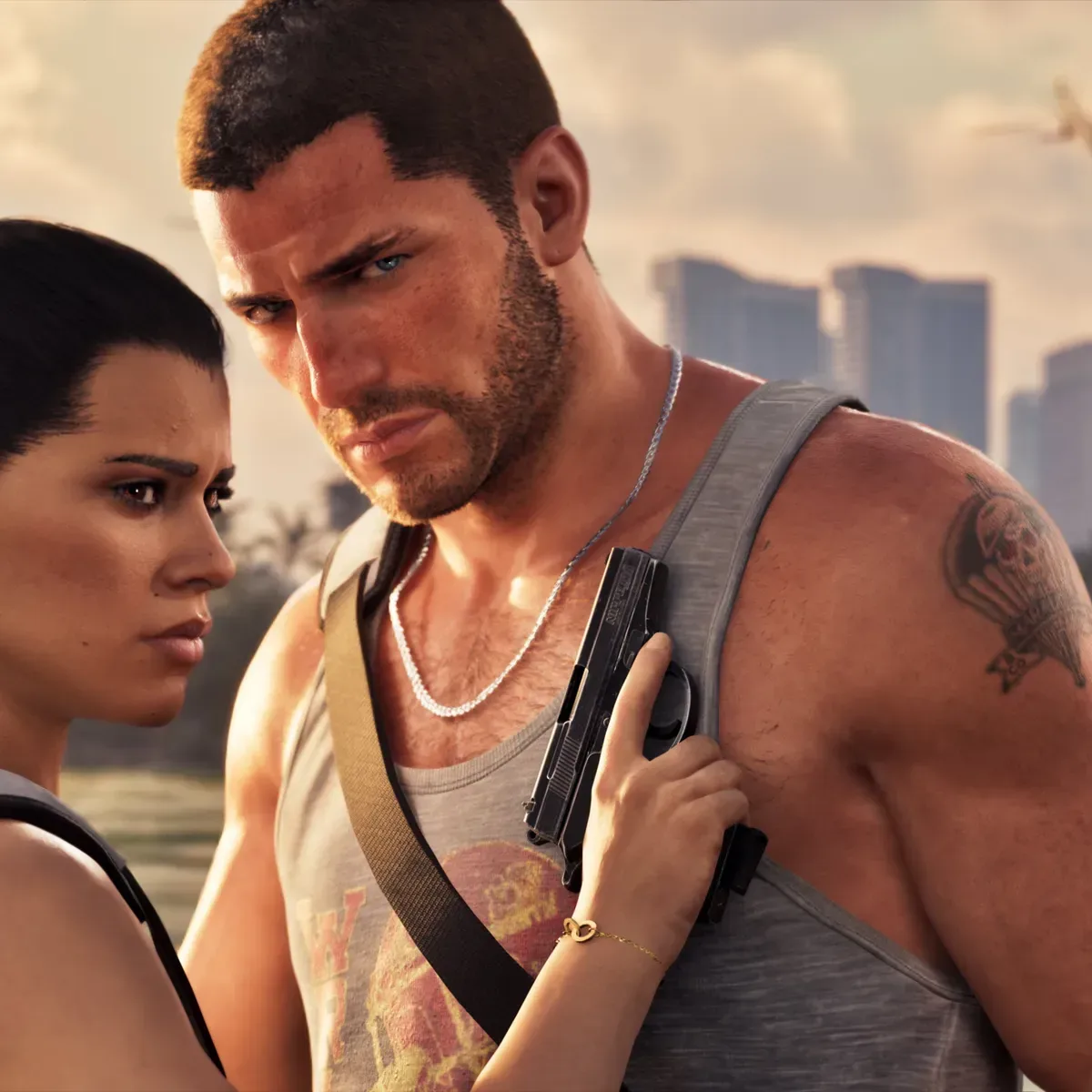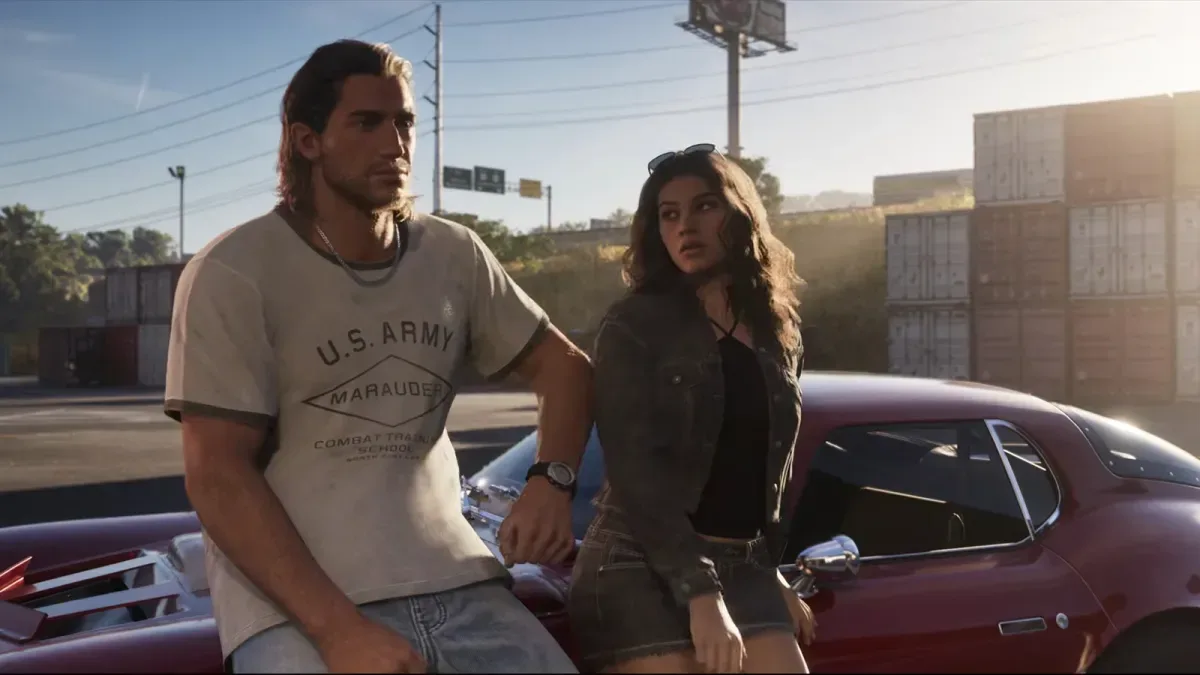
Grand Theft Auto VI may be asking players to do something unusually consequential for this series: define the emotional terms of its central partnership. New details indicate that protagonists Jason and Lucia begin as former partners who may want another chance at a relationship, but the direction of that bond is not locked in. Players can apparently preserve it, lose it, or steer the pair into an alliance rather than a romance.
That does not automatically make GTA 6 a role-playing game in the conventional, stat-sheet-and-skill-tree sense. But it could be a substantial shift in what the next Grand Theft Auto allows players to author. If the relationship meaningfully changes as a result of decisions, Rockstar would be placing player agency inside the story’s core rather than reserving choice for an ending or a single late-game fork.
GTA 6 is due this month, and the newest picture of its design suggests an open-world crime game with a more flexible narrative center. Alongside the Jason and Lucia details, Rockstar has described an approach to exploration inspired by a Skyrim-like feeling of discovery: players can go to random locations throughout the world rather than treating the map solely as a route between prescribed missions.
Jason and Lucia are not simply a fixed Bonnie-and-Clyde pairing
The promotional framing around Jason and Lucia has strongly emphasized a two-person criminal partnership, naturally inviting comparisons to a romantic outlaw story. The reported starting point is more complicated. They are exes, and their early situation involves the possibility of trying again. From there, the relationship is described as something the player can keep or lose.
For more context, explore Blueface Says DDG Helped Launch a 90-Day Streaming Run Worth $1 Million.
That distinction matters because it makes the relationship a variable rather than a premise the player merely watches unfold. A fixed romance can still be dramatically effective, but it delivers one authored interpretation of why the characters take risks together. A relationship that players can reshape has the potential to change the context around the same actions.
A heist, escape, argument, or act of loyalty can read differently depending on whether Jason and Lucia are trying to repair a damaged romance, functioning as trusted allies, or struggling through a bond the player has allowed to deteriorate. The available information does not establish exactly how far that branching extends, whether missions change, or how many different outcomes exist. Those are important unknowns. Still, the fact that the central relationship itself is reportedly player-defined is notable on its own.
It is also more intimate than a broad good-versus-evil meter. A morality system generally records a character’s behavior against a defined scale. A relationship system, by contrast, can focus on trust, affection, resentment, commitment, or distance between particular people. If GTA 6 follows through on this idea in consequential ways, the question would not only be what kind of criminal the player is. It would be what Jason and Lucia mean to each other while the story unfolds.
What “RPG-like” means here—and what it does not
The RPG label can be useful, provided it is used precisely. Traditionally, a role-playing game often includes character progression, numerical attributes, equipment systems, dialogue choices, party management, or branching quests. None of those systems has been confirmed here beyond the relationship and exploration concepts described so far. There is no reason to assume GTA 6 will revolve around levels, builds, or a deep class system.
What makes the term relevant is agency: the player’s ability to make decisions that alter how a story, a character, or the world is experienced. Choice and consequence are common RPG design ideas even when a game has no visible experience points. An action game can borrow them without changing its basic identity.
In that narrower sense, GTA 6 sounds RPG-like. The player is reportedly given authority over a defining personal relationship, while the world itself is designed to reward unplanned exploration. Those two ideas work together. One concerns narrative ownership; the other concerns spatial ownership. The first says a player may have some say in who the protagonists become to each other. The second says a player can make discoveries beyond a neat sequence of mission markers.
That is different from claiming that every player will receive a wholly separate story. Player choice can be meaningful without producing dozens of unrelated campaigns. It can change tone, motivation, scenes, access, reactions, or the emotional weight of a conclusion. Until Rockstar provides more specifics, the most accurate reading is that GTA 6 appears to be adding RPG-informed structure to an action sandbox, not abandoning the crime-game identity that defines the series.
Why the comparison with earlier GTA choices is useful
Grand Theft Auto has long been associated with freedom of movement and disruptive sandbox play, while its main stories have generally remained tightly authored. Players can decide where to drive, what to do between missions, and how much chaos to cause in the open world. That kind of freedom is not necessarily the same as narrative freedom.
GTA 5 showed that Rockstar was willing to give players a consequential story decision through its three possible endings. That is a clear form of branching narrative: the player reaches a major decision point and selects from distinct resolutions. A relationship that evolves over the course of the game would potentially operate on a different level. Instead of asking for one defining choice at the end, it could make the characters’ shared path responsive throughout the journey.
The difference is worth stressing because it affects expectations. An ending choice is a destination. A dynamic relationship, if it has genuine consequences, is part of the route. It can shape how players interpret events long before they reach a finale.
Whether GTA 6 actually delivers that degree of responsiveness remains unconfirmed. Players should be wary of filling in the blanks with imagined features. “Keep or lose” a relationship is a strong premise, but it does not by itself promise limitless branching, fully separate mission lines, or unrestricted romance simulation. It does, however, signal that Rockstar is treating the duo’s bond as more than decorative characterization.
Exploration could reinforce the sense of ownership
The other major design clue is the emphasis on discovery. Rockstar has invoked the feeling of being able to head toward a random location and see what is there, an approach compared with the exploratory pull associated with Skyrim. The comparison should not be stretched into a claim that GTA 6 copies Skyrim’s systems. Its value is in describing a player impulse: choose a direction because something looks interesting, not merely because a mission demands it.
In an open-world game, that principle can make a map feel less like a checklist and more like a place. It invites detours, curiosity, and the chance that players will encounter aspects of the game world in different orders. When placed beside a more changeable lead-character relationship, it gives GTA 6 two complementary forms of flexibility:
- Exploratory flexibility: deciding where to go and what to investigate.
- Narrative flexibility: influencing the status of Jason and Lucia’s bond.
Neither form needs to be unlimited to matter. A game can guide its overall story while letting players discover the world at their own pace. It can preserve carefully written character arcs while allowing a relationship to take different emotional paths. The key test will be whether the choices are reflected in ways players can recognize, rather than existing as a label detached from the rest of the experience.
Lifestyle systems may make choices feel more visible
GTA 6 is also said to include additional lifestyle-simulation elements and a video-game version of social media. These details are still broad, so it is too early to say how they operate. Yet they suggest a possible way for the game to make a player’s decisions feel present beyond a private cutscene.
In game-design terms, a social or lifestyle layer can act as feedback: a method of showing how a world acknowledges actions and relationships. It could potentially make the fictional setting feel reactive, but that remains analysis rather than a confirmed feature list. The confirmed takeaway is simply that Rockstar is combining the open-world framework with more attention to everyday social texture and a nuanced relationship system.
That mix could help move GTA 6 beyond the simplistic description of a “violent crime sim.” Crime and action remain fundamental to the premise, and the title itself leaves little ambiguity about that. But player-defined relationships, open-ended discovery, and social-world texture can add other reasons to inhabit the setting. They can turn the space between major missions into something more personally interpreted, even if the main action remains the headline attraction.
The practical takeaway ahead of launch
For players, the most interesting promise is not that GTA 6 must fit perfectly into one genre box. It is that decisions surrounding Jason and Lucia may carry emotional stakes that belong to the individual player’s version of the story. Someone who keeps them together could approach the pair’s criminal ambitions differently from someone who lets the relationship collapse into a working partnership.
For Rockstar, it is a potentially ambitious balancing act. A player-directed relationship has to feel meaningful without making either protagonist seem incoherent. The game must let people influence the bond while preserving characters with their own identities, motivations, and limits. That is the difference between meaningful agency and an illusion of agency: decisions should be acknowledged, but the people at the center still need to feel like people rather than empty containers for every possible player projection.
There are still major questions to answer. How are choices made? Can the relationship change repeatedly? Do decisions alter missions, dialogue, the world’s reactions, or only the broad emotional framing? What does an ally-only version of Jason and Lucia look like in practice? The available information does not answer those questions, and it is better to leave them open than invent a system before launch.
Even with that uncertainty, the reported design direction is enough to make GTA 6’s storytelling feel more intriguing. Its criminal sandbox may still be unmistakably Grand Theft Auto, but the player’s role appears to extend beyond causing mayhem or choosing an ending. If Jason and Lucia’s connection really is theirs to keep or lose, the next entry may make the personal cost of its chaos feel far more player-authored. For more on this emerging player-choice angle, see this GTA 6 discussion of its RPG-like potential.