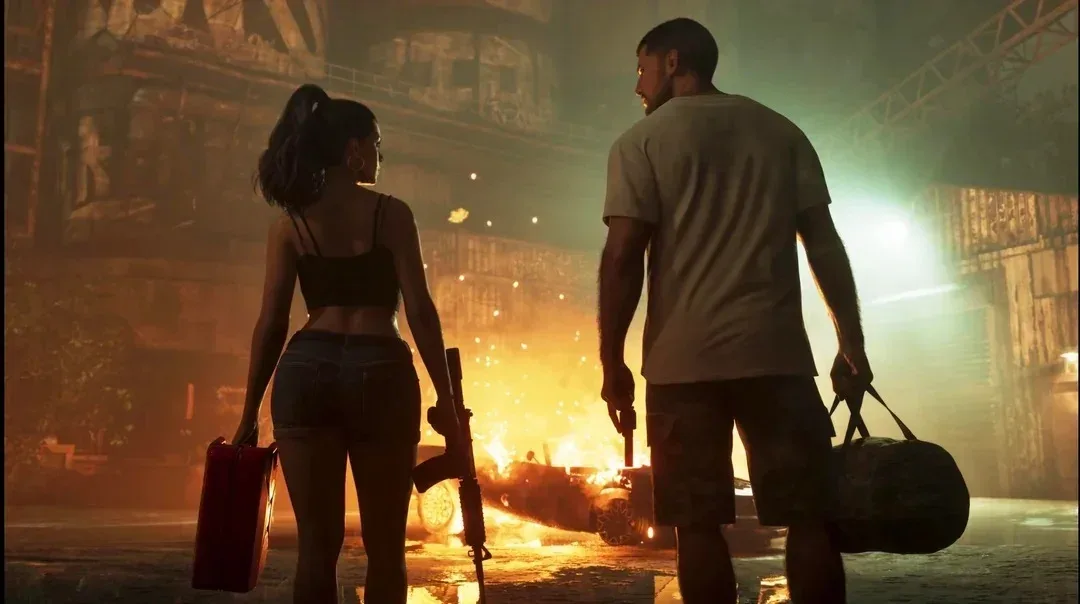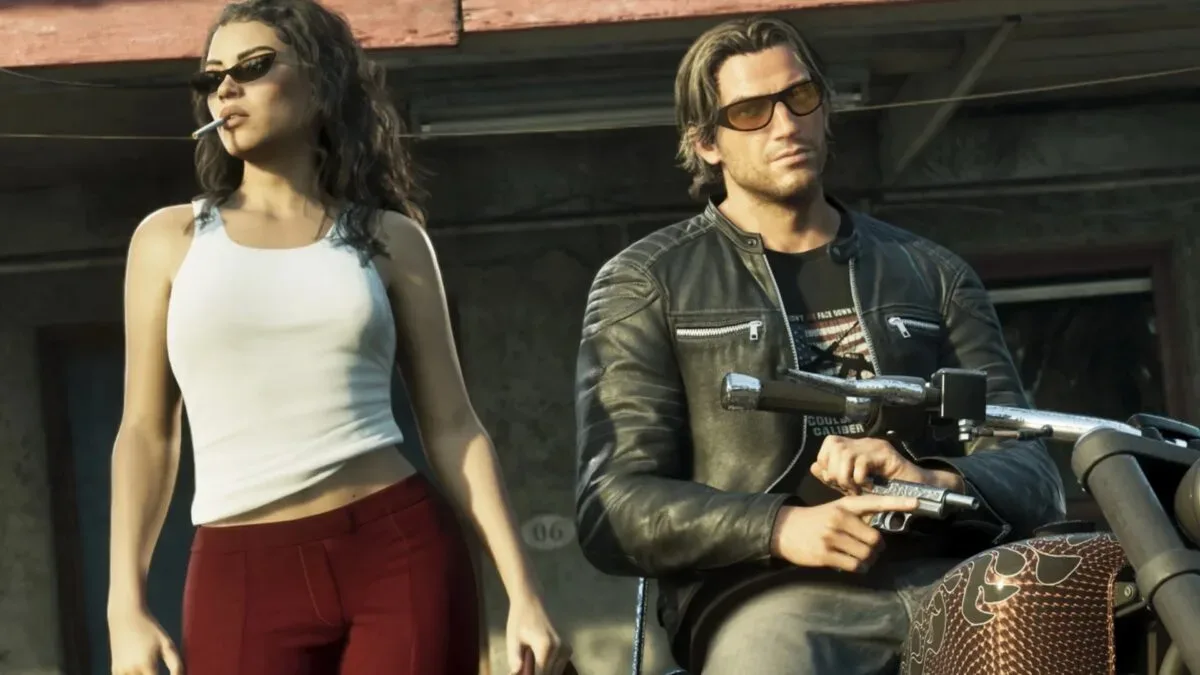
Grand Theft Auto 6 may be taking character simulation down to the pores. A newly detailed account of the project says Rockstar has built a system in which Jason, Lucia and potentially other characters accumulate different amounts of visible sweat depending on how hard they are physically exerting themselves. The example offered is nightclub dancing: a character going all-out should appear sweatier than one moving with less intensity.
It is a small detail in isolation, and not one likely to decide anybody’s purchase. But it is an unusually clear illustration of the sort of production ambition associated with GTA 6. A believable open world is not made solely from big map features, missions and traffic density. It is also built from countless smaller reactions that make characters feel connected to what they have just done.
In this case, the game’s visual state appears intended to respond to activity rather than treating perspiration as a fixed cosmetic look. That distinction matters. A permanently sweaty character model is an art choice. A sweat system tied to exertion is a reactive simulation feature: the game assesses an action’s intensity and uses that information to alter the character’s appearance.
What “effort-based” sweat means
The reported system is described in straightforward terms: greater physical effort produces more sweat. The nightclub example is useful because it suggests that the feature is not necessarily confined to obvious action sequences. If dancing has variable intensity, the game must in some way distinguish between lower- and higher-effort movement before presenting a differing visual result.
For more context, explore Netflix TV Layoffs Include Original Series Director Carolina Garcia and Other Development Executives.
That does not tell us every technical rule behind the feature. There is no confirmed breakdown of how rapidly sweat appears, whether it fades over time, how weather affects it, whether it applies to every non-player character, or whether players can directly observe it in every camera situation. Those are all reasonable questions, but they remain unanswered by the information available.
What is supported is the broader principle: character appearance can change in response to exertion. In practical terms, it could help sell the aftermath of physical activities without needing dialogue or a scripted cutscene to explain that a character has been active. A visual cue like perspiration can communicate fatigue, heat or intensity instantly—provided it is used subtly and consistently.
A tiny system with a wide production footprint
Features like this can sound trivial when reduced to a sentence. Building them into a major game can be much less trivial. A reactive body-surface effect has to look convincing across different lighting conditions, animations, camera distances and character states. It has to avoid distracting artifacts, abrupt transitions and situations where a character’s appearance no longer matches the action that preceded it.
That is not evidence that sweat is responsible for a particular delay, nor does it establish that it is a major gameplay system. It is better understood as one example of the accumulated work involved in pursuing a highly detailed simulation. When a game contains many interlocking world and character behaviors, each one needs to coexist with the rest.
Separate coverage has likewise highlighted the reported effort-responsive perspiration detail in GTA 6’s broader detail push. The salient point is not that the game has discovered sweat as a graphical concept. It is that Rockstar reportedly wants a character’s condition to reflect what the player has been doing.
The bigger picture: density rather than sheer map size
The same development account indicates GTA 6 was at one point planned around a more expansive open world spanning North and South America before that scope was reduced. That context makes the sweat detail more revealing. A smaller or more focused geographic ambition does not automatically mean a less demanding project; resources can be redirected toward density, interactions and the fidelity of individual systems.
Open-world scale is easy to summarize in square miles or named regions. Depth is harder to market because it lives in behavior: weather, physical presentation, character reactions and environmental systems that may only become visible in specific circumstances. The reported perspiration feature belongs firmly in that second category.
GTA 6 is also said to include systems involving weight gain, weather and a highly detailed iguana. Taken together, these details point toward an attempt to make the world feel responsive at both the broad and unusually granular levels. Yet they should not be mistaken for a complete feature list or a guarantee that every observed detail will have meaningful mechanical consequences. A convincing simulation can improve atmosphere even when it does not create a new objective or change mission outcomes.
Why visual realism is not the same as gameplay depth
There is a natural temptation to treat every microscopic detail as proof that a game will be better. That does not necessarily follow. Realistic sweat can contribute to immersion—the feeling that the game world follows understandable physical rules—but immersion is only one part of a successful open-world game. Mission design, controls, pacing, storytelling and the reliability of its systems will matter just as much.
There is also a balance to strike. The best reactive visual details are often the ones players register almost unconsciously. If Jason or Lucia looks appropriately worn down after intense activity, the world may feel more coherent. If an effect is exaggerated, inconsistent or overly prominent, it can become a novelty rather than a believable part of the scene.
For now, the reported feature is most valuable as a signal of intent. Rockstar appears to be investing in details that connect animation and physical activity to a character’s visible state. It is an approach that could make mundane moments—such as time on a dance floor—feel less like static set dressing and more like events with physical consequences.
The cost question remains unanswered
Development at this level inevitably invites speculation about budget and time. Rockstar has not disclosed GTA 6’s development cost. The available account specifically rejects the previously circulated figure of $1.5 billion, so that number should not be presented as the game’s confirmed budget.
Likewise, it would be a leap to pin the game’s schedule on any single feature. A sweat system is not a sufficient explanation for the timeline by itself. Instead, it represents the kind of bespoke polish that becomes significant when multiplied across characters, activities, environments and the vast number of situations an open-world game must support.
Whether players ultimately notice the system in ordinary play may depend on lighting, costume, activity and camera framing. But the premise is easy to understand: work harder, look sweatier. If GTA 6 executes that rule consistently alongside its other reported environmental and character systems, it could be one more quiet layer supporting the game’s larger ambition of a more believable sandbox.