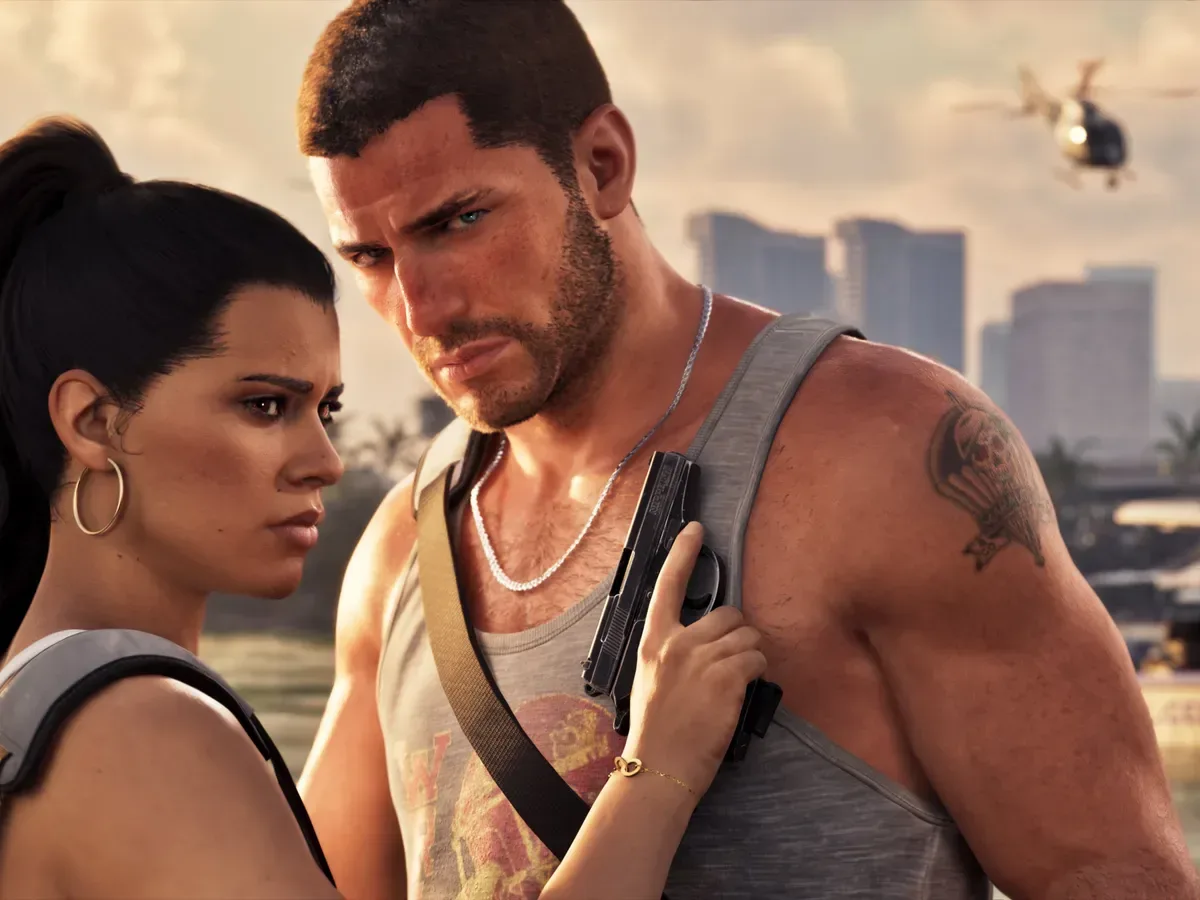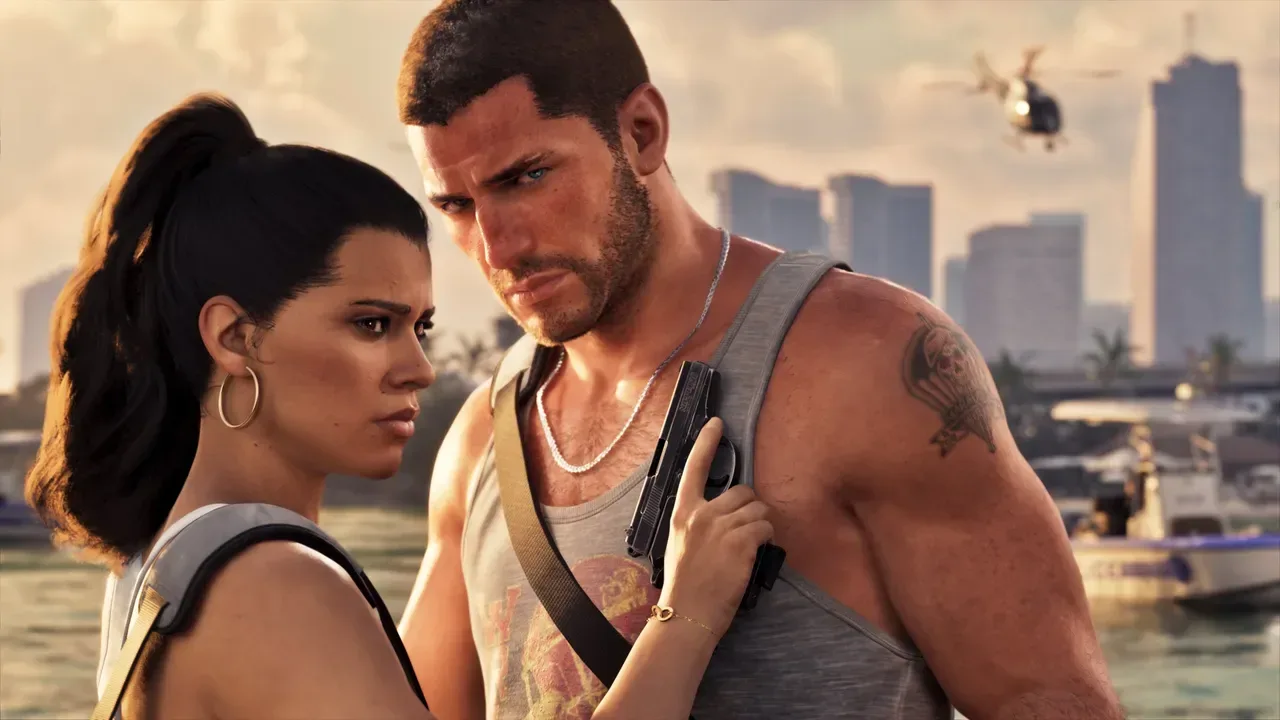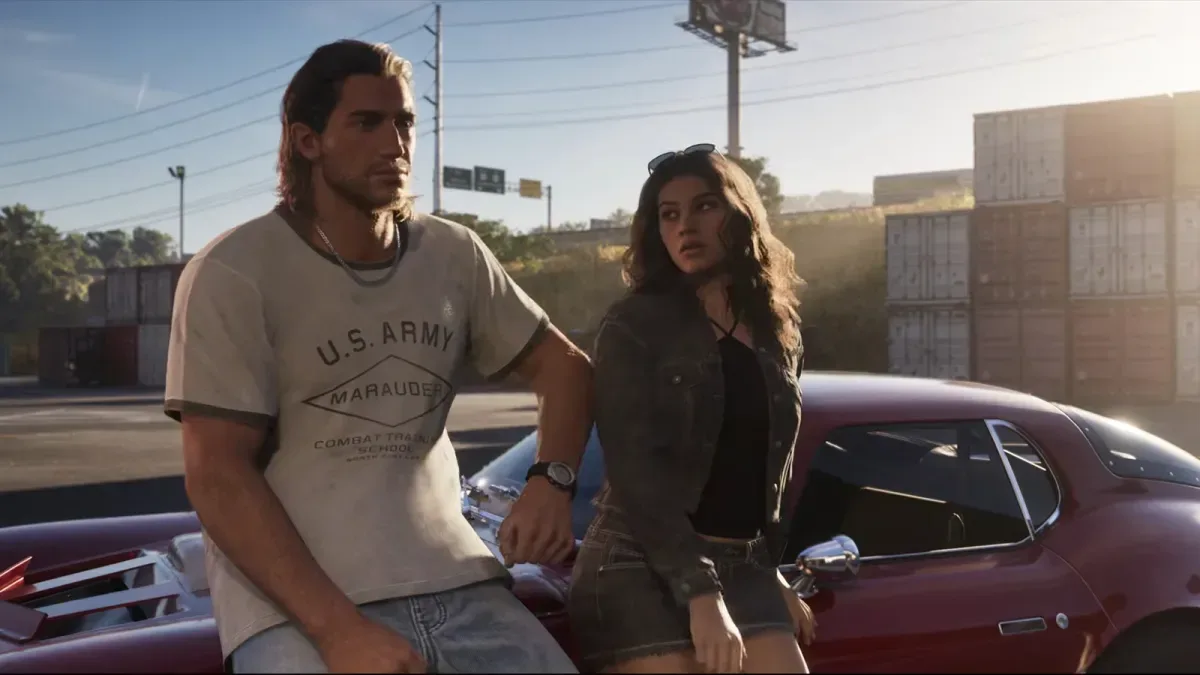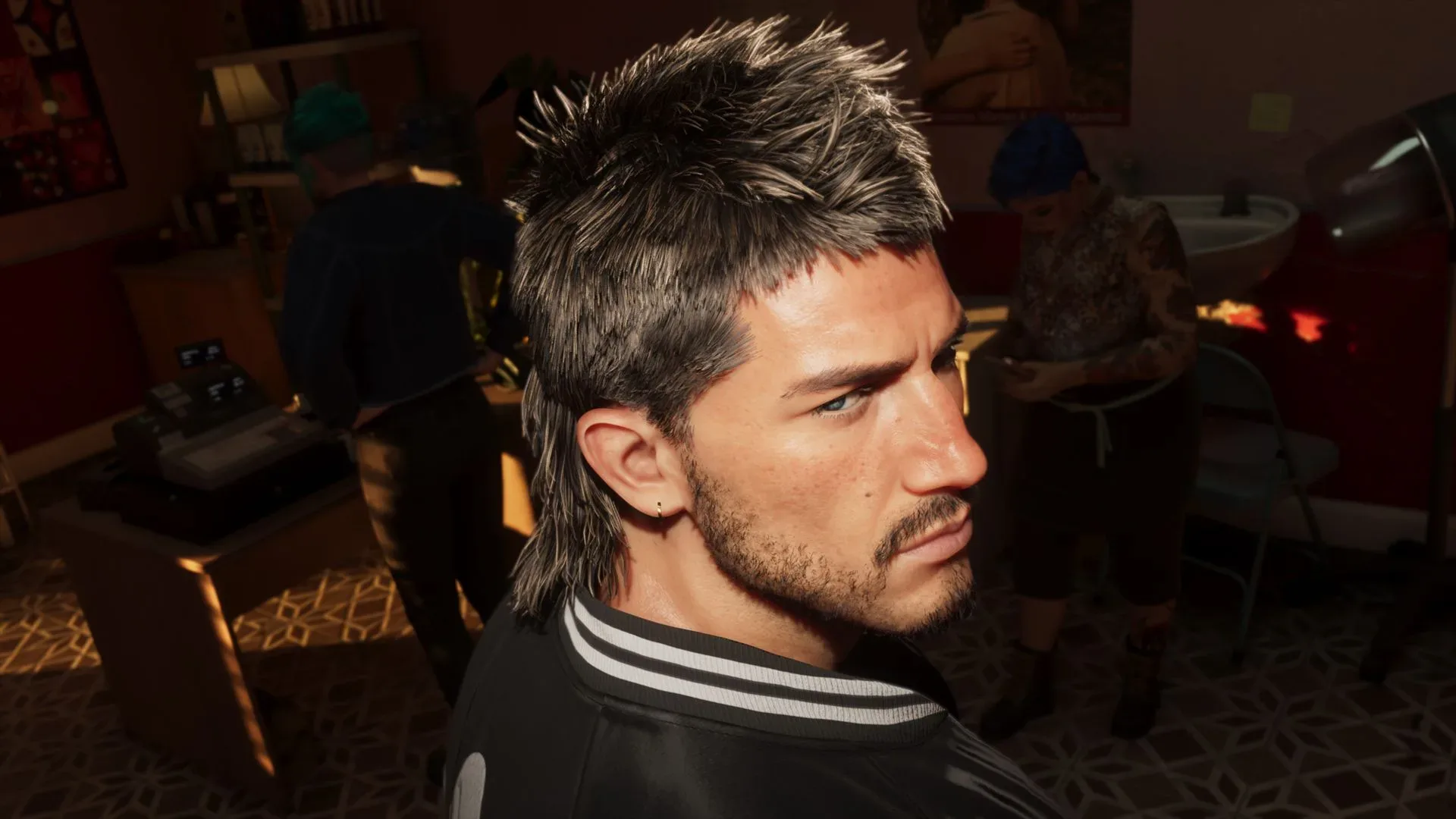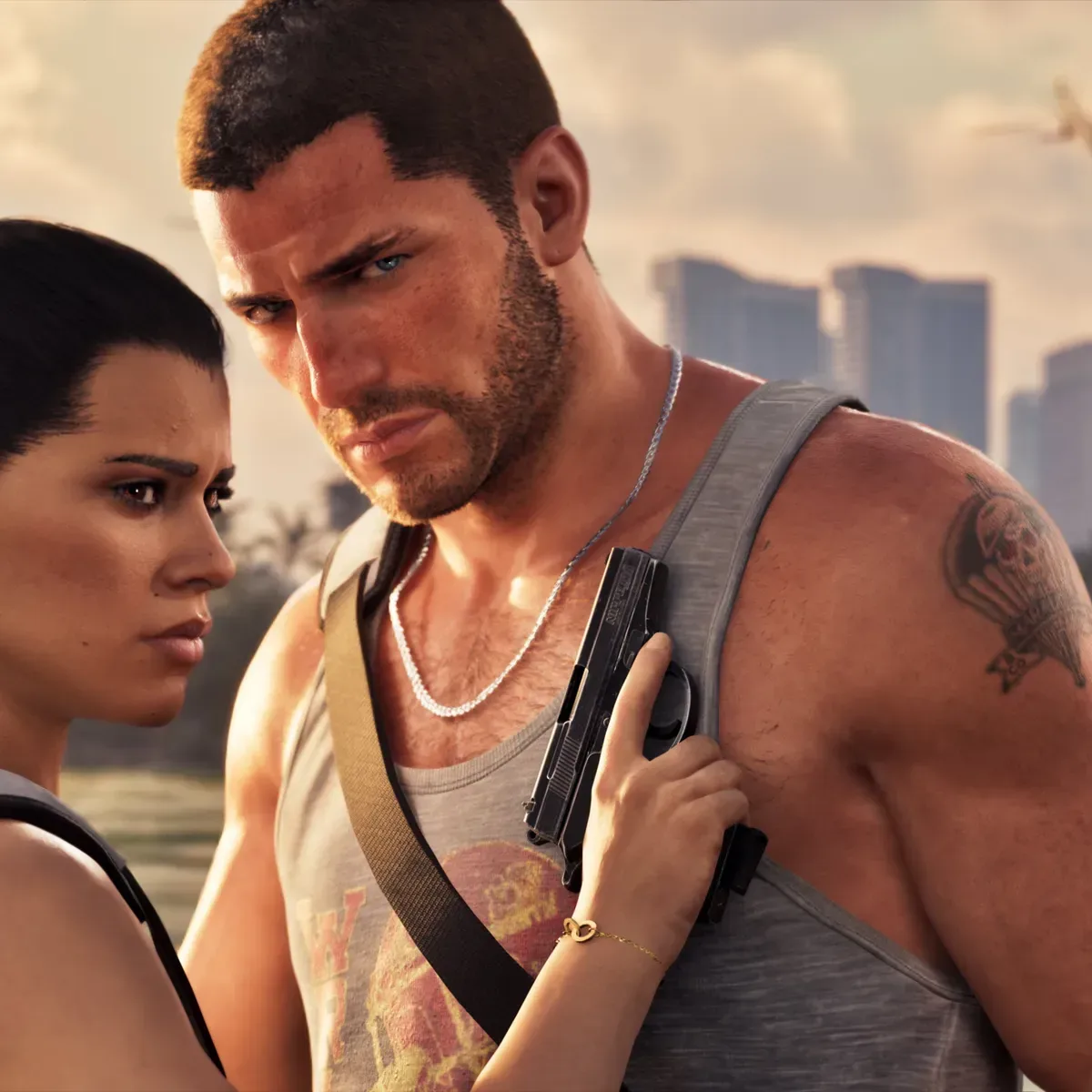
Grand Theft Auto has never treated its protagonists as disposable once the credits roll. The series moves on, cities change and a new criminal partnership takes the wheel, but players tend to carry characters with them for years. That is the perspective behind a set of unusually practical messages for the still-unannounced performers playing Jason and Lucia in Grand Theft Auto 6.
With GTA 6 scheduled to arrive on November 19, Young Maylay, Shawn “Solo” Fonteno and Ned Luke—known to players respectively as CJ, Franklin Clinton and Michael De Santa—were asked what its next leading actors should know. Their answers were not about auditioning, celebrity, or trying to outshine the games before them. They were about navigating the aftermath: following the studio’s lead, accepting that the spotlight may last a long time, and treating the fan community as something earned rather than automatic.
It is advice shaped by the peculiar longevity of a major game role. A performance can be recorded long before a game reaches the public, but the character does not truly become a shared cultural reference until players meet them. From then on, the actor may find that a line, a mannerism, or an entire fictional life follows them into conventions and public appearances for years.
“Have fun,” but understand the scale of the moment
Young Maylay’s advice was direct: “Have fun.” It is brief, though it carries some weight in the context of a launch surrounded by years of anticipation. Jason and Lucia are positioned as the dual protagonists of a game entering a franchise with an enormous, highly engaged audience. Enjoyment may be the simplest instruction, but it also cuts against the temptation to reduce the job to a pressure-filled handoff between generations of stars.
Fonteno added the more operational version of that thought. His recommendation was to listen to Rockstar, saying the team would steer the performers in the right direction. He also offered a warning wrapped in encouragement: “Get ready.” In his view, the experience will be a ride that lasts for a while.
That phrase is important because it distinguishes a game launch from a single publicity appearance. The actors’ identities have not been officially disclosed, yet the characters are already the subject of intense speculation. Once their names are confirmed, every remark, appearance and social-media interaction may draw scrutiny from an audience that has spent years waiting to learn more about the game. Fonteno’s point is not that performers should fear that attention; it is that they should recognize its duration.
What an NDA means in this context
One recurring element of the discussion around Jason and Lucia is the possibility that the performers are bound by an NDA, short for non-disclosure agreement. An NDA is a contract requiring someone to keep confidential information private. In a project as closely watched as GTA 6, that can mean neither confirming involvement nor addressing rumors, even when online communities believe they have identified a cast member.
Fans have speculated that Manni L. Perez may be connected to Lucia, citing a perceived vocal similarity and resemblance. But that is not an official casting confirmation. The distinction matters: resemblance theories and fan analysis are not evidence that an actor has been formally announced. Until Rockstar identifies the performers, Jason and Lucia’s actors remain unconfirmed.
Related coverage includes GTA Veterans Offer Jason and Lucia's Actors Advice Ahead of GTA 6.
That silence may be frustrating for people eager to attach faces and names to the protagonists, but it is also a reminder of the divided nature of game performance. Audiences ultimately see animated characters, often built through a mix of voice work, physical performance, animation, writing and production. Treating speculation as settled fact risks flattening that process—and putting an unfair spotlight on people who have not publicly said they are involved.
Characters outlast the release calendar
Young Maylay’s longer observation was about the generational structure of the audience. He described meeting longtime players, including older fans who still identify him immediately with CJ, while noting that the GTA 5 cast connects especially strongly with a younger group. In his framing, a new release does not erase the previous era. Instead, each group of protagonists develops its own audience over time.
That helps explain why the arrival of Jason and Lucia need not be understood as a competition with CJ, Michael, Franklin or Trevor. The franchise has room for multiple points of attachment. Players who remember San Andreas closely may retain their connection to CJ; those who spent years with Grand Theft Auto V may have a similarly durable bond with its three playable leads. The new duo will likely be the entry point for another wave of players, while also being examined by fans who know the older games intimately.
For the performers, that creates both opportunity and a responsibility to let the role become its own thing. The public response will not be limited to whether Jason and Lucia resemble previous protagonists. Fans will bring their own expectations, jokes, theories and memories to them. If the characters land, the actors could be discussing them for a very long time.
It also adds perspective to the scale of current marketing. Rockstar is bringing Vice City imagery into Miami through large signs and a partnership that will put the Miami Heat in Vice City-themed uniforms for its November 18 game against the Milwaukee Bucks. Burger Shot, the franchise’s fictional fast-food brand, is also set to appear at Kaseya Center during that game. The campaign is a vivid signal that the game is approaching, but the actors’ comments suggest the more enduring story begins after the launch spectacle: how players decide to make these characters part of their lives.
Ned Luke’s central point: fans can tell when appreciation is real
Luke’s advice focused squarely on the people who will buy, play, debate and revisit the game. He urged the incoming cast to genuinely appreciate fans, arguing that performative gratitude is easy to detect. His underlying claim was blunt: without the audience, there is no lasting phenomenon to celebrate.
“You have to really appreciate them, genuinely, because what we have is because of them.”
There is a useful distinction in that statement. Appreciation does not mean agreeing with every reaction, endorsing every online theory, or giving fans answers that performers are not free to provide. It means recognizing why people are invested. Players may be responding to years spent in earlier games, to a character’s role in their own memories, or simply to the excitement of a new chapter. An actor can respect that connection while keeping appropriate boundaries.
That is particularly relevant where secrecy remains part of the launch. The cast cannot necessarily satisfy every question before release, and fans cannot reasonably demand confirmation from people who have made none. Genuine engagement, as Luke presents it, is not the same thing as unrestricted access. It is a tone: being present, respectful and honest about what can and cannot be discussed.
A franchise handoff does not require an old character’s exit
The conversation also highlights a difference in how former franchise performers can view the next installment. Steven Ogg, associated with Trevor Philips in GTA 5, has said he is not a gamer and felt no personal excitement about GTA 6. In 2025, he floated the idea of Trevor being killed at the beginning of the new game as a kind of torch-passing gesture.
That is only an idea expressed by Ogg, not a revealed story detail or a sign that Trevor will appear. Nothing in the available information confirms a returning-character role for him. Still, it illustrates a common fan instinct around long-running series: the desire for a symbolic bridge between eras.
Young Maylay’s comments offer a less zero-sum way to see it. Previous protagonists do not need to be removed for new ones to matter. CJ remains CJ to the people who found him in an earlier generation; the GTA 5 leads hold that place for another cohort. Jason and Lucia can become meaningful without displacing either group. That may be the most reassuring message available to the performers who will eventually step forward.
What fans can reasonably take from this
The key fact is straightforward: the official identities of Jason and Lucia’s actors have not been announced. Everything beyond confirmed public information should be approached with restraint, including casting speculation and theories about returning characters. That same restraint is likely what Fonteno meant by trusting Rockstar’s direction: the people closest to the production will decide when the details are ready to become public.
In the meantime, the veterans’ advice forms a compact survival guide for a uniquely visible game role:
- Enjoy the work. A role this large can be exhilarating as well as demanding.
- Expect longevity. The public association with a beloved character can endure across generations of players.
- Respect confidentiality. Rumors are not confirmations, and silence can be part of the job.
- Value the audience sincerely. Enthusiasm for these characters is what turns a performance into a lasting relationship with players.
As November 19 approaches, the spotlight on GTA 6 will only become brighter. For more on how careful wording and official labels can shape discussion around the game, see why Rockstar’s labels matter when fans decode GTA VI music. For Jason and Lucia’s eventual actors, though, the clearest preparation may not involve decoding anything at all: make the role count, be ready for the attention, and remember who gives fictional characters their very real staying power.