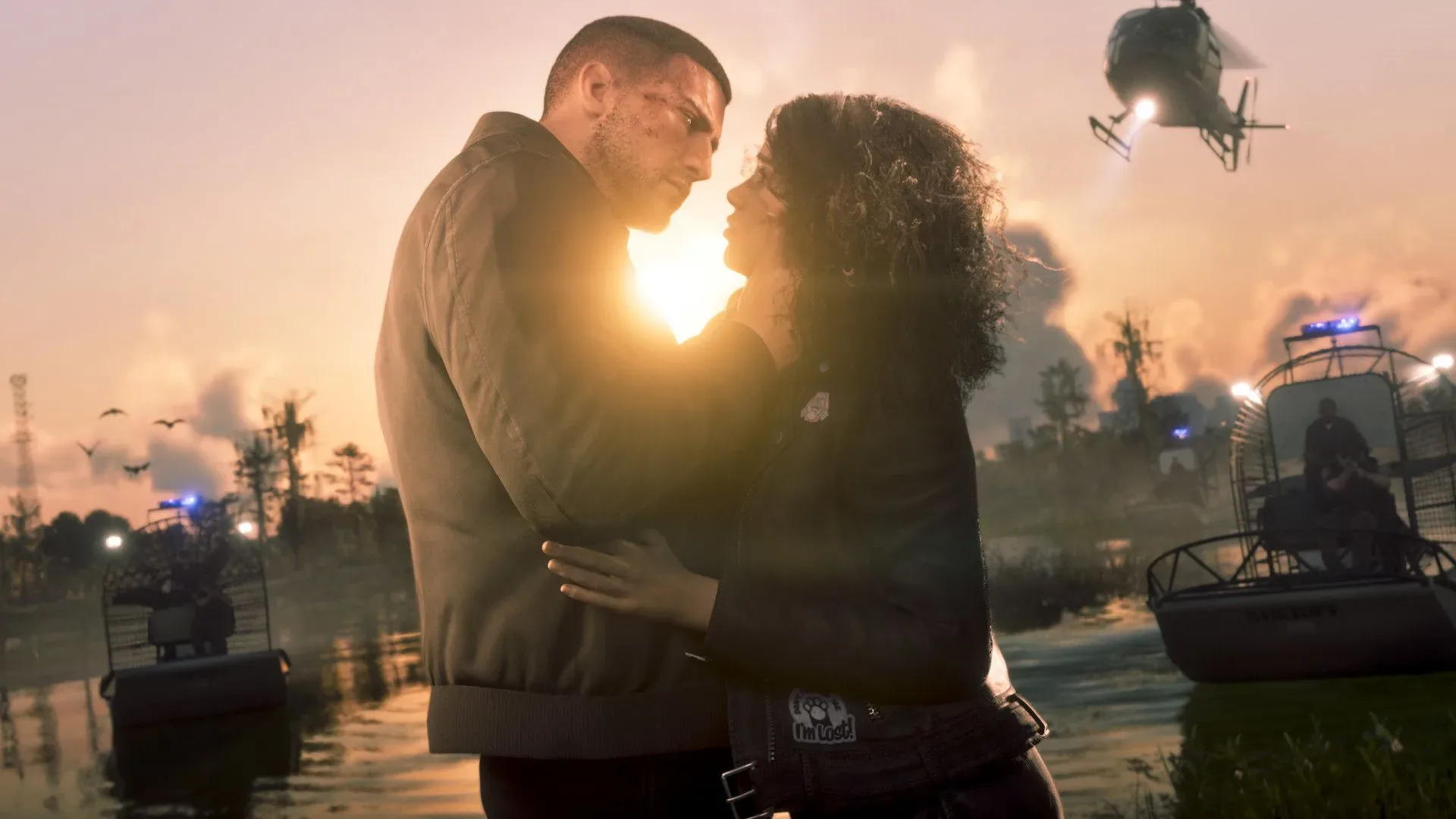
Grand Theft Auto 6’s Criminal Profile is provoking an argument that is much more interesting than a conventional morality-meter complaint. The system tracks Jason and Lucia on a five-step spectrum running from Professional to Irredeemable, but it is not judging whether they are saints or villains. It is apparently measuring the method of their criminal conduct: preparation, discretion, restraint and control on one side; recklessness, needless killing and chaos on the other.
That premise has split players. Some see a smart role-playing system that asks criminals to behave like competent criminals, not action-movie hurricanes. Others believe the rules can feel opaque or unfair, especially when violent self-defence, a headshot, or a vehicle theft can apparently push a character away from the Professional end of the scale.
The disagreement matters because this is not merely a label in a menu. Criminal Profile affects focus boosts, changes what conduct the game rewards during combat, removes the opportunity to surrender at the Psycho rank, and can eventually become permanent. For a series long associated with player-driven mayhem, GTA 6 appears to be offering consequences without fully taking the mayhem option off the table.
It also adds another layer to the distinction between the two playable protagonists. Jason and Lucia can apparently develop very different profiles based on the player’s actions when controlling each one. One can remain a controlled operator while the other becomes a walking emergency broadcast.
The five Criminal Profile ranks, explained
The available description of the mechanic indicates that it has five named stages. They should not be read as a simple “good to evil” meter. The lower end still accommodates criminal activity and, in some circumstances, killing. The practical dividing line is whether the player handles dangerous situations efficiently or turns every encounter into a broader and bloodier disaster.
- Professional: This is the most controlled profile. Undetected approaches and non-lethal incapacitations support it, as do kind interactions with NPCs. During bullet time, limbs are highlighted in yellow, signalling that shots intended to incapacitate rather than kill are the preferred response. Stealth takedowns and non-lethal action can build focus, a combat-related boost.
- Hardened: Hardened represents a more lethal but still relatively contained style. Killing hostile opponents, including through headshots, may fit here, provided the player is not escalating into attacks on uninvolved civilians or police.
- Violent: At this stage, law enforcement and bystanders are beginning to be caught up in the player’s actions. The focus reward changes: headshots, rather than restraint, become the behavior that feeds the boost. The system is therefore not just scolding violence; it is adapting its combat incentive to the character the player has created.
- Psycho: This rank is associated with the killing of defenceless people and animals, and with extreme, indiscriminate conduct. One immediate mechanical consequence is the loss of the surrender option when dealing with police.
- Irredeemable: Remaining at Psycho long enough, while disregarding multiple in-game warnings, can permanently lock the character into this final profile for the rest of a playthrough. The player can no longer alter that profile or boost focus, making combat more difficult. There are also narrative consequences, though the specific story effects have not been detailed.
Focus, in this context, is a gameplay resource or state enhanced by certain actions. The notable design choice is that the “correct” way to earn it shifts with the profile. At Professional, it favors controlled, non-lethal tactics. At Violent, it favors headshots. That gives the system an identity beyond a passive punishment meter: it appears designed to reinforce the player’s chosen approach moment to moment.
Why self-defence is the pressure point
The main criticism is not that GTA 6 recognizes collateral damage. The concern is that the game may categorize certain understandable responses as evidence of a more violent personality. Players have raised examples involving fighting back against an NPC in the street and choosing headshots in dangerous encounters. A player can reasonably feel that survival and escalation are not the same thing.
There is also a debate around carjacking. One critic argues that removing a driver from a vehicle without injuring them should not be treated as a violent act. The counterargument is that Criminal Profile is not intended to classify offenses with legal precision. It appears to assess operational discipline within GTA 6’s fictional criminal world. A player who has already parked a discreet getaway car nearby has planned ahead; a player who steals an occupied vehicle in public has created a visible scene, a victim and a possible chain reaction.
Related coverage includes GTA 6's Criminal Profile System Is Sparking a Debate Over Self-Defense and "Professional" Crime.
That explanation does not automatically solve the objection. If the interface does not clearly show why a given action changed the profile, players may interpret the meter as inconsistent even when there is a hidden contextual rule. A system based on intent, threat level, witnesses and the location of an encounter needs unusually clear feedback. Otherwise, someone who believes they defended themselves may see only that they lost progress toward Professional.
The supplied examples suggest context is important. Shooting a gang member in the head after using non-lethal shots on most enemies inside a hideout may not carry the same profile cost as firing at a bank teller when intimidation would have sufficed. That is a meaningful distinction in theory: an armed hostile during a criminal operation is not equivalent to an unarmed civilian. But it also illustrates why players want the boundaries made legible.
Professional does not mean pacifist
The key to the entire debate is the word Professional. It can sound like the game is demanding moral purity, yet the system described here does not appear to work that way. A Professional player may still kill enemies, especially in more action-heavy missions. The point is to avoid gratuitous force and prevent a job from becoming a public catastrophe.
That means preparation appears to be as important as aim. Players discussing the system have pointed to planning an escape route, parking out of sight, carrying spare clothes, disabling alarms, wiping evidence and keeping a body shop in mind as the behaviors that suit a professional criminal fantasy. These actions are not confirmed as individual scoring triggers in every case, but they reflect the larger philosophy players are reading into the mechanic: leave less chaos behind, not necessarily no crime at all.
Viewed that way, a carjacking can be seen as a failure before it even begins. It may get the player out of an immediate problem, but it means there was no prepared exit. The Criminal Profile concept treats improvisational panic as part of a character’s identity. The player is being evaluated less on whether they completed a task and more on how much disorder they generated doing it.
That approach can make the open world feel more grounded, particularly if GTA 6’s story is aiming for a more believable relationship between actions, character and consequences. It also creates a reason to use mechanics that might otherwise be ignored in a sandbox built around overwhelming firepower: stealth, non-lethal attacks, situational planning and careful movement.
A character system, not a sermon
There is a useful shorthand circulating among players: the scale evokes the distance between Michael and Trevor in Grand Theft Auto V. It is not a perfect technical description, but it captures the intended contrast. One end is controlled and calculating; the other is volatile, destructive and impossible to contain.
That framing is important because it makes room for players who actively want the higher-profile chaos. Violent, Psycho and even Irredeemable are not presented as content bans. They are available roles with different costs. A player who wants unrestrained destruction can still pursue it, but should expect fewer safety valves and a harsher combat situation after crossing the permanent threshold.
Irredeemable is the sharpest expression of that idea. The game reportedly warns the player before the profile becomes fixed, then removes both the ability to change it and the ability to improve focus. This is a long-term commitment rather than a temporary wanted-level-style inconvenience. It tells the player that repeated behavior has defined this version of Jason or Lucia.
For some fans, that is exactly the wrong direction for GTA. Their preferred series experience is freedom to create absurd havoc one minute and return to a normal mission the next, with no persistent judgment attached. For others, the profile system makes the freedom more expressive by letting reckless play leave a recognizable mark on the protagonist.
Neither preference is inherently mistaken. The real test is whether GTA 6 communicates its rules precisely enough that players can pursue either fantasy intentionally. A careful player needs to know how to remain Professional without guessing. A chaos-focused player should understand the permanence and mechanical drawbacks of moving toward Irredeemable. Without that clarity, the system risks being read not as characterization, but as arbitrary punishment.
What players can take from the system now
Based on the behaviors described so far, the safest reading is straightforward: think ahead, reduce witnesses and collateral harm, and use force proportionately if trying to maintain a low Criminal Profile. Non-lethal incapacitations, stealth approaches and limb shots are specifically associated with Professional behavior. Headshots and killing hostile enemies can still fit a Hardened approach, but indiscriminate harm to civilians, police and animals is what drives a character toward the upper ranks.
- Use stealth and non-lethal options when a controlled profile is the goal.
- Watch the yellow limb indicators during bullet time if trying to preserve or regain Professional standing.
- Do not confuse a successful escape with a clean one; public panic and collateral violence appear to matter.
- Take the game’s warnings seriously at Psycho, because Irredeemable is described as permanent within that playthrough.
- Consider Jason and Lucia separately, since each can form a distinct profile from the player’s choices.
The wider GTA 6 conversation is already moving beyond whether a player can commit crimes. The question is what kind of criminal the game recognizes them as becoming. Criminal Profile seems designed to make that answer visible—and to make competence, restraint and forethought part of the sandbox alongside speed, shooting and escape routes.
For more GTA 6 discussion, including the reported risks attached to certain thefts, see how GTA 6’s Coil cars reportedly turn a routine theft into a police trap.