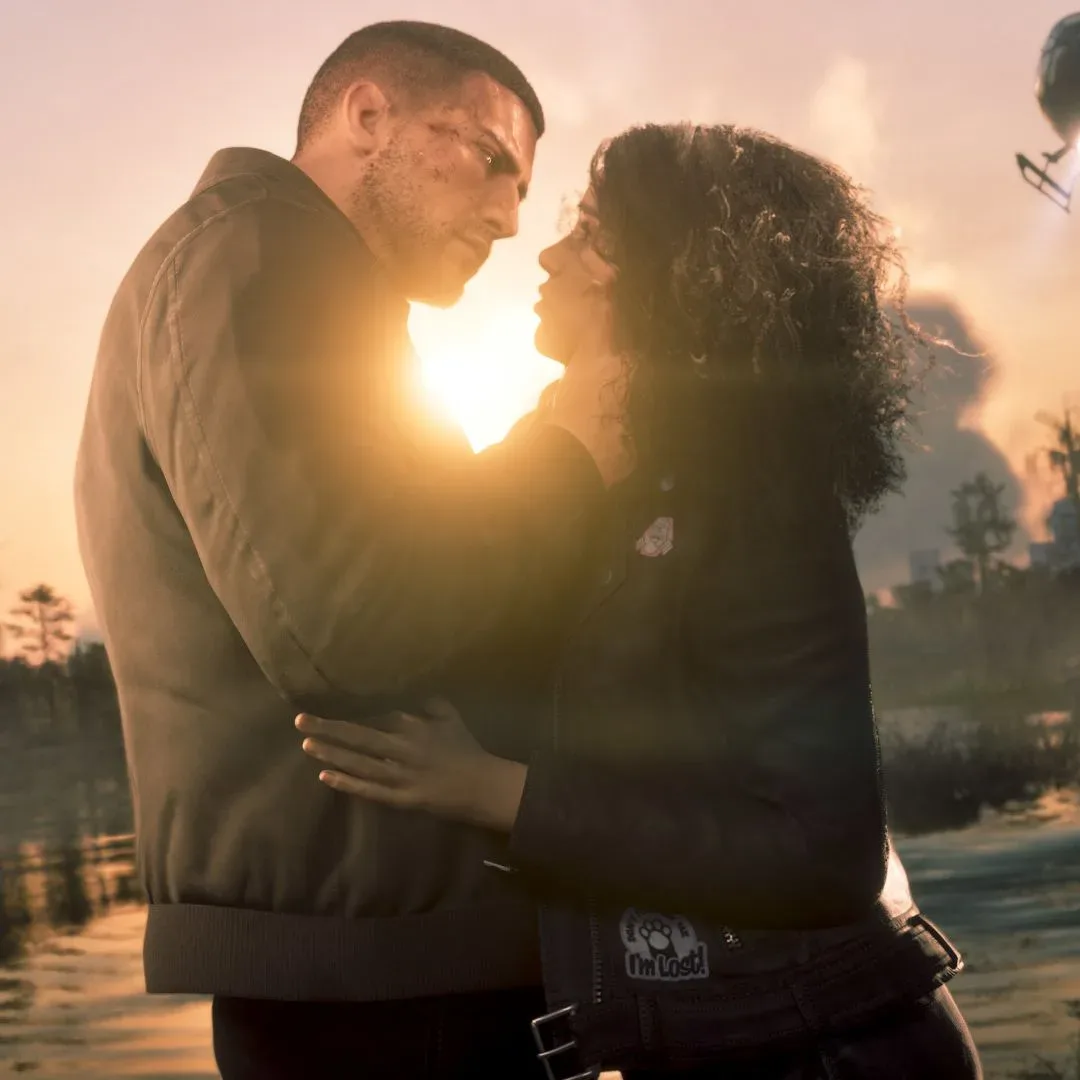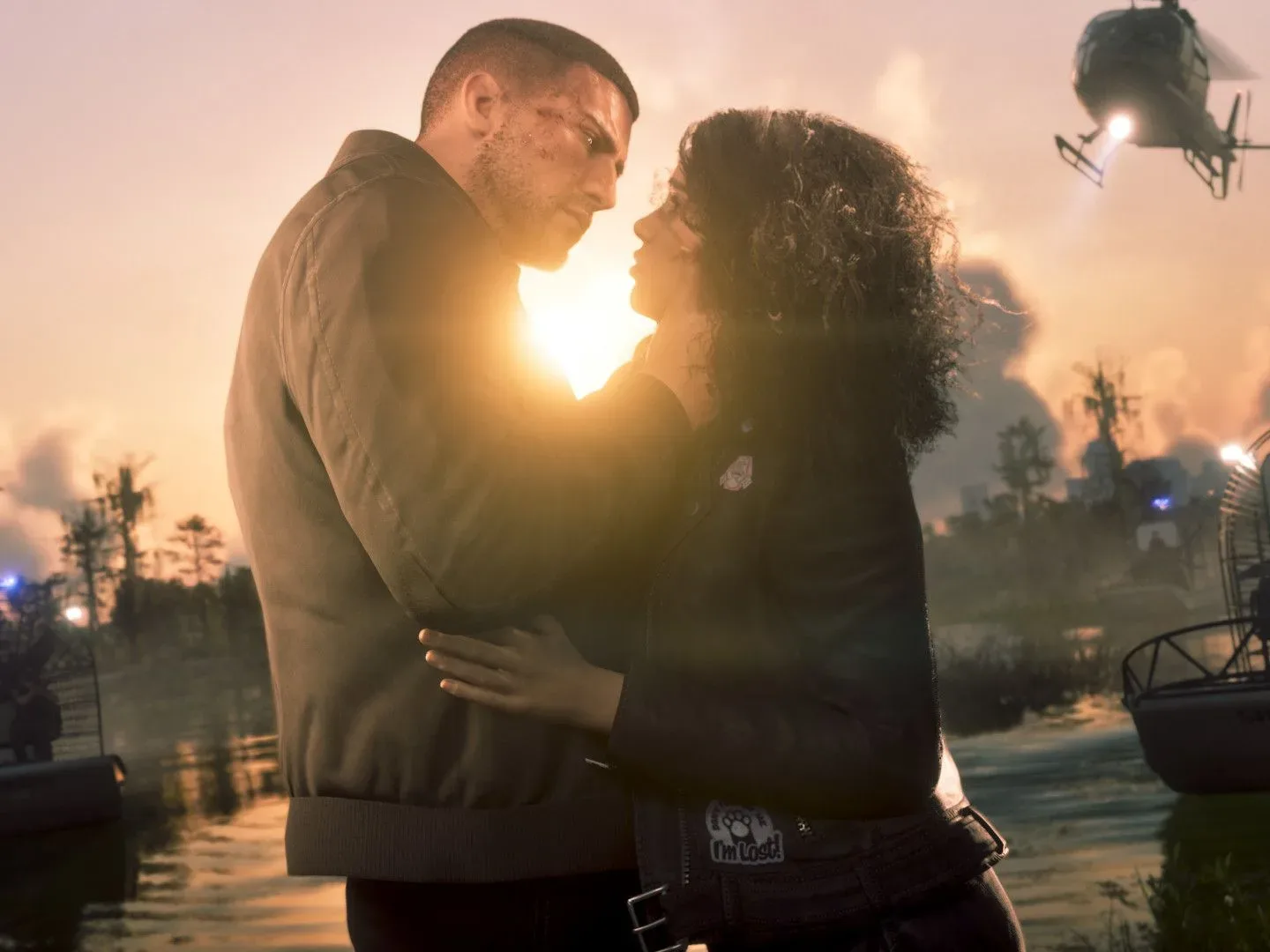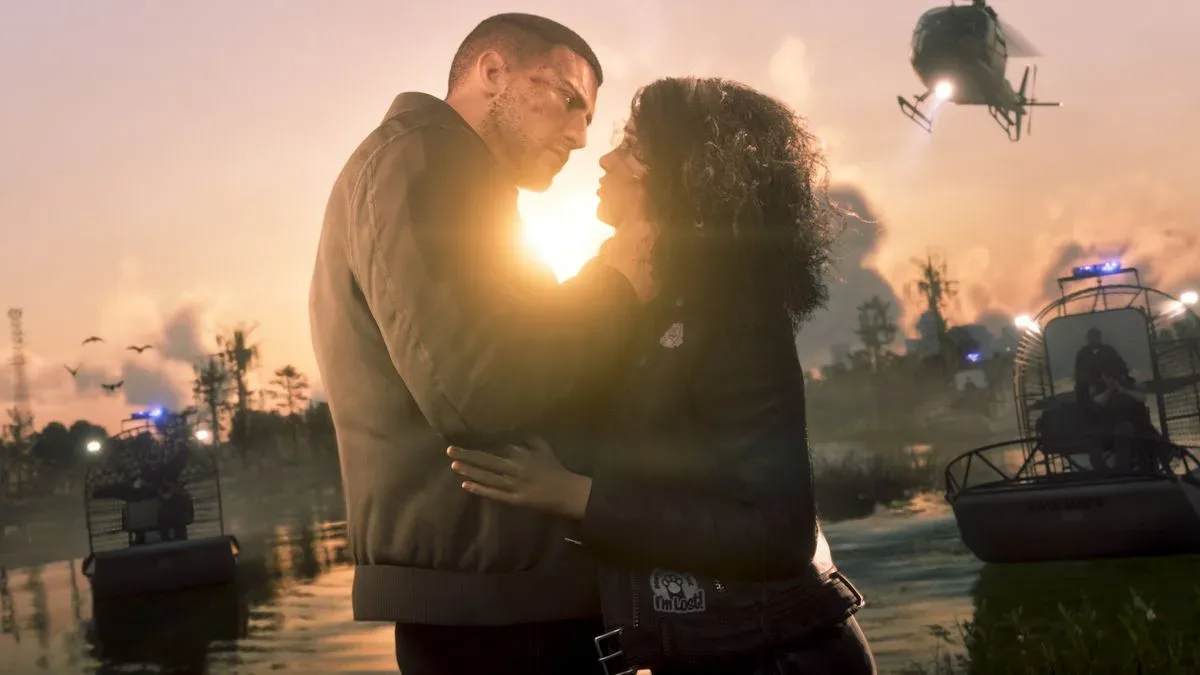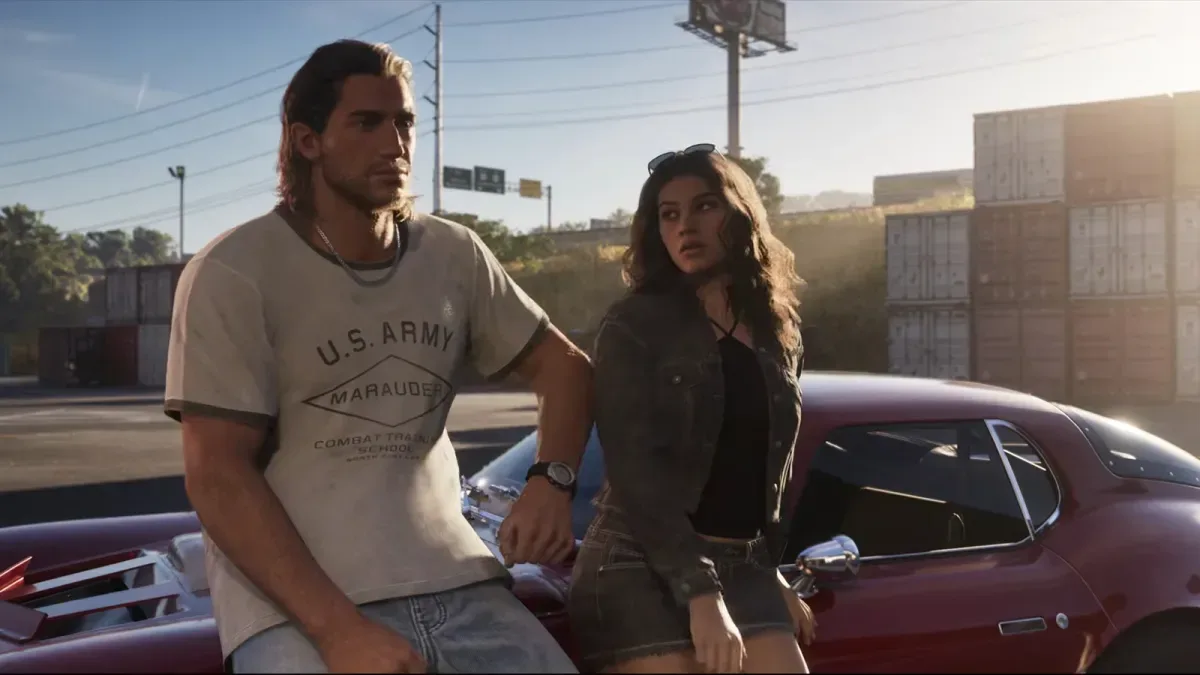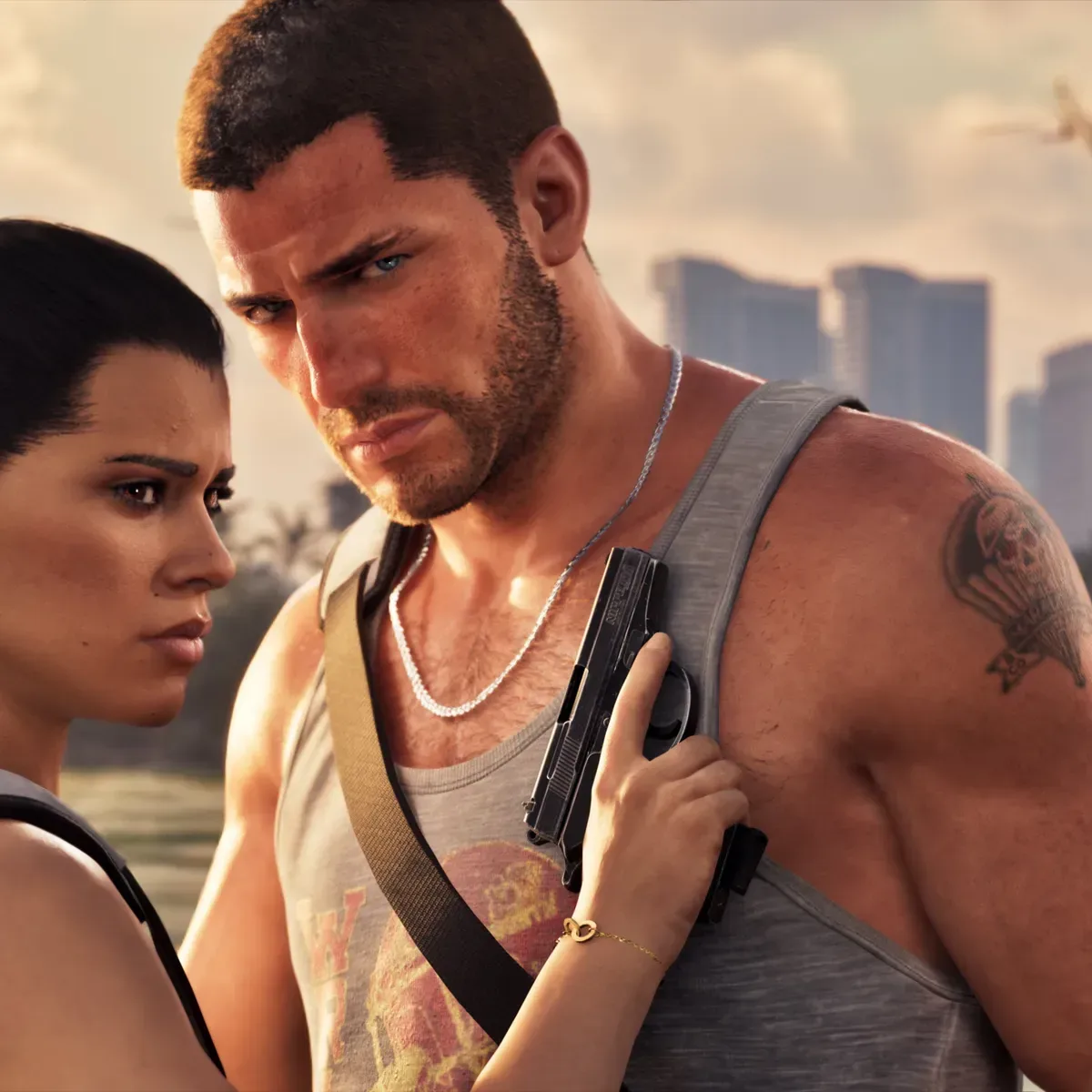
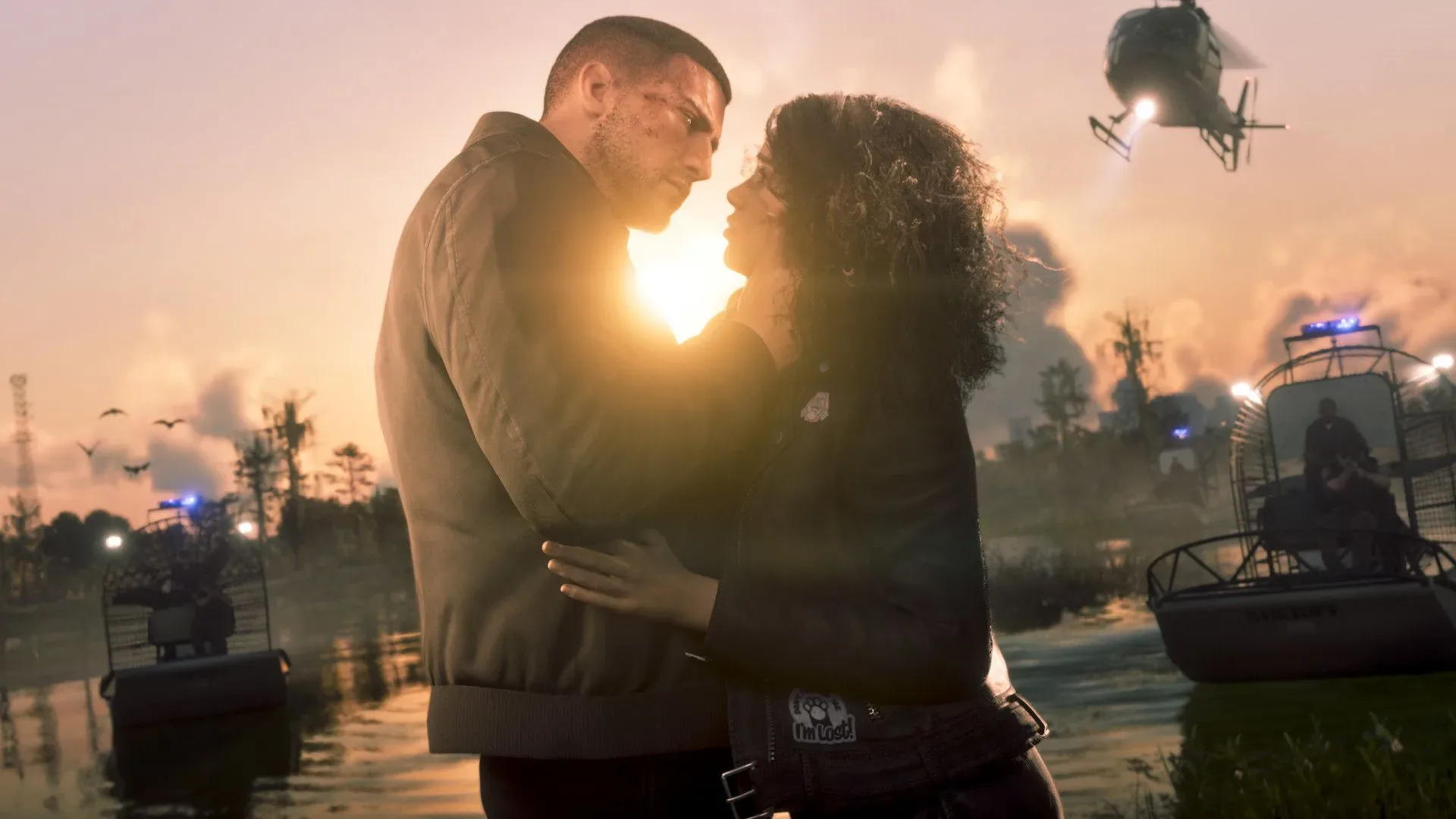
Grand Theft Auto VI may put its two leads on the criminal side of the law, but Rockstar’s stated narrative goal is not simply to make Jason and Lucia larger-than-life outlaws. The studio wants players to form a connection with them—and to understand the pressures shaping the world around them.
Rupert Humphries, Rockstar’s senior vice president of narrative, described Jason and Lucia as the human center of a setting where people are being pulled in every direction. His framing is blunt: many people can feel only “two bits of bad luck” away from losing control. In GTA 6’s version of that anxiety, the streets of Vice City and the wider state of Leonida become a place where stress, noise and desperation surface in many forms.
That does not turn criminality into a consequence-free choice. Rather, it identifies the dramatic question Rockstar appears to be pursuing: can players believe in the relationship between two people who make damaging choices, and can that relationship give emotional shape to an enormous, volatile open world?
Connection is the stated priority
Humphries said the key feeling Rockstar wants players to take from GTA 6 is connection—both a connection to Jason and Lucia individually, and the connection that exists between the pair. That distinction matters.
In narrative terms, player connection is more than simple likability. A protagonist does not need to be morally spotless for an audience to understand their fears, needs or reasons for acting. The crucial issue is whether the game gives the player a sufficiently clear emotional stake in what the characters are trying to preserve or escape.
Jason and Lucia’s relationship is positioned as the answer to that challenge. Instead of presenting Leonida’s social chaos as an abstract backdrop, Rockstar is placing two people at its center who must deal with it together. Humphries suggested that players should be able to “believe in and inhabit” the pair through the journey.
That emphasis also suggests the relationship may be important to how players interpret major events, rather than merely functioning as a premise for missions. The supplied details do not establish specific mechanics, choices or relationship systems, so it would be premature to read more into it than that. But Rockstar’s narrative framing makes clear that the bond between the protagonists is intended to carry weight.
Leonida’s chaos has a purpose
Humphries described present-day pressures as coming from multiple directions: politics, the environment, media and social media. GTA 6 filters that sense of overload through Vice City and Leonida, where people have been driven toward different kinds of irrationality or desperation.
Related coverage includes GTA 6 Aims to Make Jason and Lucia Feel Human Amid Leonida's Chaos.
The examples he named—conspiracy theories, self-help cults, get-rich-quick schemes and drug habits—are useful because they describe more than random eccentricity. They point to a setting built around people seeking certainty, belonging, relief or a shortcut out of trouble. In other words, the madness is not only there for a joke or a headline-grabbing encounter. It is part of the social pressure that gives the setting its tone.
Leonida, as described here, is GTA 6’s wider state setting, while Vice City is one of the places within it. Rockstar’s comments present both as a shared environment shaped by strain and spectacle. That gives the satire a more personal edge: the game’s absurd characters and schemes are meant to emerge from a world in which people feel cornered.
There is still room for comedy in that construction. Grand Theft Auto has long made space for outsized personalities and institutions behaving badly. But the stated goal here is to put those elements in a world whose pressures feel recognizable enough to make Jason and Lucia’s struggle emotionally legible.
Why Jason and Lucia’s stakes matter
The pair are described as having few attractive options beyond criminal ones. Their own outlook is that the world is stacked against them and that following the rules will not get them ahead. This is an important narrative position, because it establishes motivation without requiring Rockstar to present their actions as admirable.
There is a difference between explanation and excuse. Explanation gives an audience context for a character’s decisions: financial precarity, limited opportunity, fear, loyalty or a belief that normal routes are closed. An excuse asks the audience to ignore the impact of those decisions. Humphries’ remarks focus on the former. Rockstar wants its characters’ personal stakes to be understood amid a world designed to feel hostile and unstable.
For players, that can create tension rather than dissolve it. A crime story gains dramatic friction when viewers or players can see why someone chooses a dangerous path while still recognizing the cost of that path. Jason and Lucia’s shared predicament may therefore be as important as any individual score or setback: their relationship provides a lens through which the player can judge whether they are surviving together, drifting apart, or making a bad situation worse.
Players looking for more practical GTA 6 information can also consult our guide to GTA 6 safe codes, focus clues and opening safes.
A softer center than GTA 5’s outlook
Humphries characterized GTA 6 as more optimistic than GTA 5’s generally cynical worldview. The contrast is not that Leonida will be free of ugliness; his description of its conspiracies, cults, grifts and drug problems makes the opposite clear. The difference is where Rockstar says it has placed its hope.
That hope is in companionship. Humphries’ central idea is that people may be better off together than alone, even when they are flawed or have done bad things. It is a modest proposition rather than a promise of easy redemption. The world remains difficult. Jason and Lucia remain criminals. Yet the game’s narrative appears interested in whether mutual care can be meaningful in a place that constantly encourages isolation, suspicion and self-interest.
This gives GTA 6 a potentially distinct emotional framework. Cynicism often treats institutions, ambitions and relationships as fundamentally hollow or corrupt. Rockstar’s comments do not deny the corruption in Leonida; they instead locate value in two people trying not to face that environment alone. Whether the game sustains that balance will depend on the story itself, but the intended direction is unusually clear.
What Rockstar has and has not confirmed
The comments establish several broad principles behind GTA 6’s story:
- Jason and Lucia are intended to be characters players can connect with and inhabit.
- Their bond with each other is a core part of the narrative’s emotional design.
- Vice City and Leonida are being portrayed as places affected by modern pressure and social instability.
- Rockstar sees a note of optimism in people supporting one another rather than going it alone.
They do not, however, confirm the structure of the campaign, a particular ending, player-driven relationship outcomes, or the full range of activities and systems in the game. The comments are a statement of narrative intent, not a complete outline of how that intent will be delivered.
Still, they offer a useful way to read what Rockstar is trying to do with its new central duo. GTA 6 is not being framed solely as a tour through spectacular crime and regional satire. It is also being framed as a story about two people trying to hold onto one another while everything around them insists that instability, opportunism and isolation are normal.