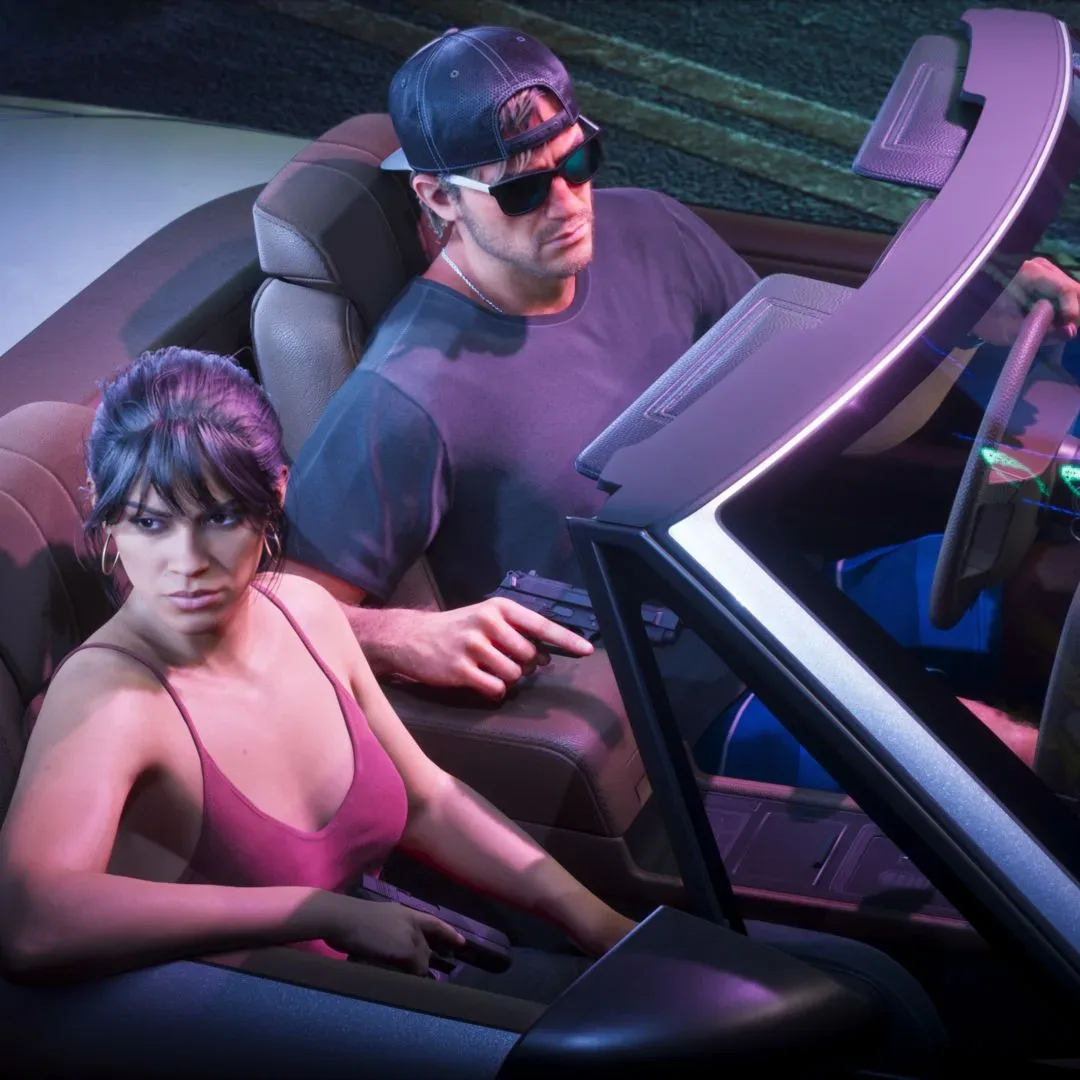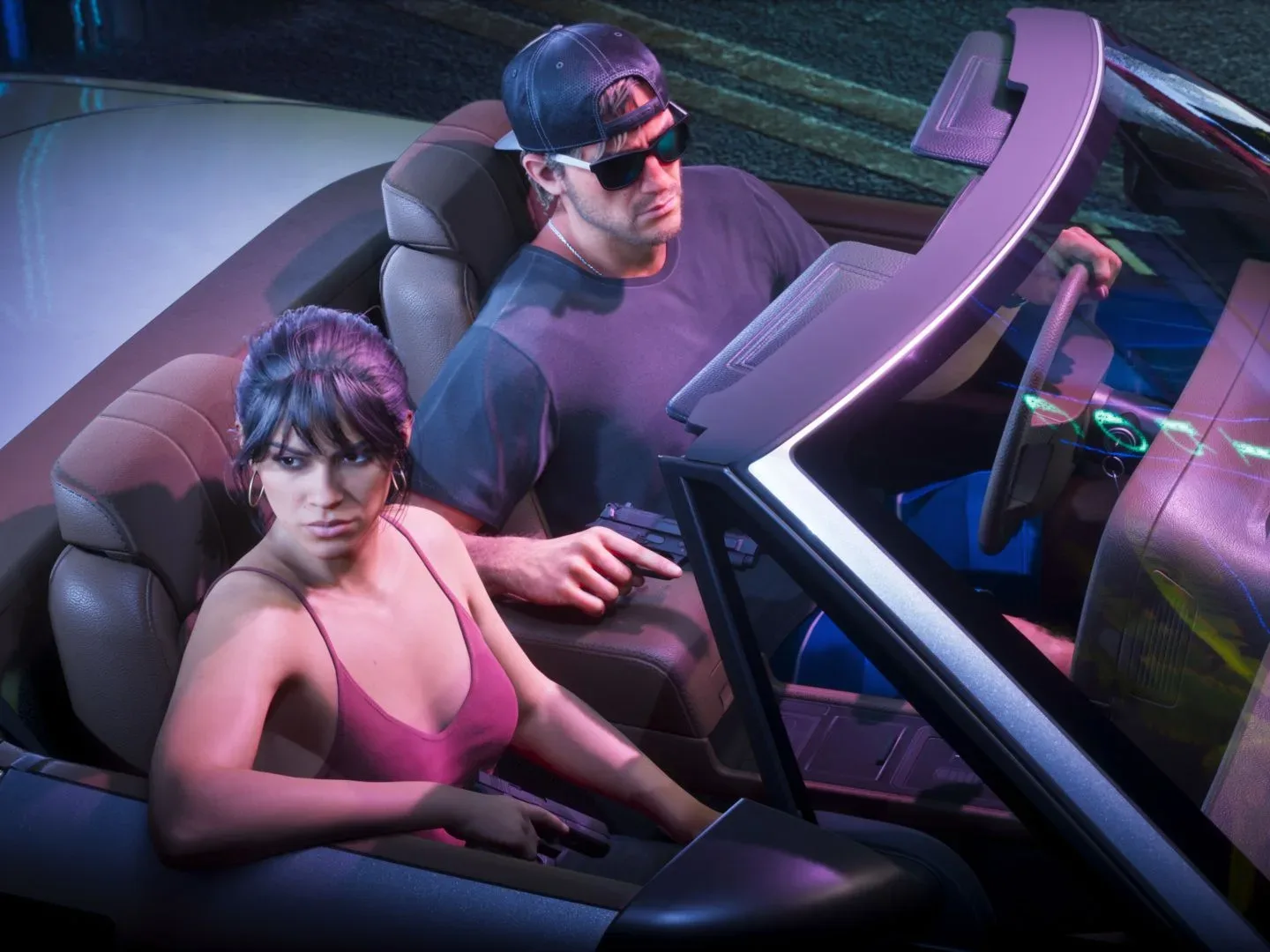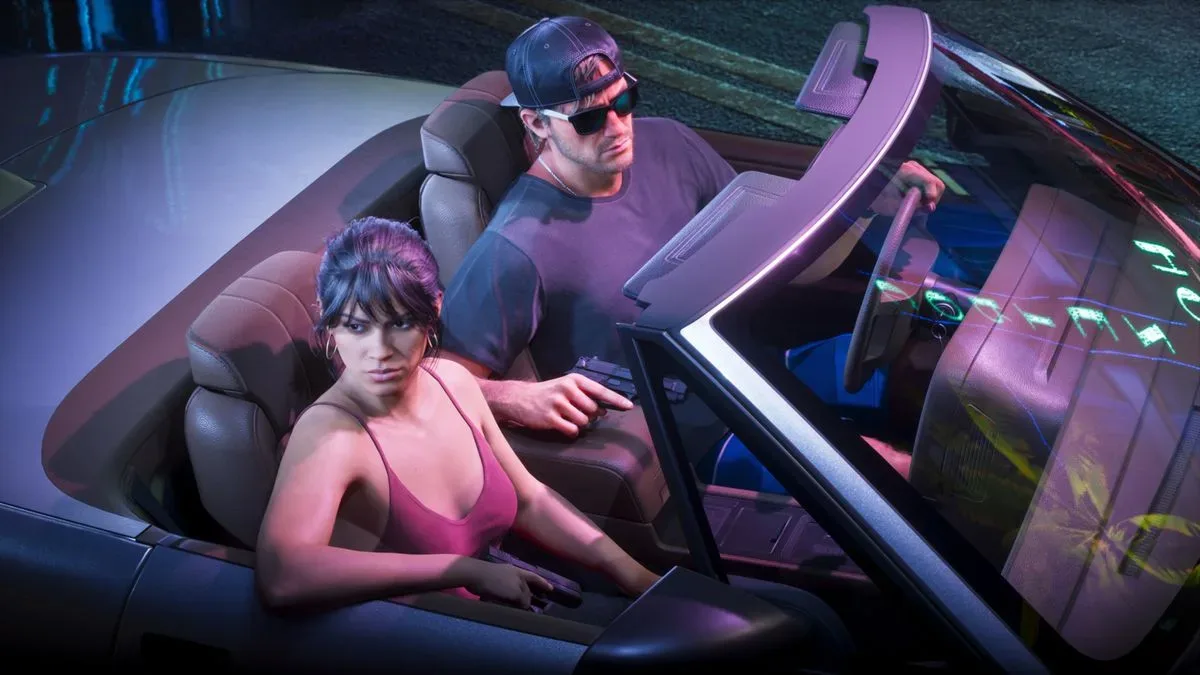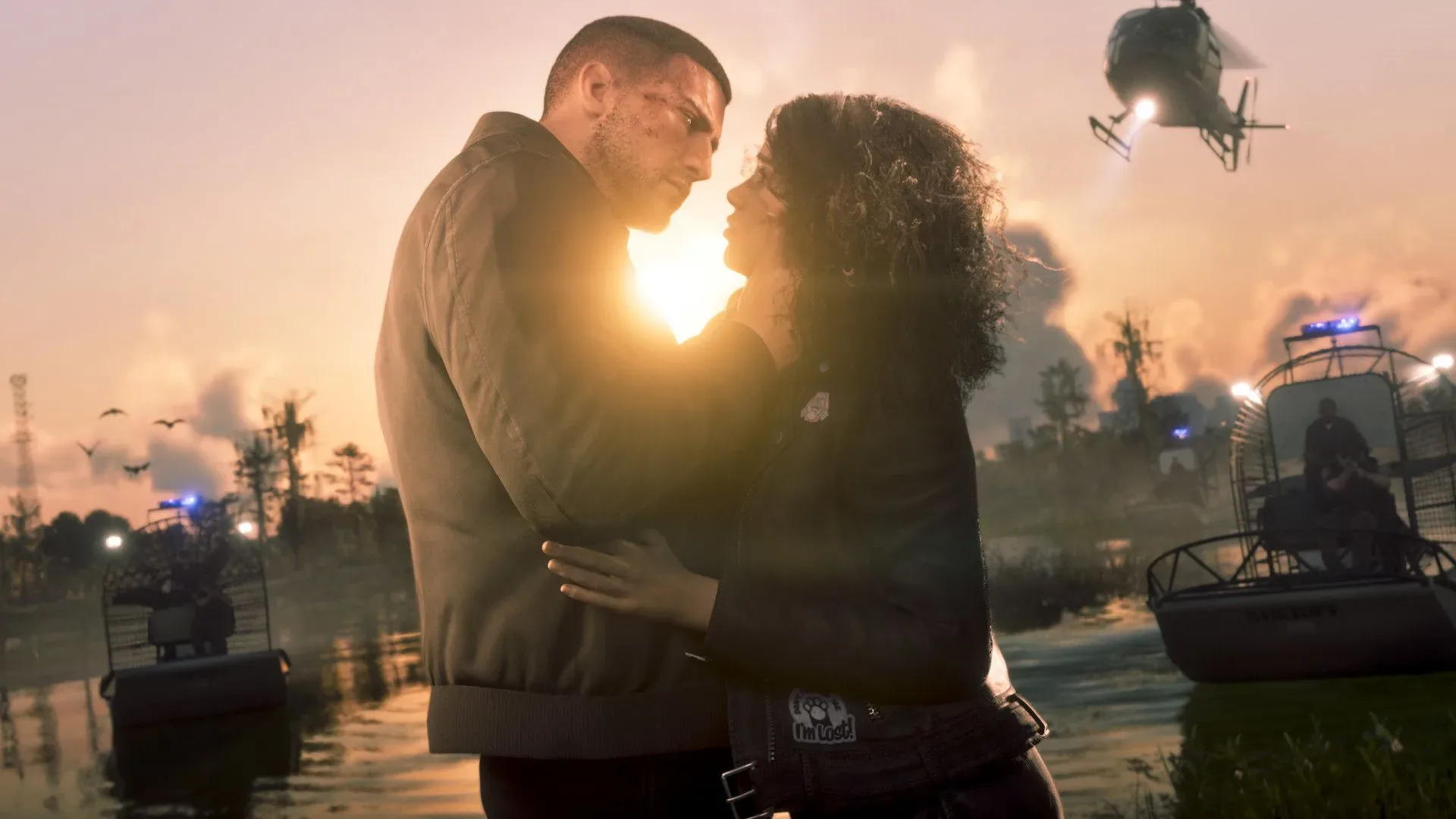
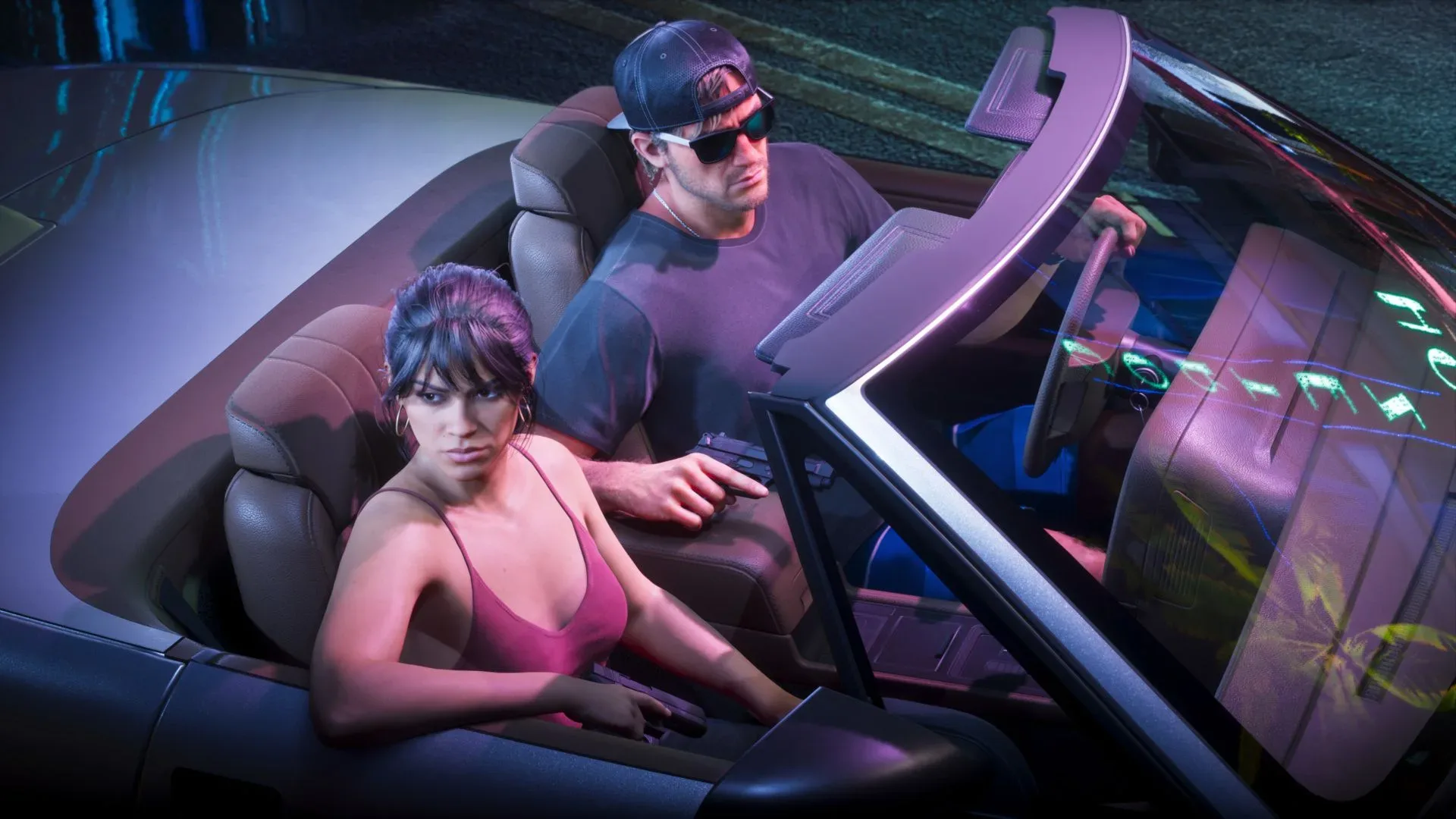
Grand Theft Auto VI is framing intimacy between its two central characters, Jason and Lucia, as a relationship system rather than a detached activity. Rockstar Games vice president of animation Mark Tennant says the studio found that creating those moments in a believable way required substantial thought and iteration.
The key issue was not simply animating a scene. It was making physical interactions reflect the state of a player-shaped relationship. Jason and Lucia can apparently range from intensely romantic to more restrained, functioning as cordial criminal partners depending on player choices. That means one fixed portrayal of affection would risk contradicting the story players have helped create.
“Exploring the physical relationship between Jason and Lucia required a lot of thought and iteration,” Tennant said.
Tennant described the goal as allowing players to interact with a partner in a way that feels natural and loving, while giving that interaction a believable progression tied to the player’s investment in the relationship. In practical terms, Rockstar is treating intimacy as part of character storytelling: a moment should communicate where Jason and Lucia stand with one another, rather than operate as an isolated reward or gag.
Why relationship-aware animation is difficult
Animation is often discussed as if it is purely visual polish, but it is also a system for communicating intent. A character’s posture, timing, distance, eye contact and reaction can all signal comfort, attraction, hesitation or tension. When an interactive game lets the player influence a relationship, those signals must remain coherent across more than one emotional state.
That is especially complicated for a pair such as Jason and Lucia. A linear story can decide exactly what both characters feel at every moment, then build each scene around that single answer. A game with player-driven variations has a harder task: it needs performances that account for differing levels of attachment without making either participant seem disconnected from the scene.
Tennant summarized the challenge as finding a realistic balance between player agency and partner response. Player agency means the player has meaningful influence over what happens and how a relationship develops. Partner response means the other character still needs to feel like a person with reactions, boundaries and emotional context—not an animation that simply activates on command.
Those two aims can pull against each other. Too much emphasis on agency can reduce the partner to a button-driven prop. Too much emphasis on a predetermined reaction can make a player’s choices feel cosmetic. Rockstar’s stated approach is to make these interactions fun, passionate and rewarding while retaining a credible give-and-take between both characters.
Related coverage includes Rockstar Says GTA 6's Intimacy Systems Needed Extensive Animation Work.
What “progression” could mean for Jason and Lucia
The available details do not lay out a complete menu of relationship choices, scenes or thresholds, so it would be premature to assume a specific branching structure. What is clear is that Rockstar does not describe the romance as a single straight line. The relationship can take different tones based on choices, and the physical presentation is intended to match that result.
That word, progression, matters. In a narrative context, progression is the sense that a relationship changes over time because of events and decisions. It can be expressed through dialogue, shared activities, conflict, reconciliation, or changing degrees of trust. Here, Rockstar says physical interaction is also meant to participate in that progression.
For players, the implication is less about a standalone feature and more about continuity. If the game has made Jason and Lucia feel close, their animation should convey that history. If the pair are operating with more distance, their behavior should not suddenly communicate a level of intimacy that the player’s path has not earned. Consistency is what makes a choice-driven relationship feel responsive instead of decorative.
It is also a notably different design target from the series’ more impersonal treatment of sexual encounters in prior entries. Those interactions have commonly been transactional or disconnected from a central, evolving romance. GTA 6, by contrast, places Jason and Lucia’s relationship at the center of the discussion.
A shift away from transactional encounters
Rockstar’s focus on the lead pair helps explain another reported change: GTA 6 will not let players hire prostitutes. The reasoning is tied directly to Jason and Lucia’s central romance. Rather than positioning sex as an optional exchange detached from character investment, the game’s stated design places it within the ongoing relationship between its protagonists.
That does not mean every player will make the same choices or interpret the couple the same way. It does mean Rockstar is presenting their connection as a meaningful narrative variable, one that affects how the game expresses affection and closeness. The studio’s animation challenge follows from that decision.
There is an important distinction between mature subject matter and maturity of presentation. Including sex or nudity does not by itself create a convincing romance. The more difficult work is ensuring that the game’s mechanics, story context and performances agree with each other. Rockstar’s comments suggest the team sees that alignment as essential to making Jason and Lucia’s bond feel believable.
Animation has to carry narrative consequences
Games regularly use animation to sell movement: running, climbing, driving, fighting and reacting to impacts. Relationship animation needs to sell something less mechanical but no less demanding: emotional consequence. A gesture that is appropriate after shared trust may land very differently after a disagreement or during a cooler partnership.
That does not require players to inspect every movement as though it were a technical demo. Ideally, the system does its work quietly. Players understand the status of the relationship because the dialogue, writing and performances all point in the same direction. If the pieces conflict, players notice quickly; a supposedly close couple may feel remote, or a tense pair may act with unexplained affection.
Rockstar’s comments indicate the team is attempting to avoid that mismatch by creating varied animation performances, not merely altering a single cinematic scene. “Performance” in this usage refers to the acted behavior embedded in an animation: how characters move, react and relate to each other. Variation is necessary when relationship status can change, because a single performance cannot convincingly represent every possible emotional context.
The studio has not provided technical specifics on how choices are tracked, how many relationship states exist, or precisely when animations change. The safe takeaway is narrower: interaction is designed to respond to the overall level and tone of Jason and Lucia’s relationship, rather than following one immutable romantic script.
What this means for players exploring Leonida
GTA 6’s open world is Leonida, but Rockstar’s comments suggest the game’s most important relationship may be shaped by more than whatever players do while roaming its wider map. Choices affecting Jason and Lucia are positioned as significant enough to alter the emotional texture of their interactions.
That makes the relationship a possible lens through which players read the broader story. A partnership built on affection will likely feel different from one held together mainly by shared criminal goals, even if both versions involve the same two protagonists. The value of the approach is not that it promises a universal “best” relationship outcome; it is that it tries to make the chosen version legible in performance.
Players seeking practical help with the game’s wider activities can also consult this GTA 6 Rhino tank guide for Mile Zero Air Station. That kind of open-world problem solving sits at the opposite end of the design spectrum from relationship animation, but both reinforce the same idea: GTA 6 is combining large-scale player freedom with systems that need to react convincingly to what players do.
The larger design challenge
Rockstar’s explanation is notable because it identifies a problem that is easy to underestimate. An intimate interaction cannot feel believable just because it looks technically detailed. It has to arrive at the right point in the relationship, reflect both characters’ established dynamic and preserve the player’s sense of influence without erasing the partner’s individuality.
For GTA 6, that means the animation work is tied directly to narrative design. Jason and Lucia’s romance is not being described as a fixed backdrop to an open-world crime story. It is being built as an evolving part of the player’s experience, with animation expected to reflect whether the pair are deeply passionate or operating with more limited warmth.
How consistently that ambition comes through will depend on the complete game, including the choices that shape the couple’s bond and the situations in which those performances appear. But Tennant’s comments make Rockstar’s intention clear: intimacy is meant to be relationship-aware, responsive and rooted in the specific connection players develop between Jason and Lucia.