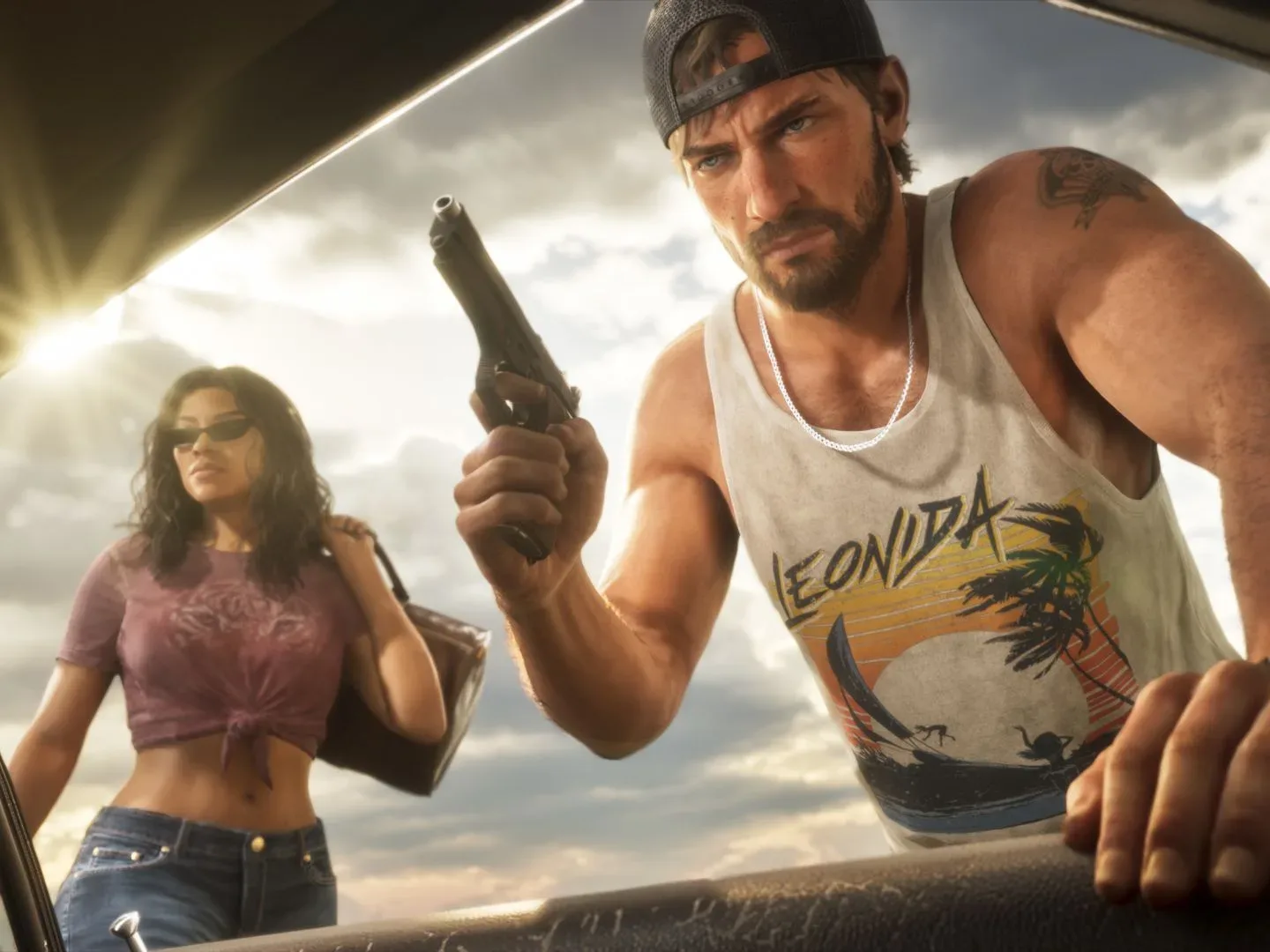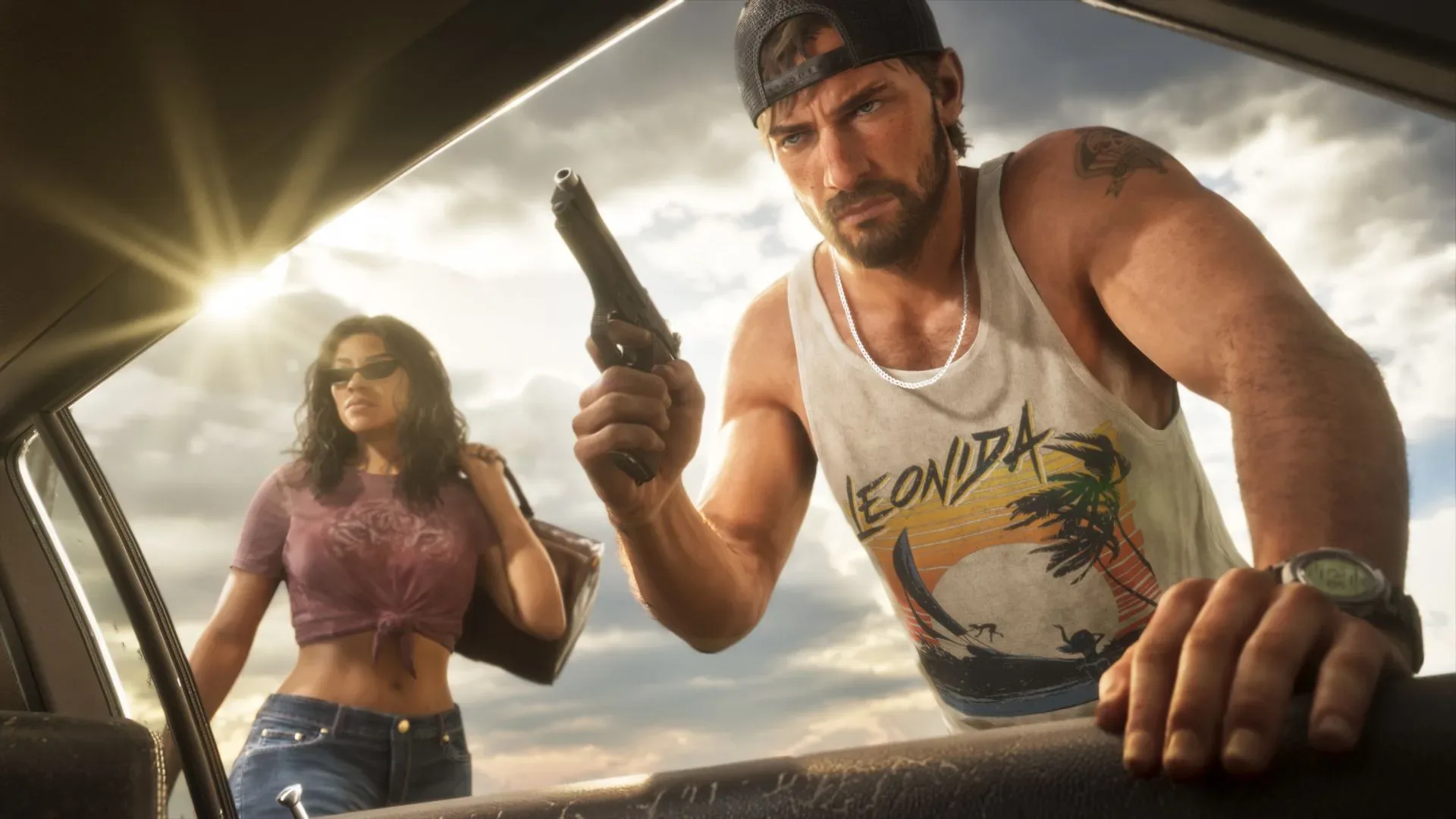
Dylan Rourke, the actor credited as Jason Duval in Grand Theft Auto 6, has publicly reflected on the production after the game’s launch and the publication of Rockstar’s full cast and credit listings. His message puts attention not just on the leading performers, but on the broad development effort behind a project of this scale.
Rourke described having spent years around exceptionally skilled game-making craftspeople and characterized the finished work as a major demonstration of creativity, ingenuity and persistence. He also thanked the collaborators involved and signed off by pointing toward Leonida, the setting associated with GTA 6.
It is a notably team-focused response from an actor occupying one of the game’s most prominent roles. Jason sits at the top of the main cast section, with Manni L. Perez, credited as Lucia Caminos, immediately following. Their characters form the central relationship discussed around GTA 6, making the visibility of both performers particularly significant now that the wider credits are public.
The principal GTA 6 cast now listed in the credits
Alongside Rourke as Jason and Perez as Lucia, the published cast credits identify a number of familiar names in key roles:
- Brad Carter as Donnie
- Bobby Moynihan as Cal
- Stephen Root as Brian Heder
- Orlagh Cassidy as Lori Heder
- Machel Montano as Kenton Rees
- Mallory Wu as Andy
That list is only a small portion of the names included. The credits’ size is itself a useful reminder of how a major open-world game comes together. A search for “Jason” returns 54 separate entries, although that does not mean all 54 refer to Jason Duval or to the actor who plays him. Credits are assembled across many departments and commonly contain people with the same first name, as well as role, specialist, and support listings. Still, the result illustrates the scale of the team attached to the project.
Why cast credits matter beyond a list of names
Game credits can look like an administrative detail, but they serve several practical purposes. For players, they provide a clear record of who portrayed a character after years in which audiences may have speculated about identities. For the people who worked on a game, credits document their professional contribution. And for a project as expansive as GTA 6, the list makes visible the fact that performances on screen are supported by a much larger production structure.
The term principal cast generally refers to performers tied to the most prominent characters, rather than every person who may have contributed voice work, performance capture, motion, or supporting roles. It does not reduce the importance of the wider group. Rather, it provides a way for credits to identify the characters positioned most centrally in the story.
Rourke’s statement emphasizes precisely that wider collective. His comments avoid framing GTA 6 as the work of a few recognizable actors or a single creative lead. Instead, they point toward the many specialists required to make a large game work: artists, designers, programmers, writers, audio teams, producers, technical staff and other contributors whose work may not be obvious in a single scene but remains essential to the finished experience.
Related coverage includes GTA 6's Dylan Rourke Celebrates Rockstar Team as Full Cast Credits Appear.
Jason and Lucia are at the center of the conversation
The credit ordering confirms the narrative importance of Jason and Lucia, but it also gives fans a firmer basis for talking about the performances themselves. Perez’s involvement as Lucia had previously been revealed at The Game Awards; the current credits place her directly alongside Rourke in the game’s leading cast lineup.
That pairing matters because GTA 6’s story discussion has focused heavily on the dynamic between its two leads. In a series known for large casts and escalating criminal stories, the Jason-Lucia relationship has been identified as a particularly empathetic element. Rourke’s message arrives at a moment when players can connect the people behind those characters with the broader team that built the world around them.
Analysis: Public cast confirmation can change the way a game is discussed after launch. Before credits are available, online attention often centers on guesses about performers. Afterward, the conversation can move toward the work on the page and screen: how an actor’s delivery supports character relationships, how a supporting cast shapes the surrounding world, and how the game’s developers integrate those performances into missions and open-world storytelling.
That distinction is worth preserving. A credited actor is responsible for a performance, while the final presentation also relies on direction, editing, animation, writing, sound and design. GTA 6’s credits offer recognition across that chain rather than treating a virtual character as the work of one person alone.
A production scale reflected in the details
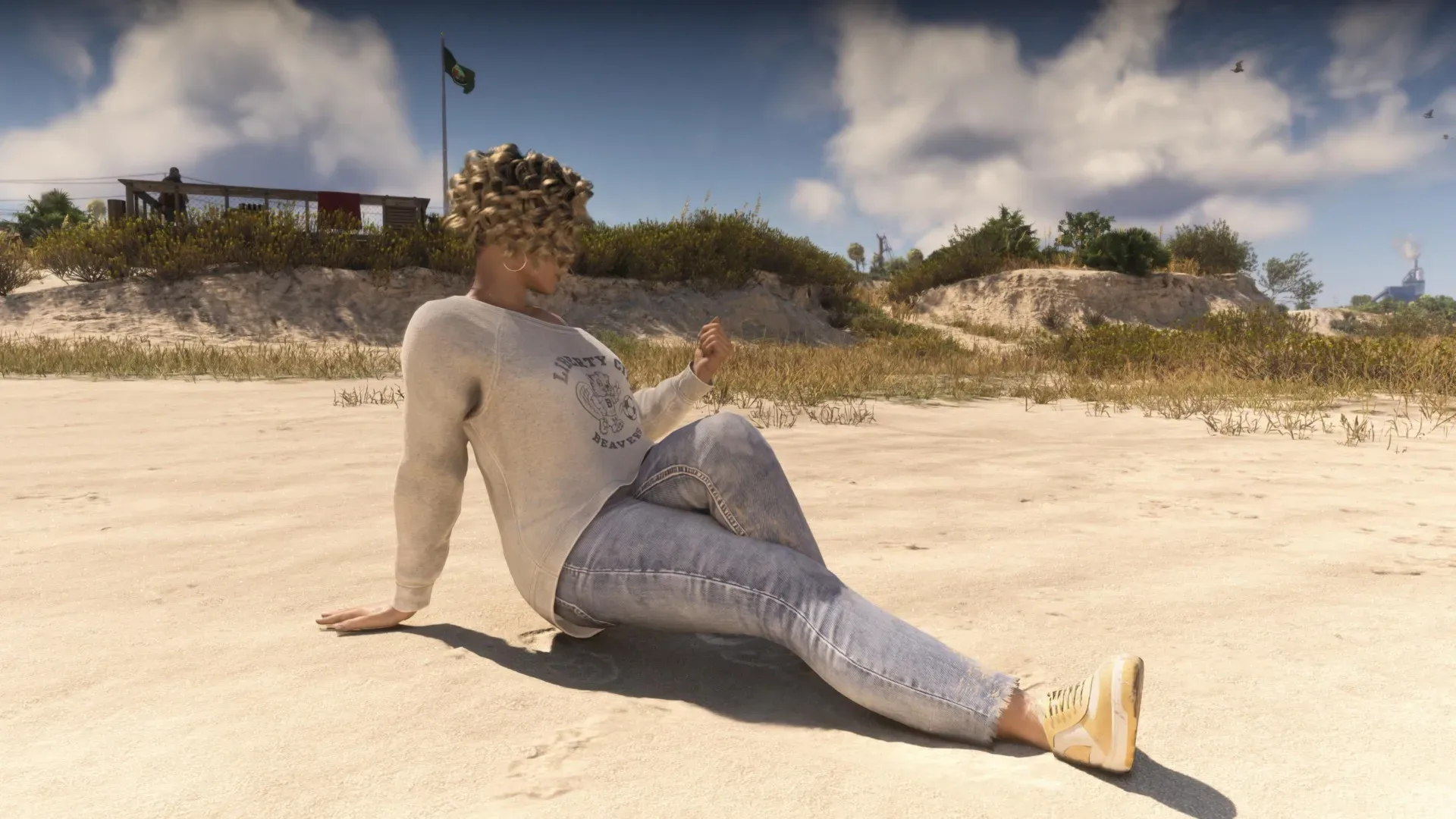
GTA 6 has been described as an exceptionally detailed sandbox. In gaming, a sandbox is a structure that gives players broad room to explore, choose activities, and approach parts of the experience with relative freedom rather than following a single fixed route at every moment. “High fidelity” refers to the density and refinement of its presentation and simulated detail, not simply graphical resolution.
Those qualities require many forms of labor, and Rourke’s praise is most informative in that context. An open world needs its spaces, characters, dialogue, systems and audiovisual elements to work together. A polished lead performance can anchor a story, but it exists inside a web of technical and artistic work that lets players encounter it naturally.
The credits do not provide a simple measure of the contribution of each individual, and a larger number of names does not automatically determine a game’s quality. What they do show is the breadth of credited participation. Rourke’s choice to celebrate the people around the project is therefore an appropriate response to a credit roll that extends far beyond the headline cast.
For players returning to Leonida, the newly published cast details add a useful layer of context without changing the game itself. Jason is Dylan Rourke; Lucia is Manni L. Perez; a substantial supporting ensemble surrounds them. Anyone looking for practical help while exploring the game can also consult our guide to GTA 6’s car-flipping and rest controls, which covers two mechanics that can affect how a getaway plays out.
Recognition for the people behind Leonida
Rourke’s public remarks are ultimately a gesture of appreciation toward that full production community. His message is optimistic, but it also recognizes the sustained work involved in delivering a game of GTA 6’s scope. The cast credits now give players a more complete record of the actors behind its characters, while the much broader credits underline that Leonida was made by a large and varied group of contributors.
For fans, the immediate takeaway is straightforward: the names behind Jason and Lucia are now clearly credited, the principal supporting roles are documented, and the production’s scale is visible in the depth of the listings. For the industry, the moment is a reminder that even the most visible performances are part of a collaborative process measured in years and carried by many disciplines.