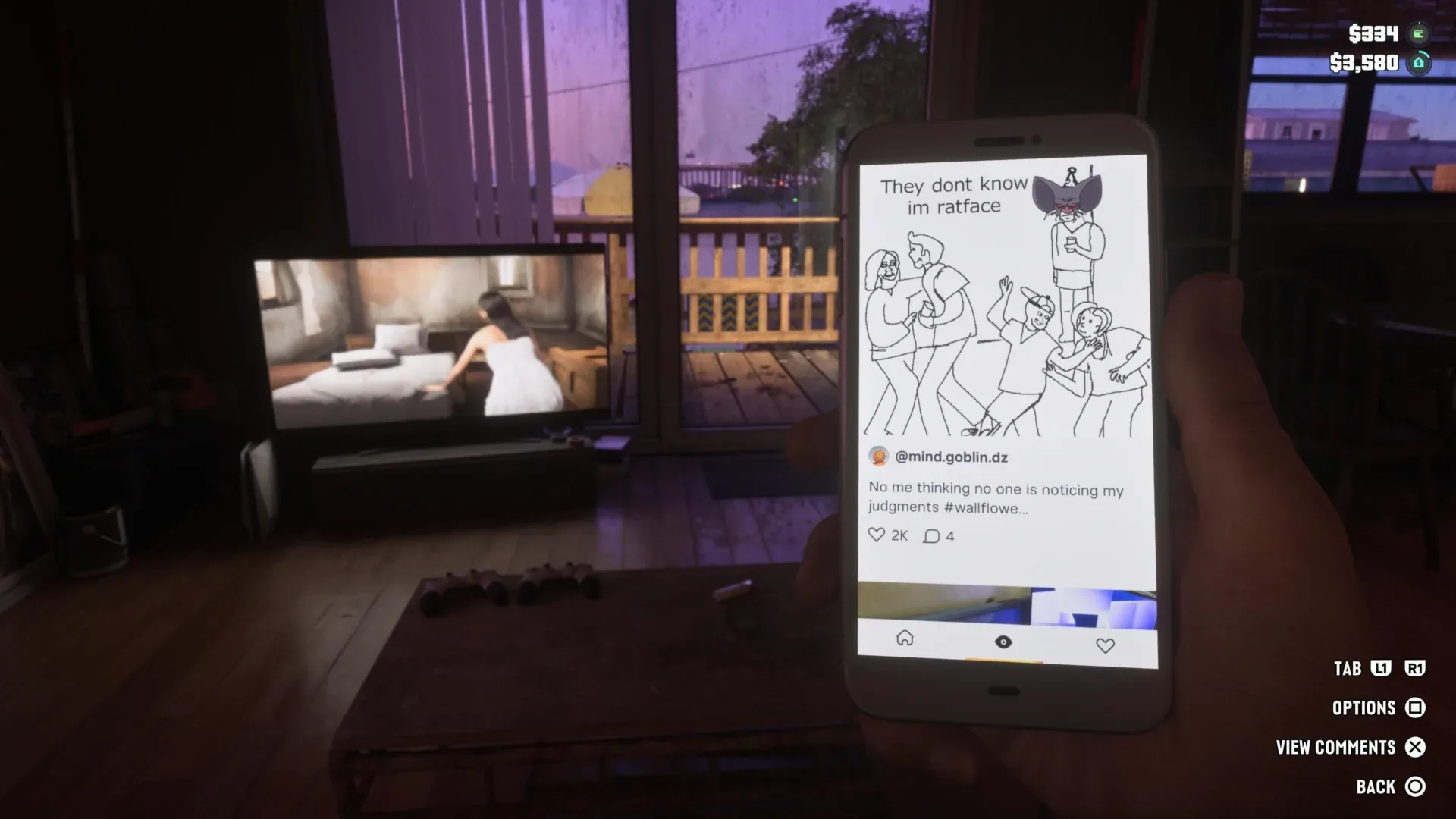
Spoiler warning: This article discusses an optional GTA 6 environmental Easter egg and the details found inside its location. It does not cover a story twist, but players hoping to discover every strange corner of Lenoida without advance knowledge may want to turn back now.
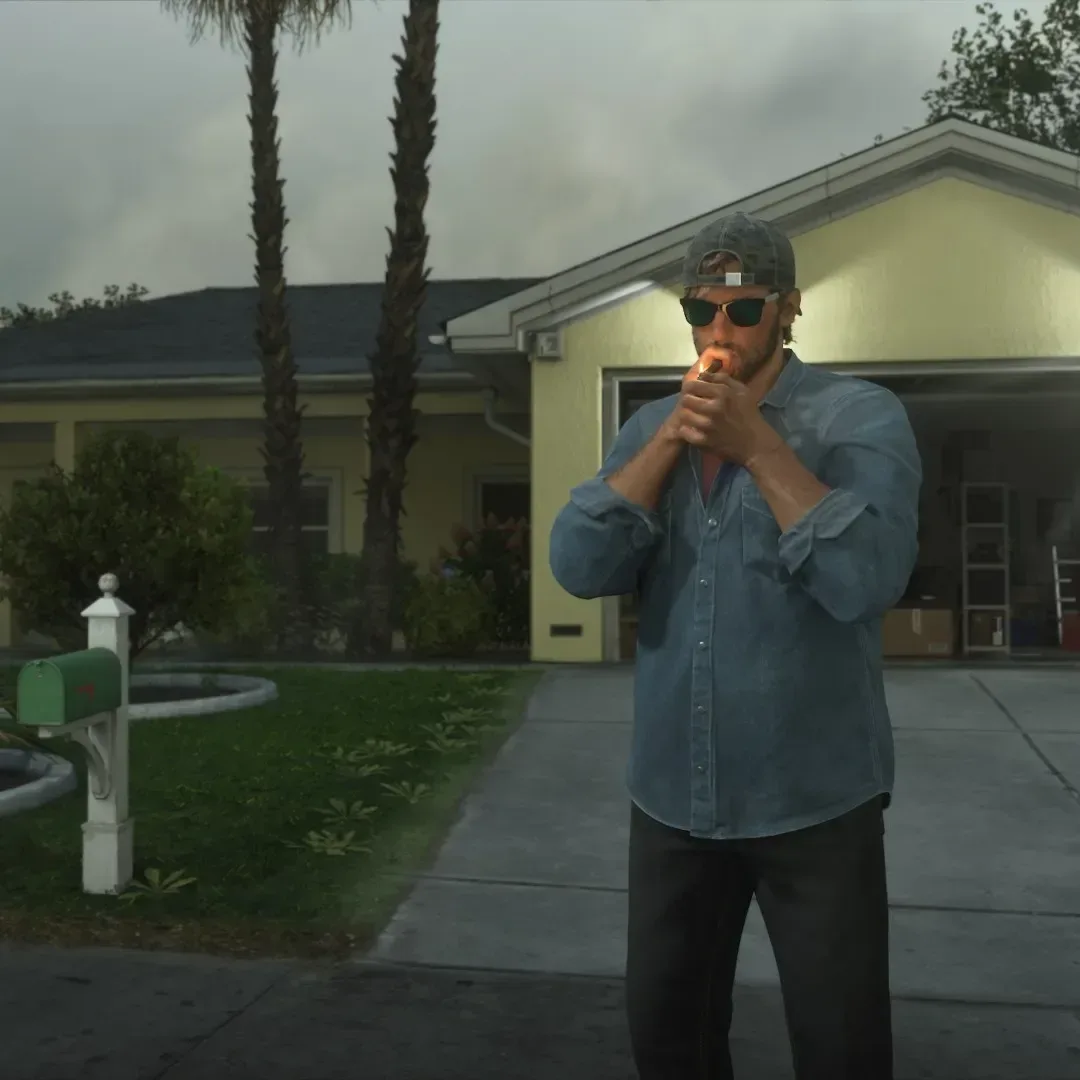
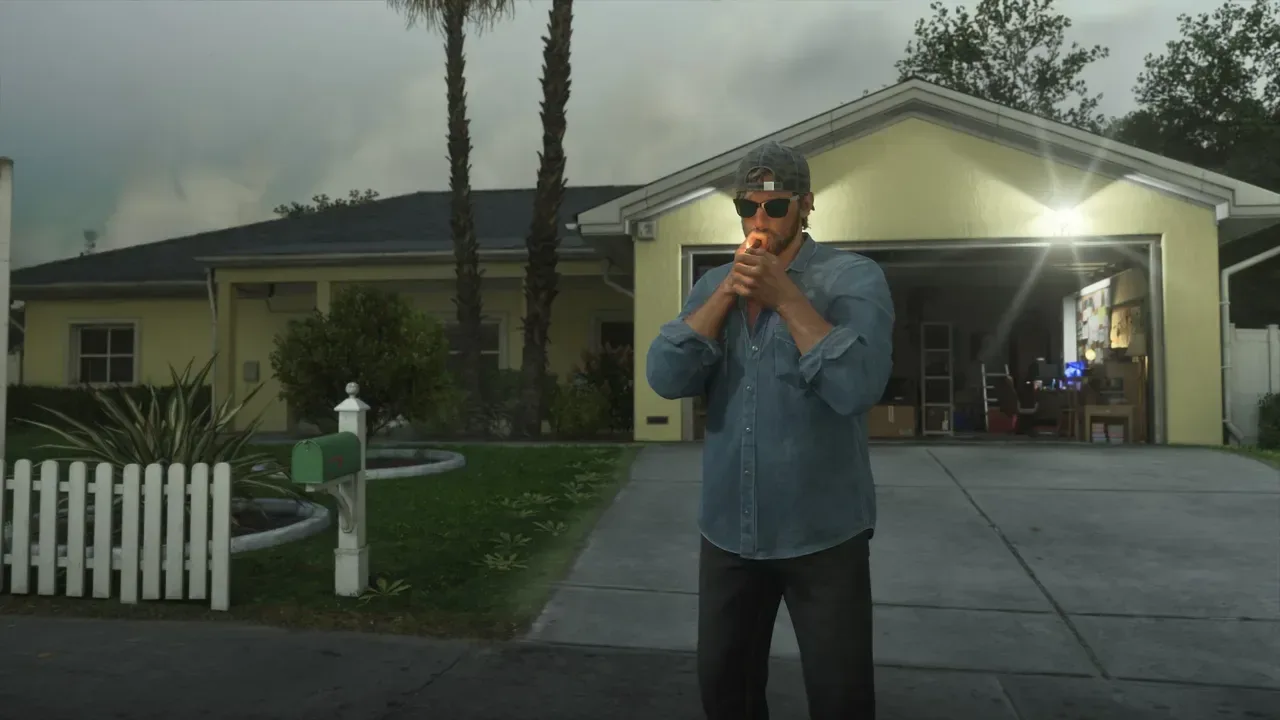
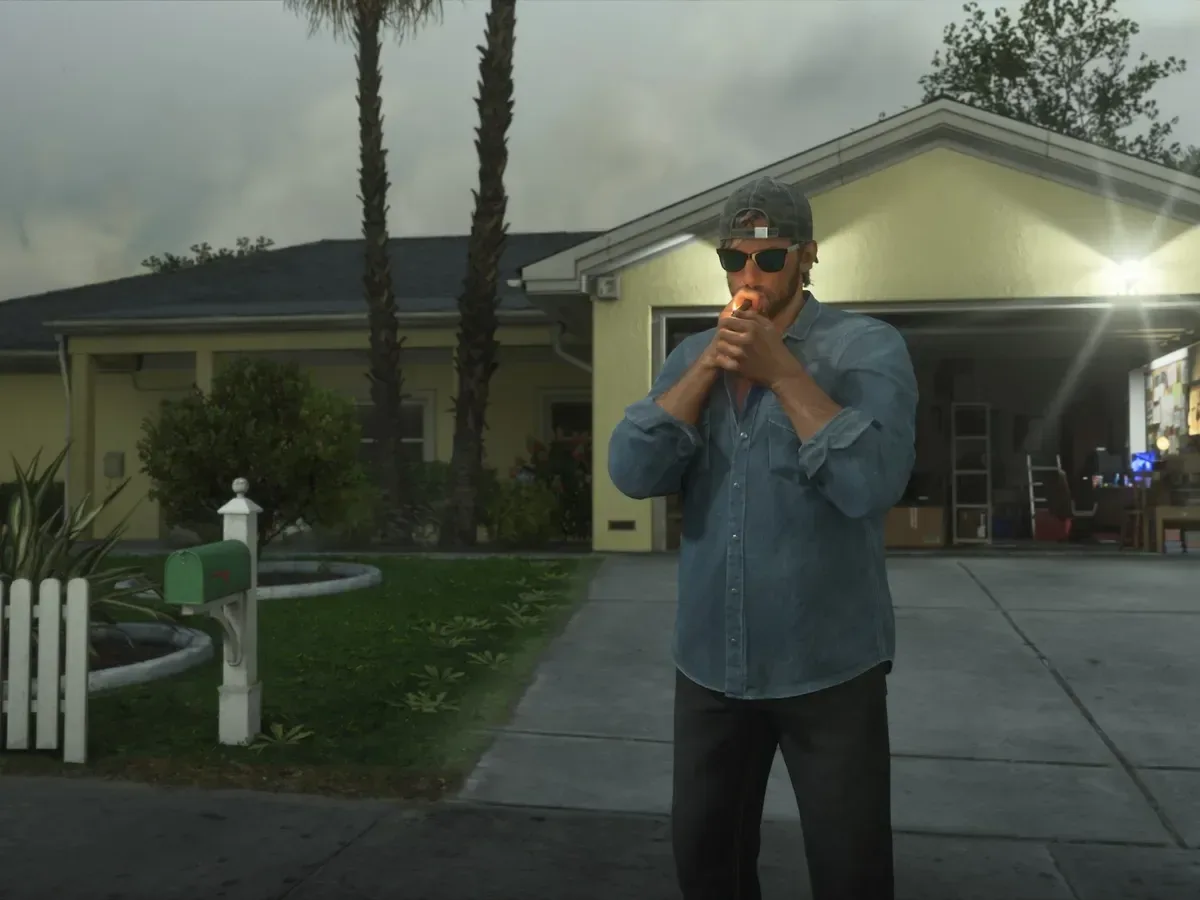
A seemingly out-of-place house image in the 2021 remastered edition of Grand Theft Auto: San Andreas has paid off as a remarkably specific GTA 6 connection. The building can be found in Leonard County, in the Belville suburb, and its significance goes beyond matching an old image: its garage can be entered, revealing the workspace of an in-game conspiracy theorist who has reached a deeply inconvenient conclusion. The world around him behaves like a video game.
That premise makes the location more than a visual callback. It is a compact, self-aware joke built around the conventions players take for granted: map boundaries, repeated non-player characters, inaccessible buildings, collision errors, respawns, and the exceptional freedom afforded to protagonists. It also turns years of fan attention around a mysterious image into part of the gag.
From unexplained image to a place in Leonard County
In 2021, the remastered collection of the PlayStation 2-era GTA games added an image of a house to San Andreas that had not appeared in the original release. It did not obviously correspond to a known location from the earlier games. Fans therefore began treating it as a possible glimpse of a future Rockstar setting rather than ordinary decoration.
GTA 6 gives that old theory a concrete answer. The house exists in Belville, within Leonard County. The discovery has been credited to Jared of the GTA mapping community, whose work helped pinpoint the building. The confirmation is satisfying on its own, but the garage transforms it from a delayed visual reference into an explorable Easter egg with an actual point of view.
An Easter egg is an optional secret, reference, or joke placed in a game for players to notice rather than something required to advance its main plot. The term matters here because the Belville house is not presented as essential narrative information. Its reward is interpretation: the player is invited to read the environment, connect it to a years-old mystery, and recognize why the occupant’s apparent paranoia is unusually well founded.
A conspiracy board with unusually strong evidence
Breaking into the garage exposes notes, wall writing, and other clues left by a resident attempting to explain the odd rules of Lenoida. He has tried to leave the state, including by buying a ticket to Los Santos, but cannot do so. Driving beyond Lenoida also fails to provide an escape, so he considers a boat as an alternative.
That frustration is a joke about the edge of a game world. Open-world games can offer considerable room to roam while still having firm limits: the playable geography is built content, not a fully traversable version of an entire country. A character who sees those limits from inside the fiction would not necessarily describe them as technical boundaries. To him, they would look like a baffling and inescapable restriction imposed on every route out.
Related coverage includes GTA 6 Turns a 2021 San Andreas Mystery Into a Wild Meta Easter Egg.
The resident’s observations continue with the people around him. He notices an extraordinary number of doppelgangers, a nod to the way games reuse NPC models and behavior. NPC means non-player character: someone controlled by the game’s systems rather than directly by a player. Reuse is a practical part of building a large populated setting, but the Belville theorist interprets it as evidence that the population is unnaturally repetitive.
He also sees a troubling pattern in the built environment. There is nothing behind closed doors, and even neighbors cannot enter their own homes. This is another collision between the internal logic of a city and the selective detail of a game map. A door can make a street look lived in without each building requiring a complete interior. GTA 6’s joke is that a resident has stopped accepting that convention as normal and is now documenting it as proof that reality is incomplete.
Other notes point to people phasing through walls or “glitching.” A glitch, in everyday game language, is unintended or unusual behavior caused by the software: characters can clip through scenery, animations can misbehave, or collision can fail to behave as expected. The resident does not have the vocabulary of a player examining a technical fault, but he has accurately recognized that physical laws in his world occasionally become negotiable.
The graph, the sixes, and the community joke
The garage includes a graph with a dramatically exaggerated increase in violent crime, plus a conspicuous collection of 6s. Those details work on two levels. Within the location, they help sell the image of someone compulsively cataloguing alarming patterns. Outside it, the sixes appear to tease the feverish theorizing that surrounded GTA 6 before its release, including the long-running scrutiny of tiny details for hints.
That does not make the earlier house speculation meaningless—quite the opposite. The theory appears to have been correct. The joke is sharper because fans had a real clue, spent years wondering about it, and can now find the physical building at the center of an intentionally over-the-top paranoia room.
There remains an important uncertainty. It is not clear whether the house was always planned as this particular meta Easter egg when the image appeared in 2021, or whether the interior concept was developed later in response to the attention the image received. The location supports the connection, but it does not establish the development timeline behind the joke. That distinction matters: confirmation that a reference exists is not confirmation of every assumption about how and when it was conceived.
Why Jason and Lucia look different from everyone else
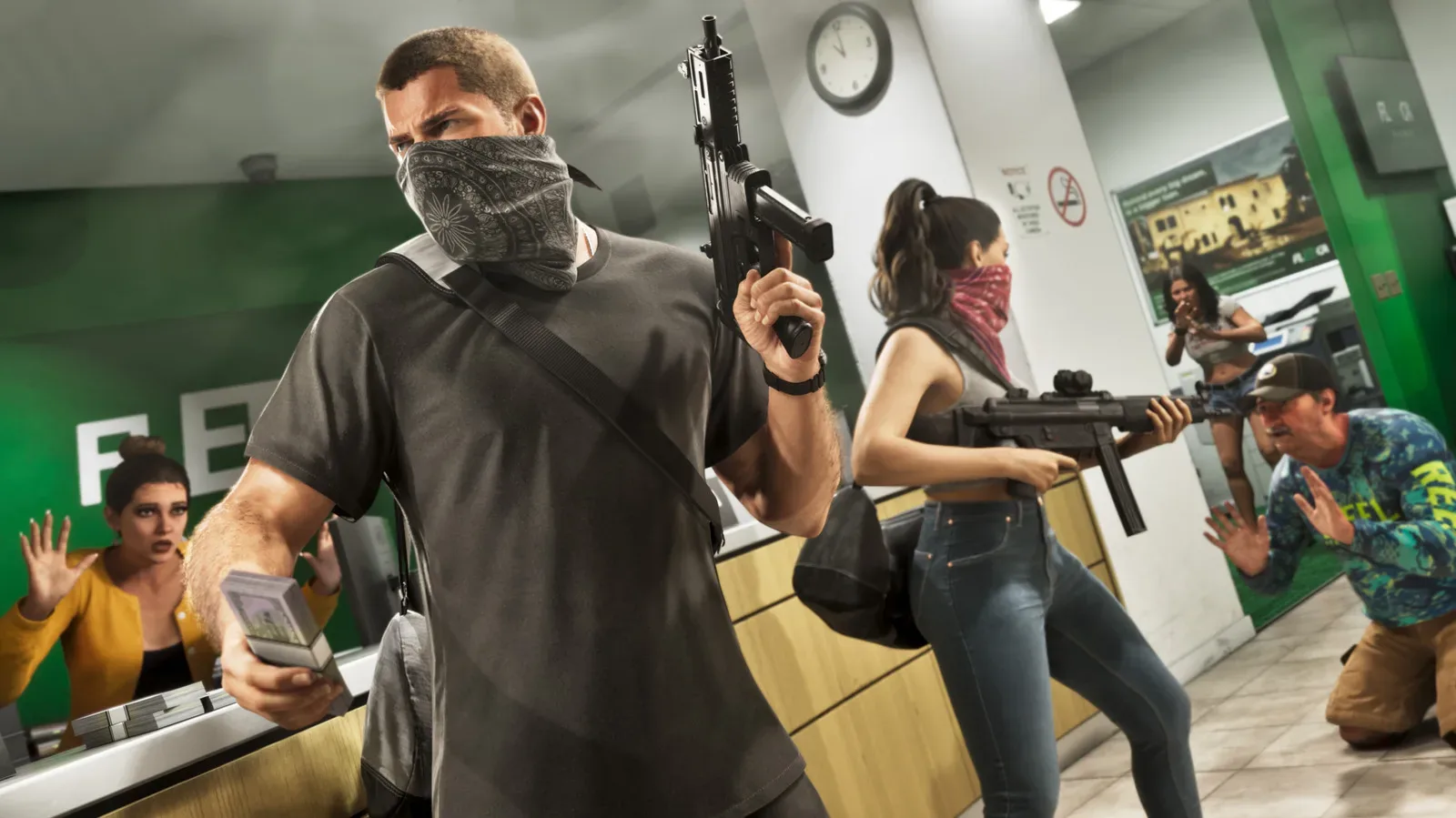
The most revealing part of the resident’s investigation concerns two people identified only as “J” and “L,” pointing to Jason and Lucia. He concludes that they are immune to the restrictions affecting other people and therefore possess unusual freedom and autonomy.
On one level, that conclusion tracks with how GTA protagonists operate. Jason and Lucia can survive situations that would permanently end the ordinary routines of an NPC. They can return after death through respawn systems, provoke mayhem on a scale other citizens do not, and are not bound by long-term legal consequences in the same way as residents who simply inhabit the simulated city.
Respawning is the game convention in which a playable character returns after being defeated rather than the game ending permanently. It is useful for play, because failure becomes recoverable and players can experiment. In the fiction of the Belville garage, however, it becomes a supernatural anomaly. The theorist is not merely watching two reckless people; he is watching people who appear able to violate the usual stakes of existence.
There is a deliberate irony in calling them autonomous. Jason and Lucia have more practical freedom than the NPCs around them, but they are also directly controlled by the player. Their actions, routes, crimes, and pauses are subject to decisions made outside the world they inhabit. The resident is therefore correct about the difference he sees while missing the mechanism behind it.
That is the most effective trick in the Easter egg. GTA’s world is often designed to feel reactive and busy, yet it is still a constructed simulation with rules, shortcuts, boundaries, and exceptions. The Belville occupant has noticed the seams. He only lacks the final piece of the explanation: a player exists beyond those seams.
A small location that rewards looking closely
The Belville house demonstrates how environmental storytelling can carry a joke without a mission marker or lengthy cutscene. Environmental storytelling is the practice of communicating character, situation, or history through spaces and objects: a wall of notes, a failed travel plan, a graph, or an arrangement of markings can establish the owner’s worldview before anyone speaks.
Here, the environment establishes a person who appears delusional at first glance but is, in several crucial respects, seeing the world clearly. His inability to leave Lenoida, his suspicion of duplicate faces, his concern over sealed-off homes, and his reports of glitches all point at ordinary video-game design choices reframed as existential horror. The punchline is not that he is wrong. It is that he is almost right.
For players exploring without a checklist, the practical takeaway is simple: the old house image is not just a visual landmark to photograph and leave behind. The garage is the meaningful part of the discovery, and the written details are what reveal the link between the structure’s 2021 appearance and GTA 6’s broader willingness to poke fun at its own artificiality.
It is also a reminder that a GTA map can contain material aimed at very different kinds of players. One player may pass the house as part of the scenery. Another may remember an old remaster curiosity. A third may recognize the building only after mapping communities identify it. The garage gives each group a reason to stop and inspect rather than simply treat Belville as a route to somewhere else.
GTA 6 has already made a recurring subject of close technical scrutiny, including discussion of its performance targets. For more on that separate subject, read why the game’s 30 FPS cap is tied to CPU limits rather than a simple ray-tracing switch. The Belville discovery is a different kind of close reading: less about frame timing and more about noticing the carefully placed joke behind an apparently routine suburban garage.
As a payoff to an image inserted years earlier, it is an unusually playful one. The building validates the old hunch, then uses its interior to laugh with—and perhaps a little at—the people inclined to turn every GTA oddity into evidence. In this case, the evidence was real. The fictional investigator simply went one layer deeper than everyone else.