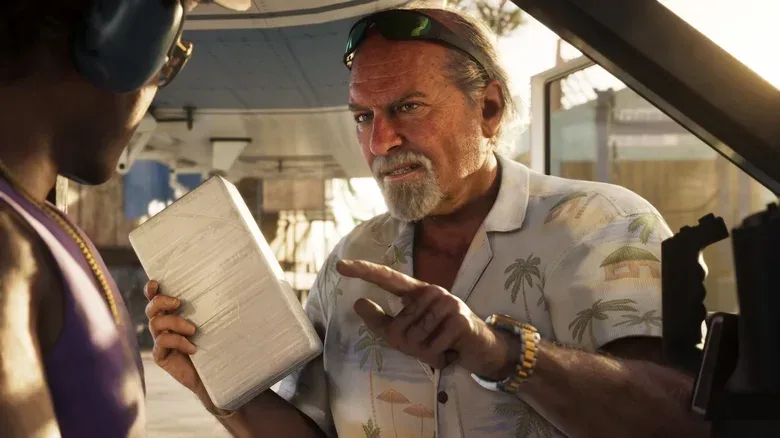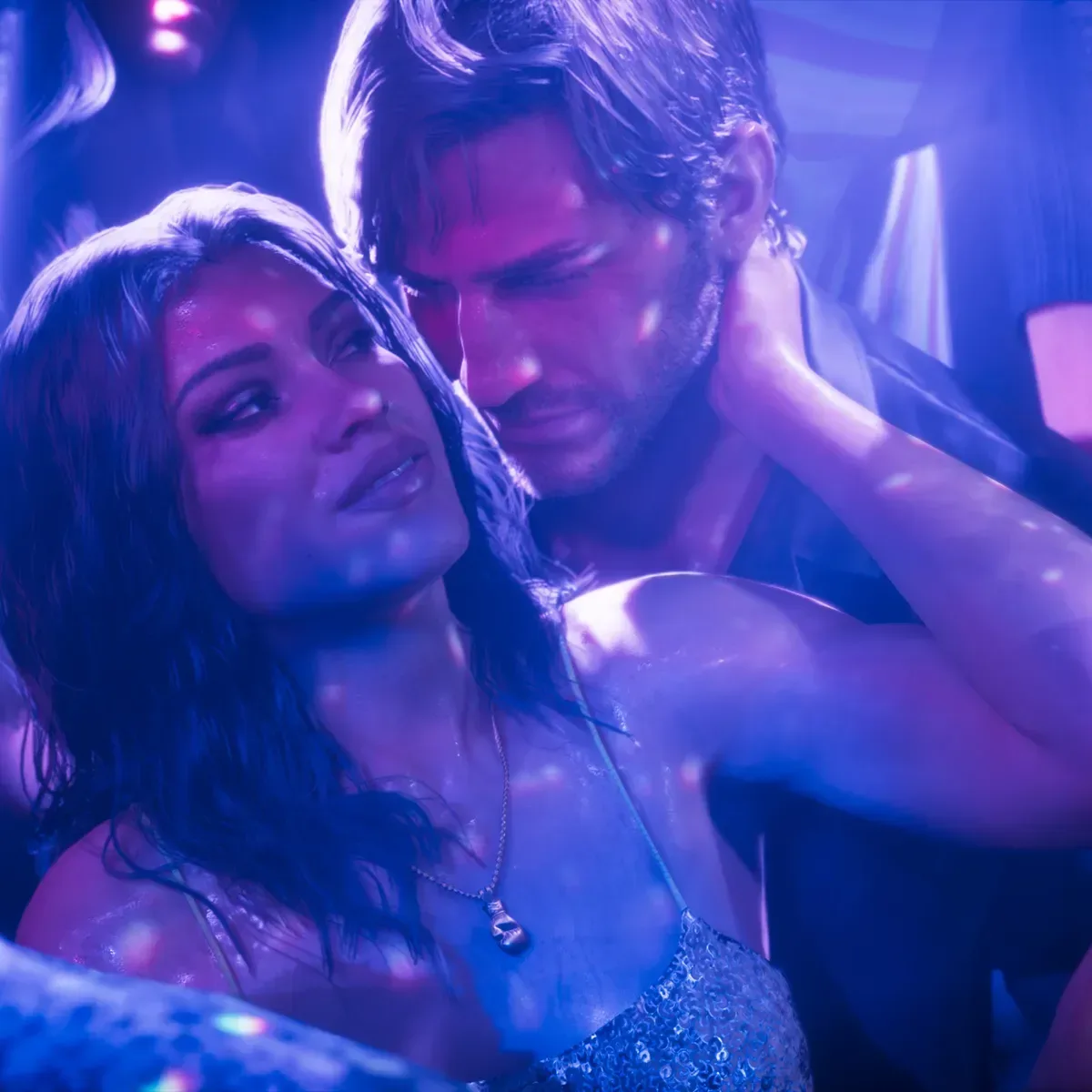
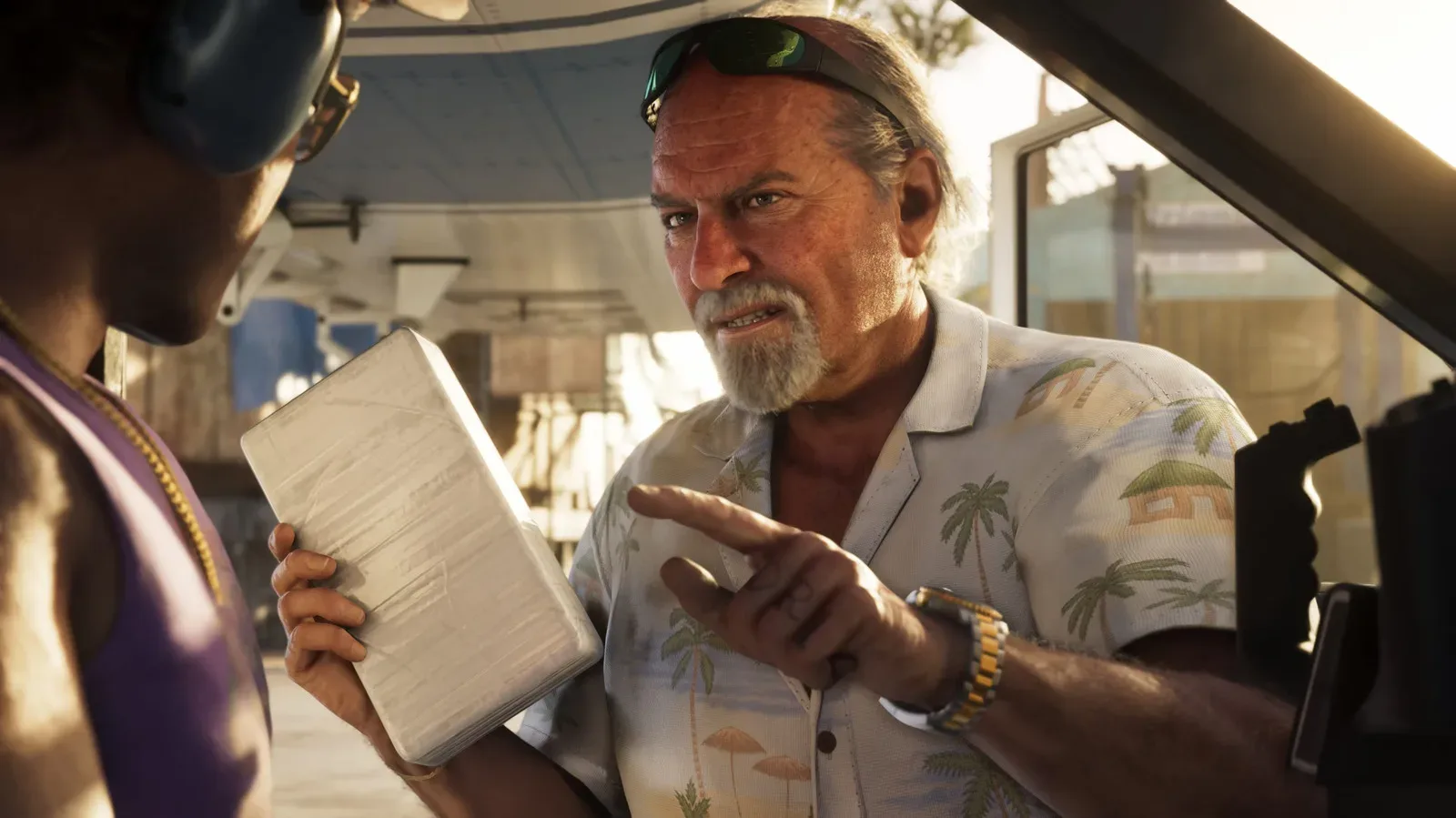
Grand Theft Auto 6 will remain a 30-frames-per-second game on its launch consoles, and Rockstar has closed off the most common hope attached to that limitation: a later 40 FPS or 60 FPS performance patch. That applies to the PlayStation 5, PlayStation 5 Pro and Xbox Series hardware named for the game’s console release.
The important part is not simply that the game has a cap. It is why. Rockstar technology production director Marc Chambers attributes the limit to the CPU workload required by GTA 6’s complex Vice City simulation. That distinction changes the usual console-performance conversation. A lower resolution, less demanding ray tracing, or a clever upscaling mode can sometimes create room for a higher frame-rate option when graphics processing is the constraint. Rockstar’s explanation is that GTA 6 is constrained elsewhere.
In short: PS5 Pro can make GTA 6 look cleaner, but its comparatively modest CPU advantage over the standard PS5 does not create enough headroom for the simulation to run at 40 or 60 FPS. For players waiting to see whether a menu patch might solve the issue, that is a much more definitive answer than a launch-day technical compromise.
Why CPU limits are different from GPU limits
A game’s GPU, or graphics processing unit, is responsible for producing the image: rendering geometry, lighting, shadows, effects and the pixels that reach the display. A CPU, or central processing unit, handles a broad range of game logic and system work. In a huge open-world game, that can include simulation work for crowds, vehicles, wildlife, world activity and other systems that must be updated while the player moves through the city.
Frame rate is a deadline as much as it is a number. At 30 FPS, a game has roughly 33.3 milliseconds to finish each frame. At 60 FPS, that budget is cut to roughly 16.7 milliseconds. A 40 FPS mode sits between them at 25 milliseconds per frame. If the CPU cannot finish its work within those shorter windows, dropping image resolution will not necessarily make the game run faster. The CPU is still facing the same simulation deadline.
That is the practical meaning of Rockstar’s position. The bottleneck is not presented as a matter of the game rendering too many pixels or applying one visual effect too many. It is the cost of maintaining the game world at a more frequent update rate. Turning down a graphics feature could lower GPU pressure, but it would not automatically reduce the CPU work Rockstar says is already preventing higher frame rates.
It also explains why the prospect of a 40 FPS option is included in the answer, rather than leaving it as a possible compromise. A 40 FPS setting is often discussed as a middle route because it offers a meaningful responsiveness improvement over 30 FPS without requiring the full leap to 60. Rockstar’s confirmation says it is not planned for GTA 6’s launch-console versions either.
What PS5 Pro does improve
The absence of a higher frame-rate mode does not mean the PS5 Pro version is identical to the standard PS5 version. Rockstar says the upgraded console’s stronger graphics hardware and upscaling technology improve the presentation, adding ray-traced shadows and improving image clarity alongside the base game’s ray-traced reflections and lighting.
Related coverage includes GTA 6 Will Stay at 30 FPS on PS5, PS5 Pro and Xbox Series Consoles.
Ray tracing is a rendering technique that models aspects of how light behaves to produce effects such as reflections, lighting and shadows. It can be visually expensive. However, Rockstar’s CPU explanation means that treating ray tracing as a simple on/off path to 60 FPS would be misleading in this case. Even if reducing such effects eases graphics rendering, the stated obstacle remains simulation performance.
The PS5 Pro also uses PSSR, Sony’s upscaling technology. Upscaling means a game renders at one resolution and uses processing to present an image that appears sharper at a higher output resolution. Testing cited in the available technical reporting indicates that both PS5 models render GTA 6 at 1440p. On PS5 Pro, PSSR produces an image approaching a clean 4K presentation, while the base PS5 appears noticeably softer.
That makes the Pro proposition unusually clear. It is a visual-presentation upgrade rather than a performance-mode upgrade. Players choosing between Sony’s two consoles should not expect the more expensive hardware to transform GTA 6 into a 60 FPS experience. They can, however, expect clearer output and enhanced ray-traced shadows, based on the details Rockstar has provided.
Consistency may be the PS5 Pro advantage that matters most
There is another benefit besides sharper image quality: steadiness. Technical analysis cited for the game reports a locked 30 FPS with perfect frame pacing on PS5 Pro. The standard PS5 largely maintains 30 FPS, but can fall into the mid-20s during extended sequences involving heavy explosions.
Frame pacing describes how evenly frames arrive. A game can average its intended frame rate while still feeling uneven if the time between individual frames varies noticeably. At a 30 FPS target, consistently delivering frames at the expected intervals can feel smoother than fluctuating around that target. This is why “locked 30” is more meaningful than simply seeing 30 FPS as a line on a specification sheet.
For GTA 6, then, the difference is not just a question of a screenshot’s sharpness. During the most demanding action, the Pro may provide a more consistent cadence, while the standard PS5 can encounter more visible performance pressure. That does not make either version a higher-frame-rate edition, but it does identify a tangible benefit for players particularly sensitive to dips and uneven motion.
What this means for buying decisions
The announcement provides a straightforward expectation to set before buying hardware for GTA 6. A PS5 Pro should not be purchased on the assumption that a future 60 FPS patch will unlock a mode unavailable on the base PS5. Rockstar has said no 60 FPS mode, or even 40 FPS mode, is coming to any launch console.
Instead, the decision comes down to priorities. Players who value a cleaner image, additional ray-traced shadows and the strongest reported 30 FPS consistency on a Sony console have a reason to consider PS5 Pro. Players satisfied with the softer presentation of the standard PS5 should understand that it remains aimed at the same 30 FPS target, though demanding explosive scenes can dip below it. The supplied information does not establish equivalent image-quality or frame-pacing comparisons for Xbox Series X|S, so broad cross-platform conclusions would go beyond what has been confirmed.
Xbox One owners have a separate route through cloud streaming. That expands where GTA 6 can be accessed, but it does not change Rockstar’s position on the native launch-console performance modes. Streaming also should not be confused with a local 60 FPS version; no such mode has been announced for the listed consoles.
For the larger GTA 6 picture, see our coverage of the game’s opening-hours streaming audience.
PC remains unannounced, not promised
It is tempting to turn the console news into a guarantee that PC will eventually provide the desired 60 FPS route. Rockstar has not announced a PC port. There is no confirmed platform date, feature list or performance target for a PC version in the information available here.
A future PC release could eventually offer hardware configurations and settings beyond the fixed console designs, but that is analysis rather than a current product commitment. CPU-heavy simulation can remain demanding on PC as well; simply calling something a PC port does not establish what frame rates it will achieve. Until Rockstar announces it, PC should be treated as an unconfirmed possibility, not an alternative that players can plan around.
The trade-off Rockstar is making
The technical reporting characterizes GTA 6 as a landmark in visual realism, while recognizing the responsiveness trade-off inherent to 30 FPS. Rockstar’s CPU explanation adds an important layer: the trade-off is tied to the density and complexity of the running world, not only to the game’s lighting and resolution choices.
That will not make 30 FPS preferable for every player. Higher frame rates can improve perceived motion clarity and controller response, especially in fast driving and combat. But the company is framing GTA 6’s launch-console design around simulation and image quality within a 30 FPS budget. The PS5 Pro shifts the balance toward a crisper, more stable version of that design, not a fundamentally different performance tier.
The practical takeaway is simple. GTA 6’s console debate is no longer about waiting for an inevitable performance switch. On current launch hardware, Rockstar’s answer is 30 FPS. The remaining choice is which version of that 30 FPS presentation best fits a player’s priorities.