Grand Theft Auto VI’s relationship system is arriving with an unusually real-world side quest attached: figuring out whether a partner is comfortable with it. A September survey of 4,000 British adults found that 6% would consider dating in a video game to be cheating. Another 19% said they would not use that label, but still would not be okay with it.
That does not mean a quarter of adults see a virtual kiss as identical to a real-life affair. The distinction in the answers matters. But it does show that, for a noticeable minority, the question is not simply whether a game character is “real.” It is about what a player chooses to do, the fantasy they are spending time on, and the boundaries a couple has already set.
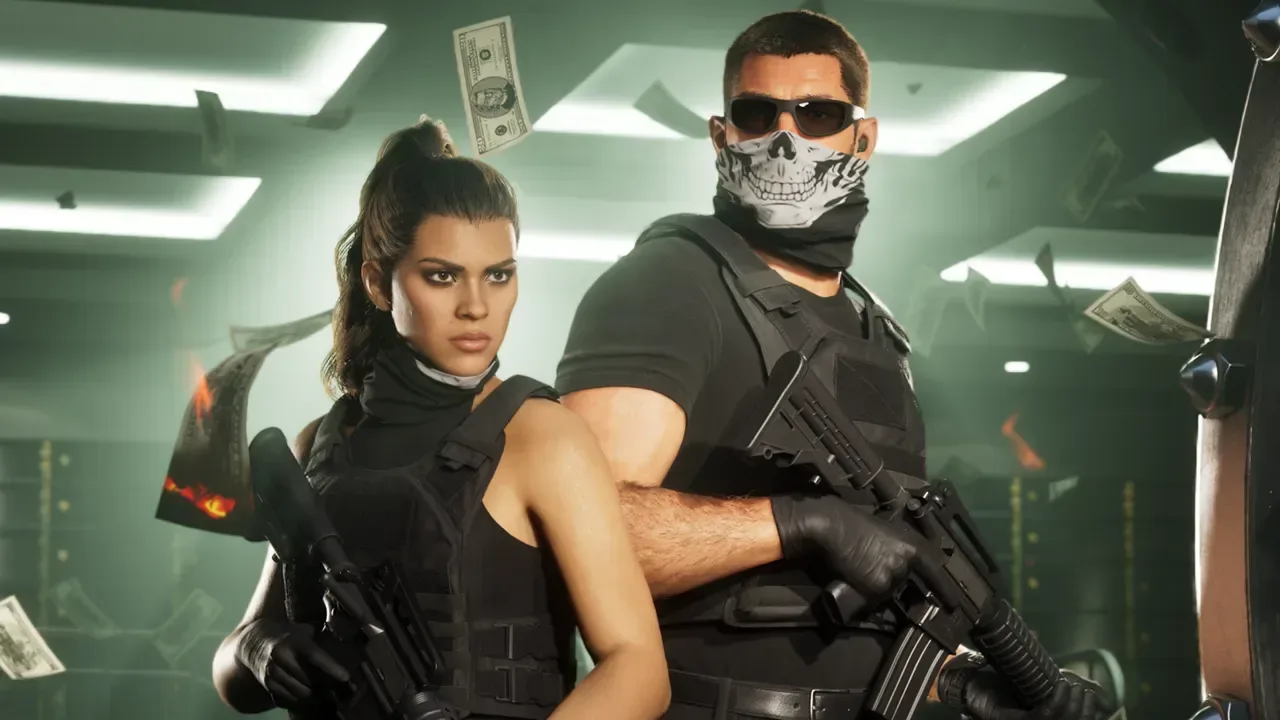
That debate has landed just as GTA 6 prepares for its November release. The game centers on dual protagonists Jason and Lucia, whose relationship can develop through player involvement. Previews and promotional material have indicated that players can have the pair kiss, walk hand-in-hand, go on dates such as beach outings and shopping trips, and influence the relationship by responding promptly to messages on their in-game phones.
In other words, this is not merely background dialogue between two fixed characters. It is an optional relationship mechanic: a game system where player actions affect the state or presentation of a fictional relationship.
The poll numbers, and what they actually say
The broad figures are striking enough on their own. Among the British adults surveyed, 6% said video-game dating counts as cheating. A further 19% did not define it as cheating but said they would still be unhappy with it.
The results also differed by gender. Four percent of men surveyed said they would consider it cheating, compared with 7% of women. In the separate “not cheating, but not okay” group, 13% of men gave that answer, alongside 24% of women.
Those categories should not be collapsed into one claim. Someone who says an activity makes them uncomfortable may be expressing a personal preference, asking for consideration, or drawing a relationship boundary. Someone who calls it cheating is applying a much stronger term: a breach of exclusivity or trust. The survey captures attitudes, not a universal rulebook for relationships.
It also does not establish why each person answered as they did. The available figures cannot tell us whether respondents were thinking about a brief dialogue choice, an extended role-playing routine, sexual content, secrecy, time spent away from a partner, or some combination of all of those. That ambiguity is central to why online arguments over the subject tend to generate more heat than clarity.
Related coverage includes GTA 6's Romance Mechanics Reignite Debate Over Video Game 'Cheating'.
Why GTA 6 has become the immediate flashpoint
Players have pursued romances, marriages and domestic storylines in games for years. The Sims came up repeatedly in the backlash to the framing of the poll, because it has long let players create households, marry, raise children, follow careers and build homes. The obvious response from many players was that role-playing a relationship is a standard fictional activity, not a real-world betrayal.
GTA 6 has nevertheless invited renewed attention because Jason and Lucia are not just player-made avatars dropped into a life simulator. They are the story’s central duo, presented as a Bonnie-and-Clyde-style pairing whose bond forms part of the game’s dramatic premise. The mechanic therefore has a more authored, cinematic feel than a detached optional flirtation with a side character.
Its visibility matters, too. The launch trailer included intimate shower scenes, while screenshots and previews have highlighted affectionate interactions and date-like activities. When a system is shown this prominently before release, it is easier for audiences to imagine it as a large part of the game, whether or not they plan to use it themselves.
Earlier social-media discussion in August had already featured some spouses and partners describing the anticipated system as grounds for conflict or even a breakup. Some posts argued that the mechanic would be so detailed that it crossed a line, while others said they did not want their partner playing the game. Those posts demonstrate that the concern exists; they do not demonstrate how common such disputes will be among players generally.
Optional does not mean irrelevant—but it does change the conversation
Rockstar has said players do not have to actively pursue Jason and Lucia’s romance. The pair begin with an interest in one another, but the player determines how fully that connection is cultivated. If the player does not invest in it, they will be less romantically devoted while still supporting each other at pivotal moments. Choosing to build them into a stronger couple is expected to offer more of the game’s relationship content.
That design choice gives players an important practical distinction. A relationship mechanic can be optional in two ways: it can be avoidable, and it can have consequences for how much content a player sees. GTA 6 appears to offer both. Avoiding romantic activities does not erase Jason and Lucia’s narrative partnership, but it may mean seeing less of the more affectionate version of their dynamic.
For couples who anticipate a disagreement, that is useful information. The discussion does not have to be framed as “play the entire game or do not play it.” It can be more precise: Are certain interactions okay? Is the concern about sexualized scenes, repeated role-play, or the prospect of hiding it? Is the issue the mechanic itself, or the amount of attention it receives?
Clear questions are better than trying to win an abstract argument over whether pixels can be unfaithful. Fictional characters cannot consent, feel betrayal or enter into a reciprocal relationship with the player. But real partners can have feelings about another person’s choices, including fictional ones. Those are separate propositions, and treating them as identical is where the conversation often gets stuck.
What “stewardship” suggests about the design
Rockstar North co-studio head Rob Nelson has described the intended feeling as one of caring for Jason and Lucia together. His explanation emphasizes their shared play: getting into trouble, fleeing police, getting into a car and waiting for one another. The aim is not only a sequence of romance animations; it is a sense that players are looking after a unit.
That is a useful technical and narrative framing. In games, a relationship system can mean several things at once: dialogue branches, activity choices, an approval value that changes in response to actions, scripted scenes, or simply a changing emotional tone in the story. The details publicly described for GTA 6 point toward a system where communication and shared activities shape how the protagonists’ connection is expressed.
It does not follow that every interaction will be a morality test, or that players are being asked to simulate a real partnership. The available information supports a narrower reading: Rockstar is using player participation to give different shades to the relationship at the heart of its crime story.
That distinction may not persuade everyone who dislikes romance mechanics. Nor does it need to. People can reasonably decide that certain fictional material is not for them, just as they can skip violent or frightening content. The stronger claim—that all players who engage with it are cheating—goes beyond what the game’s optional, fictional premise alone can establish.
A small survey result with a useful practical takeaway
The survey is most useful as evidence that the discomfort is not limited to a few viral posts. Six percent is a minority, and 19% more expressing disapproval without using the word “cheating” is still not a consensus. Yet both figures show that audiences bring personal expectations into games, particularly when games make room for romantic agency.
For players, the sensible response is less dramatic than the headline debate. If GTA 6’s Jason-and-Lucia material is likely to bother someone in a relationship, talk about it before assuming the other person’s view is obvious. Recognize that “I would rather you not” and “this is cheating” are different statements, then decide what consideration looks like for that relationship.
For everyone else, the game’s structure leaves room to focus on its central duo as allies without aggressively pursuing the romantic side. GTA 6 may be set to make dating systems a major talking point, but it also appears built to let players choose how much of that particular conversation they want to bring into their playthrough.
As the game approaches, GTA 6 is far from the only gaming story attracting attention; recent discussion has also followed Saros Zenith’s New Game+ and boss-rush update. But Jason and Lucia’s evolving partnership may be the rare feature that sparks debates both about game design and about household boundaries before players even reach the starting line.