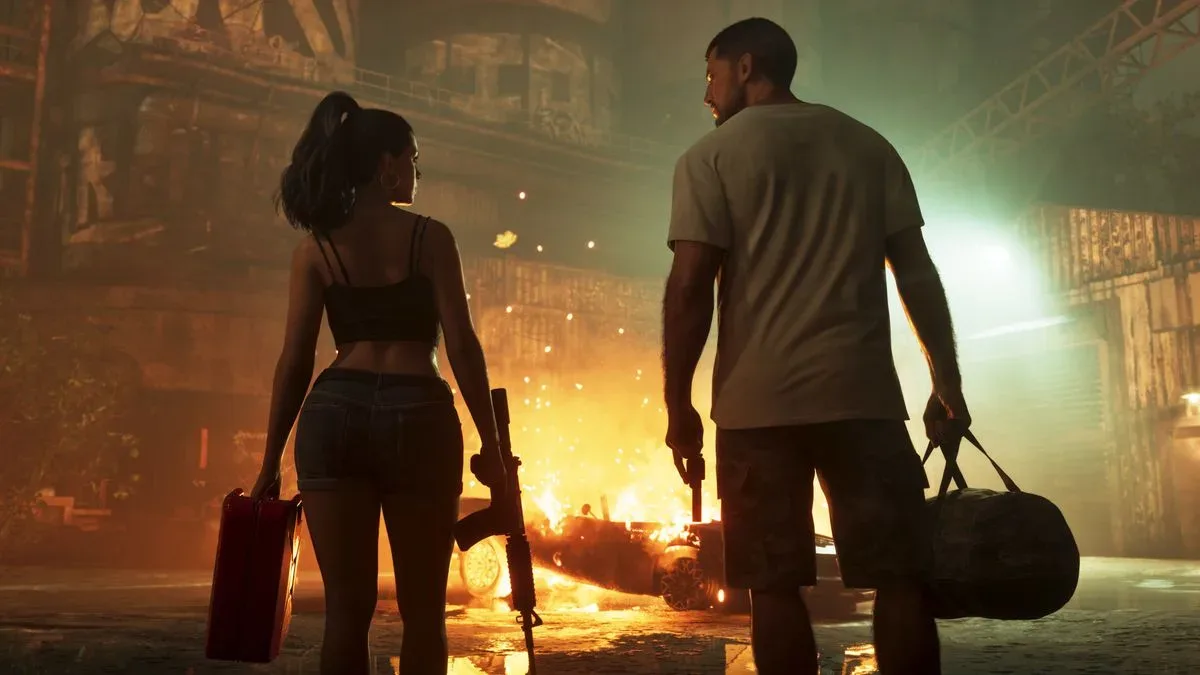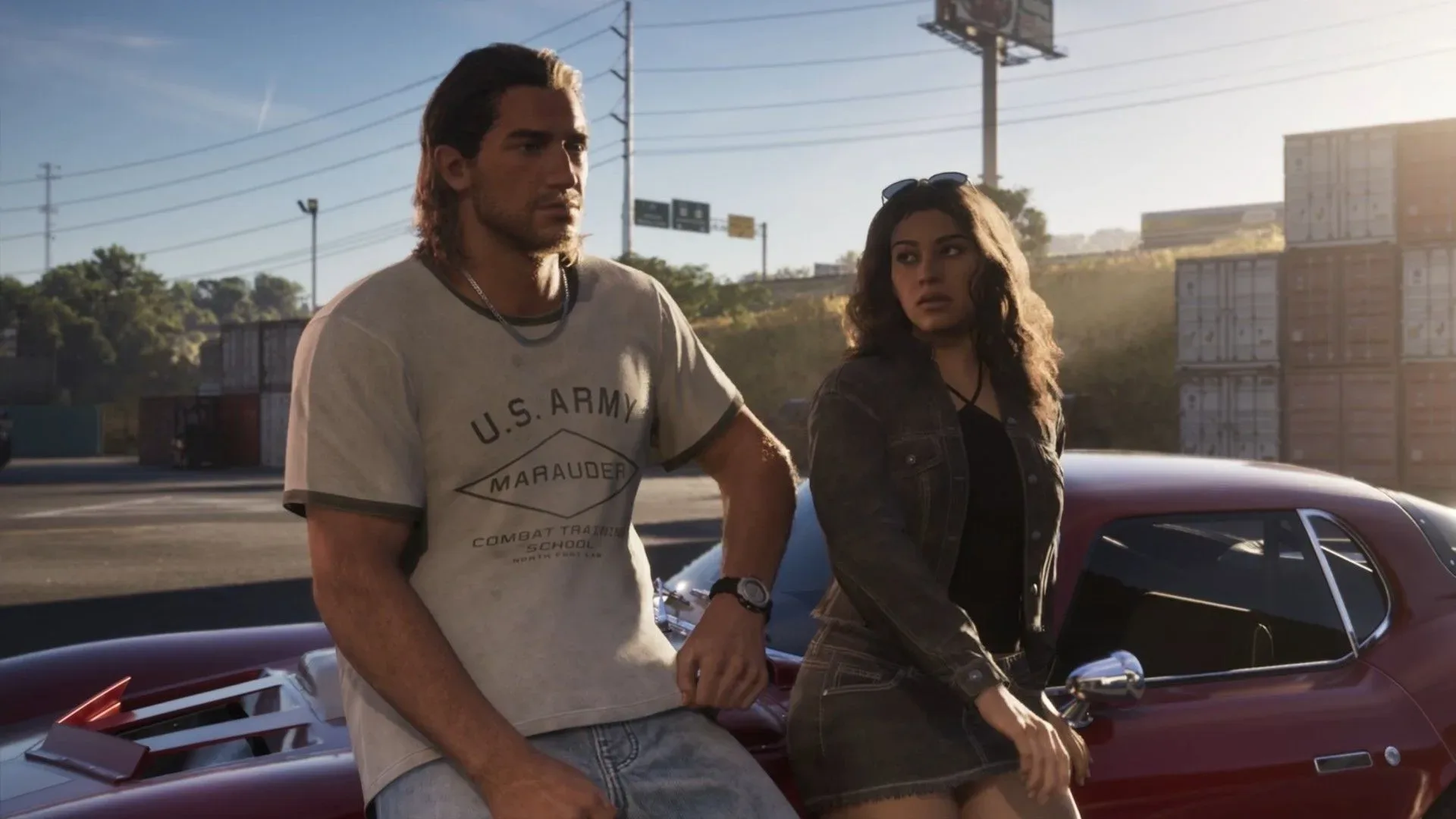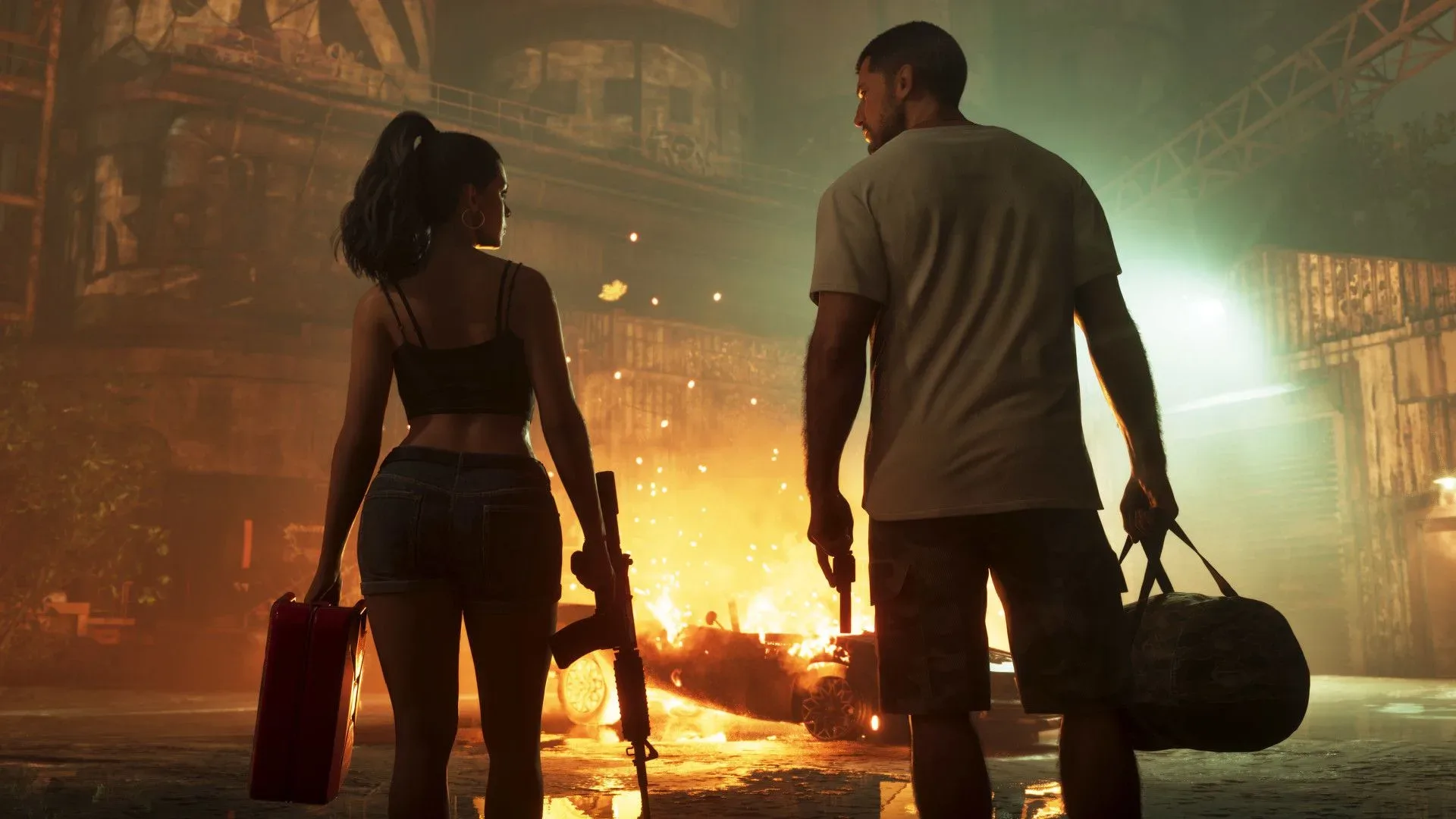
Grand Theft Auto 6 is set to give players meaningful latitude over the relationship between its two protagonists, Jason and Lucia. Their connection begins with both characters wanting to try again, but its eventual direction is not presented as fixed. Players may steer the pair toward romance, keep them operating strictly as partners in crime, or potentially see a relationship deteriorate and end.
That is a notable framing for a game built around two central characters. Rather than treating a romance as a non-negotiable story beat, the reported design puts the future of the couple in the player’s hands. Rob Nelson, co-studio head and lead developer, described the relationship as something the player can either preserve or lose as the game progresses.
“We start them wanting to be together, and wanting to give this relationship of theirs another shot. But, as the game progresses, it’s yours to keep or yours to lose.”
The important qualifier is that this does not necessarily mean every player decision will produce an immediate, dramatic romantic branch. What has been described is a broader relationship dynamic: actions such as holding hands can move Jason and Lucia closer, while repeatedly failing to respond to late-night calls from a partner can create strain. Specific requirements, thresholds, long-term consequences and the full range of possible outcomes have not been detailed.
For more context, explore AI-Assisted Software Clones Put Adobe-Style Subscriptions—and Game Decompilation—Under Fresh Pressure.
A relationship system rather than a mandatory romance
In game-design terms, the approach sounds less like a single binary selection and more like an ongoing relationship system. That phrase generally refers to mechanics that track a character bond over time through actions, interactions or choices. Here, the supplied examples point to intimate and communicative behavior being part of that process.
The distinction matters. A mandatory romance asks the player to accept a predefined emotional arc. A relationship system instead allows behavior during play to support, neglect or redefine that arc. Jason and Lucia can apparently remain connected as collaborators without becoming an on-screen couple, offering room for players who are more interested in their criminal partnership than their personal life.
It also means that a breakup would not simply be a decorative dialogue option detached from the rest of the game’s character work. If the system performs as described, the separation would be an expression of choices made over time. Ignored calls are a particularly clear example because they turn a routine, small-scale interaction into a possible signal of neglect. That creates a potential contrast with the explosive missions associated with Grand Theft Auto: the characters’ private lives can be influenced by what the player does between the headline-making moments.
Related coverage includes GTA 6 Will Let Players Decide Whether Jason and Lucia Stay Together.
For players, the practical implication is straightforward: those who want Jason and Lucia to stay close may need to treat ordinary social interactions as meaningful, while those who prefer distance may be able to pursue that outcome through their conduct. Until more specifics are available, though, it would be premature to assume that every optional activity or missed call has the same weight, or that any one action guarantees a particular ending.
The characters are meant to want things beyond the player
Nelson’s explanation places the relationship mechanic within a wider narrative idea: Jason and Lucia should have an inner life that is not entirely overridden by player wish fulfillment. He acknowledged that games can be read as power fantasies, then posed a different creative question: what happens when the protagonists themselves want something else?
Interiority is the useful term here. In storytelling, it means the sense that a character possesses personal feelings, motives and conflicts. A player character can still be controlled by the audience while retaining that sense of independent identity. The player chooses what to do, but the game’s writing and systems can make choices feel as if they are affecting someone with established desires rather than an empty avatar.
That balance is especially relevant in an open-world series, where players often have a huge degree of freedom. Giving Jason and Lucia recognizable wants could make the story’s relationship choices feel less like a menu of rewards and more like decisions that affect two people with their own stakes in the outcome. The reported premise establishes that they initially want another chance together; the player’s role is not to invent that starting point, but to decide what becomes of it.
There is a built-in tension in that setup. Players may choose to make Jason and Lucia affectionate, distant or divided, yet the characters are still designed to be more than blank vessels. The success of the idea will depend on whether their reactions feel consistent with the personalities the game establishes. A consequence is more persuasive when it seems connected to who the characters are, rather than appearing only because a hidden meter changed.
Arthur Morgan’s influence on the idea
The roots of this design philosophy were traced back to Red Dead Redemption 2 and its protagonist, Arthur Morgan. Nelson described a question at the heart of that earlier game: after acquiring money, should Arthur spend it on himself—such as outfits, horses and saddles—or contribute it to the gang he regards as family?
That is an example of a diegetic choice: a decision made through something that exists inside the game world, rather than through an abstract morality prompt. Money is already a familiar open-world resource. Making the player think about where it goes can connect economy, role-playing and character. The decision is not only “do good or bad” in a detached sense; it is also “what kind of person is Arthur when he has resources?”
Nelson characterized Arthur’s conflict as one of selfishness versus selflessness, and the goal was for that tension to follow the character outside cutscenes. In other words, Arthur was intended to remain Arthur during free-roaming play, not only during carefully scripted narrative scenes.
That principle appears to carry over to Jason and Lucia. Their relationship is not limited to a scene where the story pauses and asks players to select a response. Small activities and communications can reportedly shape the push and pull between them. If Arthur’s money choices made players weigh personal indulgence against the needs of his adopted family, Jason and Lucia’s interactions may ask players to weigh attention, intimacy and commitment against whatever else they choose to do in the wider world.
Why this could matter in a large open world
Open-world games face a familiar storytelling problem: players can spend long stretches pursuing diversions, accumulating money or exploring, while the main narrative waits. A relationship mechanic tied to optional, everyday behavior could make that freedom narratively relevant. The world remains open, but the time and attention given to another character may become part of the story rather than an entirely separate layer.
That does not mean every act of free-roaming has to be romantic or emotionally charged. On the contrary, the reported ability to keep Jason and Lucia as criminal partners is a significant part of the appeal. Choice is meaningful precisely because players are not all being pushed toward the same ideal result. One player may see an attempted reconciliation succeed; another may maintain professional loyalty without romance; another may allow the pair to come apart.
The system could also give repeat playthroughs a more personal dimension if the different states substantially affect scenes, interactions or character dynamics. However, that is analysis rather than a confirmed feature list. There has been no supplied detail on branching missions, alternate finales, relationship meters, interface indicators, or whether all relationship outcomes reshape the larger plot. Players should therefore separate the confirmed broad premise—choice over the couple’s direction—from assumptions about the scale of its narrative consequences.
What is confirmed, and what remains unclear
The clearest reported points are that Jason and Lucia begin by wanting to give their relationship another chance; players can influence whether the pair become or remain romantic; they may also remain partners in crime; and a romance can end. Holding hands was cited as a way to draw them together, while ignoring too many late-night calls may damage the relationship.
Still unknown are the exact mechanics behind those outcomes. There is no supplied information on whether the game openly displays relationship status, whether a breakup can be reversed, how much content changes by path, or whether either character can pursue other relationships. There is also no detail on whether choices are tracked through a single score, a set of narrative flags, or a more complex system.
For now, the strongest takeaway is not that Grand Theft Auto 6 will turn into a conventional dating game. It is that the game’s central duo may be written as a relationship players actively inhabit and influence. The potential to protect, redefine or break that bond is presented as an extension of Rockstar’s effort to let player-controlled characters retain their own motives and conflicts—even when players are off the beaten path.