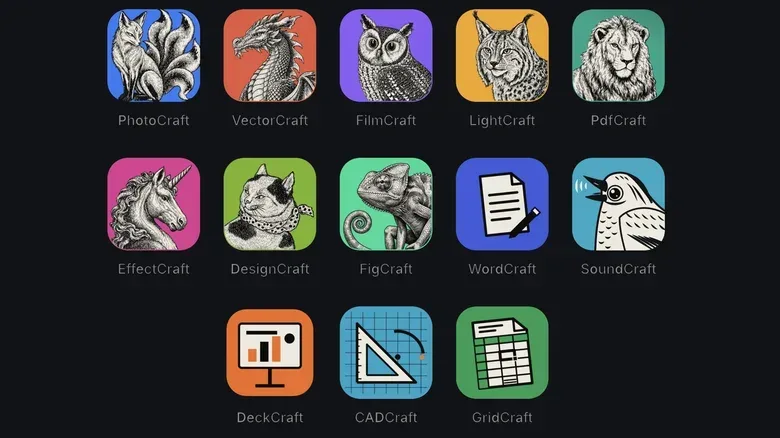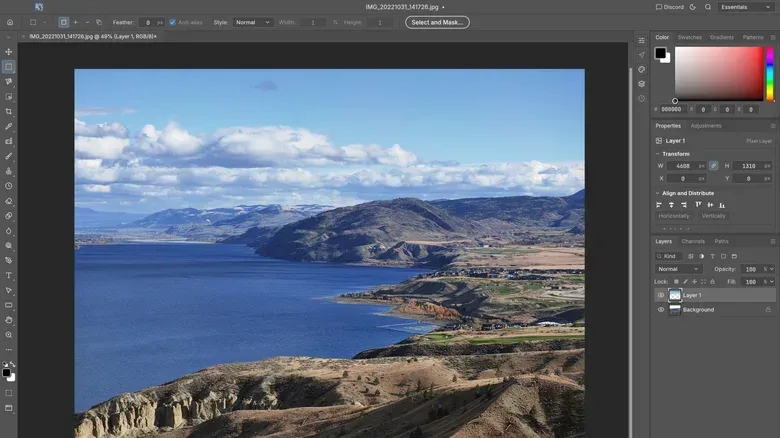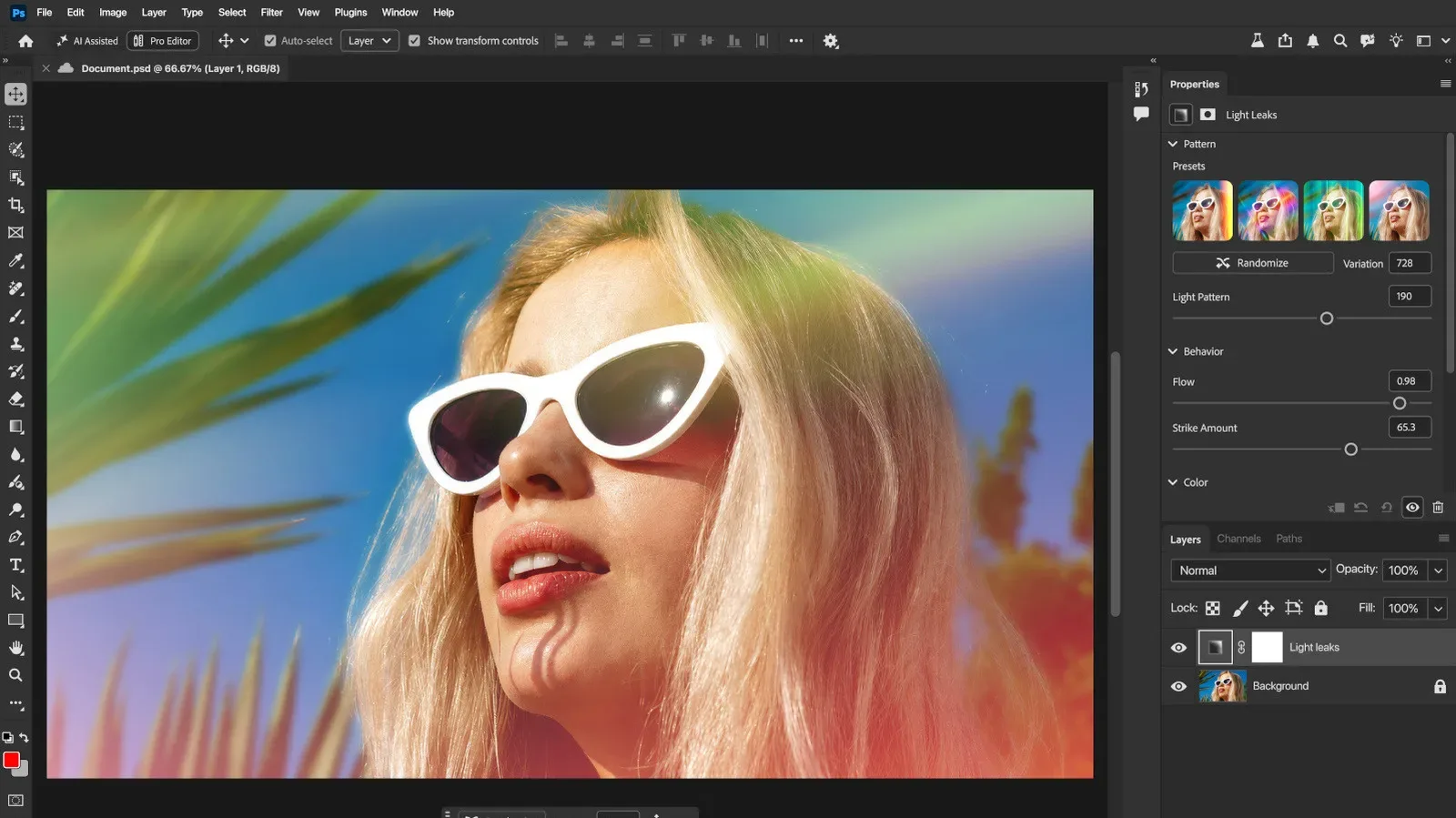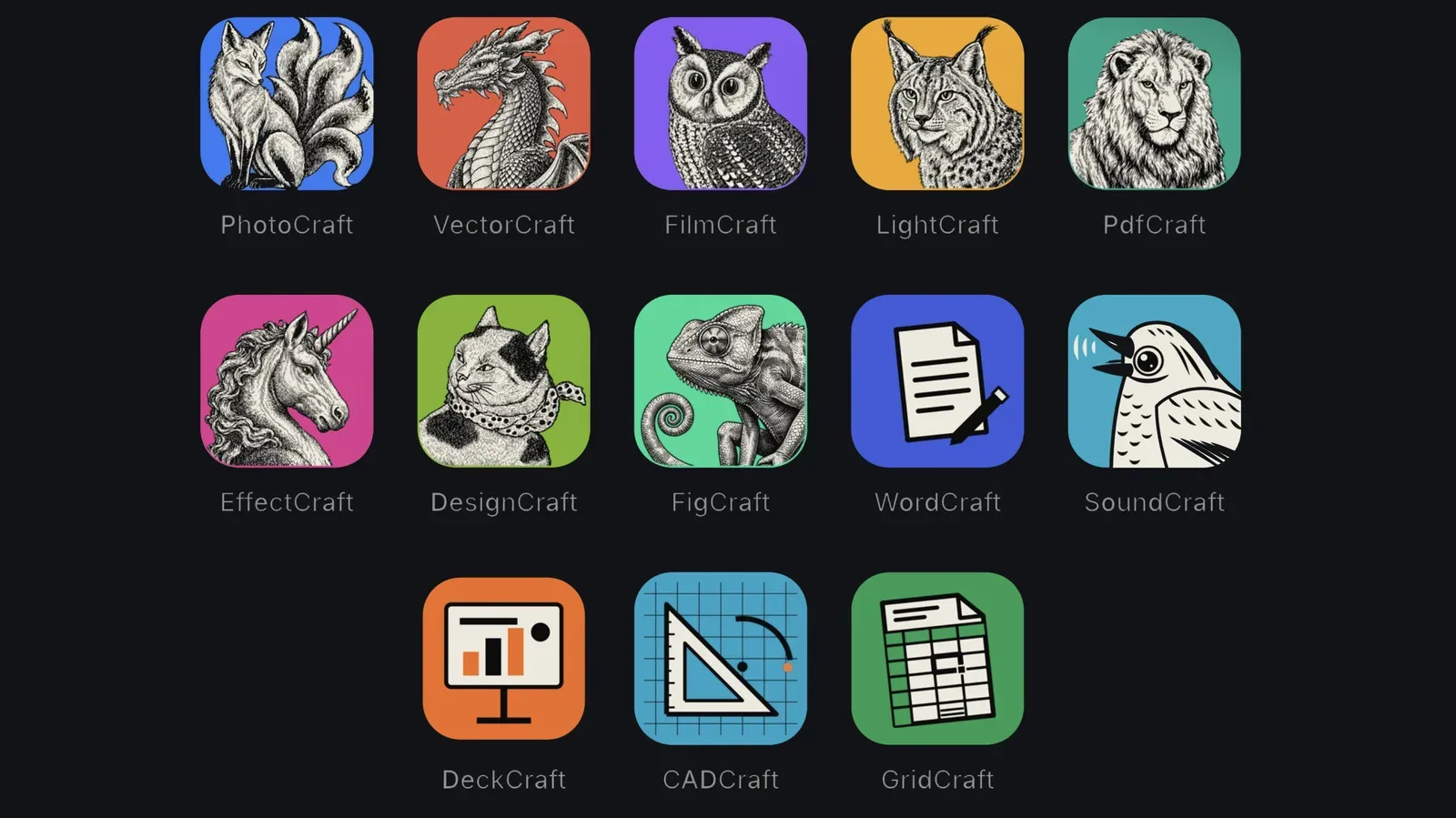
AI-assisted coding is moving from making small utilities and prototypes toward a far more provocative task: rebuilding established commercial software without access to its original source code. A project called Artcraft has become a high-profile example, with developer Brandon Thomas and collaborators releasing open-source tools intended to mirror major Creative Cloud applications. Its Photoshop-like editor, Photocraft, is pitched as free software with no subscription, source code users can own and modify, and an interface deliberately familiar to long-time Adobe customers.
That combination is the point. Free image, photo and video-editing alternatives have long existed, including GIMP, Darktable and DaVinci Resolve. The hard part has not simply been providing a cheaper tool. It has been convincing people to leave workflows they have learned over years. Artcraft’s apparent wager is that AI can make imitation of a familiar workflow fast enough to turn that habit into a competitive weakness for subscription software.
For players and preservation-minded PC users, there is a second reason to pay attention. The same broad push toward AI-assisted reverse engineering is reaching games, firmware and older software. Full decompilations have recently been reported for Tiger Woods PGA Tour 2004, Final Fantasy Tactics Advance and Metroid Prime. That does not make every decompilation lawful, stable or usable, but it does signal a changing technical landscape around understanding closed programs.
Artcraft’s pitch is familiarity, not merely a free price tag
Thomas said the project was partly motivated by frustration with Adobe’s cancellation-fee practices, describing those practices as a dark pattern. A dark pattern is a design or business practice that nudges people toward choices that may not be in their interest, such as making an exit, cancellation or account change harder than it needs to be. Whether users agree with that characterization or not, dissatisfaction with recurring software bills is clearly part of Artcraft’s appeal.
The team says it used Claude Opus 5.5 to reverse engineer the behavior and structure of Creative Cloud applications, then created clean-room versions in Rust. In this context, reverse engineering means examining how a finished program behaves or is organized in order to understand and recreate functionality without using its original source code. A clean-room implementation generally describes a separate re-creation intended to avoid copying the original code directly. Artcraft says it did not use any Adobe code.
Rust is a programming language increasingly associated with performance and memory-safety goals. Thomas has claimed the new applications are more performant than the originals. That is a claim from the developer, rather than an independently established comparison, and performance alone would not settle whether the tools meet professional needs.
What makes Photocraft notable is its pursuit of a near one-to-one visual and control layout. The familiar placement of menus and controls can matter enormously. A person who has spent years using keyboard shortcuts, panels, selections, layers and adjustment tools has accumulated muscle memory. The cost of replacing that knowledge—often called switching cost—can outweigh the savings of a free alternative. Software makers do not only compete on their feature lists; they compete on the time it takes to become productive.
Reportedly, Photocraft currently covers fundamentals such as resizing, masking and color adjustments. Its interface may therefore be enough for some people handling ordinary edits. But it lacks AI and other advanced capabilities, making it difficult to position as a universal replacement. “Good enough” is potentially meaningful for a hobbyist or casual editor, yet it is a much higher bar for teams whose jobs depend on specialized features, predictable output and dependable collaboration.
The unglamorous problems may matter more than the clone demo
New software can look remarkably convincing while still failing at the details that determine whether anyone can trust it with important work. Reports around Photocraft have included instability, unexpected layer merging and, most seriously, deleted images. There is also a major compatibility gap: it reportedly cannot open native PSD files. PSD is Photoshop’s native document format, and for existing customers it can contain years of layered projects, reusable assets and work shared across a studio or client relationship.
That limitation illustrates why cloning an interface and cloning an ecosystem are different challenges. A tool can reproduce visible commands without necessarily matching every file behavior, edge case, workflow expectation or advanced feature. For a user beginning a disposable personal project, that distinction may be tolerable. For someone opening irreplaceable artwork or a client deliverable, it can be a deal-breaker.
Practical caution is especially sensible with early open-source projects that have reports of destructive bugs:
- Keep original files unchanged and work on copies.
- Use noncritical test projects before placing a new editor in a regular workflow.
- Confirm whether important native formats can be opened, saved and reopened correctly.
- Check that layers, masks and color-related adjustments survive a round trip before trusting an export.
- Maintain backups independently of any one application.
These are not unique concerns for AI-generated code. All young software can have bugs. But rapid AI-assisted construction changes the scale of the concern: a project can reach a plausible-looking state quickly, potentially before its design, testing and maintenance practices have caught up.
REA suggests the technique is becoming more accessible
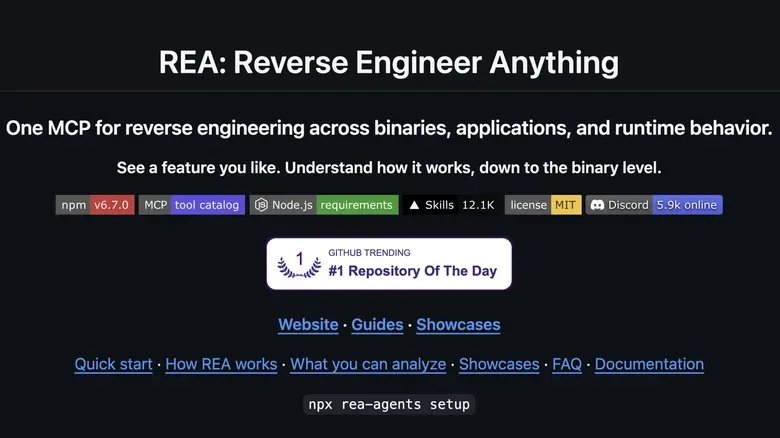
Artcraft is not the only project pointing in this direction. REA, short for Reverse Engineer Anything, has attracted substantial attention, recording 87,000 forks and 346,000 stars as of October 20. On software-hosting platforms, a star is generally a sign of interest or bookmarking, while a fork is a copy of a project that can be developed independently. Neither figure proves quality, legality or reliability, but both show considerable attention.
REA describes its function as inspecting an application without source code, explaining how a feature works, presenting evidence and building a version for another project. In plain language, tools in this category aim to automate portions of a job that traditionally demanded a great deal of technical labor: observe the target, infer its structure and behavior, then translate that understanding into new code.
The possible targets extend beyond desktop and smartphone applications. The same techniques can be directed toward firmware in consumer hardware such as televisions, refrigerators, musical instruments and smart frames. Firmware is the low-level software that helps a device operate. That breadth makes the trend larger than a dispute over photo-editing subscriptions. It could affect repair, customization, interoperability and preservation—but also introduce fresh opportunities for misuse and conflict.
Why game communities should watch the decompilation angle
Game decompilation is not the same thing as emulation. Emulation recreates the behavior of hardware or a system environment so software designed for that hardware can run elsewhere. Decompilation tries to translate a compiled program back into a more understandable code-like representation, or otherwise reconstruct its logic. Both are relevant to preservation and compatibility work, but they tackle different layers of the problem.
The reported decompilations of older games show that reverse-engineering communities have already spent years doing painstaking work. AI tools could accelerate parts of that process, especially the repetitive analysis and reconstruction tasks. They could also flood projects with code that appears productive but is difficult to verify, maintain or integrate. A community dedicated to human-led game reverse engineering, decomp.dev, has said it is shutting down amid the influx of AI-driven decompilation.
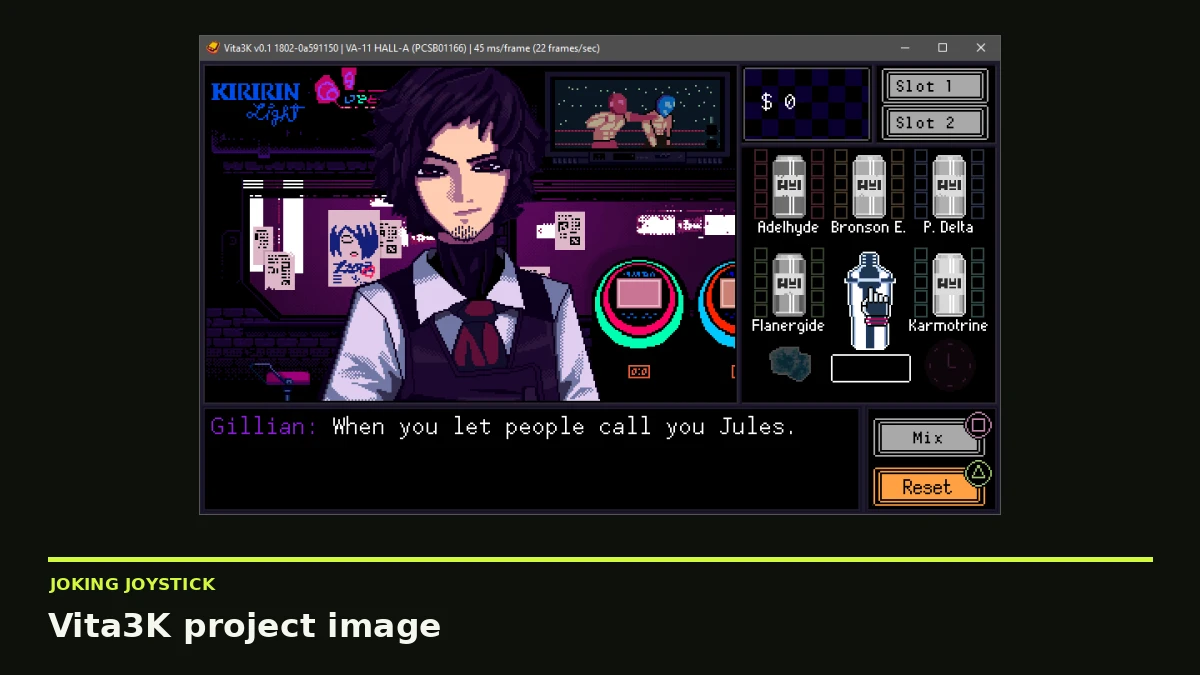
That tension will be familiar to anyone following experimental emulator development: faster output is useful only when it remains understandable, testable and durable. Readers interested in that broader technical ecosystem can see a recent example in an experimental Vita3K emulator snapshot. The goal of preservation-oriented technical work is not simply to make something run once; it is to build a result people can study, improve and use responsibly over time.
Legal questions remain a central obstacle
AI does not dissolve the legal and contractual questions that surround copying a program’s behavior, visual identity or protected technology. Artcraft’s assertion that it avoided Adobe source code may be relevant to its approach, but it would not automatically resolve questions involving trademarks, patents, copyright or contractual terms. Adobe’s terms of use explicitly prohibit reverse engineering its software to determine how it works.
A trademark issue concerns branding and identifiers that tell users who made a product. Copyright can cover expressive works, including elements of software and design, though the details are often fact-specific. Patents can cover particular inventions or methods. Terms of use are contractual rules a user agrees to when accessing software or services. These areas do not reduce to a simple rule that “no copied source code” means “no problem.”
Critics of Photocraft have already argued that the project could be unmaintainable and could infringe Adobe trademarks or copyrights. Supporters, meanwhile, see the effort as a justified response to unpopular subscription practices and as an impressive technical accomplishment. Both reactions underline the same reality: AI may reduce the effort required to make a clone-like application, while leaving the harder questions of safety, support, identity, ownership and legality unresolved.
What this could mean for subscription software
The immediate outcome is unlikely to be that every major paid program receives a fully capable, risk-free free counterpart. Complex applications are more than a collection of buttons: they depend on obscure features, file compatibility, documentation, updates and sustained maintenance. The visible demo is only the start of a durable software product.
Still, the competitive pressure is real. If developers can use AI to reproduce the familiar portions of an expensive subscription tool quickly, companies may need to explain more clearly why their products deserve recurring fees. Better reliability, stronger compatibility, transparent cancellation terms and genuinely differentiated features become more important when the learning curve is no longer a powerful barrier to leaving.
Artcraft and REA therefore represent a fascinating, unsettled development rather than a completed revolution. They show how much faster software imitation and analysis may become. They also demonstrate why people should distinguish a familiar-looking interface from a mature replacement, and why the legal consequences of AI-assisted reverse engineering remain far from settled.