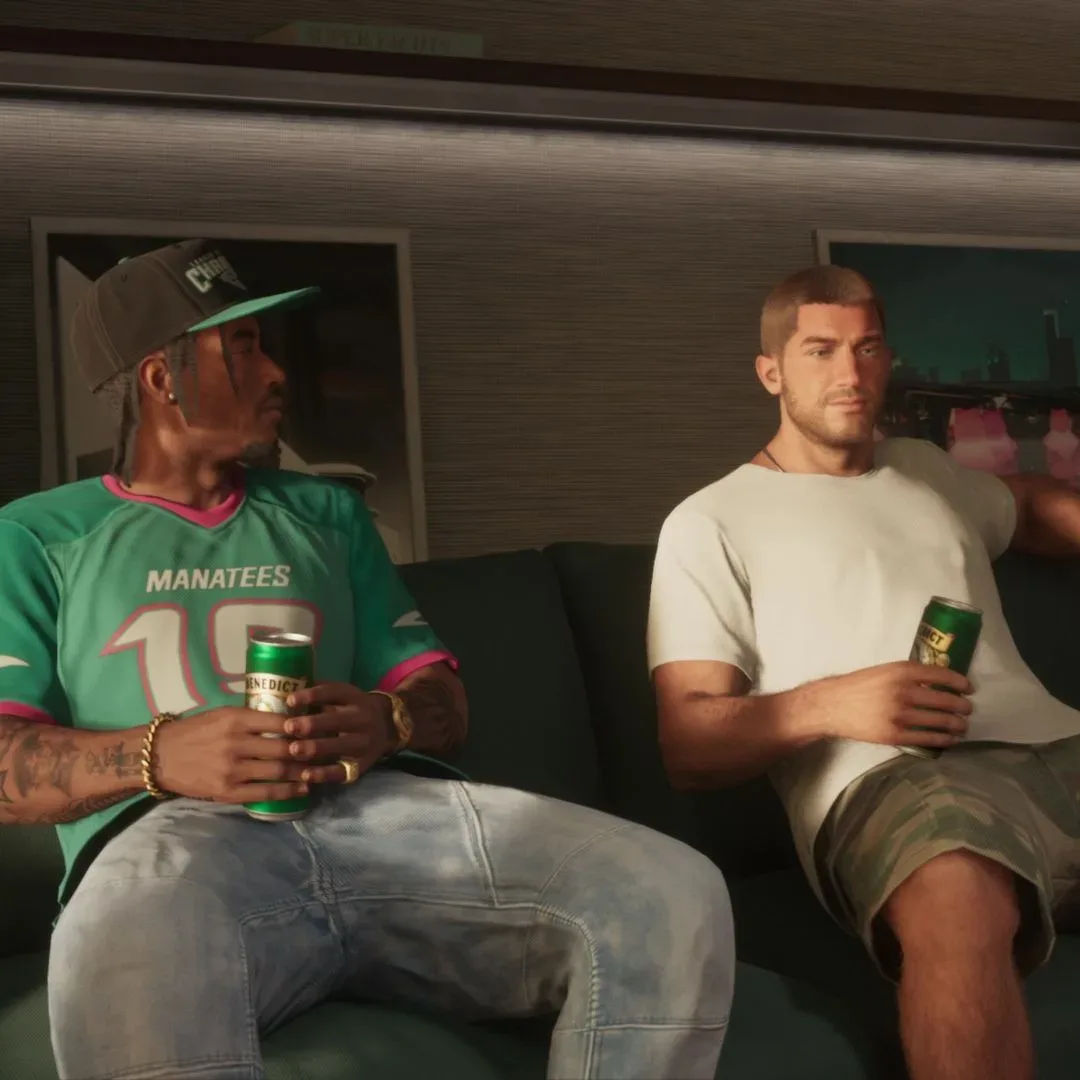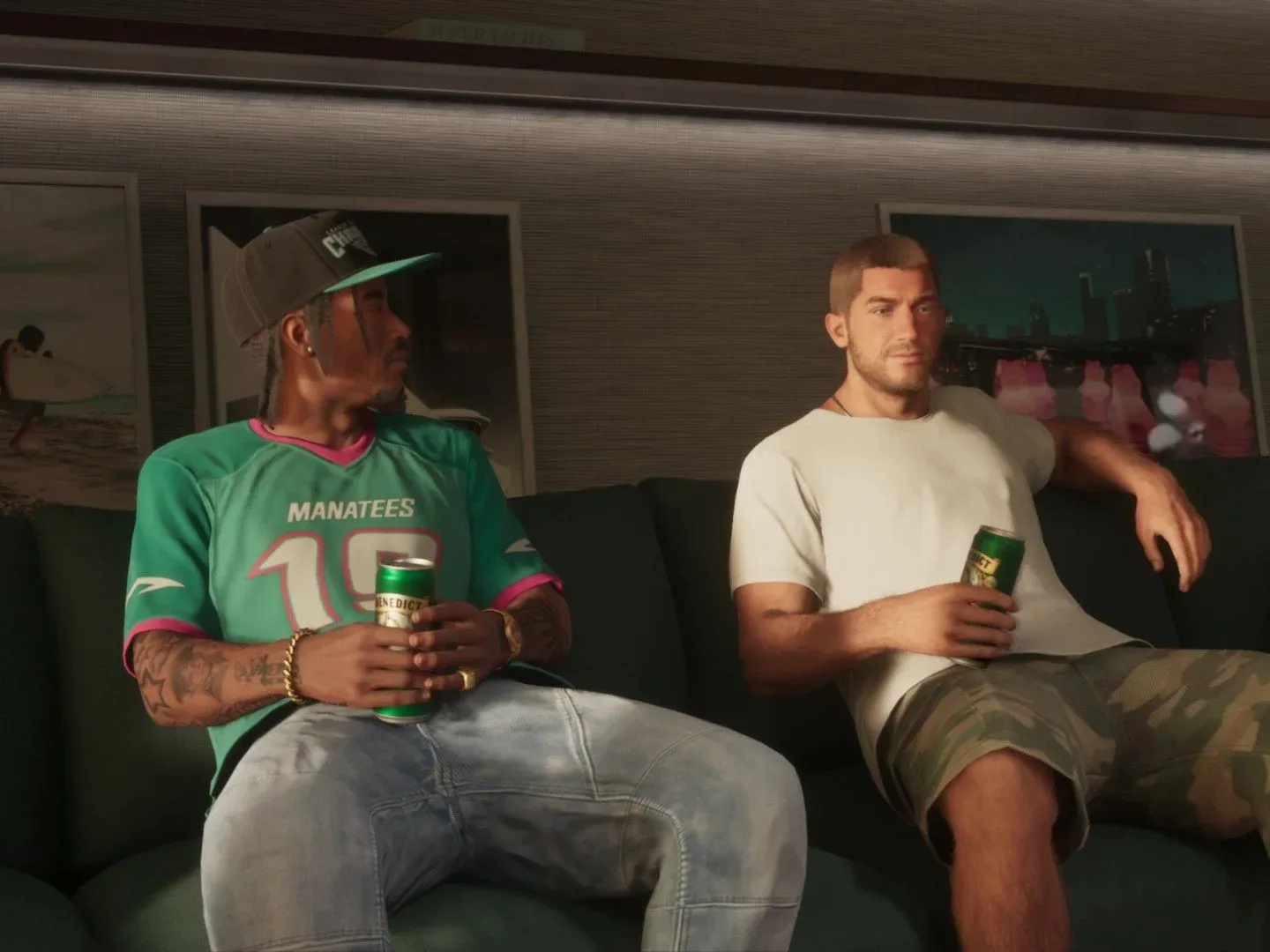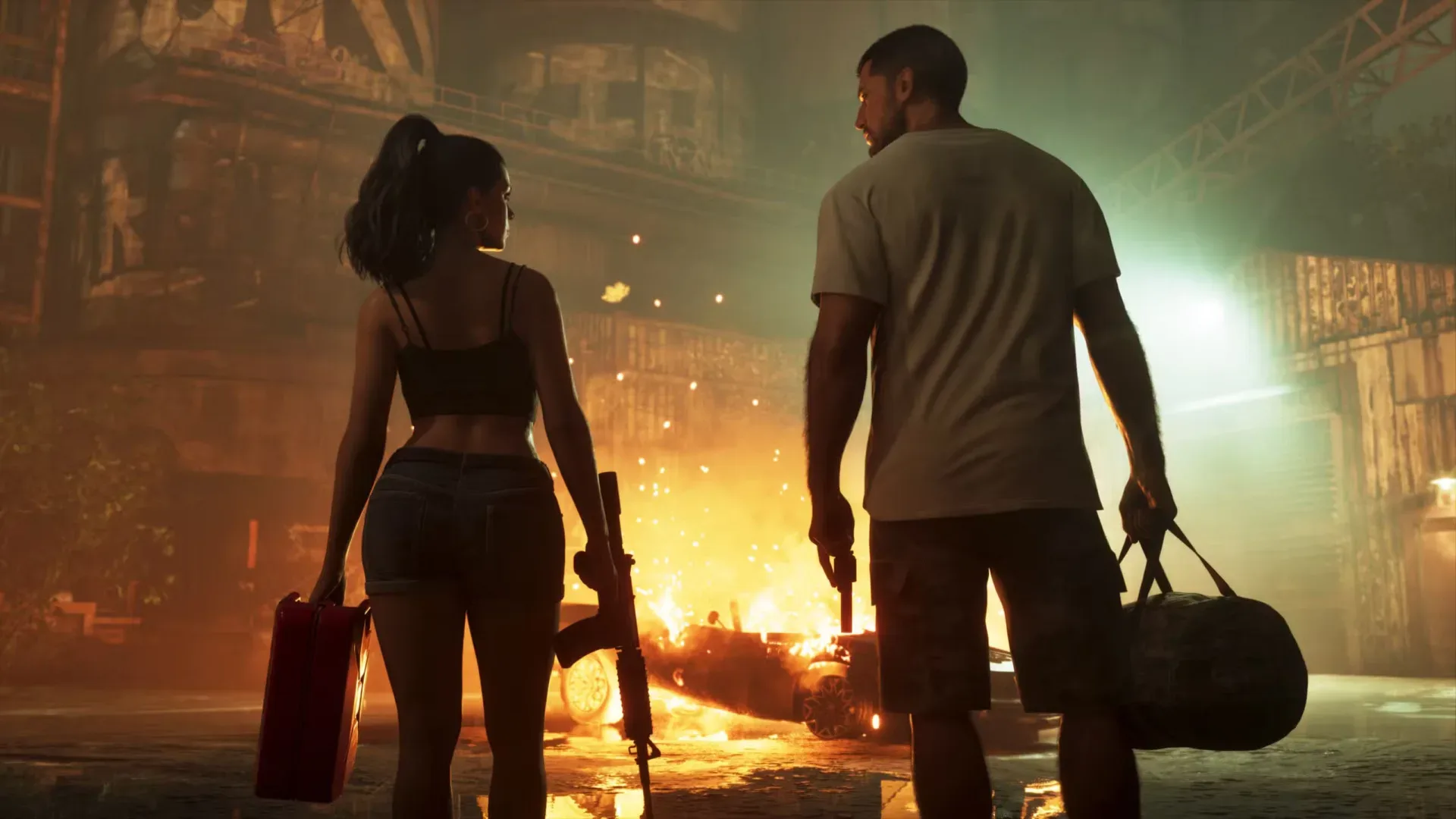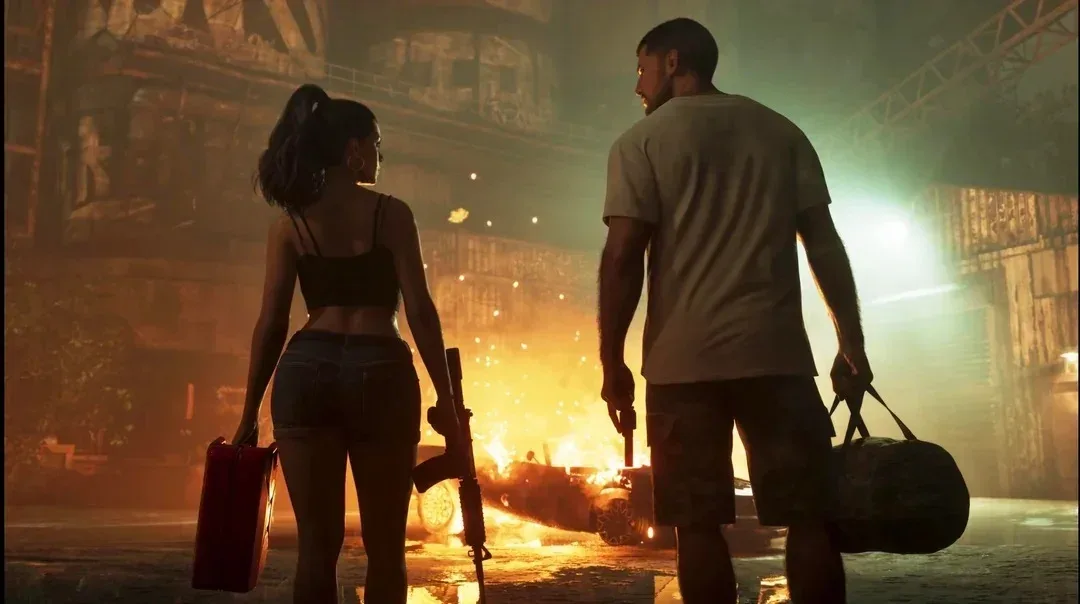
Grand Theft Auto has rarely treated success as a clean finish line. Its cities are packed with expensive cars, spectacular homes, gaudy advertising and people selling an improved version of themselves, but the series has repeatedly asked who actually gets to live comfortably inside that picture. For GTA 6, Rockstar’s senior vice president of narrative, Humphries, has identified the American Dream as one of the ideas that makes Vice City and its wider Southern Florida-inspired setting such a useful stage.
His view is not that the dream has vanished in a simple, absolute sense. Instead, it has become smaller: less about extraordinary riches and more about stability that can still feel unattainable. A family home and paid-off loans, Humphries suggested, may now represent the version of success many people are pursuing. Yet he also argued that even this more modest goal can remain beyond the average person’s reach.
That is a sharp frame for Grand Theft Auto, a series whose satire has long been interested in the distance between public promises and private reality. It also gives GTA 6 an avenue for social commentary that is broad enough to endure beyond a particular headline, celebrity or political moment.
A recurring GTA idea, viewed from Vice City
Humphries connected GTA 6’s thematic territory to two earlier games. GTA 4, he said, told an immigrant story that functioned as a deliberately hollow look at the notion of America as a land of opportunity. GTA 5 then intensified the franchise’s cynicism. Those descriptions matter because they position the next game as a continuation of an existing concern rather than a sudden turn toward social observation.
In this context, the American Dream is not a game mechanic or a promise that GTA 6 will deliver a particular ending. It is a cultural idea: the belief that effort and ambition can lead to security, prosperity and upward mobility. Grand Theft Auto’s usual satirical move is to put that belief beside systems and characters that complicate it. Wealth may be visible everywhere, but visibility is not the same thing as access. Ambition may be celebrated, but it can also become desperation, manipulation or spectacle.
Vice City is especially suited to that contrast. Humphries described Miami and Southern Florida as a front line in a conflict between “astronomical wealth” and “unbounded ambition,” calling the result a pressure cooker capable of producing all kinds of insanity. The phrase is revealing: the setting is not simply a glamorous backdrop. It is a place where the gap between aspiration and financial reality can create friction, and friction is where Grand Theft Auto tends to find its comic edge, criminal escalation and character conflict.
“Maybe the American Dream is more modest now,” Humphries said, describing a family home and cleared loans rather than “wild success” as a contemporary measure of security.
That does not establish the plot, missions or playable characters of GTA 6. It does, however, offer a credible thematic lens for the setting. A game can explore economic pressure through the spaces it builds, the aspirations its characters voice, the businesses it parodies and the everyday conversations players overhear. In Grand Theft Auto, the joke often works because an absurd detail is placed inside a world that is recognizably anxious about status, money and belonging.
Related coverage includes GTA 6 Narrative Lead Says the American Dream Is Smaller, but Still Out of Reach.
Why broad trends matter to Rockstar’s approach
Rockstar’s stated approach is to focus on wider real-world trends that are less likely to become dated by the time a game launches. That distinction helps explain why the American Dream is a useful subject. It is a longstanding cultural ideal, but the meaning attached to it can shift as conditions change. The form of the aspiration can move from luxury to security without making the underlying question disappear: what does opportunity look like, and who gets it?
A narrow reference can age quickly. A broader pressure, such as the pursuit of housing, debt relief, social standing or financial stability, can remain legible for much longer. This is not the same as predicting exact content for GTA 6. Rather, it explains the narrative value of choosing an enduring tension over commentary tied to a single person or news cycle.
The practical implication for players is that GTA 6’s satire may land less through one-to-one recreations of current events and more through patterns. Expectation, consumption, self-promotion and the display of wealth are all flexible subjects for a fictional world modeled on a recognizable region. They can appear in advertising, radio-like background material, business names, neighborhoods and incidental dialogue without requiring the game to pin itself to one moment in public life.
That emphasis also sets a useful boundary on interpretation. GTA games are knowingly exaggerated; they are not documentaries or policy arguments. Their worlds compress social tensions into broad comedy, chaos and crime-fiction logic. When a narrative lead discusses an economic and cultural theme, that should be read as a clue to the story’s possible concerns, not a detailed account of every issue the game will tackle or a guarantee of a particular political message.
From extravagant fantasy to basic security
The most notable part of Humphries’ comments is the proposed change in scale. In the older, larger-than-life version of the American Dream, achievement may be imagined as fame, enormous money, luxury property or unrestricted freedom. The newer version he describes is considerably less extravagant: a home for one’s family and no outstanding loans. The irony is that this apparently modest ideal may be no more attainable for many people.
That tension is well matched to GTA’s style. The franchise has always known that people can be surrounded by images of excess while feeling locked out of even ordinary forms of security. A fictionalized Southern Florida can make the contradiction highly visible: immense displays of money and aspiration set against people trying to climb, keep up or simply avoid falling behind.
“Pressure cooker” is useful shorthand here. It means conditions in which multiple stresses are concentrated and intensified, making explosive or irrational outcomes more likely. In narrative terms, that can give a setting energy. Characters may chase unlikely opportunities, take dangerous shortcuts, exaggerate their status or become trapped by the very dream they are supposed to be pursuing. None of that reveals a specific GTA 6 storyline, but it describes the kind of social atmosphere that can support the series’ blend of crime, satire and heightened personality.
It is also worth separating this theme from a simplistic claim that Grand Theft Auto is only cynical. Satire can criticize a promise precisely because the promise matters to people. Humphries’ formulation acknowledges ambition as well as wealth. The drive to improve one’s life is not ridiculed on its own; the richer target is the collision between that drive and an environment where the rewards appear both omnipresent and inaccessible.
The pedestrian dialogue clue
Rockstar has also said it has a dedicated team of GTA 6 writers working on pedestrian dialogue. That detail is relevant to the American Dream discussion because ambient speech is one of the ways an open-world game can establish a social climate. Pedestrian dialogue means the brief lines, conversations and reactions attached to non-player characters encountered around the city, rather than only scripted exchanges in core story scenes.
Such lines can do a great deal of quiet world-building. They can suggest what people worry about, admire, resent, buy into or laugh at. In a Grand Theft Auto setting, they can also make a joke feel rooted in a lived-in place rather than delivered from outside it. Rockstar’s point that there are no shortcuts in building a world of this scale suggests that these incidental details are being treated as part of the larger illusion of a functioning city.
Of course, a larger volume of pedestrian writing does not tell players exactly what any individual conversation will cover. It should not be mistaken for confirmation that every passerby will be discussing economics, home ownership or debt. But it does indicate that the game’s commentary is unlikely to reside only in major cutscenes. The atmosphere of a place can emerge through repetition: a boast here, a complaint there, a local fad, an overheard plan, or a tiny reminder of what people believe success should look like.
That is one reason GTA’s social critique often reaches beyond its main cast. The player’s route through an open world exposes them to a city’s many competing voices. A Vice City defined by extreme wealth and limitless aspiration has room for people who are chasing the dream, selling it, mocking it, exploiting it or realizing it was never equally available.
What this tells us—and what it does not
The comments provide a thematic signal, not a comprehensive blueprint for GTA 6. They support a few restrained takeaways:
- Vice City and the wider Southern Florida setting are being viewed as fertile ground for examining wealth, ambition and unequal access to security.
- Rockstar sees GTA 4 and GTA 5 as relevant predecessors in the series’ criticism of opportunity and success.
- The game’s real-world references are intended to favor enduring trends over highly specific, potentially dated targets.
- Ambient NPC writing is being treated as an important component of world-building.
They do not confirm a plot, a mission structure, a particular ending, any new gameplay system, or how directly these themes will be stated. That restraint is important. The point is not to turn a few narrative comments into a fictional list of confirmed features. It is to recognize the design logic behind the setting Rockstar has chosen.
For GTA 6, the American Dream may be less about a fantasy penthouse and more about the even sharper irony of ordinary stability becoming a luxury. That framing could give Vice City’s excess a different kind of bite. The flashier the wealth on display, the more forcefully the game can ask what its citizens believe they are working toward—and how many of them can realistically get there.
For more GTA 6 coverage, including a reminder to approach purported leaks with caution, see this report on an alleged GTA 6 footage roadmap tied to a meme coin.