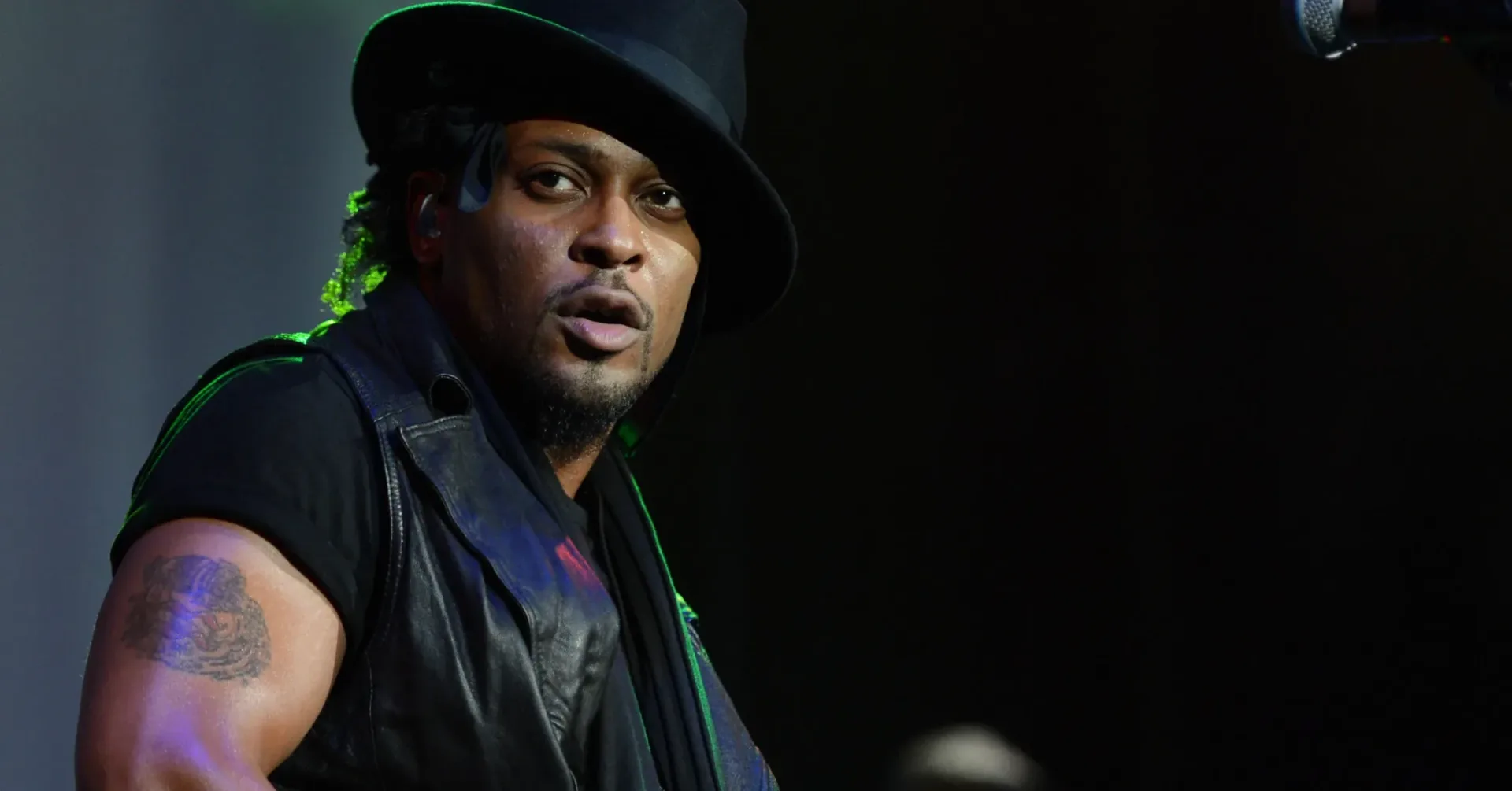
An unreleased D’Angelo song, “Kamikaze,” is reported to be part of Grand Theft Auto VI’s in-game radio lineup. The track can be heard on Worldwide FM, a station described as moving across a broad range of genres. Its inclusion gives the game’s driving soundtrack a notable connection to an artist whose work already had a memorable place in Rockstar Games’ catalogue.
The reported placement is especially meaningful because D’Angelo previously collaborated with Rockstar for Red Dead Redemption 2. He performed “Unshaken,” a song used in one of that game’s prominent musical moments. “Kamikaze”, meanwhile, is described as previously unreleased and posthumous, making its appearance on a GTA VI station more than a routine licensed-song credit.
What has been reported about “Kamikaze”
The core detail is straightforward: “Kamikaze” is said to be available through Worldwide FM in GTA VI. No additional release plan, standalone availability, songwriting information, or account of how the track came to be selected is established here. That distinction matters. A song’s use inside a game does not by itself confirm a wider commercial release, an album connection, or that players can access it outside the game.
For players, the practical implication is equally simple: Worldwide FM is the station to select while using a vehicle radio if they want to encounter the track. As with other radio programming, hearing a particular song may depend on the station’s rotation rather than on a guaranteed immediate play.
Worldwide FM’s genre-spanning format is a natural home for a D’Angelo inclusion. Radio stations in the GTA series are not merely background playlists; each one provides a curated musical identity for time spent driving through the game world. A broad-format station has room to create sharper contrasts between adjacent tracks, rather than staying inside one tightly defined sound. That can make an unexpected song feel like a discovery rather than a checkbox on a soundtrack list.
Why the earlier Rockstar connection matters
D’Angelo’s relationship with Rockstar did not begin with GTA VI. His performance of “Unshaken” for Red Dead Redemption 2 linked his voice to a key moment in that earlier game. The term needle drop is often used for a pre-existing or specially selected recorded song placed at a particular dramatic point in a film, television show, or game. It differs from a score, which is music composed primarily to accompany scenes or gameplay throughout a work.
“Unshaken” was remembered as that kind of focused musical placement: a song tied to a specific emotional beat rather than simply a tune among many ambient cues. The appearance of “Kamikaze” on a GTA VI radio station changes the setting but preserves the broader creative connection. Instead of a single authored scene, the song belongs to the player-driven rhythm of open-world travel, where the listener may encounter it during a calm cruise, a mission, a detour, or a completely improvised escape from consequences that have become dramatically expensive.
That difference is worth noting. In a linear cinematic moment, developers control exactly when a song begins and what is on screen. In an in-game radio system, players supply much of the context themselves: which car they are driving, where they are going, whether they linger on the station, and what activity is unfolding around them. The track’s presence can therefore become personal in a different way, with players attaching it to their own unscripted memories of Leonida.
Related coverage includes D’Angelo’s Unreleased “Kamikaze” Appears on GTA VI’s Worldwide FM.
An unreleased track changes the soundtrack conversation
Game soundtracks frequently rely on songs audiences already know, and that familiarity can be powerful. Recognizable music immediately carries associations from radio, clubs, films, playlists, and earlier phases of an artist’s career. An unreleased song works differently. It offers less pre-existing context and asks listeners to meet it where the game places it.
That is why “Kamikaze” stands out. For people who already know D’Angelo’s work, it represents a previously unheard addition to the artist’s body of music, at least in the form described here. For players encountering it without that background, it may register first as a compelling station selection and only later as an unreleased performance with a prior Rockstar connection.
There is also a preservation angle, though it should not be overstated. Placement in a major game exposes a recording to a large audience and gives it a defined cultural setting. It does not answer every question listeners may have about the track’s origin, intended release, or future availability. Still, it makes the song part of a work that players will revisit, discuss, catalog, and associate with particular places and journeys.
Radio is part of GTA’s world-building toolkit
The GTA radio dial has long served a larger purpose than filling silence between missions. Stations establish tonal shifts, introduce different musical traditions, and make vehicles feel like private listening spaces inside a densely populated open world. Choosing a station is a small player decision, but it can alter the feel of the same road, route, or objective.
In that context, Worldwide FM’s reported D’Angelo track is an example of soundtrack curation doing narrative work without a cutscene. The game does not need to stop and announce the song’s significance for it to matter. A player who recognizes the voice may feel the weight of the connection instantly. Another may look it up later after hearing a track that sounded unlike the surrounding rotation. Both reactions are part of how radio programming can reward curiosity.
It is also a reminder that a game’s licensed soundtrack can be more than a collection of famous names. Curation is about juxtaposition: what plays before and after a song, which station carries it, and what kind of play space surrounds it. A broad station identity can give a track room to surprise listeners. In an open-world game built around movement, that surprise may arrive while the player is doing something completely ordinary—which is often exactly why it sticks.
What players should keep in mind
- Select Worldwide FM when driving if the goal is to hear “Kamikaze.”
- Do not assume the reported in-game placement confirms an external release of the song.
- The track’s presence is separate from GTA VI’s progression systems, missions, and criminal-enterprise pacing; it is part of the radio soundtrack.
- D’Angelo’s earlier Rockstar work, “Unshaken,” appeared in Red Dead Redemption 2, making “Kamikaze” a continuation of that creative relationship.
GTA VI’s scale has made virtually every detail of its world a subject of scrutiny, from encounters to law enforcement and the texture of day-to-day life in Leonida. For a look at one of those game-world discussions, see the response to GTA 6’s fictional crime wave. The D’Angelo discovery belongs to a different but equally revealing category: the details players find when they simply spend time in the world and let the radio run.
For now, the significant confirmed point within the report is the claimed Worldwide FM placement of “Kamikaze.” It is a small item on a large soundtrack, but the combination of an unreleased D’Angelo recording, its posthumous framing, and the artist’s history with Rockstar gives it unusual weight. Sometimes the most memorable open-world discovery is not behind a locked door or at the end of a chase. Sometimes it is on the dial, arriving halfway through a drive.