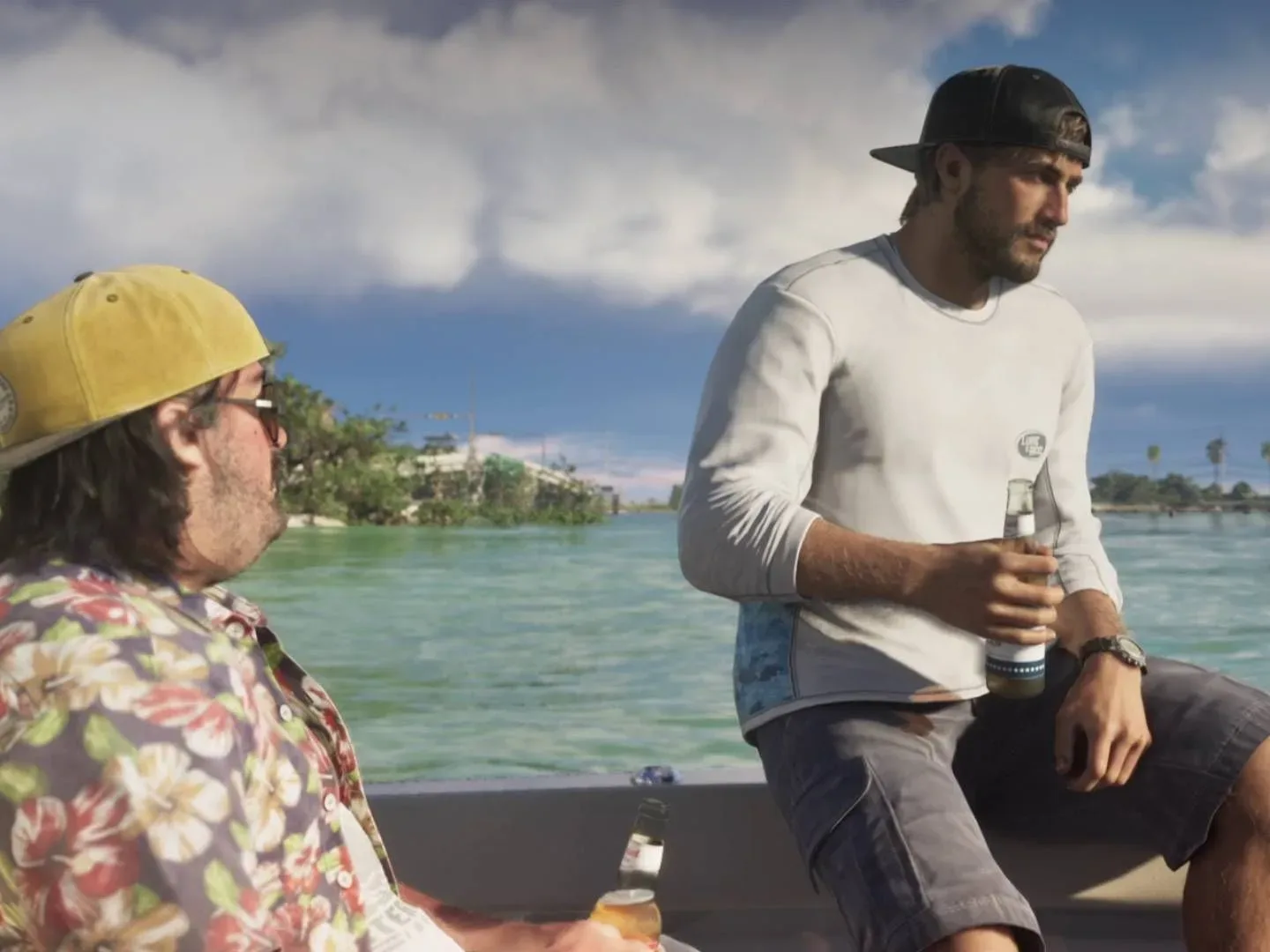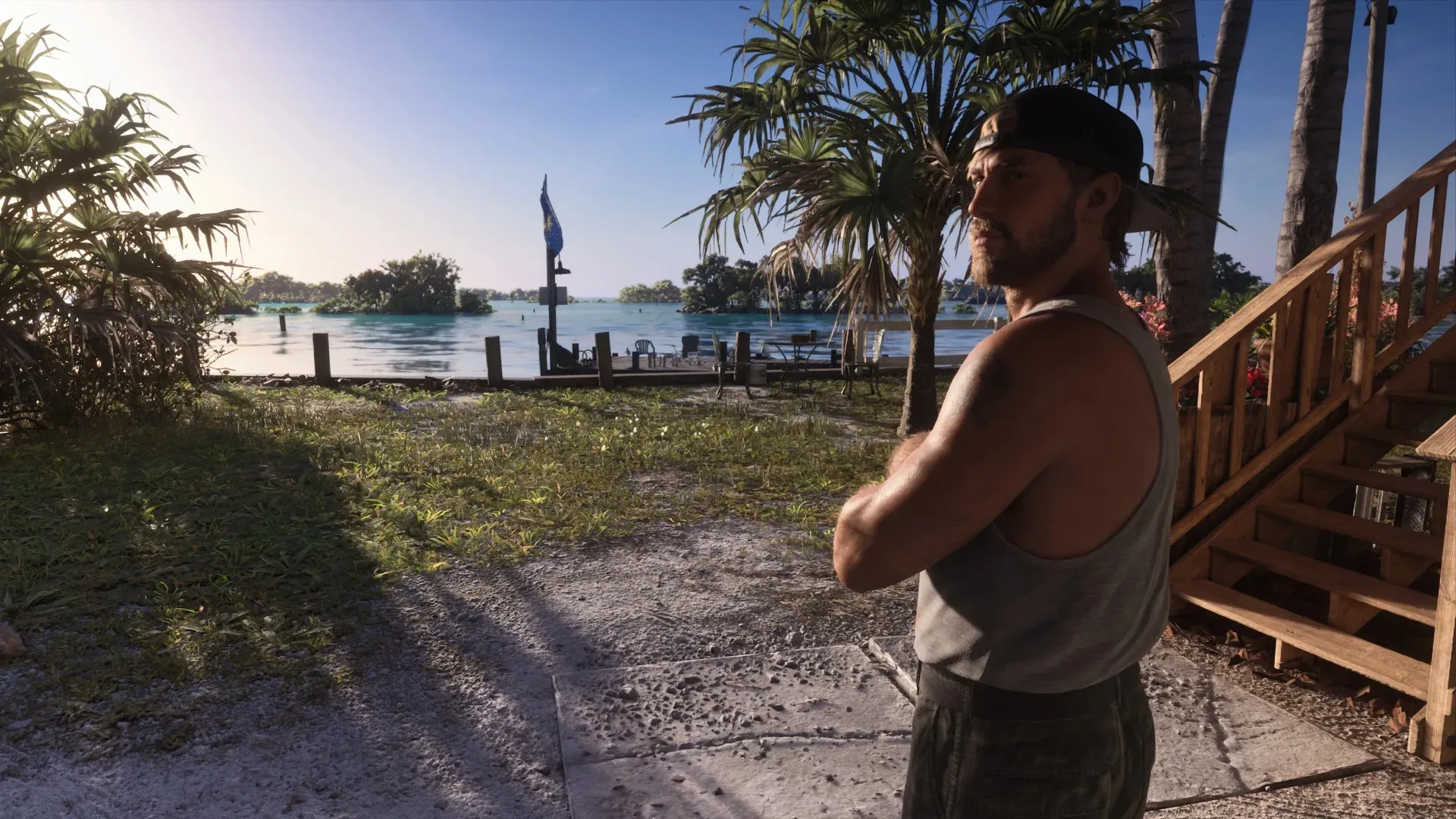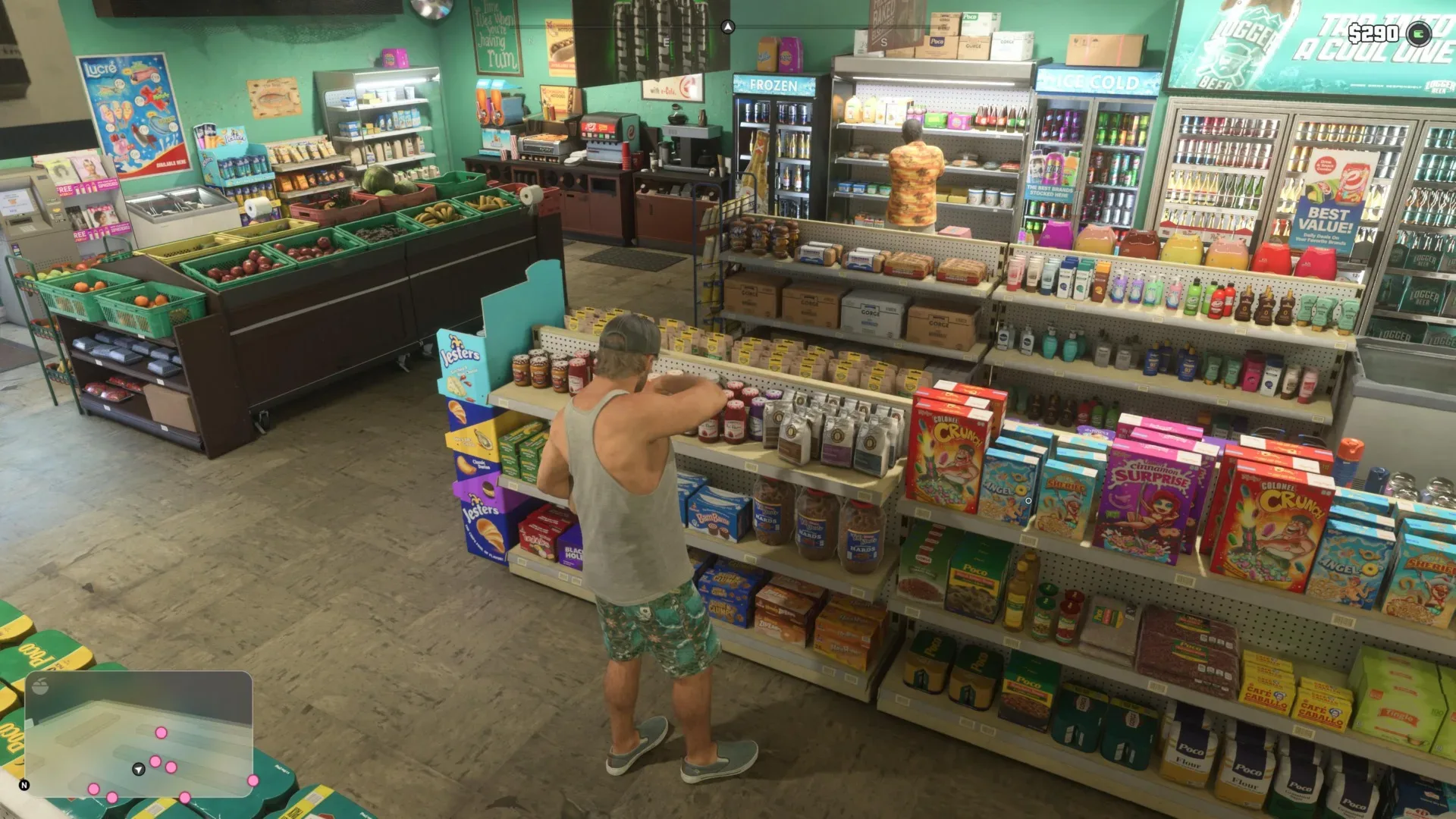
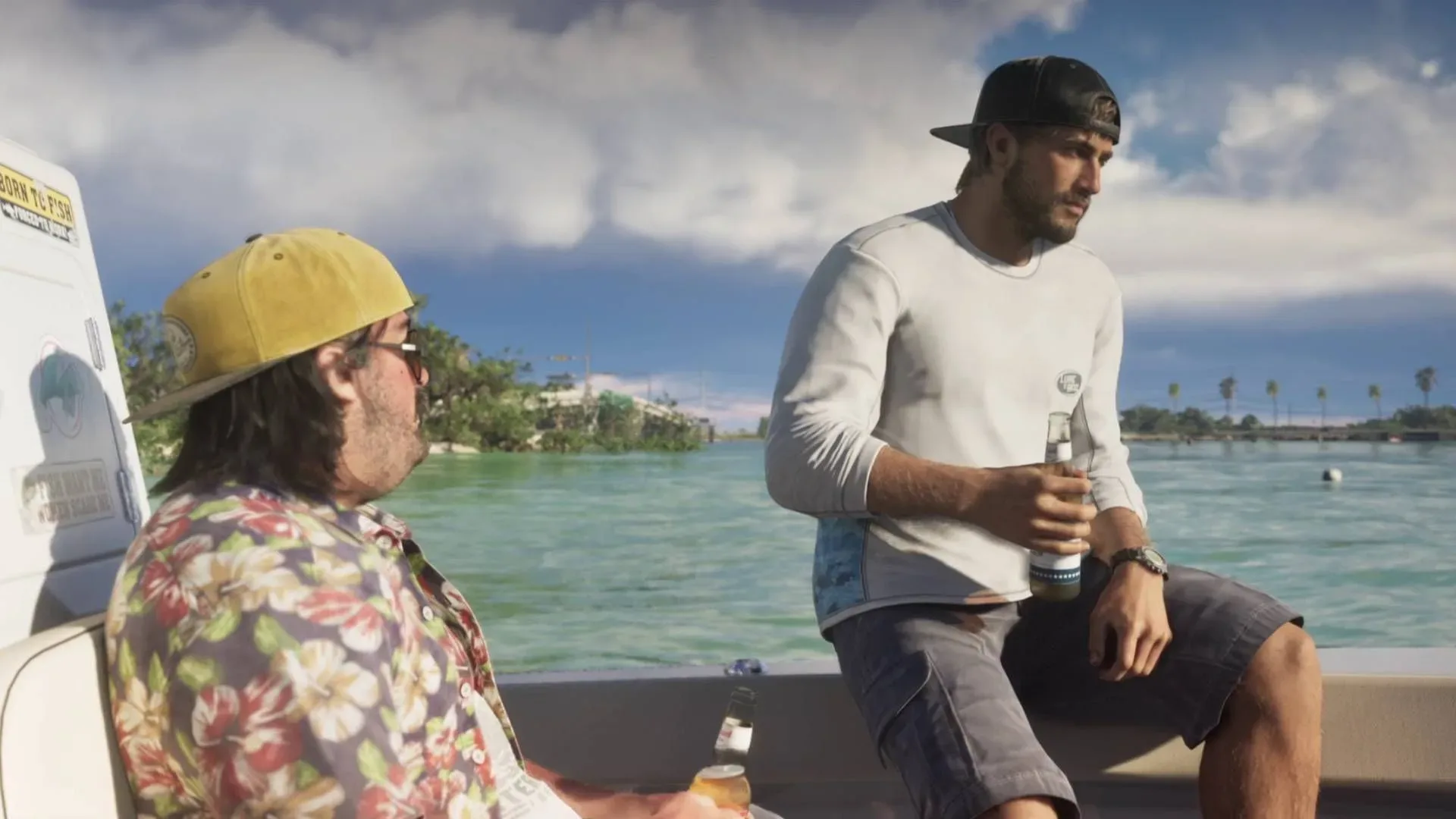
GTA 6 has prompted an argument that feels distinctly suited to Grand Theft Auto: whether a game can offer players domestic, low-stakes activities without secretly demanding that they become model citizens. Former Valve writer Chet Faliszek’s answer is emphatically no. In recent videos, Faliszek argues that complaints about GTA 6’s supposed pressure to complete chores misunderstand the central premise of a sandbox game: the player is allowed to decide what matters.
The flashpoint is a cluster of mundane optional activities attributed to protagonist Jason, including painting a house and buying flowers. Players may receive points or see those activities recorded on a list, but Faliszek’s point is that a prompt, score, or checklist does not necessarily equal an obligation. In his framing, these systems have been read as a kind of “moral yellow paint”—a perceived route the game wants players to follow—when the game’s broader structure leaves them free to go elsewhere.
What “yellow paint” means in this debate
“Yellow paint” is a useful shorthand for environmental guidance in games. It describes visual or systemic signals that make a route, object, or intended action obvious to the player. Used well, guidance can prevent frustration: it tells players where climbing is possible, where a mission expects them to go, or what object is interactive. Used too aggressively, it can make an ostensibly open experience feel like a narrow corridor.
Faliszek adapts the phrase for something less literal. The concern he addresses is not merely that GTA 6 points toward an activity, but that some players treat a points system or task list as a statement about the right way to play. A flower purchase or home-maintenance job can then appear to be more than optional flavor. It can feel like an instruction to perform a certain kind of behavior, particularly when the game tracks it.
That is where the distinction matters. A game can acknowledge an activity without making it a critical path requirement. Tracking a task can be a record, a reward hook, a role-playing prompt, or simply another item in a wide menu of things to do. It becomes mandatory only if progress is blocked without it, or if its consequences remove meaningful alternatives. The evidence Faliszek cites points in the opposite direction: the activities drawing criticism are optional, and players can leave them behind.
“This is Grand Theft Auto,” Faliszek says, framing the freedom to reject domestic tasks as part of the series’ identity.
Optional does not mean invisible
There is still a reason the disagreement exists. Optional content is rarely presented in a vacuum. A game that awards points, displays a list, or surfaces a prompt is communicating that the action exists and may have some value. Players accustomed to maximizing games can reasonably feel an urge to clear every marker, finish every list, and protect every possible reward. For that audience, a chore-like objective can feel less like a suggestion and more like an obligation created by interface design.
Faliszek’s argument is a challenge to that completionist instinct. The presence of a system does not require every player to grant it authority. If someone finds an activity dull, awkward, or tonally out of step with what they want from GTA 6, the sandbox offers another answer: do something else. The player can pursue chaos, exploration, incidental experimentation, or whatever other opportunities the game permits rather than treating a task log as a personal to-do list.
Related coverage includes Chet Faliszek Says GTA 6's Optional Chores Miss the Point of Its Sandbox Freedom.
This does not mean every player must enjoy GTA 6’s quieter activities. A person can dislike house painting as a design choice while also recognizing that it is not compulsory. Those are separate criticisms. One is about whether an activity is entertaining or fitting; the other is about whether the game forces it upon everyone. Faliszek is focused on the latter claim.
Sandbox freedom includes unruly choices
Faliszek uses deliberately extreme examples to make the case. Rather than completing neat household routines, he describes bringing bodies back and filling a house with corpses. The example is dark, absurd, and very much aligned with the provocative freedom long associated with Grand Theft Auto. Its purpose is not to propose a preferred playstyle. It is to underline the distance between a suggested domestic errand and a rigid moral framework.
In this view, GTA 6’s appeal lies in allowing contradictory player stories. One person might engage with cleaning, showering, gifts, or other role-playing routines. Another might ignore all of that and use the city as a space for mayhem. Neither response is invalid simply because the game has recorded or rewarded the first set of actions. The sandbox is not just the ability to cause trouble; it is the ability to decide whether a particular system deserves attention.
That distinction is especially important in games with many overlapping activities. Players often encounter missions, diversions, progression systems, collectibles, social interactions, and emergent encounters in the same world. If every visible feature is mentally reclassified as mandatory, an open-world game can start to feel like a job list with traffic between appointments. Faliszek’s response is to resist that reframing. The player is not required to turn optional structure into compulsory labor.
A practical way to read GTA 6’s prompts
For players unsure whether an activity deserves their time, it helps to separate three different things:
- Critical progression: actions required to move the story or a major quest forward.
- Rewarded optional content: activities that offer points, items, records, or some other incentive but can be skipped.
- Role-playing texture: actions that exist chiefly to support a character fantasy, routine, joke, or self-directed story.
The reported chores at the center of this debate belong to the latter two categories rather than the first. Seeing an icon, list entry, or reward associated with an activity is therefore not enough to establish that it is essential. Before assuming an objective is a gate, players can ask a simpler question: does refusing it actually prevent the next thing they want to do?
If the answer is no, then the choice is real even if the interface makes the option conspicuous. Players interested in story momentum can prioritize the missions that advance it. Players pursuing a particular score or completion target can opt in knowingly. And players who want a looser sandbox experience can disregard the prompt. That is not a failure to play correctly; it is a use of the freedom the game provides.
Anyone looking for targeted help with a particular objective can also consult our GTA 6 guide to finding Dolores after the Key Lento house fire. Guidance is useful when it serves a goal the player has already chosen, rather than when it turns every optional activity into an assumed requirement.
Faliszek’s praise goes beyond the chores argument
Faliszek’s comments are not a narrowly defensive response to one dispute. In a separate short video, he calls GTA 6 a masterpiece and says it may be the greatest game ever made. That is a sweeping assessment, but it clarifies why he sees the chores discussion as missing a larger point. To him, the game’s range—and the capacity to follow or abandon its smaller systems—is a major strength rather than a distraction.
His praise arrives alongside a broader debate about the industry consequences of giant productions. Faliszek references criticism from Warren Spector, who has said he would rather see hundreds of games and full employment. That concern is not directly answered by whether GTA 6’s chores are optional; it addresses the ecosystem around enormous releases and the kinds of resources they can command. Still, Faliszek does not accept that concern as a reason to deny GTA 6’s creative achievement. His position is that the game is extraordinary.
Both ideas can be understood as addressing different questions. One asks whether an individual work is impressive. The other asks what the industry may gain or lose when such massive projects become the dominant benchmark. Faliszek is arguing forcefully for the former. His sandbox reading of GTA 6 suggests that scale has been used to provide a breadth of playstyles rather than merely a longer chain of prescribed tasks.
The real disagreement is about player expectation
Ultimately, the “moral yellow paint” debate is less about flowers or house paint than about the relationship between games and their players. Some players see explicit systems and assume the game expects compliance. Faliszek sees the same systems as optional ingredients in a larger, player-led space. GTA 6 can present domestic tasks without becoming a domestic-life simulator, just as it can offer destructive possibilities without requiring players to pursue them.
The most useful reading of his argument is not that players should ignore every activity that looks ordinary, nor that they should embrace the most chaotic alternative. It is that an optional system should be judged as optional. Try it if it supports the kind of character, story, or goal you have in mind. Skip it if it does not. In a Grand Theft Auto sandbox, the list is not necessarily a command. It may simply be another door the player is free to walk past.