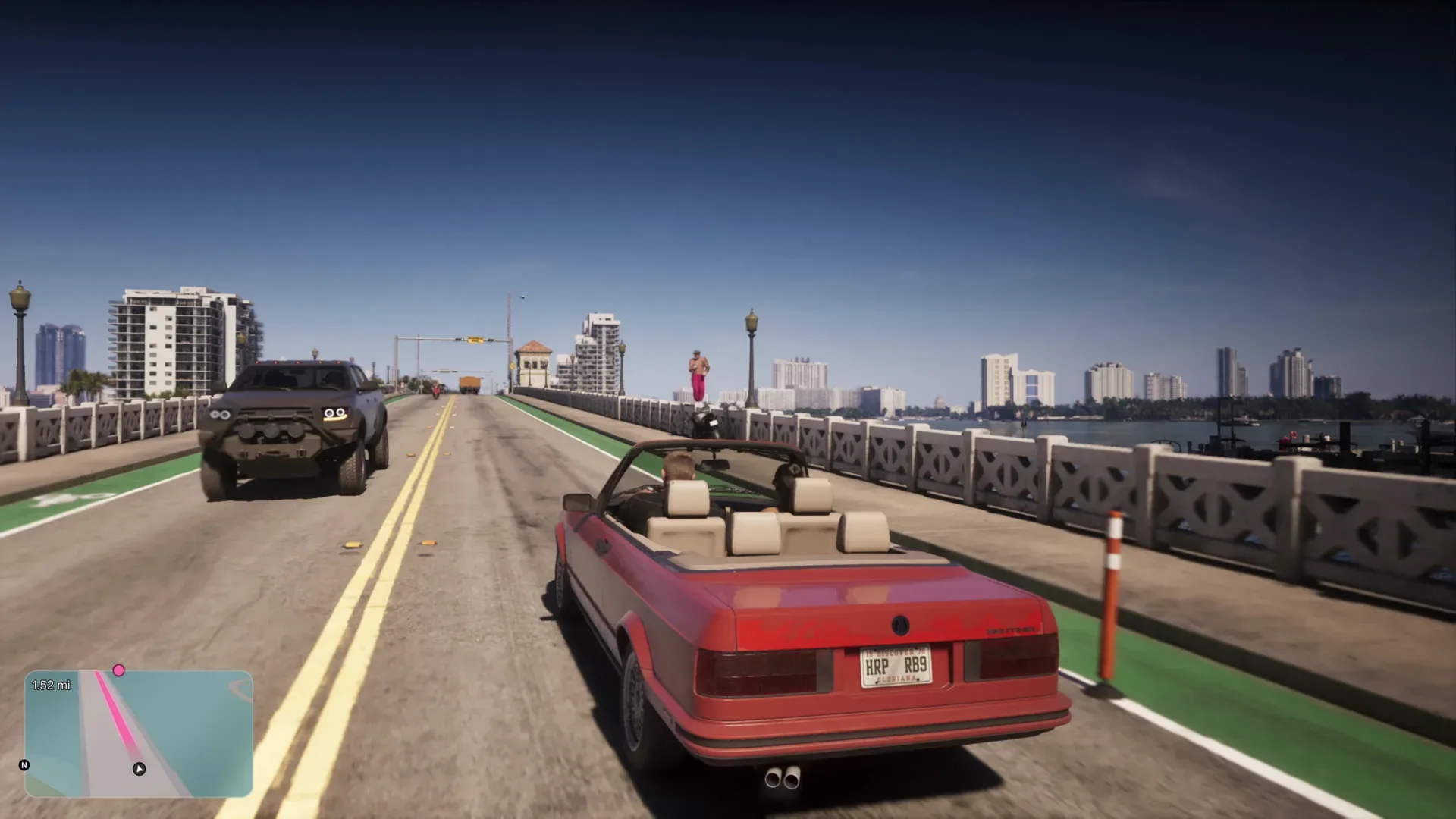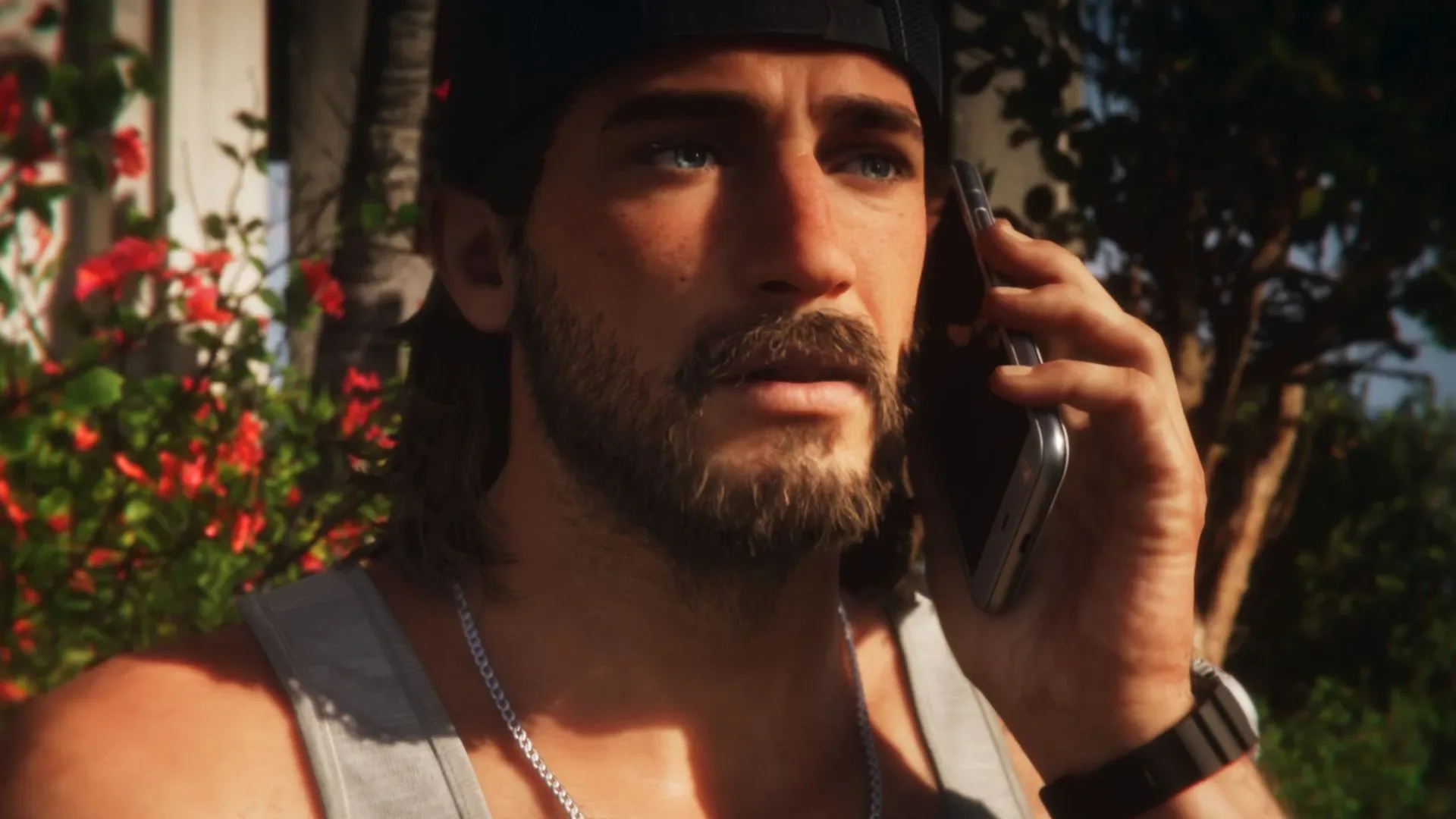

Grand Theft Auto 6 has become big enough to break out of games coverage and into late-night monologues. During the Season 24 finale of Real Time with Bill Maher, Maher made the game part of a wider routine about technology disruptions, Apple and the habits he associates with young male players.
The host’s punchline hinged on the idea that GTA 6’s arrival had sent players away from their jobs in unusually high numbers. He said: “And if you think that joke is stereotypical or unfair, I will just remind you that ‘Grand Theft Auto’ came out yesterday, and about a fifth of the young men in America stayed home and didn’t go to work to play a game. This thing has caused more workplace absences than ICE.”
It is a deliberately provocative line, built from two different kinds of exaggeration. First, it treats a massive and diverse audience as a single demographic cliché. Second, it invokes U.S. Immigration and Customs Enforcement, commonly shortened to ICE, in a comparison designed to produce shock rather than make a measurable claim. Maher framed the number of young men absent from work as part of the joke; the material does not provide evidence for the “about a fifth” figure.
Why GTA 6 made an easy target for a monologue
Even without accepting the absence statistic literally, the premise has an obvious cultural basis: GTA 6 is being presented as an enormous launch. The game was said to have generated $3.79 billion in first-day sales, and the monologue referenced people taking time away from work to play it on PlayStation 5 and Xbox.
That scale is the crucial setup. A major game launch is often discussed inside gaming through sales, platforms, trailers, performance and community reaction. Once it becomes a topic for a mainstream comedy show, the conversation changes. The game is no longer only a product for the people playing it; it becomes shorthand for a phenomenon visible to everyone else, including viewers whose entire familiarity with the series may be that it is exceptionally popular and carries a title about crime.
Maher used that familiarity efficiently. He did not dig into GTA 6’s story, systems or setting. Instead, “Grand Theft Auto” functions as a cultural signal: a game presumed to be irresistible to its presumed audience. That is useful comedy construction, but it is also why the joke is so broad. The more the routine depends on the audience instantly recognizing the franchise, the less room there is for the individual players who do not resemble the stereotype.
The joke’s actual target is larger than a game launch
Before turning to GTA 6, Maher was discussing a run of technology-related disruptions involving Microsoft, airlines, Apple, four major banks and the National Security Agency. His wider bit cast modern infrastructure as precarious and made Apple’s disruption an opening for an old-fashioned gag about phones, dating and pornography.
“Apple? Oh my gosh. I mean, I worry for young men. Really, without the phone, anyone hoping to see tits will have to talk to an actual girl,” he said before moving to GTA 6.
Related coverage includes Bill Maher Uses GTA 6’s Launch in Real Time Finale Monologue.
In that context, the game reference is not a review, a serious attempt to quantify gaming habits, or a statement about the entire GTA audience. It is the second half of a sequence about supposedly screen-dependent young men: first the phone, then the blockbuster game. The monologue uses GTA 6 as a recognizable proof point for an argument Maher had already constructed.
That distinction matters because comedy commentary can travel much further than its context. A clipped version of the line can look like a claim about gamers, whereas the full segment presents it as part of a chain of jokes. That does not make the stereotype vanish; it simply clarifies the mechanism. The target is a caricature of a disengaged, screen-focused young man, with GTA 6 chosen because its launch is large enough for the audience to understand the reference immediately.
What “workplace absences” means in this setting
“Workplace absences” normally suggests a countable employment metric: employees missing scheduled work, whether through leave, illness, vacation or an unauthorized absence. In Maher’s line, it is a comic measure of hype. The idea is not that GTA 6 has literally outperformed a federal agency in any defined statistic; it is that the game’s release feels big enough to invite an intentionally disproportionate comparison.
The same applies to the claim that a fifth of young men stayed home. The monologue offers no methodology, age range, survey, employer data or definition of what counts as staying home. It should therefore be understood as part of the bit rather than a reliable estimate of player behavior.
That is particularly relevant with games, where launch-day anecdotes can rapidly harden into a misleading story about an entire community. A handful of highly visible posts about taking a day off can be real, and a blockbuster can clearly dominate social conversation, without establishing how many people did the same thing nationally. There is a difference between a visible fan ritual and a measured labor trend.
GTA’s reach invites both attention and lazy assumptions
Grand Theft Auto has long had a name that is instantly legible outside gaming, and GTA 6’s reported sales place it firmly in broad popular-culture territory. That reach brings useful visibility: game releases can be discussed alongside film, television, music and sports as major entertainment events. It also brings commentary from people who may prefer a simple stereotype over the more complicated reality of who plays games and why.
Maher’s routine illustrates both outcomes at once. The franchise’s scale gave him a timely topic for his finale. But rather than engaging with the game as an artistic or technical work, he used it to reinforce a familiar premise about young men. The target could have been any sufficiently large entertainment release; GTA 6 happened to supply the cleanest, loudest name.
For players, the better response is not to pretend the gag is a data point, nor to treat every mainstream reference as an informed judgment on the medium. It is to recognize the threshold GTA 6 has crossed. A release associated with reported multibillion-dollar first-day sales will be used as a punchline, a business story, a social-media event and a wider cultural marker. Those uses say as much about the people making the references as they do about the game.
The actual discussion around GTA 6 remains much more specific when it stays close to play: controls, world interaction, vehicles and the practical details players encounter. For a focused example, Joking Joystick’s GTA 6 vehicle shortcuts guide covers radio controls, headlights, quick exits and moving around boat decks. That is a very different conversation from the one in Maher’s monologue—and a reminder that a cultural event and the game itself are not the same subject.
A finale moment that underscores GTA 6’s footprint
The Season 24 finale also came with confirmation that Real Time with Bill Maher has been renewed for two more seasons through 2028. GTA 6 occupied only one part of a monologue that moved across outages, artificial intelligence, cybersecurity and celebrity gossip. Still, its placement was telling: it was treated as current-event material, not niche entertainment news.
Maher’s framing will likely not persuade anyone looking for an accurate portrait of GTA 6 players. It was not built to do that. The relevant takeaway is narrower: a game described as producing $3.79 billion in first-day sales has become sufficiently ubiquitous that a late-night host can assume viewers understand the premise without explanation. The joke may be blunt, but the assumption behind it is a clear measure of the series’ cultural reach.