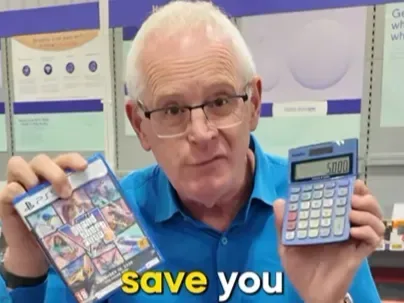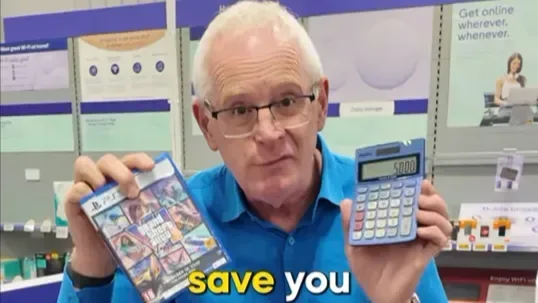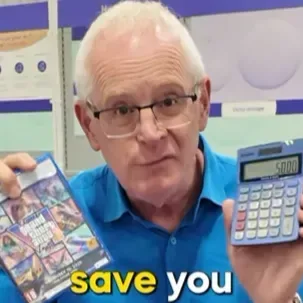
A video from British entrepreneur and frugality-focused social media educator Mark Tilbury has offered an intentionally cheeky answer to a question players will be asking around Grand Theft Auto VI: what does a huge game feel worth? His answer is to buy it, stay in, and supposedly save $5,000.
The arithmetic is designed for a punchline rather than a personal-finance plan. Tilbury uses $99.99, described as the price of an Ultimate Edition, then assumes 80 hours to finish the game. That works out to roughly $1.25 per hour. Add side missions and map exploration, he suggests, and the cost can fall to around 50 cents per hour. From there, the video imagines playing four hours each evening across 50 nights and contrasts that with spending $100 on each night out.
Fifty $100 evenings equal $5,000. So, in the video’s deliberately generous framing, GTA 6 has not merely delivered entertainment—it has stopped a five-grand social calendar from happening.
That is not how savings work for most people. A purchase only “saves” money if it genuinely replaces spending that would otherwise occur. Not everyone goes out four hours a night, and certainly not everyone would spend $100 each time. The $5,000 is therefore a hypothetical avoided expense, not cash automatically created by owning a game. Still, beneath the joke sits a useful way to talk about value: cost per hour.
What the GTA 6 calculation actually measures
Cost per hour is exactly what it sounds like: the purchase price divided by the number of hours someone gets out of an activity. It is a simple comparison tool, not a complete measure of whether something is worth buying.
Using Tilbury’s stated figures:
- $99.99 divided by 80 hours is about $1.25 per hour.
- At 200 hours, $99.99 divided by 200 becomes about 50 cents per hour.
- The $80 standard-edition figure mentioned in the discussion would be $1 per hour over 80 hours.
Those sums are straightforward. The difficult part is the denominator: how many hours will a particular player actually want to spend? That cannot be answered by a trailer, a price tag, or the scale of a map. One player may race through the main path and be satisfied. Another may embrace optional activities, exploration and repeated play. A third may buy a giant game only to discover it is not for them. The same up-front cost can consequently produce radically different personal value.
That distinction matters because “hours of content” and “hours of enjoyment” are not interchangeable. A long game is not automatically better value if its player is pushing through out of obligation. Conversely, a shorter game can feel much more worthwhile if every hour is memorable. Cost per hour makes the most sense as a retrospective calculation: after playing, a person can look at what they spent and what they received from it.
Related coverage includes A Millionaire's GTA 6 Math Says Staying In Could 'Save' $5,000.
The joke depends on substitution, not magic savings
Tilbury’s comparison is really about substitution. In budgeting terms, an expense substitutes for another when choosing one activity means you do not pay for the alternative. A game night may replace a restaurant visit, cinema ticket, bar tab, event, or other paid outing. If that was the genuine choice, the comparison can be useful.
But it breaks down when the alternative would have been a free evening at home, or when someone buys the game and continues their usual spending. In that case, GTA 6 is an additional entertainment cost, not a saving. The same goes for assuming every evening has the same price. Real leisure budgets are irregular; some plans are expensive, some are cheap, and some involve no spending at all.
The video appears to understand this. Its premise is exaggerated enough to signal that it is having fun with lifestyle math, rather than offering a blueprint for managing money. The practical takeaway is more modest: compare a purchase against your own realistic alternatives, not an imaginary month and a half of $100 nights out.
A more useful personal check
Anyone weighing a full-price game can make the argument more honest with a few questions:
- Would I have spent this money elsewhere if I did not buy the game?
- How many hours do I realistically expect to enjoy, rather than merely complete?
- Does this purchase fit after essential costs and savings priorities?
- Am I choosing the edition for features I actually value, or simply because it is positioned as the premium option?
That final question is particularly relevant here. Tilbury selected the $99.99 Ultimate Edition figure rather than the $80 standard-edition figure cited in the discussion. The more expensive starting point makes the cost-per-hour pitch a tougher sell mathematically, but it also highlights that “the game’s price” may not be one universal number. An edition is part of the value decision, not just a number to divide later.
Why GTA 6 is a natural target for this kind of math
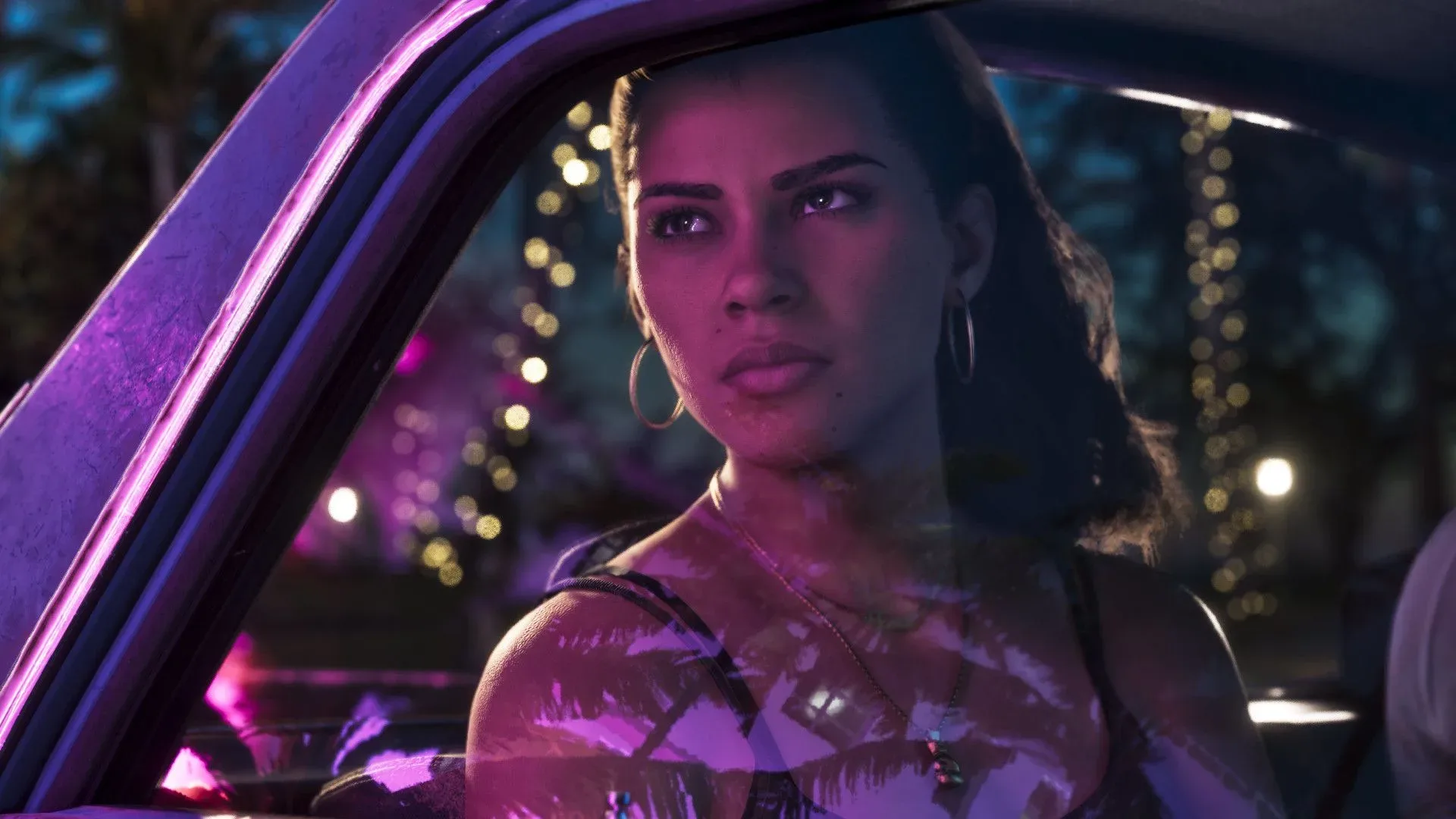
The argument lands because GTA 6 is expected to be a major release with a large scope. The conversation around it has already included side missions, map exploration and the prospect of many hours of play beyond a main completion path. Discussion also points to GTA Online as a separate factor in the broader time-value conversation.
There is an important uncertainty in all of that. Anticipated scale is not the same as a confirmed personal playtime. Players should be cautious about pre-spending hundreds of hypothetical hours in their heads. Optional content only improves the ratio for people who want to do it, and online modes only matter to players who intend to participate.
Nevertheless, the appeal of sprawling games is clear. They can serve different moods: a focused mission one evening, unhurried exploration on another, or a longer session when time permits. That flexibility can make a single purchase feel enduring in a way that a one-off night of entertainment may not. It does not make one form of leisure morally superior to another. Going out has social value that cannot be cleanly reduced to a receipt, just as a solo game session can offer relaxation that is not captured by a spreadsheet.
One commenter put the social side of this perspective plainly, describing gaming as the activity they use in place of drinking, smoking, drugs or frequent outings with friends. That is not a universal model for leisure, but it explains why the cost-per-hour framing resonates with some players. For people whose preferred downtime is gaming, an expensive release can be easier to justify than it might appear in isolation.
A pricing conversation bigger than one viral video
The video arrives amid broader interest in whether GTA 6 could influence expectations around big-budget game pricing. The idea is not that every publisher can simply copy a higher number. The argument is that a game with unusual scale and attention may be judged differently from smaller competitors, even when those competitors are also asking premium prices.
That tension is already visible across the industry whenever players assess what a purchase includes, how long it holds their interest, and whether extra editions make sense. It also sits behind debate about cosmetics and other business decisions, as seen in the competing fan and business pressures around game skin choices. Value is never just a sticker price; it is a mixture of the base product, optional additions, time, taste and expectations.
For GTA 6, the stated November 19 release date gives prospective buyers time to decide what kind of value case they need. Some will be happy with the standard edition and a focused playthrough. Others may see enough appeal in extra content to prefer a premium edition. Some may wait until they know more about the game or until their own budget is more comfortable. None of those choices needs a viral equation to be valid.
The sensible reading of the $5,000 claim
Tilbury’s figure works as comedy because it takes a familiar gamer defense—“I get loads of hours from it”—to an absurdly tidy conclusion. It is also a reminder that leisure spending is relative. A $99.99 purchase can be extravagant for one budget and exceptional value for another; an $80 standard edition can be either an easy entertainment choice or something worth delaying.
The best version of the argument is not “buying GTA 6 makes you richer.” It is: if GTA 6 is a game you will genuinely play extensively, and if it replaces leisure spending you would otherwise make, its entertainment value per hour could be very strong. If either condition is missing, the $5,000 line stays where it belongs—on the joke side of the ledger.